Category Archives: Students News

Matric Rewrite 2026: How to Register for May/June Exams (NSC & SC Guide)

Matric Rewrite 2026: Improve Your Results This Year

If you’re not satisfied with your matric results, rewriting your exams can be a smart move. The Department of Basic Education has officially opened registrations for the May/June 2026 matric rewrite exams.

This is your chance to upgrade your marks, qualify for university, or unlock new career opportunities.

Important Matric Rewrite Dates for 2026

  • May/June Rewrite Registration Deadline: 6 February 2026
  • November 2026 Exam Registration Deadline: 13 March 2026

📌 Important Update:
The old February/March supplementary exams have been phased out. The May/June exams are now your first rewrite opportunity.

Who Can Apply for Matric Rewrites?

There are two main categories:

1. NSC (National Senior Certificate) Candidates

  • Must register in person
  • Register at:
    • Your school
    • Nearest district office

2. SC (Senior Certificate) Candidates

  • Can register:
    • At a district office
    • Online via e-Services South Africa

Useful YouthScope Links:

 Note:
SC candidates can only write in May/June, not November.

How to Register for Matric Rewrite 2026

For NSC Candidates:

  1. Visit your school or district office
  2. Complete the registration form
  3. Submit required documents

For SC Candidates:

  1. Go to your nearest district office OR
  2. Apply online via e-Services
  3. Complete your application

Why Rewrite Matric?

Rewriting can help you:

  • Improve your marks
  • Qualify for university admission
  • Access bursaries like National Student Financial Aid Scheme
  • Increase job opportunities

Many students upgrade their results and go on to successful careers.

Different Matric Pass Levels Explained

Understanding pass levels helps you set goals when rewriting.

Bachelor’s Pass

  • 50% in 4–5 subjects (including Life Orientation)
  • 30% in 2 other subjects
  • Fail only 1 subject

Allows entry into universities for degrees like law, medicine, etc.

Diploma Pass

  • 40% in 5 subjects (including Life Orientation)
  • 30% in 2 subjects
  • Fail only 1 subject

Allows study at universities of technology and colleges.

Higher Certificate Pass

  • 40% in Home Language
  • 40% in 2 other subjects
  • 30% in 3 subjects

Allows study at TVET and some private colleges.

Fail

  • Failing 2 subjects (0–29%) = overall fail

⚠️ But you can always rewrite and improve.

Important Things to Know

  • You can rewrite specific subjects or the full matric
  • Only shortlisted registrations may be processed depending on requirements
  • Late applications are usually not accepted

Tips to Pass Your Matric Rewrite

1. Focus on Weak Subjects

Target the subjects that lowered your overall result.

2. Create a Study Plan

Break down your time before exams into manageable goals.

3. Use Past Papers

Practice with previous exam papers to understand question patterns.

4. Seek Help

  • Teachers
  • Tutors
  • Study groups

What Happens After You Improve Your Results?

Once you pass or upgrade your marks, you can:

  • Apply to universities
  • Apply to TVET colleges
  • Qualify for funding like NSFAS
  • Enter the job market with better opportunities

Recent Posts

  1. 2027 University Applications Now Open in South Africa: Full List & Deadlines
  2. TUT4Life Login Guide 2026: How to Access Your Tshwane University of Technology Student Email
  3. SANParks Graduate Internship Programme 2026: Work at Kruger National Park (Stipend: R6,355.69 – R9,088.37 per month)
  4. Shoprite Graduate Programme 2026: Transport & Fleet Opportunity (Apply Before 22 March)
  5. Deloitte Graduate Programme 2026 / 2027: How to Apply, Requirements & Career Opportunities

FAQs About Matric Rewrite 2026

1. Can I rewrite only one subject?

Yes, you can rewrite specific subjects.

2. Are supplementary exams still available?

No, they have been replaced by the May/June exams.

3. Can I write in November instead?

NSC candidates can, but SC candidates cannot.

4. Where do I register?

At your school, district office, or online (for SC candidates).

5. Is rewriting matric worth it?

Yes, it can significantly improve your future opportunities.

Final Thoughts

Failing or underperforming in matric is not the end—it’s a second chance.

The Matric Rewrite 2026 gives you the opportunity to improve your results and move forward with confidence.

Apply Before the Deadline

Don’t miss your chance—register early and start preparing today.

2027 University Applications Now Open in South Africa: Full List & Deadlines

2027 University Applications Are Now Open – Start Early

If you’re planning to start university in 2027, now is the time to act. Several South African universities have already opened applications, while many others will open in the coming months.

Applying early gives you a better chance of acceptance, especially for competitive programmes.

Universities Open for 2027 Applications (March 2026)

From 1 March, applications are already open at:

  • University of the Witwatersrand (Wits)

KZN Universities (Apply via CAO)

The following universities require applications through the
Central Applications Office:

  • Durban University of Technology (DUT)
  • Mangosuthu University of Technology
  • University of Zululand
  • University of KwaZulu-Natal

Universities Opening in April 2026

The following institutions are expected to open applications in April:

  • Tshwane University of Technology
  • University of Johannesburg
  • University of Limpopo
  • Central University of Technology
  • North-West University
  • University of the Western Cape
  • University of Cape Town
  • University of the Free State
  • University of Pretoria
  • Rhodes University
  • Nelson Mandela University
  • Sefako Makgatho Health Sciences University
  • Stellenbosch University
  • Sol Plaatje University

Universities Opening Later in 2026

May 2026

  • University of Venda (Univen)
  • Cape Peninsula University of Technology

June 2026

  • Vaal University of Technology
  • University of Mpumalanga
  • Walter Sisulu University
  • University of Fort Hare

September 2026

  • University of South Africa (UNISA)

Useful YouthScope Links:

What is the CAO and How Does It Work?

The Central Applications Office (CAO) is a centralized system used mainly by universities in KwaZulu-Natal.

Instead of applying to each university separately, you can:

  • Submit one application
  • Apply to multiple institutions and courses

National Benchmark Tests (NBTs)

Some universities require the
National Benchmark Tests (NBTs) as part of the application process.

NBTs assess:

  • Academic readiness
  • Maths and language skills

📌 Tip: Book and write your NBTs early to avoid delays.

NSFAS Funding for 2027 Students

The National Student Financial Aid Scheme (NSFAS) provides funding to eligible students at all 26 public universities.

Funding Criteria:

  • Household income below R350,000/year → Full bursary
  • Income R350,000 – R600,000/year → Student loan

What NSFAS Covers:

  • Tuition fees
  • Accommodation
  • Food and transport
  • Study materials

NSFAS applications usually open later in the year.

Important Application Tips

1. Apply Early

University spaces fill up quickly—especially for competitive courses.

2. Apply Before NSFAS Opens

You don’t need NSFAS approval to apply for university.

Apply first, then apply for NSFAS later.

3. Apply to Multiple Universities

This increases your chances of acceptance.

4. Prepare Your Documents

  • ID copy
  • Matric results / Grade 11 results
  • Proof of payment (if required)

Why You Should Apply Now

  • Secure your place early
  • Avoid last-minute stress
  • Get time to plan funding and accommodation

💡 Applying early does not lock you in—you can still decline offers later.

Recent Posts

FAQs About 2027 University Applications

1. When should I apply for 2027 university admission?

As early as March 2026 when applications open.

2. Can I apply without final matric results?

Yes, universities use Grade 11 or mid-year Grade 12 results.

3. Do all universities use CAO?

No, only certain universities (mainly in KZN).

4. When does NSFAS open?

Usually in the last quarter of the year.

5. Can I change my course after applying?

Yes, most universities allow course changes before final acceptance.

Final Thoughts

Applying for university in South Africa is competitive, and early preparation is key.

With 2027 applications already opening, now is the perfect time to secure your future.

Start Your Application Today

Don’t wait—begin applying now to increase your chances of getting into your preferred university and programme

TUT4Life Login Guide 2026: How to Access Your Tshwane University of Technology Student Email

What is TUT4Life?

Tshwane University of Technology (TUT) introduced TUT4Life as an official student email system to support communication, learning, and academic updates.

Established in 2004 after the merger of three Technikons, TUT has grown into one of South Africa’s leading universities of technology, focusing on innovation, inclusivity, and practical learning.

Why TUT4Life is Important for Students

Your TUT4Life email account is more than just an inbox—it’s your official communication channel with the university.

Useful YouthScope Links:

With TUT4Life, you can:

  • Receive important university announcements
  • Access Blackboard notifications
  • Communicate with lecturers and fellow students
  • Stay updated on academic activities

 Important: Missing emails can mean missing deadlines, results, or critical updates.

How to Access TUT4Life Email (Step-by-Step Guide)

Follow these simple steps to log in to your TUT4Life account:

Step 1: Visit the TUT4Life Portal

Go to the official TUT4Life login page.

Step 2: Click on “Access my TUT4Life Email”

Step 3: Enter Your Student Email

  • Use the email address provided by TUT

Step 4: Enter Your Password

  • Type your password and click Submit

Step 5: Access Your Inbox

You will now have full access to your student email and notifications.

Common TUT4Life Login Issues (And Fixes)

1. Forgot Password

  • Use the password reset option on the login page
  • Contact TUT IT support if needed

2. Incorrect Email Format

  • Ensure you’re using your official student email

3. Login Page Not Loading

  • Check your internet connection
  • Try a different browser

4. Account Locked

  • Wait and retry or contact IT services

TUT Faculties You Can Access via TUT4Life

Once logged in, students can access information across TUT’s faculties, including:

  • Science
  • Engineering and Technology
  • Business and Management
  • Education
  • Humanities
  • Arts

About Tshwane University of Technology (TUT)

Tshwane University of Technology is known for:

  • Practical, career-focused education
  • Use of innovative technology in learning
  • Promoting access to higher education
  • Addressing unemployment and inequality

The university equips students with skills aligned to real-world industry needs.

Tips for Using TUT4Life Effectively

  • Check your email daily
  • Enable notifications on your phone
  • Keep your login details secure
  • Use it for all academic communication

 Pro Tip: Link your TUT4Life email to your mobile device for instant updates.

Recent Posts

FAQs About TUT4Life

1. What is TUT4Life used for?

It is your official student email used for communication, updates, and academic notifications.

2. Can I access TUT4Life on my phone?

Yes, you can log in via mobile browser or email apps.

3. What if I forget my password?

Use the password reset option or contact TUT support.

4. Is TUT4Life mandatory?

Yes, all students must use it for official communication.

5. Does TUT4Life include Blackboard notifications?

Yes, Blackboard updates are sent directly to your TUT4Life email.

Final Thoughts

The TUT4Life email system is an essential tool for every student at Tshwane University of Technology.

By checking it regularly and using it effectively, you can stay informed, organised, and ahead in your academic journey.

Start Using TUT4Life Today

Make sure you log in, stay updated, and never miss important university communication.

NSFAS 2026 Update: Over 1 Million Students Approved for Funding in South Africa

NSFAS 2026: Major Funding Boost for Over 1 Million Students

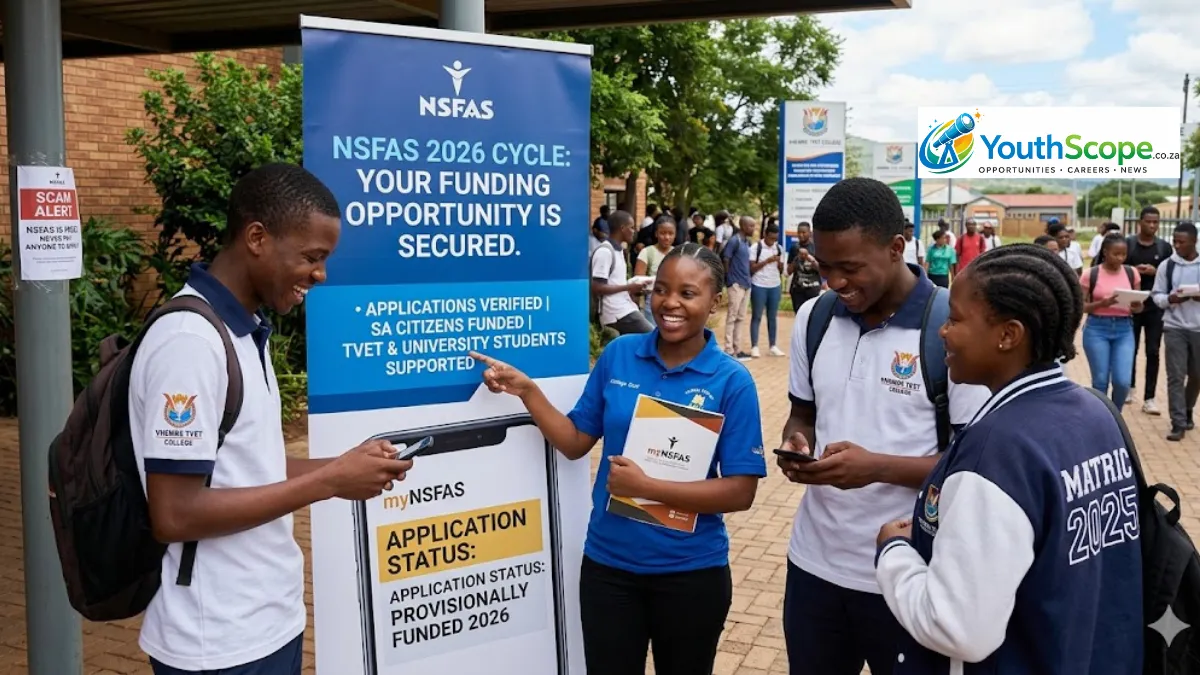
More than 1 million South African students will receive financial support for the 2026 academic year through the
National Student Financial Aid Scheme.

This announcement brings relief to thousands of families and confirms that universities and TVET colleges can proceed with registrations and admissions.

For many students, this funding is the difference between studying and missing out on higher education.

Strong Support for New and Returning Students

The 2026 funding cycle supports both:

  • First-time applicants entering higher education
  • Returning students who meet academic requirements

Balanced Funding Approach

  • A large portion of funding goes to new students
  • Returning students retain funding based on academic performance

 Key Insight:
This system ensures greater access while maintaining accountability.

Early Processing Improves 2026 Registration

For 2026, NSFAS processed a high volume of applications earlier than usual.

Why This Matters

  • Reduces registration delays
  • Allows institutions to plan better
  • Helps students secure placement faster

This is a major improvement compared to previous years.

Why Some Applications Were Rejected

Despite high approval rates, some applications were unsuccessful.

Common Reasons

  • Missing documents
  • Not meeting financial criteria
  • Not meeting academic requirements

⚠️ Important:
Incomplete applications are one of the biggest reasons students lose funding opportunities.

Academic Performance Still Matters

For returning students, funding is not automatic.

Instead, institutions evaluate:

  • Academic progress
  • Course completion rates

Students who fail to meet requirements risk losing funding.

However, support is still available through appeals.

Useful YouthScope Links:

NSFAS Appeals Process 2026

Students whose applications were rejected or incomplete can still apply for reconsideration.

How Appeals Work

  • Submit missing documents
  • Provide valid reasons for reconsideration
  • Apply within the official deadline

 Act Fast:
Late appeals are usually not accepted.

What NSFAS Funding Covers

Approved students receive comprehensive financial support.

Covered Costs

  • Tuition fees
  • Accommodation
  • Meals
  • Transport allowance
  • Learning materials

Payments are managed through institutions based on academic schedules.

Universities and TVET Colleges Ready for 2026

With funding confirmed, institutions across South Africa are now:

  • Opening registrations
  • Finalising admissions
  • Preparing orientation programmes

This ensures a smoother start to the academic year.

New Eligibility and System Improvements

NSFAS continues to refine its system to improve efficiency.

Key Improvements for 2026

  • Faster application processing
  • Better communication with students
  • More structured funding approvals

💡 These changes aim to reduce uncertainty and improve access.

What This Means for Students

Benefits

  • Increased access to higher education
  • Reduced financial stress
  • Improved registration process

Challenges

  • Strict academic requirements
  • Competitive application process
  • Need for complete documentation

Why This Is a Big Step for South Africa

The approval of funding for over 1 million students highlights:

  • Government commitment to education
  • Increased access to skills development
  • Support for future workforce growth

Education remains one of the most powerful tools for economic development.

Recent Posts

Frequently Asked Questions (FAQs)

1. How many students are funded by NSFAS in 2026?

Over 1 million students have been approved.

2. Does NSFAS fund both new and returning students?

Yes, as long as eligibility and academic requirements are met.

3. What does NSFAS funding cover?

Tuition, accommodation, food, transport, and study materials.

4. Can I appeal if my application is rejected?

Yes, but you must submit your appeal within the deadline.

5. When will payments be made?

Payments are distributed through institutions during the academic year.

Final Thoughts

The NSFAS 2026 funding update marks a major milestone for higher education in South Africa.

With over 1 million students funded, improved processing systems, and better access to financial aid, the 2026 academic year is set to be more efficient and inclusive.

Don’t Miss Your Opportunity

If you applied:

  • Check your application status
  • Submit appeals if needed
  • Prepare for registration

Taking action early could secure your place in 2026.

South Africa Disability Grant 2026: Everything Young People Need to Know

If you’re living with a disability in South Africa, managing money, school, or daily life can feel overwhelming. Luckily, the Disability Grant is here to help. In 2026, this grant gives R2,310 every month to people who can’t work because of a disability. That money can help with essentials like food, transport, electricity, and medical care, making life a little less stressful.

Here’s a full guide on who can get it, how to apply, and what to expect, all explained in a way young people can understand.

What Is the Disability Grant?

The Disability Grant is a type of social support provided by the South African Social Security Agency. Think of it as a monthly allowance for adults who can’t work due to a disability. Unlike a loan, it’s not something you pay back—it’s money meant to cover your basic needs so you can focus on living your life.

Who Can Apply?

If you’re thinking, “Can I get this grant?” here’s what you need to know:

  1. Age – You must be between 18 and 59 years old.
  2. Residency – You need to be a South African citizen, permanent resident, or a legally recognized refugee.
  3. Medical Condition – A doctor must confirm that your disability stops you from working for at least six months.
  4. Financial Situation – You must pass a means test, which checks your income and assets. If you earn too much or have too many resources, you won’t qualify.

Basically, the grant is for people who really need it and can’t earn money because of their disability.

South Africa Disability Grant 2026: Everything Young People Need to Know

How to Apply

Applying might feel scary, but it’s actually pretty straightforward. Here’s the step-by-step:

  1. Visit a SASSA office – This is where everything starts.
  2. Bring your documents, including:
    • Proof of identity (ID or smart ID)
    • Medical records from a licensed healthcare professional
    • Proof of where you live
    • Financial documents (bank statements, pay slips, or anything showing your income and assets)
  3. Medical assessment – A healthcare professional will check how serious your disability is and how long it might last.

Once SASSA approves your application, your grant starts right away. You don’t need to keep reapplying until SASSA asks for updated documents.

Useful YouthScope Links:

How Much Money Will You Get?

In 2026, the Disability Grant pays R2,310 per month. While it’s not a fortune, it’s enough to cover basic living costs like:

  • Groceries
  • Transport (bus, taxi, or Uber)
  • Electricity and water bills
  • Medication or doctor visits

This money can give you independence, especially if you’re studying or trying to manage your own budget for the first time.

When and How Do You Get Paid?

SASSA tries to make payments simple and predictable:

  • Payment Date: The first day of every month (sometimes the first week if the 1st falls on a weekend or public holiday)
  • Payment Methods:
    • Direct deposit into your bank account
    • SASSA card
    • Approved pay points

Even if you don’t take out the money immediately, it will stay in your account. This makes it easier to plan for bills, food, or even small personal goals like saving for a phone or laptop.

Keeping Your Grant

SASSA checks in from time to time to make sure you still qualify. This might include:

  • Updating medical records
  • Taking a new medical test

As long as you keep your documents current, you’ll keep getting your grant without interruptions.

Why the Disability Grant Matters for Young People

For teens and young adults, having a disability can make school, work, and daily life extra challenging. The Disability Grant isn’t just money—it’s a lifeline that helps you live independently. It allows you to:

  • Focus on school or studies without constantly worrying about money
  • Cover transport to school, work, or medical appointments
  • Get essential items like groceries, medication, and electricity

It’s about giving you freedom and stability, so you can live your life as fully as possible despite challenges.

Recent Posts

Final Thoughts

The South African Disability Grant is an important safety net for anyone living with a disability. In 2026, the R2,310 monthly payment can make a big difference, helping you cover essentials, stay independent, and plan for the future.

If you or someone you know might qualify, don’t wait—visit your nearest SASSA office, get your documents ready, and take the first step toward financial support and independence.

2026 TUT Online Courses Now Open – Study From Home With Flexible Learning

South Africans who want to study while working or managing other responsibilities now have a great opportunity. Tshwane University of Technology (TUT) has opened applications for its 2026 online courses, allowing students to earn recognised qualifications while studying from home.

These online programmes are designed for flexibility, career growth, and accessibility, making it easier for students across the country to access higher education without relocating.

If you are planning to upgrade your qualifications in business, management, administration, or hospitality, the TUT Online Study programmes could be a practical pathway to your career goals.

Quick Overview of 2026 TUT Online Courses

Institution: Tshwane University of Technology
Study Mode: Fully Online
Application Deadline: 28 March 2026
Classes Start: 13 April 2026
Study Flexibility: Pay per module and study while working

Why TUT Online Courses Are Becoming Popular

Online education continues to grow in South Africa as more students look for flexible and affordable study options.

With TUT’s online learning platform, students can:

✔ Study from anywhere in South Africa
✔ Learn at a flexible pace
✔ Balance work, family, and studies
✔ Access digital learning materials and academic support

These programmes are especially useful for working professionals who want to upgrade their qualifications without leaving their jobs.

TUT Online Courses Available for 2026

The Tshwane University of Technology online study platform offers several qualifications across different study levels.

Higher Certificate Programmes

  • Higher Certificate in Contact Centre Management
  • Higher Certificate in Administrative Information Management

These programmes are ideal for students who want to enter the workforce quickly or build foundational business skills.

Diploma and Advanced Diploma Programmes

Students can also pursue career-focused diplomas such as:

  • Diploma in Retail Business Management
  • Advanced Diploma in Human Resource Management
  • Advanced Diploma in Supply Chain Management
  • Advanced Diploma in Hospitality Management

These qualifications prepare students for management and leadership roles in various industries.

Useful YouthScope Links:

Postgraduate Online Qualifications

For graduates who want to specialise further, TUT also offers postgraduate online programmes including:

  • Postgraduate Diploma in Human Resource Management
  • Postgraduate Diploma in Hospitality Management
  • Master of Engineering Management
  • Master of Management Sciences in Contact Centre Management
  • Master of Tourism and Hospitality Leadership

These programmes are designed to develop advanced professional and leadership skills.

Documents Required for TUT Online Applications

Students applying for online courses should prepare the following documents:

  • Certified copy of South African ID or passport
  • Matric certificate or latest academic results
  • Academic transcripts (for postgraduate applicants)
  • Proof of application fee payment

Submitting complete documents early can help avoid delays in the application process.

2026 TUT Online Courses Now Open

How to Apply for TUT Online Courses

Applying for the 2026 online programmes at Tshwane University of Technology is simple.

Step 1: Visit the Official TUT Online Portal

Choose the programme you want to study.

Step 2: Complete the Online Application

Fill in your personal and academic information.

Step 3: Upload Required Documents

Submit all supporting documents needed for your application.

Step 4: Submit Before the Deadline

Applications close 28 March 2026, so students should apply early.

Who Should Consider TUT Online Courses?

These programmes are ideal for:

  • Working professionals who want to upgrade their qualifications
  • Students who prefer flexible study schedules
  • People living far from universities
  • Individuals looking for career advancement in business and management

Online learning allows students to study at their own pace while gaining recognised qualifications.

Final Thoughts

With flexible study options, career-focused qualifications, and fully online learning, the 2026 online courses at Tshwane University of Technology offer an excellent opportunity for students who want to further their education without traditional classroom restrictions.

Because the application deadline is 28 March 2026, interested students should prepare their documents and apply as soon as possible.

Recent Posts

SASSA Grant Payment Dates April 2026 – Don’t Miss Your Money!

Wondering when your SASSA grant will hit your account in April 2026? We’ve got the exact dates for older persons, disability, children’s grants, and SRD payments so you can plan ahead.

Why You Need These Dates

Thousands of South Africans rely on SASSA grants every month for groceries, bills, and essentials. Missing the payout date can be stressful—but knowing the schedule gives you a financial head start.

Youthscope :

Older Persons Grant

  • Payment Date: Thursday, 2 April 2026
  • First in the monthly payout schedule, so plan your essentials around this date.

Disability Grant

  • Payment Date: Friday, 3 April 2026
  • Quick tip: Check your bank or post office to confirm the payment on the morning of the 3rd.

Children’s & Other Grants

  • Payment Date: Monday, 6 April 2026
  • This covers child support, foster care, care dependency, and other grants.
  • 💡 Pro Tip: Weekend/public holiday? SASSA may adjust the date slightly—always verify with your pay point.

Social Relief of Distress (SRD) Grant

  • Payment Window: 24–30 April 2026
  • SRD payouts are processed later in the month. Keep an eye on your bank account for the exact day.
SASSA Grant Payment Dates April 2026

Where to Collect Your Grant

You can get your SASSA money in three ways:

  1. Bank deposit – direct to your account
  2. SASSA/Postbank card – swipe at approved retailers
  3. Retail pay points – Shoprite, Checkers, Pick n Pay

Always have your ID and SASSA card ready to avoid delays.

How to Check Your Payment

This ensures you don’t miss your grant.

Final Tips to Stay Ahead

  • Keep your personal info updated with SASSA
  • Plan shopping and bills around payout dates
  • Avoid long queues at pay points

Knowing the exact dates in advance helps you manage money stress-free.

Recent Posts

Trustee-in-Training Fellowship 2026: FirstRand Empowerment Foundation 12–24 months

The FirstRand Empowerment Foundation (FREF) Trustee-in-Training Fellowship is a unique opportunity for young professionals under 35 years to gain exposure to board governance, strategic decision-making, and leadership development within a high-impact social development context.

This programme is offered by FirstRand in Johannesburg, Gauteng.

Programme Overview

  • Position: Trustee-in-Training Fellow
  • Location: Johannesburg
  • Type: Part-time fellowship
  • Duration: 12–24 months
  • Time Commitment: 2–6 hours per week, approximately 16 days per annum
  • Closing Date: 06 March 2026

The fellowship offers exposure to the FREF board of trustees and committee work, providing insights into governance, financial oversight, and strategic planning.

Purpose of the Fellowship

FREF was established to:

  • Address poverty and inequality in South Africa
  • Promote B-BBEE through public benefit activities
  • Develop the next generation of leaders who understand business’s role in society

The Trustee-in-Training programme allows fellows to:

  • Gain board-level exposure
  • Develop skills in governance, leadership, decision-making, and stakeholder engagement
  • Participate in board committee deliberations
  • Contribute perspectives of youth in social and financial development initiatives

Participant Selection Criteria

Candidates must:

  • Be under 35 years old at appointment
  • Hold at least a 3-year degree or equivalent
  • Demonstrate interest in social development, youth development, and systemic change
  • Show engagement in relevant activities such as volunteering, community activism, or NGO work
  • Have work experience; public sector experience is advantageous
  • Be able to present youth perspectives in board discussions
  • Preferably be alumni of FirstRand Foundation International Scholarship Programme or associated empowerment partners

Desirable Personal Characteristics

Successful fellows are expected to:

  • Listen, analyse, and think creatively
  • Work well individually and in groups
  • Prepare for and attend board and committee meetings
  • Take responsibility and follow through on assignments
  • Exhibit honesty, integrity, and sensitivity to differing views
  • Demonstrate leadership, community-building skills, and professionalism

QUICK LINKS:

Requirements for Successful Applicants

  • Full participation in FREF board and committee meetings
  • Active involvement in social investment programme activities
  • Engagement for 12–24 months, with reporting and reflection at programme end
  • Participation in assessment and review by the Trustee Affairs and Governance Committee
  • Commitment to learning and development as defined by the foundation
Trustee-in-Training Fellowship 2026

Application Documents

Candidates must submit:

  1. Completed application form
  2. Curriculum Vitae (CV)
  3. Certified copy of South African ID
  4. Motivation letter (max 1000 words)
  5. Short reference/recommendation letter (max 1000 words)

Why Apply?

This fellowship is ideal for young professionals seeking:

  • Hands-on governance experience
  • Exposure to strategic decision-making at board level
  • Development of leadership, financial oversight, and stakeholder engagement skills
  • A pathway to future senior executive roles

FREF provides a high-impact learning environment and a platform to contribute to social change while developing your professional skills.

Recent Posts

Your Academic Integrity Matters – Start Today!

All newly registered Unisa students in undergraduate and postgraduate qualifications (NQF levels 5–8), and those who haven’t yet completed it, are required to complete the Compulsory Academic Integrity Course for 2026.

Why It’s Important

The course teaches you to embody honesty, respect, fairness, responsibility, and accountability throughout your studies. These values:

  • Help you navigate your studies ethically
  • Protect the credibility of your qualification
  • Lay the foundation for future professional success

QUICK LINKS:

What You’ll Learn

By completing the course, you will:

  • Understand the meaning and importance of academic integrity
  • Learn about academic misconduct such as plagiarism, collusion, and contract cheating
  • Use AI tools ethically
  • Engage with academic work responsibly and ethically

How to Access the Course

  1. Go to Unisa MOOC
  2. Log in using your myLife account credentials
  3. Click “My Courses”
  4. Complete all 6 study units

When Is the Course Due?

Check your allocated group sites for your open and due dates to avoid missing the deadline.

Need Help?

Act Now!

Let’s build a culture of honesty and respect together. Unisa has zero tolerance for academic dishonesty. Take the first step towards academic excellence by completing the course on time!

Recent Posts

NSFAS Allowance Changes – Students React

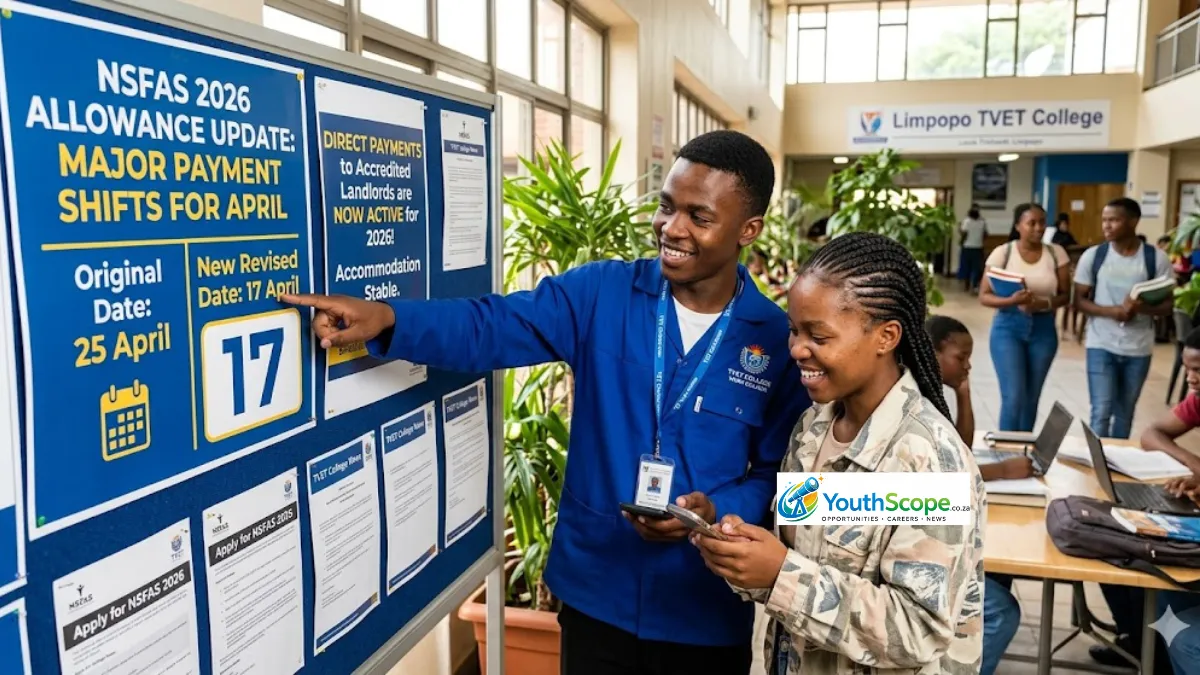
Recent changes to NSFAS allowances have sparked mixed reactions among students across South Africa. While some welcome the adjustments as a step forward, others say the new amounts still fall short of covering the real cost of student life in 2026.

As the cost of living continues to rise, NSFAS-funded students are once again debating whether allowances are enough to survive month to month.

What Changed With NSFAS Allowances?

NSFAS has adjusted certain allowance categories for the 2026 academic year, including:

  • Living allowances
  • Accommodation caps
  • Transport allowances
  • Learning material support

The aim, according to NSFAS, is to better align funding with students’ essential needs while ensuring sustainability of the scheme.

However, students say the reality on the ground tells a different story.

Students Welcome the Increase – But With Concerns

Some students say any increase is better than none, especially given rising food prices and transport costs.

“At least NSFAS is trying. Groceries are expensive, and every extra rand helps,” said a TVET college student in Gauteng.

Others noted that allowance adjustments provide short-term relief but don’t solve long-term affordability challenges.

QUICK LINKS:

“It’s Still Not Enough” – Common Student Complaints

Despite the changes, many students feel allowances remain below the real cost of living, especially for those living off campus.

Common concerns include:

  •  Food prices rising faster than allowances
  •  Transport costs exceeding NSFAS limits
  •  Private accommodation costing more than NSFAS caps
  •  Learning material funds running out mid-semester

“My allowance finishes before the month ends. You end up borrowing or skipping meals,” a university student shared on social media.

TVET vs University Students: Different Realities

TVET students and university students often experience NSFAS differently.

  • TVET students say allowances are sometimes delayed, making budgeting difficult.
  • University students say accommodation and food costs in major cities make NSFAS support stretch very thin.

Many students argue that allowances should be adjusted based on location and cost of living, not a one-size-fits-all model.

Social Media Reactions: #NSFASAllowance Trends

On social media, hashtags like #NSFASAllowance#StudentLifeSA, and #FeesMustFall have resurfaced, with students calling for:

  • Annual adjustments linked to inflation
  • Faster allowance payments
  • Clear communication from NSFAS
  • Higher living allowances for off-campus students

Some students also expressed frustration at not being consulted before changes were implemented.

What Students Want NSFAS to Do Next

Based on student feedback, common demands include:

  • Better communication from NSFAS
  • Allowances adjusted to real living costs
  • On-time monthly payments
  • Higher accommodation caps in expensive cities

Students say they want support that allows them to focus on studying, not survival.

Final Thoughts

While NSFAS allowance changes for 2026 show some progress, student reactions make one thing clear: funding remains a major stress point for South Africa’s youth in higher education.

As the academic year continues, many will be watching closely to see whether NSFAS responds to student concerns—or whether protests and public pressure return.

SEE MORE: