
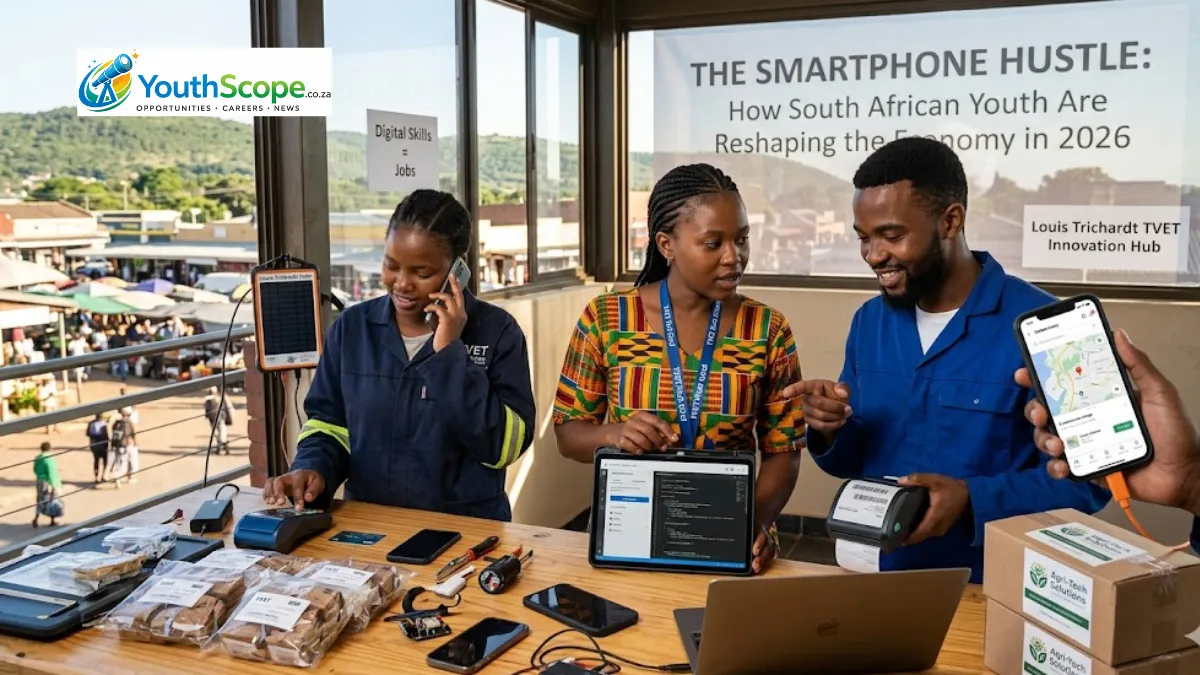
In 2026, the traditional office cubicle has a new rival: the smartphone. Across South Africa, from the bustling streets of Soweto to the coastal hubs of Durban, young entrepreneurs and “side-hustlers” are leveraging mobile technology to bypass high unemployment rates. By turning a handheld device into a storefront, a classroom, or a workstation, the youth are proving that access is the new currency.
Here is how the South African “Phone Economy” is operating right now.
1. The WhatsApp Commerce Revolution
WhatsApp has evolved from a messaging app into South Africa’s most powerful decentralized marketplace.
- The “Status” Storefront: Small-scale entrepreneurs use WhatsApp Status to showcase everything from thrifted fashion and baked goods to tech repairs.
- Seamless Payments: With the rise of tools like iK Pay Link, sellers no longer need expensive card machines. They simply send a secure payment link via chat, allowing customers to pay instantly with their cards—solving the “trust gap” in remote sales.
2. The Rise of “Agentic” Gig Apps
2026 has seen the launch of localized platforms designed specifically for the South African landscape.
- Uptooyoo: Launched in early 2026, this app allows “kasi hustlers” and digital pros alike to list services—ranging from plumbing and pet grooming to AI prompt engineering—and build a verified reputation within their local communities.
- Yoma: This UNICEF-supported digital marketplace allows youth to complete “challenges” and upskill, earning digital tokens that can be redeemed for airtime, data, and grocery vouchers.
3. Micro-Tasking for Global AI
As global AI companies (like Google, Meta, and OpenAI) race to improve their models, they need human feedback. South African youth are filling this gap using platforms like Toloka and Amazon Mechanical Turk.
- What they do: Record simple voice clips in local languages, identify objects in videos, or rate the “helpfulness” of AI responses.
- The Benefit: It requires no startup capital and can be done during a taxi commute or between classes.
4. Short-Form Content & “Faceless” Channels
Content creation is no longer just for “influencers.” In 2026, the trend has shifted toward niche expertise and faceless channels.
- TikTok & YouTube Shorts: Creators are using AI-powered mobile editing tools to build channels that focus on local tips (e.g., “Best cheap eats in Braamfontein”) or educational “explainer” videos.
- Monetization: Income is generated through the Creator Fund, affiliate marketing for local brands, or by using their channel as a portfolio to land social media management gigs for small businesses.
5. Mobile-First Tutoring
With the 2026 education system leaning heavily toward hybrid learning, mobile tutoring is a major income stream for university students.
- SAYouth & Think Digital: Platforms now allow students to offer CAPS-aligned tutoring via video calls. High-performing students are making a living by teaching STEM subjects or helping younger learners with digital literacy.
You can also Check:
FAQ: Making Money via Smartphone
Is it really possible to make a full-time living from a phone?
While many use it for “top-up” income (R2,000–R5,000/month), those who specialize—such as high-level social media managers or specialized tutors—can exceed the earnings of many entry-level office jobs. Success usually depends on consistency and data management.
Which apps are the most “data-friendly”?
Apps like SAYouth.mobi and certain educational platforms are zero-rated (free to use) on major networks like MTN and Vodacom. For creators, using “Lite” versions of editing apps and uploading content during off-peak hours (night-time data) is a common strategy to save costs.
Do I need a high-end iPhone to start?
No. Most gig economy apps (Uptooyoo, Toloka) are optimized for entry-level Android devices. As long as the phone has a functional camera, GPS, and a stable internet connection, the “digital doors” are open.
How do I avoid “online job” scams?
If an app or person asks you to pay an “activation fee” or “training fee” before you start working, it is almost certainly a scam. Legitimate platforms like Umuzi, Yoma, and Upwork are free to join and take a percentage of your earnings after you get paid.

Mbalizuke Nkosi
Mbalizuke Nkosi is the editorial voice behind YouthScope.co.za, a South African youth-focused platform dedicated to sharing opportunities, education updates, and career development information. The editorial team focuses on producing clear, reliable, and easy-to-understand content for students, job seekers, and young professionals.
With a strong interest in youth empowerment, skills development, and access to opportunities, Youth Admin curates and publishes content covering learnerships, internships, bursaries, and study guides across South Africa.
The aim of Mbalizuke Nkosi is to simplify important information and make it accessible to young people who are building their future careers.