
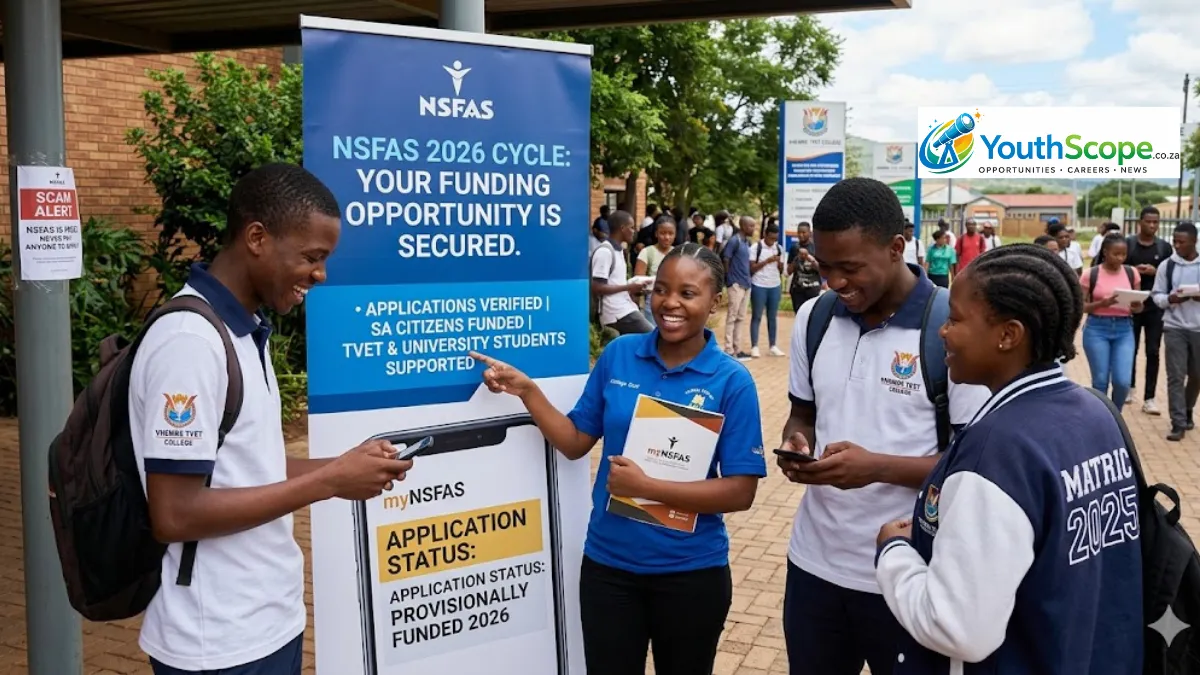
Introduction
The National Student Financial Aid Scheme (NSFAS) remains one of the most important funding opportunities for students in South Africa. The NSFAS 2026 cycle has been a major focus for matriculants, university applicants, and TVET college students seeking financial support for higher education.
NSFAS helps qualifying students cover study costs such as tuition, accommodation, transport, learning materials, and living allowances. For many families, this funding makes tertiary education possible.
If you are planning to study in 2026, this guide explains the latest NSFAS updates, eligibility requirements, application process, and important deadlines.
What is NSFAS?
NSFAS is a government-funded bursary scheme that supports financially eligible South African students who study at public universities and public TVET colleges.
Funding is aimed at students who cannot afford tertiary education and meet the academic and financial criteria set each year.
NSFAS 2026 Application Updates
According to official updates, NSFAS opened applications for the 2026 academic year in late 2025 and later announced that applications had closed. Students are advised to monitor their myNSFAS accounts for funding outcomes and additional document requests.
Applicants can track their funding progress online using the official myNSFAS portal.
Who Qualifies for NSFAS 2026?
To qualify for NSFAS funding in 2026, applicants generally must meet the following requirements:
1. Citizenship Requirements
You must be:
- A South African citizen
- In some cases, approved permanent residents or qualifying groups may be considered
2. Institution Requirements
You must be accepted or intending to study at:
- A public university in South Africa
- A public TVET college
Private institutions are generally not funded through standard NSFAS bursary support.
3. Financial Requirements
Funding is mainly for students from low-income and working-class households. Means testing is used to determine eligibility.
4. Academic Requirements
You should meet the minimum academic entry requirements of your chosen institution and maintain satisfactory academic progress to continue receiving funding.
What Does NSFAS Cover in 2026?
Approved students may receive support for:
University Students
- Tuition fees
- Registration-related approved costs
- Accommodation (subject to rules)
- Transport allowance where applicable
- Learning materials allowance
- Living or personal care support
TVET College Students
- Tuition
- Accommodation or transport (where applicable)
- Learning materials
- Meals or related allowances depending on approved structure
Allowance rates may be reviewed annually.
How to Apply for NSFAS 2026
Applications are handled online through the official myNSFAS system.
Step 1: Create a myNSFAS Account
Go to the official portal and register using:
- South African ID number
- Your own cellphone number
- Valid email address
Step 2: Complete the Application Form
Fill in:
- Personal details
- Household information
- Institution details
- Course information
Step 3: Upload Supporting Documents
Depending on your profile, required documents may include:
- ID document
- Consent form
- Proof of income (if requested)
- Parent/guardian details
- Supporting legal documents if applicable
NSFAS notes that document requirements depend on the application type.
Step 4: Submit and Save Reference
After submitting, keep your reference details and monitor status updates.
How to Check NSFAS Status
Students can log in to the myNSFAS portal and use the “Track Funding Progress” feature.
Common statuses include:
- Submitted
- Under Review
- Awaiting Documents
- Approved
- Rejected
NSFAS has stated that application outcomes are communicated through the portal.
Common Reasons Applications Get Delayed
Many students face delays because of:
- Incorrect ID details
- Unclear uploaded documents
- Wrong contact information
- Missing supporting forms
- Institution registration not confirmed
Always double-check details before submitting.
Important NSFAS Safety Warning
NSFAS has warned students not to share passwords or login details. Only use official NSFAS platforms and never pay anyone to “approve” your funding.
Why NSFAS Matters in South Africa
NSFAS continues to help thousands of students access higher education who might otherwise be unable to study. It supports:
- Youth development
- Skills training
- Graduate employability
- Access to university and college education
You can also Check:
FAQ – NSFAS 2026 Updates
1. Is NSFAS a loan or bursary?
For many qualifying students, NSFAS support is bursary-based depending on current policy.
2. Can I apply before matric results are released?
Often yes, depending on the application cycle and institution requirements.
3. Does NSFAS fund private colleges?
Generally, standard NSFAS funding focuses on public universities and public TVET colleges.
4. How do I know if I am approved?
Check your myNSFAS portal regularly.
5. Can I reapply if rejected before?
Yes, many students can reapply if they still meet the criteria.
6. What if I forgot my password?
Use the password reset option on the myNSFAS portal.
Conclusion
The NSFAS 2026 funding cycle remains a critical opportunity for South African students seeking affordable access to tertiary education. If you meet the financial and academic requirements, ensure your documents are ready, apply through official channels, and check your status regularly.
For many students, NSFAS can be the key to starting and completing higher education successfully.

Mbalizuke Nkosi
Mbalizuke Nkosi is the editorial voice behind YouthScope.co.za, a South African youth-focused platform dedicated to sharing opportunities, education updates, and career development information. The editorial team focuses on producing clear, reliable, and easy-to-understand content for students, job seekers, and young professionals.
With a strong interest in youth empowerment, skills development, and access to opportunities, Youth Admin curates and publishes content covering learnerships, internships, bursaries, and study guides across South Africa.
The aim of Mbalizuke Nkosi is to simplify important information and make it accessible to young people who are building their future careers.