
Tag Archives: Graduate internship 2026

FoodBev SETA-Funded Millwright Programme Gives South African Youth a Powerful Technical Career Opportunity for 2026

Technical and engineering careers continue to offer some of the strongest employment opportunities in South Africa — especially for young people who are willing to build practical skills that industries urgently need.

But for many unemployed youth, the biggest struggle begins after finishing school or college. Having qualifications is important, yet many employers still expect workplace experience.

That is why the 2026 Millwright Training Opportunity funded by FoodBev SETA and offered through Tshwane South TVET College is receiving major attention among technical students and engineering graduates.

This programme gives young South Africans a valuable chance to move beyond theory and enter a career path linked to manufacturing, automation, industrial maintenance, food production, and engineering support industries.

For applicants with Electrical or Mechanical Engineering backgrounds, this opportunity could become the start of a long-term artisan career with strong growth potential.

What You Need to Know

Programme DetailsInformation
Programme NameMillwright Training Opportunity
Funded ByFoodBev SETA
InstitutionTshwane South TVET College
Programme TypeTechnical Training Opportunity
IndustryEngineering / Manufacturing
Closing Date15 May 2026
Age Requirement18 – 35 Years
Minimum QualificationGrade 12 with Technical Subjects OR NCV Level 4 OR N2–N6
Accepted FieldsElectrical Engineering / Mechanical Engineering
Documents RequiredCV and Certified ID Copy
Application MethodPhysical Submission

Why Millwright Careers Are Becoming More Valuable in South Africa

South Africa’s industrial sector still depends heavily on skilled artisans who can maintain, repair, and troubleshoot machinery.

Factories, food processing companies, manufacturing plants, mining operations, and production facilities all rely on technical professionals who understand both mechanical and electrical systems.

That is exactly why Millwrights remain highly employable.

As automation and industrial technology continue expanding, companies increasingly need multi-skilled workers who can solve technical problems quickly and keep production running efficiently.

For young people searching for artisan opportunities, SETA programmes, apprenticeships, engineering learnerships, or technical jobs in South Africa, Millwright training can open the door to stable and practical career opportunities.

What Exactly Does a Millwright Do?

Many people hear the word “Millwright” without fully understanding the role.

A Millwright is a highly skilled artisan responsible for working with industrial machinery and production systems.

Their work often includes:

  • Installing machinery
  • Repairing equipment
  • Troubleshooting technical faults
  • Maintaining industrial systems
  • Working with automation equipment
  • Inspecting electrical and mechanical components

Because Millwrights combine both electrical and mechanical knowledge, they are often considered multi-skilled technical professionals.

This makes them valuable across many industries.

Industries Where Millwrights Can Work

One of the biggest advantages of becoming a Millwright is career flexibility.

Qualified Millwrights may work in:

  • Manufacturing plants
  • Food production facilities
  • Beverage companies
  • Packaging industries
  • Mining operations
  • Automotive factories
  • Engineering companies
  • Industrial maintenance environments
  • Processing plants
  • Power generation facilities

As industries modernise and machinery becomes more advanced, technical artisan skills continue becoming more important.

Who Should Apply for This Opportunity?

This programme is ideal for technically minded young people who enjoy practical environments and problem-solving.

You should strongly consider applying if you are:

  • A TVET engineering student
  • An NCV engineering graduate
  • Studying Mechanical Engineering
  • Studying Electrical Engineering
  • Interested in artisan careers
  • Looking for entry-level technical opportunities
  • Passionate about working with machinery and systems

This opportunity may especially suit candidates who enjoy:

  • Hands-on technical work
  • Mechanical systems
  • Electrical equipment
  • Workshop environments
  • Industrial technology
  • Solving practical problems

Minimum Requirements for the Programme

Applicants must meet the following criteria:

Age Requirement

You must be:

  • Between 18 and 35 years old

Educational Requirements

Applicants must have ONE of the following:

Option 1:

Grade 12 with technical subjects including:

  • Mathematics
  • Physical Science

Option 2:

NCV Level 4 Engineering & Related Design

Option 3:

N2 to N6 qualification in:

  • Electrical Engineering
  • Mechanical Engineering

These requirements show that the programme is specifically designed for youth with technical or engineering backgrounds.

Important Documents You Need Before Applying

Applicants must prepare the following:

  • Updated Curriculum Vitae (CV)
  • Certified copy of South African ID

Before submitting your documents, make sure:

  • Your CV is professional and easy to read
  • Your contact details are correct
  • Your ID copy is clearly certified
  • Your information is accurate and complete

Incomplete applications may reduce your chances of being considered.

Where to Submit Your Application

Applications can be submitted to Tshwane South TVET College at the following campuses:

Head Office

85 Francis Baard Street
Pretoria
0001

Centurion Campus

TEK Base, College Street
Lyttelton
0157

Atteridgeville Campus

5 Khoza Street
Atteridgeville
0008

Pretoria West Campus

150 Industrial Road
Pretoria West
0183

Odi Campus

Molefe Makinta Highway
Mabopane
0190

Application Closing Date

The closing date for applications is:

15 May 2026

Applicants are encouraged to submit their applications early to avoid delays or last-minute issues.

Late applications may not be accepted.

Benefits of Joining a Millwright Programme

Technical artisan programmes can create long-term career opportunities for young people willing to commit themselves seriously.

Potential benefits include:

  • Practical technical experience
  • Exposure to industrial environments
  • Improved employability
  • Artisan career pathways
  • Opportunities for apprenticeships
  • Engineering support career growth
  • Factory maintenance experience
  • Manufacturing industry exposure

Technical skills remain among the most employable skills in South Africa’s industrial economy.

Expert Career Tips to Improve Your Application

Competition for SETA-funded opportunities can be very high.

Small improvements to your application can make a major difference.

Common Mistakes Applicants Make

Many candidates lose opportunities because they:

  • Submit incomplete applications
  • Use weak CVs
  • Forget contact details
  • Submit unclear certified documents
  • Apply without researching the programme

How to Make Your Application Stronger

To improve your chances:

  • Keep your CV neat and professional
  • Mention technical subjects clearly
  • Highlight workshop or practical exposure
  • Include engineering strengths
  • Double-check phone numbers and email addresses
  • Practice communication skills for interviews

Employers and training institutions often look for young people who show professionalism, discipline, reliability, and willingness to learn.

Why Technical Careers Should Not Be Overlooked

Many young people focus only on university pathways while ignoring technical careers that are often highly employable and financially rewarding.

South Africa continues to need skilled artisans across multiple sectors.

Millwright careers can lead to:

  • Apprenticeships
  • Permanent technical jobs
  • Industrial maintenance careers
  • Manufacturing roles
  • Engineering technician opportunities
  • Long-term artisan development

For motivated youth, technical training can become the foundation of a successful and stable future.

Explore More Opportunities:

Final Encouragement for Young Applicants

Opportunities like this do not only offer training — they offer direction, experience, and a chance to enter industries that continue to grow.

If you have technical abilities, enjoy solving problems, and want practical career skills that industries truly need, this Millwright opportunity could be worth serious consideration.

Do not underestimate the value of artisan careers.

Many successful technical professionals started with one opportunity exactly like this.

Apply early, prepare properly, and take your future seriously.

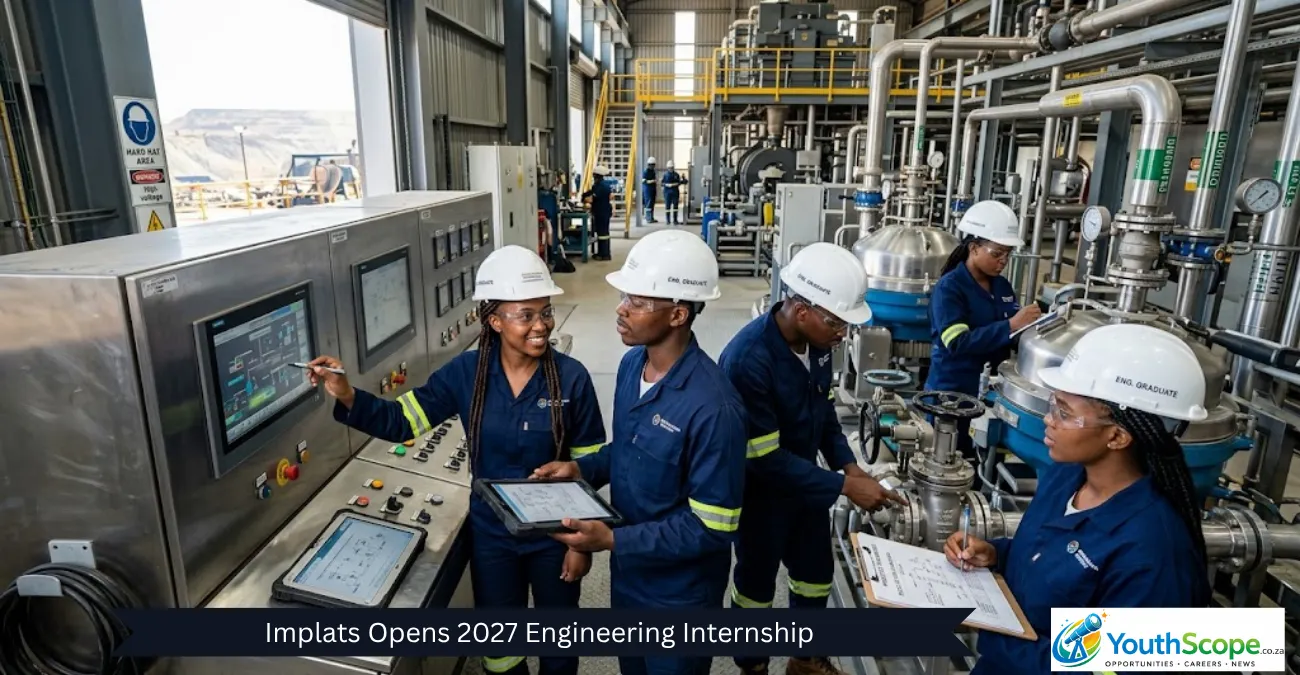
Implats Opens 2027 Engineering Internship Applications for South African Graduates

South African engineering graduates looking for real workplace experience now have a major opportunity to launch their careers in one of the country’s most important industrial sectors.

Impala Platinum Refineries Limited (Implats) has officially opened applications for its 2027 Graduate Internship Programme, giving unemployed graduates the chance to gain hands-on exposure inside large-scale mining and refinery operations.

For many young graduates, getting a qualification is only the first step. The real challenge is gaining industry experience that employers are looking for. This 24-month internship programme could help bridge that gap by placing graduates inside active operational environments where learning happens in real time.

With applications closing on 29 May 2026, eligible candidates are encouraged to apply early and prepare strong professional applications.

What You Need to Know

OpportunityImplats Graduate Internship Programme 2027
Programme TypeGraduate Internship
Duration24 Months
Start DateJanuary 2027
LocationSouth Africa
Closing Date29 May 2026
Fields AvailableChemical Engineering, Metallurgy, Mechanical Engineering
Qualification LevelNQF Level 7
Target GroupUnemployed South African graduates
Reference NumbersRef Nr 1912 and Ref Nr 1914

Why This Internship Matters for Young South Africans

Finding internships in South Africa can be difficult, especially for graduates trying to enter technical industries like mining, refining and engineering.

Many graduates spend months applying for jobs without success because they lack workplace exposure. Programmes like this give young professionals the chance to develop practical skills while working alongside experienced engineering teams.

Instead of sitting at home waiting for experience, successful candidates will be placed in structured operational environments where they can learn production systems, technical reporting, engineering support processes and industrial safety practices.

For graduates serious about building long-term engineering careers, this type of exposure can become a strong foundation for future opportunities.

Inside the Implats Graduate Internship Programme

The Implats Graduate Internship Programme 2027 is designed to develop engineering graduates through structured workplace learning and technical exposure.

Graduates will spend two years gaining experience in real production and engineering environments connected to refinery and industrial operations.

The programme focuses on helping graduates transition from academic learning into practical industry experience.

Participants may work with operational teams, support engineering projects, assist with technical documentation and learn how industrial systems function in high-performance environments.

This opportunity is especially valuable for graduates interested in mining, metallurgy, process engineering, production systems and industrial maintenance.

Who Can Apply?

This internship programme is aimed at unemployed South African graduates who are ready to begin their professional engineering journey.

Applicants must:

  • Be currently unemployed
  • Hold a completed NQF Level 7 qualification
  • Have not participated in another graduate programme before
  • Understand the technical principles linked to their qualification field
  • Be medically fit for operational environments

Implats is also looking for graduates who can work well under pressure, take accountability and adapt to demanding industrial workplaces.

Minimum Requirements for Each Engineering Stream

Chemical Engineering / Metallurgy Internship

Reference Number: Ref Nr 1912

Applicants must have:

  • An NQF Level 7 qualification in Chemical Engineering or Metallurgy
  • Understanding of chemical or metallurgical principles
  • Unemployed status
  • No previous graduate programme experience
  • Medical fitness for Concentrator Operations, Smelting Operations, PMR and BMR environments

Graduates in this stream may gain exposure to:

  • Refinery operations
  • Metallurgical systems
  • Mineral processing
  • Smelting operations
  • Industrial process optimisation
  • Production engineering environments

Mechanical Engineering Internship

Reference Number: Ref Nr 1914

Applicants must have:

  • An NQF Level 7 qualification in Mechanical Engineering
  • Strong understanding of engineering principles
  • Unemployed status
  • No previous graduate programme participation
  • Medical fitness for industrial operations

Graduates may gain exposure to:

  • Plant engineering
  • Industrial machinery
  • Maintenance systems
  • Mechanical support services
  • Production equipment
  • Operational engineering systems

What Graduates Will Learn During the Programme

This is not just a classroom-based internship.

Graduates are expected to participate directly in operational learning activities and technical support functions.

During the 24-month programme, interns may:

  • Assist engineering and production teams
  • Support maintenance planning
  • Attend technical training sessions
  • Participate in plant inspections
  • Compile engineering reports
  • Monitor production systems
  • Help with troubleshooting equipment
  • Contribute to process improvement initiatives
  • Learn workplace safety procedures
  • Gain exposure to industrial problem-solving

For many graduates, this is where engineering theory finally becomes real-world confidence.

Benefits of Joining the Implats Internship Programme

One of the biggest advantages of graduate programmes and internships is the opportunity to gain practical experience that improves employability.

Benefits may include:

  • Real industry exposure
  • Workplace mentorship
  • Improved technical skills
  • Better understanding of mining and refinery operations
  • Professional networking opportunities
  • Exposure to industrial safety culture
  • Stronger CV and future job prospects
  • Hands-on engineering experience
  • Career development within the mining and engineering sector

Graduates who complete structured internship programmes often become stronger candidates for future engineering jobs in South Africa.

Important Documents You Should Prepare

Before applying, candidates should prepare clear and professional documents.

Required documents may include:

  • Updated CV
  • Certified copy of South African ID
  • Qualification certificate
  • Academic transcript or statement of results
  • Letter confirming completion of studies where available

Make sure all certified documents are readable and recently certified.

A poorly prepared application can reduce your chances even if you meet the requirements.

How to Make Your Application Stand Out

Many graduates submit generic CVs that fail to highlight their technical strengths.

To improve your chances:

  • Mention engineering software exposure
  • Include final-year projects
  • Highlight laboratory or workshop experience
  • Add vacation work or practical training
  • Show safety awareness
  • Mention leadership activities
  • Include technical reports or research projects
  • Use professional formatting

Mechanical Engineering graduates should highlight:

  • Machinery exposure
  • Workshop training
  • Maintenance knowledge
  • Plant-related experience

Chemical Engineering and Metallurgy graduates should highlight:

  • Process engineering projects
  • Laboratory work
  • Production systems
  • Refinery exposure
  • Mineral processing knowledge

How to Apply for the Implats Internship Programme

Applications must be submitted through the official Implats careers portal.

Applicants should use the correct reference number when applying:

  • Chemical Engineering / Metallurgy: Ref Nr 1912
  • Mechanical Engineering: Ref Nr 1914

Candidates are encouraged to apply as early as possible instead of waiting for the final week before closing.

Application Closing Date

The closing date for the Implats Graduate Internship Programme 2027 is:

29 May 2026

Late applications may not be considered.

Expert Career Tip for Engineering Graduates

One of the biggest mistakes graduates make is submitting a CV that only lists qualifications without showing practical ability.

Recruiters want evidence that you can apply technical knowledge in real environments.

To stand out professionally:

  • Keep your CV clean and easy to read
  • Focus on technical achievements
  • Include measurable project outcomes
  • Avoid spelling mistakes
  • Use a professional email address
  • Tailor your application to the engineering field
  • Show willingness to learn and adapt

Graduates who present themselves professionally often gain an advantage during internship shortlisting.

Explore More Opportunities:

Final Thoughts

The Implats Graduate Internship Programme 2027 could become a career-changing opportunity for unemployed engineering graduates in South Africa.

With structured workplace learning, exposure to real industrial systems and practical engineering experience, the programme offers more than just temporary training — it offers a pathway into the professional engineering world.

For graduates in Chemical Engineering, Metallurgy and Mechanical Engineering, this is an opportunity to gain the kind of experience many employers expect from entry-level candidates.

If you meet the requirements, start preparing your documents now and submit your application before the closing date.

Lancet Opens 2026 Internship Opportunity for South African Youth With Grade 12 or NQF Level 4

For many young South Africans, finding that first real workplace opportunity can feel impossible — especially without experience. That’s why the new Lancet Pre-Analytical Internship Programme 2026 could become an important stepping stone for school leavers, entry-level job seekers and aspiring healthcare professionals.

This opportunity gives candidates practical exposure inside a professional pathology laboratory environment, even if they only have Grade 12 or an NQF Level 4 qualification. For unemployed youth looking to build workplace experience in healthcare support, laboratory administration or science-related careers, this internship could open valuable doors.

What You Need to Know

  • Company: Lancet Laboratories
  • Programme: Pre-Analytical Internship Programme 2026
  • Location: Richmond
  • Contract Type: Fixed-term internship
  • Reference Number: 1167084
  • Minimum Qualification: Grade 12 or NQF Level 4
  • Experience Required: 0–1 years
  • Closing Date: 12 May 2026
  • Start Date: 9 April 2026
  • Application Method: Online application through the official careers platform

Why This Internship Could Be a Great First Career Move

Breaking into the healthcare sector without experience is often one of the biggest challenges for young job seekers in South Africa.

Lancet’s 2026 internship programme creates an entry point into the medical laboratory environment by giving interns hands-on exposure to the early stages of pathology testing and specimen handling.

Instead of sitting at home waiting for experience, selected candidates will gain practical workplace skills inside a structured healthcare setting where accuracy, teamwork and professionalism matter every day.

This type of workplace exposure can strengthen a CV and improve future applications for healthcare jobs, learnerships, laboratory assistant positions and graduate opportunities.

What the Lancet Pre-Analytical Internship Involves

The internship focuses on the pre-analytical side of pathology services.

This is the stage where patient samples are received, sorted, tracked and prepared before deeper laboratory testing begins.

Interns will support the laboratory team with important operational duties such as:

  • Sorting and distributing pathology samples
  • Registering and logging specimens
  • Capturing and verifying information on laboratory systems
  • Preparing and scanning patient documents
  • Supporting specimen dispatch processes
  • Monitoring courier tracking activities
  • Maintaining organised and clean workspaces
  • Assisting with administrative support duties

Because medical laboratories rely heavily on accuracy, interns will also learn how to follow strict procedures and maintain confidentiality in a professional healthcare environment.

Who Should Apply for This 2026 Internship?

This opportunity is ideal for:

  • Matriculants looking for workplace experience
  • Young South Africans interested in healthcare careers
  • Entry-level candidates with little or no experience
  • Applicants interested in pathology support or laboratory administration
  • Youth seeking internships in South Africa for 2026
  • Candidates wanting exposure in medical environments

Applicants with a science background may have an advantage, but the internship is still accessible to candidates starting their career journey.

Minimum Requirements Applicants Must Meet

To qualify for consideration, candidates should have:

  • Grade 12 or a relevant NQF Level 4 qualification
  • Basic computer literacy
  • Good organisational skills
  • Strong attention to detail
  • Professional communication skills
  • Ability to work under pressure
  • Understanding of confidentiality and ethical conduct

A BSc qualification may strengthen an application, but it is not compulsory.

The programme also accepts applicants with only 0–1 years of experience, making it one of the more accessible healthcare internships currently available in South Africa.

Important Skills That Could Help You Stand Out

Lancet is looking for candidates who can work carefully and responsibly in a healthcare environment.

Some of the most valuable qualities include:

  • Accuracy and attention to detail
  • Reliability and punctuality
  • Ability to work in a team
  • Calmness under pressure
  • Administrative ability
  • Professional behaviour
  • Respect for confidential patient information

Healthcare environments move quickly, so applicants who can stay focused and organised may improve their chances of selection.

Why Practical Healthcare Experience Matters

One of the biggest struggles facing unemployed youth is the “experience needed” barrier.

Internships like this help bridge that gap by allowing candidates to gain real-world exposure while learning professional workplace standards.

Practical laboratory support experience can help candidates prepare for future:

  • Healthcare internships
  • Medical administration roles
  • Laboratory assistant jobs
  • Pathology support careers
  • Science-related learnerships
  • Graduate programmes
  • Hospital administration opportunities

It also helps young professionals build confidence, discipline and workplace communication skills.

Documents You Should Prepare Before Applying

Before starting your online application, make sure you have:

  • Updated CV
  • Certified copy of your ID
  • Certified matric certificate or NQF Level 4 qualification
  • Academic records (if applicable)
  • Supporting qualifications or certificates
  • Proof of previous experience or volunteering (if available)

Double-check that your contact details are correct before submitting your application.

How to Apply for the Lancet Internship Programme 2026

Applications must be submitted online through the official careers portal.

Applicants should carefully complete all sections of the application and upload the required documents before the deadline.

Take time to review your CV and ensure your skills, education and any healthcare exposure are clearly listed.

Candidates should avoid rushing their applications, as incomplete submissions may affect consideration.

Application Closing Date

The closing date for the Lancet Pre-Analytical Internship Programme 2026 is:

12 May 2026

Late applications may not be considered, so interested candidates are encouraged to apply as soon as possible.

Expert Career Tip: How to Improve Your Chances

Many applicants make the mistake of submitting generic CVs that do not highlight relevant strengths.

For healthcare internships, employers often look beyond qualifications alone.

Here are simple ways to improve your application:

  • Keep your CV clean and easy to read
  • Clearly show your Grade 12 subjects and achievements
  • Mention computer literacy and admin skills
  • Include volunteering, school leadership or community work
  • Use a professional email address
  • Check spelling and grammar carefully
  • Be honest about your experience level

Candidates who show professionalism, reliability and willingness to learn often stand out — even without extensive experience.

Explore More Opportunities:

Final Thoughts

The Lancet Pre-Analytical Internship Programme 2026 offers more than just temporary work exposure.

For many young South Africans, it could become the first step toward building a long-term healthcare or laboratory career.

With Grade 12 accepted and minimal experience required, this opportunity gives motivated applicants a realistic chance to enter a professional medical environment and gain valuable practical skills.

If you are serious about building experience, improving your CV and entering the healthcare sector, this internship is worth considering before applications close.

FNB Opens 2026 Graduate Development Programme for South African Graduates Ready to Shape the Future of Banking

South African graduates searching for meaningful career opportunities in banking, technology, analytics and innovation now have a chance to join one of the country’s leading financial institutions.

First National Bank (FNB) is inviting ambitious and talented graduates to apply for its 2026 Graduate Development Programme — an opportunity designed to help young professionals gain practical experience, industry exposure and long-term career growth within the banking sector.

For graduates struggling to gain workplace experience after university, this programme could become a powerful stepping stone into South Africa’s competitive corporate world.

What You Need to Know About the FNB Graduate Programme

Quick Summary

  • Company: First National Bank (FNB)
  • Programme: Graduate Development Programme 2026
  • Location: South Africa
  • Opportunity Type: Graduate Programme
  • Target Group: Final-year students and graduates
  • Fields Included: Banking, technology, analytics, engineering and finance
  • Application Closing Date: Not specified
  • Application Advice: Apply as early as possible
  • Work Structure: Full-time employment with structured development

Why This Graduate Opportunity Matters

One of the biggest challenges facing South African graduates today is the lack of work experience.

Many young professionals complete university qualifications only to face rejection because employers want practical skills and industry exposure.

The FNB Graduate Development Programme helps bridge that gap.

Instead of simply offering temporary training, the programme places graduates inside real business units where they can contribute to meaningful projects while developing professional skills.

For graduates interested in innovation, problem-solving, technology and customer experience, this programme offers far more than a standard entry-level job.

About the FNB Graduate Development Programme

FNB is searching for graduates who are curious, innovative and passionate about improving the future of banking in South Africa.

Participants will join different business divisions across retail and commercial banking environments and gain exposure to real operational and strategic projects.

Graduates will work full-time while participating in:

  • Structured learning sessions
  • Monthly development training
  • Action learning projects
  • Workplace mentorship
  • Professional growth initiatives

This combination of practical work and continuous development helps graduates build confidence, leadership ability and industry knowledge.

Career Areas Included in the Programme

Successful applicants may gain exposure to several exciting areas within banking and financial services.

Graduate Exposure Areas May Include

  • Credit analytics
  • Product development
  • Fraud and risk analysis
  • Financial management
  • Technology and systems development
  • Customer experience and usability
  • Brand management
  • Process improvement
  • Digital innovation

This broad exposure helps graduates discover where their strengths and interests fit within the financial services industry.

Who Can Apply for the FNB Graduate Programme?

FNB is mainly targeting final-year university students and graduates in high-demand fields linked to innovation, data, finance and technology.

Eligible Fields May Include

  • Actuarial Science
  • Mathematics
  • Statistics
  • Engineering
  • Physics
  • Information Systems
  • Computer Science
  • Chemistry
  • Data Science
  • UX and Customer Experience
  • Related qualifications

Graduates with strong analytical thinking and problem-solving ability are likely to stand out during the recruitment process.

FNB Engineering & Technology Graduate Programme

In addition to the main graduate programme, FNB is also recruiting graduates for its specialised Engineering and Technology stream.

This pathway focuses more heavily on technical and digital innovation within banking systems and technology environments.

Fields Often Considered

  • Technology
  • Engineering
  • Technical qualifications
  • Systems and software-related fields

As digital banking continues to grow rapidly, graduates with technical skills remain in high demand.

What FNB Looks for in Graduates

Strong academic performance matters, but employers also look closely at personality, attitude and potential.

FNB is searching for candidates who demonstrate:

  • Innovation and creativity
  • Problem-solving skills
  • Self-motivation
  • Adaptability
  • Curiosity and willingness to learn
  • Customer-focused thinking
  • Passion for technology and banking innovation

Graduates who can combine technical knowledge with communication and teamwork skills often perform well in corporate graduate programmes.

Benefits of Joining the FNB Graduate Programme

This programme offers more than just a job title.

Graduates receive structured development designed to help them grow professionally inside a major financial institution.

Key Benefits Include

  • Practical workplace experience
  • Exposure to real business operations
  • Structured graduate training
  • Mentorship and support
  • Career development opportunities
  • Participation in impactful business projects
  • Professional networking opportunities

For many graduates, programmes like this become the beginning of long-term corporate careers.

Documents You Should Prepare Before Applying

Before applying, make sure your documents are professional and updated.

Required Documents

  • Updated CV
  • Latest academic transcript

Some applicants may also choose to include:

  • Motivational letters
  • Certifications
  • LinkedIn profile links
  • Awards or leadership achievements

Your application should clearly reflect your skills, achievements and career interests.

How to Apply for the FNB Graduate Development Programme 2026

Interested graduates should apply online through the official FNB graduate application portals.

Before submitting your application:

  • Double-check all information
  • Ensure your academic transcript is updated
  • Use a professional email address
  • Keep your phone number active
  • Apply early

NB. Use the links given below to Apply

FNB Graduate Programme

Apply Online for the FNB Graduate Programme

FNB Engineering & Technology Graduate Programme

Apply Online for the FNB Engineering & Technology Graduate Programme 2026

Because no official closing date has been provided, early applications may improve your chances.

Application Closing Date

Closing Date: Not Specified

Applicants are strongly encouraged to apply as soon as possible.

Large graduate programmes often receive thousands of applications, and waiting too long can be risky.

Expert Career Tip: How Graduates Can Stand Out

Many graduates apply using generic CVs that fail to show personality, achievements or problem-solving ability.

Recruiters often look for more than marks alone.

Common Mistakes Applicants Make

  • Using poorly formatted CVs
  • Applying with incomplete documents
  • Ignoring spelling mistakes
  • Using unprofessional email addresses
  • Failing to explain achievements clearly
  • Submitting applications too late

Smart Ways to Improve Your Chances

  • Tailor your CV toward banking and innovation
  • Highlight leadership roles and projects
  • Mention technical skills clearly
  • Include teamwork and problem-solving examples
  • Keep your LinkedIn profile updated
  • Research FNB before interviews

Professional presentation can make a major difference during competitive graduate recruitment.

Explore More Opportunities:

Why Banking and Technology Careers Are Growing

South Africa’s banking industry continues to evolve rapidly through digital transformation, data analytics and customer-focused innovation.

Graduates with skills in technology, engineering, finance and analytics are increasingly valuable in modern banking environments.

This makes graduate programmes like FNB’s especially important for young professionals looking to build future-focused careers.

Final Thoughts

The FNB Graduate Development Programme 2026 offers South African graduates a valuable opportunity to enter the banking and financial services industry while gaining practical experience and professional development.

Whether your passion lies in analytics, engineering, technology, customer experience or innovation, this programme can help you develop the skills needed for long-term career success.

For graduates ready to learn, adapt and grow inside a leading corporate environment, this opportunity could become the beginning of an exciting professional journey.

SASSETA Could Change Your Future: Exciting Learnerships, Internships and Bursaries South African Youth Should Watch in 2026

For thousands of unemployed young South Africans, finding a real opportunity can feel impossible. Many graduates sit at home without experience, while matriculants struggle to enter the job market for the first time.

That is why SASSETA-funded programmes continue to attract attention across the country.

These opportunities are more than just training programmes. They give young people practical workplace experience, nationally recognised qualifications, monthly stipends, and a possible pathway into careers within policing, law, security, justice and public safety.

If you are searching for 2026 internships, learnerships, bursaries or entry-level opportunities in South Africa, this could be one of the smartest career paths to explore.

What You Need to Know About SASSETA Opportunities

Quick Summary

  • Programme Type: Learnerships, internships, bursaries and skills programmes
  • Sector: Safety, security, policing, justice and legal services
  • Who Can Apply: South African youth, graduates, matriculants and unemployed individuals
  • Age Group: Mainly youth aged 18–35
  • Funding: SASSETA-funded training and workplace programmes
  • Stipend: Usually between R3,500 and R6,000 depending on the programme
  • Qualification Levels: NQF Level 3 to NQF Level 5
  • Application Method: Online, email or in-person applications
  • Fields Covered: Security, policing, legal services, corrections and law enforcement

Why SASSETA Opportunities Matter More Than Ever

South Africa continues to face serious youth unemployment challenges. Many young people have qualifications but no experience, while others have the passion to work in safety and justice but do not know where to start.

The Safety and Security Sector Education and Training Authority (SASSETA) helps bridge that gap.

Its mission is to develop skilled professionals who can contribute to safer communities, stronger justice systems and better public protection services.

For young people, this means access to funded training opportunities that can lead to real employment and long-term career growth.

Instead of sitting at home waiting for a job, many learners gain workplace exposure while studying toward recognised qualifications.

What Exactly Is SASSETA?

SASSETA is one of South Africa’s official Sector Education and Training Authorities (SETAs).

The organisation focuses on skills development in sectors linked to:

  • Law enforcement
  • Private security
  • Policing
  • Corrections
  • Legal services
  • Justice administration
  • Intelligence and community safety

Through partnerships with employers, training providers and government institutions, SASSETA funds programmes designed to prepare young South Africans for careers in these important industries.

Who Can Apply for SASSETA-Funded Programmes?

Many opportunities are designed specifically for unemployed youth and entry-level job seekers.

You may qualify if you are:

  • A South African citizen
  • Between 18 and 35 years old
  • Currently unemployed
  • Not studying full-time
  • Interested in law, policing, justice or security careers
  • A matriculant or graduate looking for workplace experience

People living with disabilities are also strongly encouraged to apply for available programmes.

Even if you do not have work experience yet, some learnerships are designed to help beginners enter the workforce for the first time.

Popular SASSETA Learnerships and Career Fields

One of the biggest advantages of SASSETA programmes is the variety of career paths available.

Depending on your interests and qualifications, you may find opportunities in several specialised fields.

Learnerships Often Include:

  • General Security Practices (NQF Level 3)
  • Law Enforcement Officer Training (NQF Level 4)
  • Paralegal Practice (NQF Level 5)
  • Legal Secretary Training (NQF Level 5)
  • Close Protection Officer Training (NQF Level 5)

These programmes combine classroom learning with practical workplace training.

That means learners graduate with both theoretical knowledge and hands-on experience.

Short Skills Programmes That Can Boost Your CV

Not every opportunity lasts a full year.

SASSETA also supports short skills programmes that help young people develop targeted workplace skills.

These may include:

  • Crime prevention techniques
  • Conflict management
  • Court interpreting
  • Administrative support
  • Community safety practices

Short courses can strengthen your CV and improve your chances of securing permanent employment later.

Internship Opportunities for Graduates

Graduates often struggle because employers demand experience before offering jobs.

SASSETA-funded internships help solve this problem by placing graduates in real working environments where they can learn practical industry skills.

Internship opportunities may be available through:

  • Government departments
  • Municipalities
  • Legal organisations
  • Security companies
  • NGOs
  • Public safety institutions

This workplace exposure can make a major difference when applying for future jobs.

Bursaries That Help Students Continue Their Studies

For students who cannot afford tertiary education, SASSETA bursaries may provide valuable support.

Funding may cover:

  • Tuition fees
  • Accommodation
  • Textbooks
  • Meals and learning materials

Fields linked to law, criminal justice, policing and security studies are usually prioritised.

For many students, bursary funding becomes the key that allows them to continue studying without financial stress.

Documents You Should Prepare Before Applying

Many applicants lose opportunities because they wait until the last minute to collect important documents.

Prepare these early to avoid unnecessary delays.

Commonly Required Documents

  • Certified copy of your ID
  • Certified Matric certificate
  • Updated CV
  • Proof of residence
  • Academic records or qualifications
  • Affidavit confirming unemployment
  • Police clearance certificate (for some security programmes)

Ensure your documents are clear, updated and professionally organised.

How to Apply for SASSETA Opportunities

One important thing to understand is that SASSETA does not always advertise opportunities directly.

Applications are often managed through employers, training providers or partner organisations.

Where Opportunities Are Usually Advertised

  • Accredited training providers
  • SAPS and law enforcement institutions
  • Municipalities
  • Government departments
  • Youth employment platforms
  • NGO programmes

Application Methods

Depending on the programme, applications may be submitted:

  • Online
  • Via email
  • In person

Always follow the instructions carefully.

Missing documents or incorrect information can lead to automatic disqualification.

Trusted Training Providers to Watch

Several accredited providers regularly offer SASSETA-funded programmes.

Some well-known names include:

  • Security Academy
  • Justice College
  • Khulani HR Consulting
  • Lawhill College
  • SAPS Academy

These institutions may advertise internships, learnerships and short skills programmes throughout the year.

Checking their websites and social media pages regularly can help you stay ahead of new opportunities.

What Happens After You’re Accepted?

Being selected is only the beginning.

Most learnerships include:

  • Classroom-based learning
  • Workplace practical training
  • Assessments and assignments
  • Workplace logbooks

Learners are expected to remain disciplined, punctual and committed throughout the programme.

Completing the full programme successfully can improve your employability significantly.

Monthly Stipends and Financial Support

One reason many young people apply for SASSETA programmes is the financial support provided during training.

Typical monthly stipends may include:

  • Learnerships: Around R3,500 – R4,500
  • Internships: Around R4,500 – R6,000
  • Skills programmes: Varies by provider and programme type

Bursary recipients may receive additional educational support.

Importantly, these stipends do not need to be repaid.

They are meant to help learners participate fully in their training.

Where to Find the Latest SASSETA Opportunities in South Africa

Opportunities can open unexpectedly during the year.

To stay informed, regularly check:

  • The official SASSETA website
  • Social media pages
  • Accredited training provider websites
  • SA youth employment portals
  • Municipal career pages
  • Government opportunity platforms

Many applications close quickly due to high demand.

Early preparation can give you a major advantage.

Explore More Opportunities:

Expert Career Tip: How to Stand Out From Thousands of Applicants

Many young people apply for learnerships and internships using rushed applications filled with mistakes.

This immediately reduces their chances.

Common Mistakes Applicants Make

  • Submitting incomplete documents
  • Using outdated CVs
  • Ignoring application instructions
  • Applying after the closing date
  • Using unprofessional email addresses

Smart Ways to Improve Your Chances

  • Keep your CV short, clean and updated
  • Use a professional email address
  • Double-check all certified documents
  • Apply early instead of waiting for the deadline
  • Research the organisation before applying

Professionalism matters — even for entry-level opportunities.

Small details can separate successful applicants from rejected ones.

A Powerful Opportunity for South African Youth

Careers in safety, law enforcement and justice are important to South Africa’s future.

For unemployed youth, SASSETA-funded opportunities can provide more than just temporary training. They can create real pathways into stable careers with long-term growth potential.

Whether you dream of working in law enforcement, legal administration, community safety or security services, these programmes could help you take your first step toward that future.

The competition may be high, but preparation, persistence and professionalism can make all the difference.

Your career journey could begin with one application

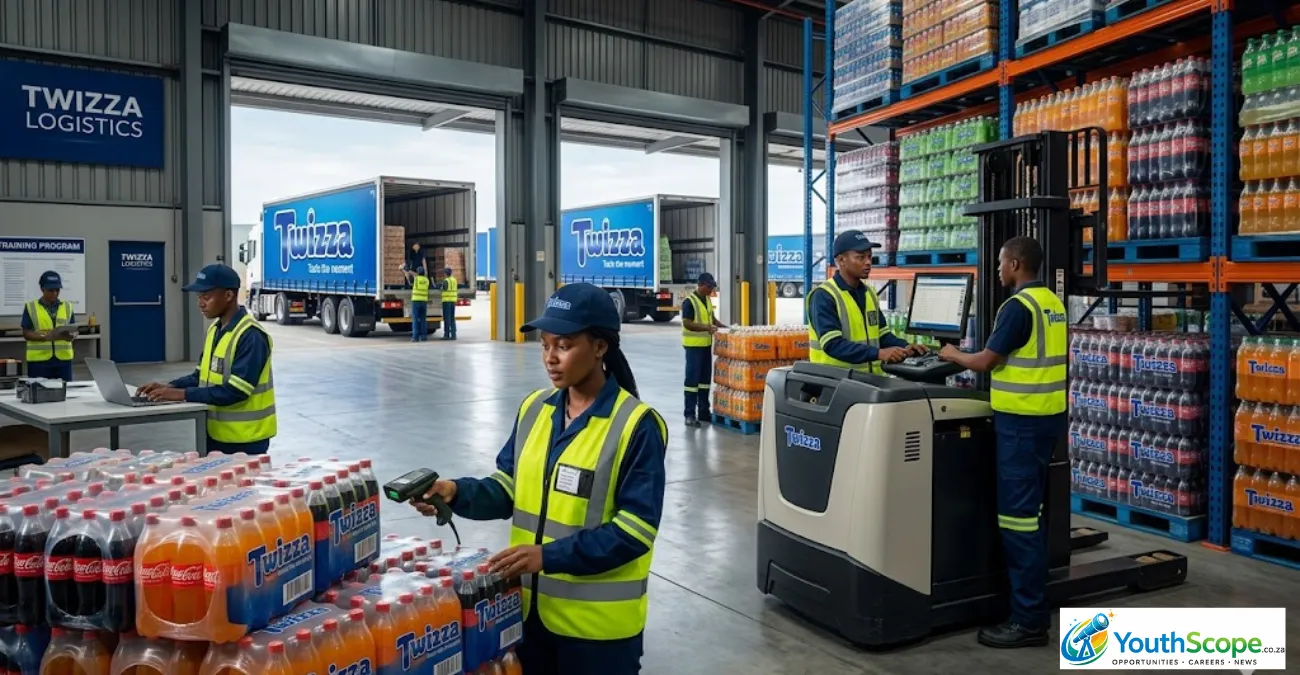
Twizza Logistics & Supply Chain Opportunities 2026 (WIL & Graduates) – Bellville FMCG Career Path

Application Closing Date: 29 May 2026
Location: Bellville, Western Cape, South Africa
Programme Duration: Work Integrated Learning (WIL) / Graduate Experience (duration depends on placement)
Monthly Stipend/Salary: Market Related
Organisation: Twizza
Qualification Requirements: Logistics or Supply Chain Management Diploma, Advanced Diploma, or Degree (WIL students must require workplace exposure)

South African students and graduates continue to face one major challenge when entering the job market: employers want experience, but experience is hard to get without a first opportunity.

The Twizza Logistics & Supply Chain Opportunities 2026 programme is designed to address exactly this gap. It gives students requiring Work Integrated Learning (WIL) and graduates needing workplace exposure a chance to build real experience in a fast-paced FMCG environment.

This opportunity is based in Bellville, Western Cape, and forms part of Twizza’s long-term talent development pipeline in logistics and supply chain management.

About the Twizza Logistics & Supply Chain Opportunity

This programme is offered by Twizza within the fast-moving consumer goods (FMCG) industry, which includes the production, distribution, and supply of everyday consumer products.

It is designed for:

  • Students who still need workplace exposure to complete their qualification (WIL)
  • Graduates who want to gain real industry experience

Participants will work in a real operational environment where logistics and supply chain processes are actively managed.

Instead of only classroom learning, candidates are exposed to actual business operations such as inventory movement, distribution systems, and procurement processes.

Why Is This Opportunity Important?

The logistics and supply chain sector is one of the most important parts of the South African economy. Every product that reaches a shop shelf depends on supply chain professionals.

However, many young people struggle to enter this field because employers require experience.

This opportunity helps bridge that gap by offering:

  • Practical workplace exposure in FMCG operations
  • Industry-relevant training and mentorship
  • Exposure to real supply chain systems
  • Improved employability for graduates and students
  • A pathway into long-term careers in logistics

Experience gained in FMCG environments is highly valued across industries such as retail, manufacturing, warehousing, and distribution.

Who Should Apply?

This opportunity is suitable for:

  • TVET College students needing WIL placement
  • University of Technology students
  • University graduates
  • Diploma or Advanced Diploma holders
  • Degree holders in logistics or supply chain fields
  • Youth interested in FMCG and logistics careers

Applicants should be motivated, willing to learn, and interested in operational business environments.

What Qualifications Are Needed?

Applicants must have or be studying toward qualifications such as:

  • Diploma in Logistics and Supply Chain Management
  • Advanced Diploma in Logistics and Supply Chain Management
  • Bachelor’s Degree in Logistics and Supply Chain Management
  • Related qualifications in supply chain or business operations

WIL applicants must be students who still require workplace training to complete their qualification.

What Will Participants Do?

Depending on placement, participants may gain exposure to:

Procurement and Supplier Management

  • Supplier communication
  • Order tracking
  • Purchase support
  • Procurement administration

Inventory Management

  • Stock control systems
  • Warehouse operations
  • Inventory reporting
  • Product tracking

Distribution and Transportation

  • Delivery coordination
  • Route planning
  • Transport scheduling
  • Fleet support operations

Supply Chain Coordination

  • Cross-department communication
  • Operational planning
  • Workflow tracking
  • Process monitoring

This exposure provides a full understanding of how FMCG supply chains operate.

Skills You Will Gain

This programme helps build both technical and workplace skills.

Technical Skills

  • Supply chain systems understanding
  • Inventory and stock management
  • Procurement processes
  • Data tracking and reporting

Workplace Skills

  • Communication and teamwork
  • Problem-solving ability
  • Time management
  • Attention to detail
  • Professional workplace behaviour

One of the most important skills developed is data handling using Microsoft Excel.

Why Excel Skills Matter in This Field

Excel is widely used in logistics and supply chain roles for:

  • Stock tracking
  • Inventory reports
  • Delivery schedules
  • Procurement monitoring
  • Data analysis

Useful Excel skills include:

  • Basic formulas
  • VLOOKUP
  • Pivot tables
  • Data filtering
  • Spreadsheet organisation

Candidates with strong Excel skills often have a competitive advantage.

Important Information About the Programme

This is a talent pipeline opportunity.

This means:

  • It is not a guaranteed job placement
  • Candidates may be contacted later when opportunities open
  • Twizza builds a database of potential future employees
  • Additional assessments may be required

Applicants should understand that selection may take place over time, not immediately after applying.

Minimum Requirements

Applicants must:

  • Not have participated in previous internships or WIL programmes
  • Be computer literate
  • Have Microsoft Office (especially Excel) knowledge
  • Show analytical and problem-solving ability
  • Have strong communication skills
  • Be detail-oriented
  • Be willing to learn and work in teams

Required Documents

Applicants should prepare:

  • Updated CV
  • Certified qualification copies
  • Certified ID copy
  • Academic transcripts (if available)
  • Proof of residence
  • Professional contact details

Documents should be saved in PDF format where possible.

How to Apply

Applications must be submitted online through the official Twizza recruitment platform.

Apply here:
Twizza Logistics and Supply Chain Opportunities 2026 (WIL & Graduates)

Closing Date: 29 May 2026

Applicants should ensure all documents are uploaded correctly before submission.

Practical Advice for Applicants

To improve your chances:

  • Keep your CV professional and updated
  • Highlight logistics-related subjects and skills
  • Include any computer or Excel experience
  • Use a professional email address
  • Check spelling and formatting carefully
  • Apply early before the deadline
  • Prepare for possible assessments

Simple, clear applications often perform better than rushed ones.

Career Opportunities After the Programme

Experience in FMCG logistics can lead to roles such as:

  • Supply chain assistant
  • Logistics coordinator
  • Inventory controller
  • Procurement assistant
  • Warehouse administrator
  • Distribution planner
  • Operations assistant

These careers exist in retail, manufacturing, transport, and consulting sectors.

Explore More Opportunities

If you are interested in similar programmes, also consider:

Applying to multiple opportunities increases your chances of success.

Final Thoughts

The Twizza Logistics & Supply Chain Opportunities 2026 programme offers a valuable entry point into one of South Africa’s most important industries.

For students and graduates struggling with the experience barrier, this opportunity provides real workplace exposure, industry learning, and a chance to build a strong foundation in FMCG supply chain operations.

If you meet the requirements, prepare your documents early and apply before 29 May 2026.

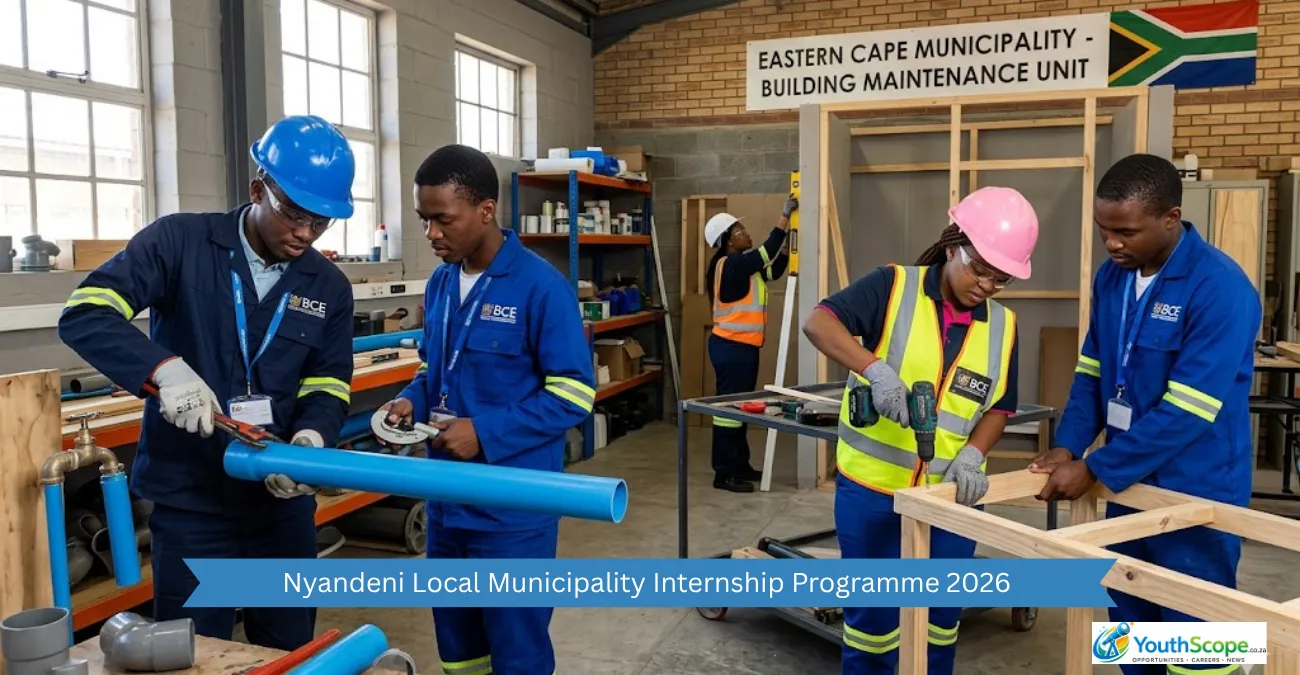
Nyandeni Local Municipality Internship Programme 2026 Opens With R5 000 Monthly Stipend

Unemployed South African graduates looking for technical workplace experience can now apply for the Nyandeni Local Municipality Internship Programme 2026 in the Eastern Cape.

The municipality is offering a 24-month internship opportunity within the Corporate Services Department to help young people gain practical experience in infrastructure support, facilities management, and technical maintenance services.

What You Need

Before applying, make sure you have:

  • South African citizenship
  • Age between 18 and 35 years
  • Relevant qualification in:
    • Plumbing
    • Carpentry
    • Technical services
    • Related fields
  • Be unemployed at the time of application
  • Updated CV
  • Certified copy of South African ID
  • Copies of academic qualifications
  • Completed municipal application form
  • Driver’s licence if available

Internship Overview

Programme Details

  • Programme: Nyandeni Local Municipality Internship Programme 2026
  • Department: Corporate Services
  • Duration: 24 Months
  • Monthly Stipend: R5 000
  • Location: Libode and Ngqeleni, Eastern Cape
  • Closing Date: 11 May 2026 at 15:30

About the Internship Programme

Nyandeni Local Municipality aims to provide unemployed graduates with structured workplace exposure in municipal technical services and maintenance operations.

Interns will gain practical experience in:

  • Building maintenance
  • Infrastructure support
  • Facilities management
  • Fleet management
  • Technical maintenance services

This programme can help young people develop practical skills while gaining experience within local government operations.

Available Internship Opportunities

Facilities and Fleet Management

Field of Exposure

  • Building maintenance and repair

Qualification Required

  • Certificate in Basic Plumbing

Building Maintenance and Repair

Qualification Required

  • Certificate in Carpentry

Key Responsibilities

Successful interns will:

  • Assist with routine maintenance and repairs
  • Support municipal facilities management activities
  • Participate in infrastructure inspections
  • Work alongside experienced technical staff
  • Maintain workplace safety standards
  • Attend workplace training sessions
  • Keep records of completed maintenance activities

Skills and Qualities Needed

The municipality is looking for applicants who demonstrate:

Important Workplace Skills

  • Attention to detail
  • Technical problem-solving skills
  • Reliability and punctuality
  • Ability to work in teams
  • Willingness to learn
  • Good communication skills

Required Application Documents

Applicants must submit:

  • Completed Nyandeni Local Municipality Employment Application Form
  • Detailed CV
  • Copies of qualifications
  • Copy of South African ID
  • Driver’s licence if available

Important

Applications that are incomplete or submitted late may be disqualified.

How to Apply

Application forms are available from:

  • Nyandeni Local Municipality website
  • Municipal offices in Libode and Ngqeleni

Hand Delivery Applications

Submit applications to:

Registry Office

Nyandeni Local Municipality
Libode or Ngqeleni Offices

Postal Applications

The Municipal Manager
Nyandeni Local Municipality
Private Bag X504
Libode
5160

Important Instruction

Clearly mark the envelope:

“APPLICATION FOR INTERNSHIP”

Enquiries

Corporate Services Department

  • Contact Person: Ms P. Makhokha
  • Telephone: 047 555 5028

Important Notes for Applicants

Applicants should note the following:

  • Faxed applications will not be accepted
  • Late applications will not be considered
  • Only shortlisted candidates will be contacted
  • Applicants who do not receive feedback within 90 days should consider their application unsuccessful
  • Persons with disabilities are encouraged to apply

Expert Insight: Why Technical Internship Applications Often Fail

One of the biggest mistakes applicants make is submitting applications without clearly showing their technical qualifications or practical abilities.

Pro Tip

To improve your chances of being shortlisted:

  • Clearly list plumbing, carpentry, or maintenance skills on your CV
  • Include practical training, workshops, or projects completed during studies
  • Ensure your documents are neatly arranged and certified
  • Submit your application before the deadline to avoid last-minute issues
  • Use a professional and easy-to-read CV format

Municipal internship programmes are highly competitive, especially for technical and infrastructure-related fields.

You Can Also Explore Youthscope

If you are interested in similar opportunities, you can also check:

Why This Internship Matters

Technical internships within municipalities can provide valuable workplace experience for young South Africans who want careers in infrastructure maintenance, technical services, construction support, or facilities management.

The practical skills gained through municipal programmes can improve employability and create future opportunities in both the public and private sectors.

Frequently Asked Questions (FAQ)

How much is the monthly stipend?

Successful interns will receive R5 000 per month.

How long is the internship programme?

The programme runs for 24 months.

Who can apply?

South African unemployed graduates between 18 and 35 years old with relevant qualifications.

What qualifications are required?

Applicants need qualifications related to plumbing, carpentry, or technical maintenance.

What is the closing date?

Applications close on 11 May 2026 at 15:30.

Are persons with disabilities encouraged to apply?

Yes. Persons with disabilities are encouraged to apply.

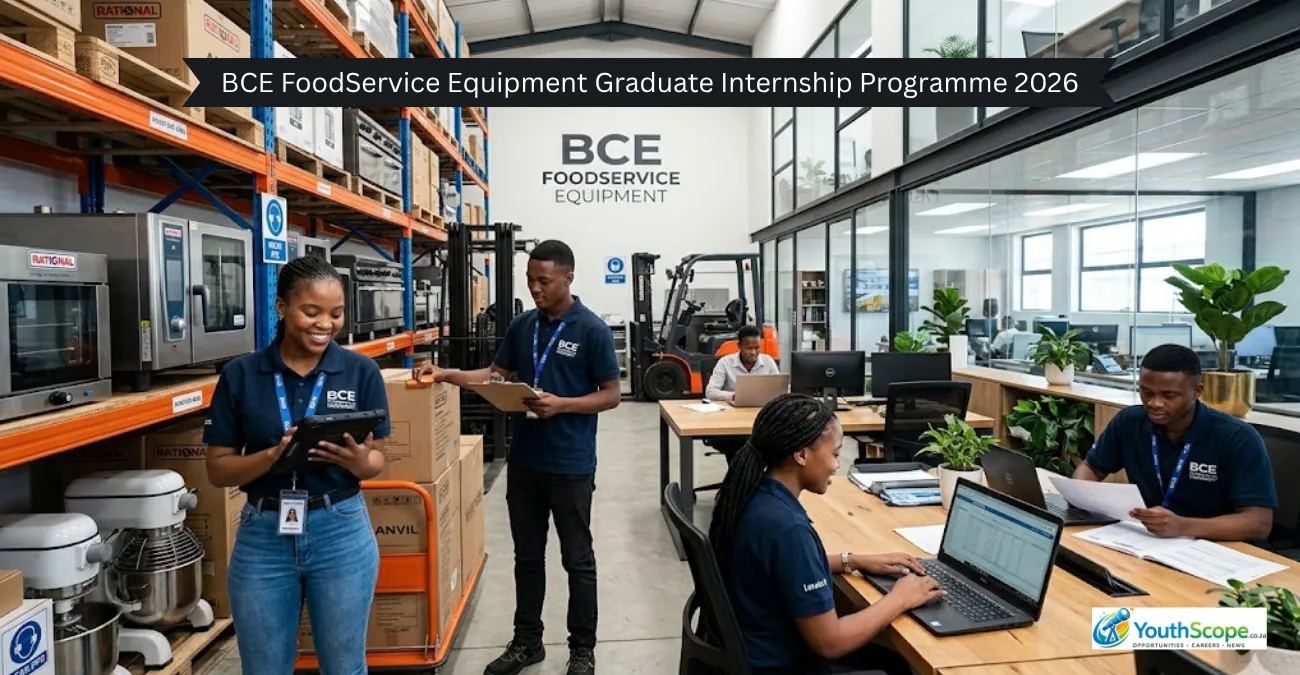
BCE FoodService Equipment Graduate Internship Programme 2026 Open in Johannesburg

South African graduates looking to gain workplace experience can now apply for the BCE FoodService Equipment Graduate Internship Programme 2026 in Roodepoort, Johannesburg.

This internship programme is designed to help unemployed graduates build practical business skills in operations, logistics, sales, and administration within the hospitality and foodservice industry.

What You Need

Before applying, make sure you have:

  • A Bachelor’s Degree or Diploma in:
    • Communications
    • Supply Chain Management
    • Logistics
    • Business Administration
    • Or a related qualification
  • Basic computer skills, including MS Office
  • Good communication and teamwork abilities
  • Willingness to learn and work across departments
  • No previous work experience required

Internship Overview

Programme Details

  • Company: BCE FoodService Equipment
  • Programme Type: Graduate Internship
  • Location: Roodepoort, Johannesburg, Gauteng
  • Industry: Hospitality and Operations
  • Application Closing Date: Not specified

About the BCE Internship Programme

BCE FoodService Equipment is offering graduates an opportunity to gain hands-on workplace exposure across different business functions.

Interns will have the opportunity to work in areas such as:

  • Warehouse operations
  • Logistics
  • Sales support
  • Business administration
  • Inventory management

The programme may also include internal department rotations depending on business needs and individual performance.

Key Responsibilities

Successful interns will assist with:

Operations and Warehouse Support

  • Stock handling and inventory control
  • Order preparation and processing
  • Maintaining accurate operational records
  • Supporting daily warehouse activities

Sales and Administration

Interns may also:

  • Support customer communication
  • Assist the sales team
  • Perform administrative duties
  • Help coordinate business activities
  • Participate in team projects

Skills and Competencies Employers Want

BCE FoodService Equipment is looking for graduates who demonstrate:

Important Workplace Skills

  • Strong work ethic
  • Attention to detail
  • Adaptability and flexibility
  • Organisational skills
  • Teamwork and communication abilities
  • Customer service mindset

Expert Insight: What Many Graduates Get Wrong

One of the biggest mistakes graduates make when applying for internships is using a generic CV that does not match the role they are applying for.

Pro Tip

To improve your chances of being shortlisted:

  • Tailor your CV to highlight logistics, administration, communication, or operations-related skills
  • Include practical assignments, projects, or volunteer work from university or college
  • Keep your CV clear, professional, and easy to read
  • Use a professional email address and updated contact details
  • Apply as early as possible since positions may close once enough applications are received

Many South African employers value attitude, willingness to learn, and professionalism just as much as qualifications.

You Can Also Explore Youthscope

If you are interested in similar opportunities, you can also check:

Why This Internship Matters

Graduate internships help young South Africans gain practical workplace experience that employers often require for permanent jobs. Programmes like this can help graduates develop real-world business skills and improve their employability in competitive industries.

Experience in logistics, operations, and administration can also open future opportunities in supply chain management, warehouse coordination, sales support, and customer service.

How to Apply

Interested applicants can apply online through the official BCE FoodService Equipment application portal.

Apply here:
BCE FoodService Equipment Graduate Internship Application

SWGC WIL Opportunities 2026 Open for N6 Graduates With R3 500 Monthly Stipend

Many South African TVET graduates complete their N6 studies but struggle to secure the workplace experience needed to qualify for a National N Diploma. To help bridge this gap, South West Gauteng TVET College (SWGC), together with MICT SETA, W&R SETA, and FoodBev SETA, has opened applications for the 2026 Work Integrated Learning (WIL) Programme.

The programme offers qualifying N6 graduates an opportunity to gain the required workplace exposure while receiving a monthly stipend of R3 500 for 18 months.

What You Need

Before applying, make sure you have:

  • Completed an N6 qualification in a relevant field
  • Need 18 months workplace experience for a National N Diploma
  • Be currently unemployed
  • Certified copy of your ID
  • Updated CV
  • Proof of residence
  • SARS registration letter
  • Bank confirmation letter
  • N4 to N6 certificates
  • College completion letter confirming WIL requirement
  • Affidavit confirming you are not part of another SETA-funded programme

Quick Programme Overview

Programme Details

  • Programme: Work Integrated Learning (WIL) Opportunities 2026
  • Institution: South West Gauteng TVET College (SWGC)
  • Partners: MICT SETA, W&R SETA, FoodBev SETA
  • Monthly Stipend: R3 500
  • Programme Duration: 18 Months
  • Closing Date: 22 May 2026
  • Location: Florida Campus, Roodepoort

Why Work Integrated Learning Matters

Many students complete their academic studies but cannot receive their National N Diploma without practical workplace experience.

What Is WIL?

Work Integrated Learning (WIL) is structured workplace training linked to your qualification. For NATED programmes, students usually complete:

  • N4
  • N5
  • N6

After completing these levels, graduates still need workplace exposure before qualifying for the National N Diploma.

Without this experience:

  • Graduates cannot obtain the full diploma
  • Job opportunities become limited
  • Employers often prefer experienced candidates

This is why WIL opportunities are highly competitive across South Africa.

Fields Included in the Programme

The programme is available for qualifying N6 graduates in the following fields:

Management Assistant

Students may gain experience in:

  • Office administration
  • Scheduling
  • Record management
  • Communication support

Possible career paths include:

  • Administrative Assistant
  • Receptionist
  • Office Coordinator

Business Management

This field focuses on:

  • Business operations
  • Customer service
  • Project coordination
  • Administration systems

Graduates can work in both public and private sector organisations.

Human Resource Management

Participants may gain exposure to:

  • Recruitment support
  • Employee administration
  • Payroll processes
  • HR compliance

Human Resources remains one of South Africa’s most competitive career fields for TVET graduates.

Financial Management

Practical experience may include:

  • Bookkeeping
  • Financial administration
  • Budget support
  • Procurement processes

Marketing Management

Marketing students may assist with:

  • Marketing campaigns
  • Social media support
  • Brand communication
  • Customer engagement

Digital marketing experience is becoming increasingly valuable in the South African job market.

Monthly Stipend and Programme Duration

Successful candidates will receive:

R3 500 Monthly Stipend

The programme will run for:

18 Months

The stipend is designed to help learners cover:

  • Transport costs
  • Daily workplace expenses
  • Basic living needs

The 18-month period aligns with the workplace experience requirement needed for the National N Diploma.

Applicant Eligibility Requirements

To qualify, applicants must:

  • Have completed an N6 qualification in a relevant field
  • Require workplace experience for the National N Diploma
  • Be unemployed
  • Be available for the full 18-month programme
  • Provide a host employer accommodation letter where required

Required Application Documents

Applicants must submit:

  • Comprehensive CV
  • Certified ID Copy
  • Matric Certificate or NC(V) Level 4 Certificate
  • College completion letter
  • Proof of residence
  • Bank confirmation letter
  • SARS registration letter
  • Affidavit confirming no SETA-funded participation
  • N4 to N6 certificates

Important

All copies must be clearly certified. Incomplete applications may be disqualified.

Application Submission Details

Applications must be hand delivered to:

South West Gauteng TVET College – Florida Campus

40/42 Goldman Street
Florida, Roodepoort

Closing Date: 22 May 2026

Late applications may not be considered.

Important Notes for Applicants

Applicants should note the following:

  • The programme is expected to start on 1 June 2026
  • Incomplete applications will not be considered
  • Only shortlisted candidates will be contacted
  • If you do not receive feedback within 15 days after closing, consider your application unsuccessful

Expert Insight: The Biggest Mistake TVET Graduates Make

One of the most common reasons applications get rejected is missing or poorly certified documents. Many graduates also submit CVs that do not clearly explain their qualifications, computer skills, or practical abilities.

Pro Tip

To improve your chances:

  • Organise your documents neatly in the correct order
  • Use a professional and updated CV
  • Ensure certified copies are clear and recent
  • Double-check your contact details
  • Submit your application early to avoid last-minute problems

TVET WIL opportunities are highly competitive, and professional presentation can make a major difference.

Why This Opportunity Matters

For many young South Africans, workplace experience is the missing link between studying and employment. Programmes like this help graduates gain practical exposure, improve employability, and strengthen their chances of securing permanent work in the future.

Even though the stipend may be limited, the long-term value of practical experience can help open doors to future internships, learnerships, and full-time employment opportunities.

You Can Also Explore Youthscope

If you are interested in similar opportunities, you can also check:

Frequently Asked Questions (FAQ)

Who can apply for this programme?

Students who completed relevant N6 qualifications and still require workplace experience for their National N Diploma.

How much is the stipend?

Successful applicants will receive R3 500 per month.

How long is the programme?

The programme runs for 18 months.

Is this permanent employment?

No. This is a Work Integrated Learning placement for practical experience.

What is the closing date?

Applications close on 22 May 2026.

Can employed people apply?

The programme specifically targets unemployed graduates.

Where must applications be submitted?

Applications must be hand delivered to SWGC Florida Campus in Roodepoort.

RAF Internship Programme 2026 – Application Guide for South African Graduates Stipend: R96,000 per year

What You Need (Quick Checklist)

  • Updated CV (max 2–3 pages)
  • Certified copy of your ID
  • Grade 12 certificate
  • Diploma or Degree qualification
  • Academic transcripts
  • A tailored motivational letter
  • A professional email address
  • Access to the online application portal

Overview of the RAF Internship Programme

The Road Accident Fund (RAF) Internship Programme offers unemployed graduates structured workplace experience to build skills and employability.

Key Details

  • Location: Centurion, Gauteng
  • Duration: 18 months
  • Closing Date: 12 May 2026
  • Stipend: R96,000 per year
  • Application Method: Online only

This programme supports RAF’s mandate to assist road accident victims while developing young professionals.

Available Internship Opportunities

RAF offers three main internship streams. Choose the one that best matches your qualification.

Learning and Development Internship (Ref: 6606)

Focus: Training and skills development

Key Responsibilities:

  • Support skills development programmes
  • Assist with induction planning
  • Prepare research and reports
  • Manage learner administration

Governance, Risk and Compliance Internship (Ref: 6601)

Focus: IT governance and risk management

Key Exposure:

  • Conduct risk assessments
  • Support audit and compliance processes
  • Assist with cybersecurity governance
  • Monitor vendor risk and due diligence

Organisational Transformation Internship (Ref: 6600)

Focus: Project and programme coordination

Key Exposure:

  • Assist with project planning and coordination
  • Support stakeholder engagement
  • Contribute to risk and compliance reporting

Minimum Requirements

To qualify, you must meet all the following:

Basic Requirements

  • Grade 12 (Matric)
  • Relevant Diploma or Degree
  • Certified ID copy
  • Academic transcripts
  • CV and motivational letter

Eligibility Criteria

  • Must be unemployed
  • Aged 18–25 years
  • No prior internship experience
  • No experience in the relevant field

The Road Accident Fund will verify all information before appointment.

Key Competencies Required

Applicants should demonstrate:

  • Strong communication skills
  • High attention to detail
  • Basic computer literacy
  • Ability to prioritise tasks
  • Willingness to learn and grow

These align with RAF’s values of integrity and accountability.

How to Apply for the RAF Internship Programme

Follow these steps carefully:

Application Steps

  1. Choose your preferred internship stream
  2. Use the correct reference number
  3. Complete the online application
  4. Upload all required documents
  5. Submit before the closing date

Use the correct link and reference number for each internship.

Important Application Instructions

  • Include the correct reference number
  • Submit a CV (max 3 pages) and motivational letter
  • Attach your academic transcript
  • Apply for a maximum of three positions
  • Only the first 100 applications will be considered

Late or incomplete applications may be automatically disqualified.

Selection and Screening Process

The Road Accident Fund uses strict screening procedures:

  • Security vetting is required
  • Employment history verification
  • False information leads to disqualification

If you do not receive feedback within six weeks, consider your application unsuccessful.

Why Apply for the RAF Internship Programme?

This programme offers valuable exposure in the public sector.

Key Benefits

  • Structured workplace experience
  • Development of in-demand skills
  • Improved employability
  • Monthly financial support (stipend)

Expert Insight: Avoid This Common Mistake

A common mistake is submitting a generic application that doesn’t match the internship stream.

Why this matters

Each stream requires specific skills and knowledge. A general CV makes it harder for recruiters to see your fit.

Pro Tip

Customise your application by:

  • Highlighting relevant coursework or projects
  • Matching your skills to the internship role
  • Using keywords like “risk management”, “training support”, or “project coordination”

This small effort can significantly improve your chances.

FAQs About the RAF Internship Programme

Is the internship paid?

Yes. Interns receive a stipend of R96,000 per year.

Can I apply for more than one role?

Yes, you can apply for up to three positions.

What happens if I don’t get feedback?

If you hear nothing within six weeks, your application was unsuccessful.

You Can Also Explore Youthscope

If you are interested in similar opportunities, you can also check:

Final Advice

The Road Accident Fund Internship Programme is competitive. Submit a complete, accurate, and tailored application early to maximise your chances.

Eskom Electrical Technician Training Programme 2026 (Generators) – Application Guide Positions Available: 20

What You Need (Quick Checklist)

  • Updated CV (focused on electrical experience)
  • Certified copy of your ID
  • National Diploma in Electrical Heavy Current Engineering
  • Academic transcripts
  • Proof of practical training (TVET, apprenticeship, or workshop exposure)
  • A tailored motivational letter
  • Access to Eskom careers portal

Programme Overview

The Eskom Electrical Technician Training Programme offers a structured pathway into South Africa’s energy sector. This opportunity is part of Eskom’s Generator Services training pipeline, focusing on rotor and stator systems.

Key Details

  • Position: Electrical Technician in Training (Generators)
  • Location: Rosherville, South Africa
  • Business Unit: Turbine Generator Services – Works
  • Positions Available: 20
  • Reference Number: eskom_004677
  • Closing Date: 15 May 2026
  • Remuneration: Market-related

This programme is open to both internal and external applicants.

Role Purpose and Responsibilities

The trainee will support technical teams in maintaining generator reliability and safety.

Key Responsibilities

  • Inspect rotor and stator components
  • Test insulation and electrical balance
  • Assist with commissioning processes
  • Detect faults using diagnostic tools
  • Maintain accurate technical records

You will work under supervision while gaining hands-on industry experience.

Required Knowledge and Technical Competencies

Applicants must have a strong grounding in electrical engineering fundamentals.

Core Knowledge Areas

  • Electrical systems and component functions
  • Basic electrical theory and circuits
  • Reading technical drawings and schematics
  • Understanding safety standards and compliance

Working in high-voltage environments requires strict attention to regulations and procedures.

Essential Skills for the Programme

Technical Skills

  • Use of multi-meter and insulation tester
  • Operation of diagnostic equipment
  • Understanding fault detection processes

Soft Skills

  • Clear communication
  • Strong teamwork and collaboration
  • Ability to follow instructions accurately

These skills are critical for safe and efficient performance.

Personal Attributes Eskom Looks For

Eskom prioritises candidates who show:

  • Strong safety awareness
  • Willingness to learn and grow
  • Problem-solving mindset
  • Respect for high-voltage environments
  • Flexibility to work extended hours when needed

Minimum Requirements

Qualifications

  • National Diploma in Electrical Heavy Current Engineering

Experience

  • Basic hands-on electrical exposure
  • Apprenticeship or learnership participation
  • TVET practical training
  • Workshop or technician support experience

Even limited experience is acceptable if it is relevant and practical.

Why Apply for This Programme?

This programme offers a strong foundation for a career in power generation.

Key Benefits

  • Industry-relevant technical training
  • Exposure to large-scale generator systems
  • Mentorship from experienced engineers
  • Improved employability in the energy sector

Eskom provides a structured environment aligned with South Africa’s energy needs.

Employment Equity and Workplace Policy

Eskom supports employment equity and diversity.

  • Preference may be given to under-represented groups
  • Persons with disabilities are encouraged to apply
  • The workplace is smoke-free

Application Process

Follow these steps carefully to avoid disqualification:

How to Apply

  1. Visit the official Eskom careers portal
  2. Search using reference: eskom_004677
  3. Upload all required documents
  4. Submit before the closing date

Important Tip

If you do not receive feedback within 28 days after closing, consider your application unsuccessful.

Important Dates

  • Closing Date: 15 May 2026

Apply early to avoid last-minute issues and system delays.

Expert Insight: Avoid This Common Mistake

A major mistake applicants make is submitting a generic CV that doesn’t highlight practical electrical experience.

Why this matters

Recruiters at Eskom are looking for candidates who can demonstrate hands-on exposure, not just theory.

Pro Tip

Update your CV to clearly show:

  • Tools you’ve used (e.g. multi-meter, insulation tester)
  • Practical tasks completed during training
  • Any real-world electrical projects

Even small details can make your application stand out significantly.

FAQs About the Programme

Who can apply?

Anyone with a National Diploma in Electrical Heavy Current Engineering.

Is experience required?

Yes, but only basic practical exposure is needed.

Where is the programme based?

Rosherville, under Eskom’s Generator Services unit.

Is this a permanent job?

No, it is a training programme (internship).

What does Eskom look for?

Strong technical knowledge, safety awareness, and a willingness to learn.

You Can Also Explore Youthscope

If you are interested in similar opportunities, you can also check:

Final Advice

This is a competitive opportunity in a critical sector. Focus on accuracy, relevant experience, and a tailored application to improve your chances.

Northlink College WIL Internship Programme 2026 for NCV Level 4 Graduates

If you are a Northlink College graduate with an NCV Level 4 qualification, this Work Integrated Learning (WIL) Internship Programme 2026 offers a practical opportunity to gain the workplace experience you need to move into employment.

This programme is designed to bridge the gap between theory and real work experience, helping you become job-ready in a competitive South African job market.

What You Need (Checklist)

Before applying, make sure you have:

  • Updated CV
  • Certified copies of NCV Level 2, 3 and 4 certificates/results
  • Certified copy of your South African ID
  • SARS letter
  • All documents saved in PDF format
  • Certified documents not older than 3 months

Internship Overview

  • Programme: Work Integrated Learning (WIL) Internship
  • Institution: Northlink College
  • Closing Date: 11 May 2026 at 12:00 PM
  • Location: Western Cape, South Africa
  • Target Group: Northlink College NCV Level 4 graduates

Why This Internship Matters

Many graduates struggle to find jobs due to a lack of practical experience. The WIL programme is designed to solve this problem.

This internship helps you:

  • Gain hands-on workplace experience
  • Apply your theoretical knowledge in real settings
  • Improve your employability
  • Build a professional track record

In South Africa, WIL is often a critical requirement before securing permanent employment—especially for TVET graduates.

Fields Available

This opportunity is open to graduates in:

  • Office Administration
  • Finance, Economics & Accounting

You must have completed your qualification at Northlink College to qualify.

Who Should Apply

This is a targeted opportunity, and only eligible candidates will be considered.

Minimum Requirements

  • Must be a Northlink College graduate
  • Must have completed NCV Level 4
  • Must be ready to participate in a WIL programme
  • Must submit all documents in PDF format

Important: Applications from non-Northlink students will not be considered.

Required Documents

Prepare and submit the following:

  • Comprehensive CV
  • Certified NCV Level 2, 3 and 4 certificates/results
  • Certified copy of ID
  • SARS letter

Important Rules

  • Certified documents must be less than 3 months old
  • Photos of documents will not be accepted
  • Only PDF files are allowed

How to Apply

Follow these steps carefully:

  1. Prepare all required documents in PDF format
  2. Use a clear subject line:
    • Office Administration WIL Application
    • OR Finance Economics and Accounting WIL Application
  3. Email your application to:
    placement.tygerberg@northlink.co.za

Important Deadline

  • Closing Date: 11 May 2026
  • Time: 12:00 PM

Late applications may not be considered, so apply early.

Why Applications Get Rejected

Many candidates miss out due to avoidable mistakes, such as:

  • Submitting incorrect document formats
  • Sending uncertified documents
  • Using unclear subject lines
  • Applying after the deadline

Expert Insight: How to Stand Out

A common mistake is sending a generic CV with no clear direction.

Employers want to see:

  • Your specialisation (Office Admin or Finance)
  • Your practical understanding of the field
  • Your readiness to work

Pro Tip

Improve your CV by:

  • Adding a short career summary at the top
  • Highlighting key subjects or modules
  • Including any practical projects or simulations

This makes your application more relevant and easier to shortlist.

Smart Application Strategy

To increase your chances:

  • Apply before the deadline
  • Double-check all documents and formats
  • Keep your email professional
  • Apply to multiple WIL opportunities

You Can Also Explore Youthscope

If you are interested in similar opportunities, you can also check:

Frequently Asked Questions

Who can apply?

Only Northlink College graduates with NCV Level 4.

Can I apply if I studied at another college?

No. This programme is only for Northlink students.

What is WIL?

Work Integrated Learning (WIL) is practical workplace training required to complete or strengthen your qualification.

Is this a paid internship?

Not specified. Confirm with the college during the process.

What happens after the internship?

You gain work experience, improving your chances of employment.

NARYSEC Firefighter Trainees Programme 2026 (KwaZulu-Natal) Unemployed and not studying

If you’re a young person living in rural KwaZulu-Natal and looking for a structured path to skills development and employment, the NARYSEC Firefighter Trainees Programme 2026 offers a practical opportunity to build a career in public safety.

This programme, under the National Rural Youth Service Corps (NARYSEC), is designed to equip unemployed youth with real skills, discipline, and work readiness.

What You Need (Checklist)

Before applying, make sure you have:

  • South African ID (certified copy)
  • Grade 12 certificate or statement of results
  • Updated CV with 2 contactable references
  • Proof of residence (from councillor or traditional authority)
  • Completed and signed application form
  • A valid driver’s license
  • Ability to meet physical fitness requirements

Programme Overview

  • Programme: NARYSEC Firefighter Trainees Recruitment
  • Department: Department of Land Reform and Rural Development (DLRRD)
  • Location: Johannes Phumani Phungula Local Municipality (All Wards), KwaZulu-Natal
  • Opening Date: 4 May 2026
  • Closing Date: 25 May 2026
  • Target Group: Unemployed youth (18–35 years)
  • Minimum Qualification: Grade 12 / NQF Level 4
  • Training Focus: Firefighting and leadership development
  • Application Method: Physical submission

Why This Opportunity Matters in South Africa

Youth unemployment remains high in rural areas. Programmes like NARYSEC are designed to bridge that gap by offering:

  • Practical, in-demand skills
  • Leadership and discipline training
  • Pathways into employment or entrepreneurship
  • Opportunities to contribute to community development

Firefighting is a critical public service, meaning your training can lead to careers in:

  • Municipal fire departments
  • Emergency services
  • Disaster management
  • Safety and security sectors

About the Programme

The National Rural Youth Service Corps (NARYSEC) was established to support rural youth through structured development initiatives aligned with:

  • National Development Plan (Vision 2030)
  • Comprehensive Rural Development Programme (CRDP)

The programme focuses on:

  • Reducing rural unemployment
  • Building work-ready youth
  • Promoting economic inclusion

What You Will Learn and Experience

This is not just classroom learning. The programme combines training, discipline, and real-world exposure.

Training Includes

  • Firefighting skills
  • Leadership development
  • Community service
  • Workplace readiness

Important Commitment

  • You will be away from home for approximately 9 weeks
  • This includes:
    • NARYSEC Induction
    • Youth Leadership Development Programme

This requires serious commitment, but offers long-term value.

Who Should Apply

You must meet all requirements to be considered.

Minimum Requirements

  • Aged 18–35 years
  • Grade 12 / NQF Level 4
  • Resident of Johannes Phumani Phungula Local Municipality
  • Unemployed and not studying
  • No criminal record

Additional Requirements

  • Valid driver’s license
  • Must be physically fit
  • Willing to undergo medical and fitness assessments
  • At least:
    • 40% in English
    • 40% in Mathematics Literacy

Required Documents

Prepare your documents carefully to avoid disqualification:

  • Certified ID copy
  • Proof of residence
  • Matric certificate or results
  • Updated CV
  • Completed application form

Important: Incomplete applications will be rejected.

How to Apply

This is a manual application process.

Step 1: Collect the Application Form

Get the form from:

Johannes Phumani Phungula Local Municipality
29 Margaret Street
Ixopo, 3276

Step 2: Complete the Form

  • Fill in all sections clearly
  • Do not leave blanks
  • Sign where required

Step 3: Attach Documents

Include all required documents listed above.

Step 4: Submit Your Application

  • Submit at the application box at the same address
  • Ensure your name is recorded in the register

Contact for Enquiries

Why Selection Is Competitive

Programmes like NARYSEC receive thousands of applications.

Successful candidates usually show:

  • Discipline and commitment
  • Attention to detail
  • Ability to follow instructions

Firefighting also requires:

  • Physical endurance
  • Mental resilience
  • Teamwork under pressure

Expert Insight: Common Application Mistake

Many applicants are rejected for one simple reason: incomplete or poorly prepared applications.

This includes:

  • Missing documents
  • Incorrect information
  • Unsigned forms

Pro Tip

Treat this like a job application, not a casual submission:

  • Double-check every document
  • Ensure your CV is clear and professional
  • Submit early, not on the last day

Following instructions carefully already puts you ahead of most applicants.

Smart Application Strategy

To improve your chances:

  • Submit your application as early as possible
  • Prepare for fitness and medical assessments
  • Keep copies of all documents
  • Apply for multiple opportunities, not just one

You Can Also Explore Youthscope

If you are interested in similar opportunities, you can also check:

Frequently Asked Questions

Is this a permanent job?

No. It is a training programme, but it can lead to employment opportunities.

Do I need firefighting experience?

No. Training will be provided.

Can I apply if I live outside the municipality?

No. Only residents of Johannes Phumani Phungula Local Municipality qualify.

What happens after the programme?

You can:

  • Apply for jobs in firefighting or emergency services
  • Use your skills in other sectors
  • Continue with further training

Is there a stipend?

Not specified, but NARYSEC programmes often include support.

Can I apply without a driver’s license?

No. A valid driver’s license is required.

How to Register with CETA 2026 (Step-by-Step Guide for South Africans)

What You Need Before You Start

  • South African ID or company registration documents
  • Updated CV (for individuals)
  • Proof of address
  • Relevant qualifications or school results
  • Access to a computer or smartphone with internet
  • A valid email address and phone number

What Does “Registering with CETA” Mean?

The Construction Education and Training Authority (CETA) does not work like a job portal where you create a simple profile and apply directly.

Instead, registration depends on who you are:

  • Youth / job seekers → Apply through learnership providers or employers
  • Companies → Register to access grants and funding
  • Training providers → Register to offer accredited programmes

Option 1: How Youth Can Access CETA Opportunities

If you’re a young job seeker, you don’t register directly with CETA.

What You Should Do Instead

  • Apply for CETA-funded learnerships, internships, or apprenticeships
  • These are advertised by:
    • Construction companies
    • Training providers
    • Job platforms

Steps to Follow

  1. Prepare your CV and certified documents
  2. Search for “CETA learnerships 2026”
  3. Apply via:
    • Company websites
    • Email applications
  4. Attend interviews if shortlisted

Important: The employer or training provider registers you with CETA after acceptance.

Option 2: How Companies Register with CETA

🏢Step-by-Step Process

  1. Visit the official CETA website:
    https://www.ceta.org.za
  2. Access the Indicium System (online portal)
  3. Create a company profile and upload:
    • Company registration documents (CIPC)
    • SARS registration
    • SDL number (Skills Development Levy)
  4. Submit:
    • Workplace Skills Plan (WSP)
    • Annual Training Report (ATR)
  5. Apply for:
    • Mandatory Grants
    • Discretionary Grants (when open)

Option 3: Training Provider Registration

Who This Is For

  • Colleges
  • Skills development providers
  • Training institutions

Steps

  • Apply for CETA accreditation
  • Align your courses with NQF qualifications
  • Register on the Indicium system
  • Submit required compliance documents

Common Mistakes to Avoid

  • Trying to register as a job seeker directly on CETA
  • Missing deadlines for grant applications
  • Submitting uncertified or outdated documents

Expert Insight: The #1 Mistake Youth Make

Many young people waste time trying to “register on CETA” instead of applying to opportunities.

Why this slows you down:
CETA works through partners, not direct applications.

Pro Tip

Focus on:

  • Applying consistently to learnerships
  • Following companies in the construction sector
  • Keeping your documents ready at all times

This approach gives you a much higher chance of getting placed.

You Can Also Explore Youthscope

If you are interested in similar opportunities, you can also check:

Final Thoughts

Registering with CETA depends on your role—but for most young South Africans, the key is simple:

Apply to CETA-funded opportunities, not CETA itself

Stay alert for openings, apply early, and use every opportunity to build real, in-demand skills in the construction industry.

ARB YES Programme 2026/2027: Work Experience Opportunities for Unemployed Youth Across South Africa

What You Need

  • South African ID
  • Age 18–30 years
  • Matric / Grade 12 or relevant qualification
  • Updated CV tailored to your field
  • Must be unemployed
  • Not studying full-time
  • Must not have participated in a YES Programme before
  • Access to email and internet to submit your CV

Overview: A Real Entry Into the Workplace

If you’re struggling to get your first job because you lack experience, the ARB YES Programme offers a practical way to gain real workplace exposure.

Offered by ARB Electrical Wholesalers, this programme places young people inside a professional business environment, helping them build confidence, skills, and work habits that employers look for.

For many South African youth, this is the step that turns:
“I’m looking for work” into “I have workplace experience.”

What Is the ARB YES Programme?

The programme is a fixed-term, full-time work experience opportunity designed for unemployed youth.

Selected candidates will:

  • Be placed at an ARB branch or division
  • Report to work daily
  • Gain exposure to real business operations
  • Develop practical workplace skills

Why This Programme Is Worth Considering

Workplace Experience That Employers Value

You’ll gain exposure to:

  • Teamwork and communication
  • Daily business operations
  • Professional workplace expectations

Industry Exposure

ARB operates in:

  • Electrical wholesale
  • Solar and renewable energy
  • Logistics and supply chain

This gives you insight into growing sectors in South Africa.

Stronger CV for Future Opportunities

Even without permanent placement, experience gained can help you qualify for:

  • Internships
  • Entry-level jobs
  • Learnerships

Who Can Apply?

To qualify, you must:

  • Be a South African citizen
  • Be aged 18–30 years
  • Be unemployed
  • Not be studying full-time
  • Have Matric or a tertiary qualification
  • Have no criminal record
  • Not have participated in a YES Programme before

Fields Available

ARB encourages applications in multiple fields:

  • Finance
  • Sales and Marketing
  • Warehouse / Logistics
  • Electrical
  • Debtors / Creditors
  • Tenders
  • Information Technology (IT)
  • HR and Payroll

Where Are Placements Available?

Opportunities are available across South Africa, including:

  • Gauteng (Midrand, Centurion, Pretoria, East Rand)
  • Western Cape (Cape Town, Montague Gardens)
  • KwaZulu-Natal (Durban, Pietermaritzburg)
  • Limpopo (Polokwane)
  • Mpumalanga / North West (Nelspruit, Rustenburg)
  • Eastern Cape (Gqeberha, East London)
  • Free State (Bloemfontein)

Choose a location you can travel to daily.

What You Will Gain

Depending on your placement, you may learn:

  • Customer service and sales support
  • Stock control and logistics operations
  • Finance and admin processes
  • IT support and systems
  • Electrical product knowledge

This builds real, transferable skills for future employment.

How to Apply

Follow these steps:

  1. Visit the official ARB careers page
  2. Find the YES Programme section
  3. Select your region and branch
  4. Use the provided email link
  5. Submit your CV

Only send your CV to the correct branch email.

What to Include in Your CV

Make sure your CV includes:

  • Full name and contact details
  • Location and nearest branch
  • Matric and qualifications
  • Field of interest
  • Relevant skills
  • Any experience (even informal)
  • Availability for the programme

Expert Insight

A common mistake is sending one generic CV to every field. This weakens your application because recruiters want candidates who clearly match a specific role.

Pro Tip

Tailor your CV based on your chosen field:

  • Applying for Finance? Highlight Excel, accounting, numbers
  • Applying for Logistics? Mention stock, warehouse, organisation
  • Applying for IT? List software, systems, technical tools

A targeted CV shows focus and seriousness, which improves your chances.

Common Mistakes to Avoid

Do not:

  • Submit an outdated or messy CV
  • Apply for a branch you cannot reach daily
  • Hide your study status
  • Apply if you’ve done a YES Programme before
  • Leave your field unclear
  • Send repeated follow-up emails

Closing Date

No specific closing date is listed.

Applications may close once enough candidates are selected, so apply as soon as possible.

You Can Also Explore Youthscope

If you are interested in similar opportunities, you can also check:

Final Thoughts

The ARB YES Programme 2026/2027 is a strong opportunity for unemployed youth to gain real workplace experience in a professional environment.

With exposure across finance, logistics, IT, sales, and electrical sectors, this programme can help you build a strong foundation for your career.