
Category Archives: Learnerships

Paid SCO-TECH Learnerships Open for South African Youth in Pretoria and Durban for 2026

Finding a job without work experience remains one of the biggest struggles facing young South Africans today. Many matriculants and entry-level job seekers have qualifications but still struggle to enter the workplace because employers often want practical experience.

That is why the SCO-TECH Finance and Office Learnership 2026 is attracting attention among unemployed youth looking for business, administration and finance opportunities in South Africa.

This paid learnership programme gives young people the opportunity to gain workplace exposure while developing practical office and business skills that employers value. With opportunities available in Pretoria and Durban, the programme could become an important stepping stone toward long-term employment.

For applicants with Grade 12 or N3 qualifications, this opportunity offers more than just training — it offers real workplace preparation.

What You Need to Know

Programme DetailsInformation
Programme NameSCO-TECH Finance and Office Learnership 2026
Programme TypePaid Learnership
LocationsPretoria, Gauteng & Durban, KwaZulu-Natal
IndustryBusiness Administration / Finance / Office Support
Minimum QualificationGrade 12 or N3
Age Requirement18 – 35 Years
Employment StatusMust be Unemployed
Skills RequiredBasic Computer Skills
Application MethodEmail Application
Closing Date04 June 2026

Why This Learnership Matters for South African Youth

One of the biggest challenges young people face after school or college is the lack of workplace experience.

Many companies advertise entry-level jobs but still expect candidates to already understand professional work environments, office systems and business communication.

The SCO-TECH Learnership helps bridge that gap by giving learners practical exposure to real office and business operations.

This is especially valuable for unemployed youth searching for:

  • Learnerships in South Africa
  • Office administration opportunities
  • Entry-level business jobs
  • Finance learnerships
  • HR internships
  • Marketing internships
  • Youth employment programmes
  • 2026 opportunities for matriculants

For many applicants, this programme could become the first important step toward building a stable professional career.

What the SCO-TECH Learnership Is About

The programme is designed to help learners build practical workplace skills in several business support areas.

Instead of only studying theory, participants gain exposure to real office environments and workplace responsibilities.

This helps young people understand how companies operate while improving their confidence, professionalism and employability.

Learners may also develop communication, teamwork and organisational skills that are important in almost every industry.

Fields Available in the Programme

Successful applicants may be placed in different workplace support fields depending on operational needs and interests.

Human Resources

Learners in Human Resources may gain exposure to:

  • Recruitment support
  • Employee administration
  • Workplace documentation
  • HR processes
  • Basic payroll-related support

This field suits people who enjoy organisation, communication and working with others professionally.

Administration and Clerical Work

Administration is one of the most important functions in any workplace.

Learners may gain practical experience in:

  • Data capturing
  • Filing systems
  • Record management
  • Office support
  • Document handling
  • General administration duties

Strong administration skills are highly valuable because almost every company depends on organised office operations.

Marketing and Sales

Marketing and Sales exposure may include:

  • Customer communication
  • Sales support
  • Brand promotion
  • Professional communication
  • Business engagement activities

This field may suit candidates who are confident, creative and interested in working with people.

Project Management

Project Management exposure can help learners understand how workplace tasks are organised and completed.

Learners may gain insight into:

  • Planning tasks
  • Managing deadlines
  • Team coordination
  • Workplace organisation
  • Progress tracking

These skills are useful in many industries and can strengthen future career growth.

Who Can Apply for the SCO-TECH Learnership?

Applicants must meet the programme requirements before applying.

To qualify, applicants must:

  • Be South African citizens
  • Be between 18 and 35 years old
  • Have Grade 12 or N3
  • Have basic computer skills
  • Be unemployed
  • Be available for the full duration of the programme

Candidates who meet these requirements are encouraged to apply early before the closing date.

Skills That Could Help You Stand Out

SCO-TECH is looking for candidates who show strong workplace potential and willingness to learn.

Helpful skills include:

  • Communication skills
  • Teamwork
  • Problem-solving ability
  • Time management
  • Professional attitude
  • Computer literacy
  • Willingness to grow

Remember, employers are not only looking for qualifications — they are also looking for reliability, discipline and professionalism.

Locations Available for the Learnership

The programme is available in:

Pretoria, Gauteng

and

Durban, KwaZulu-Natal

Applicants should clearly indicate their preferred location when submitting their application.

It is important to apply for a location where you can realistically attend and participate fully in the programme.

Benefits of Joining the Programme

This learnership can help young people build valuable workplace readiness and improve future employability.

Potential benefits include:

  • Workplace experience
  • Professional office exposure
  • Practical administration skills
  • Improved confidence
  • Networking opportunities
  • Business communication experience
  • CV improvement
  • Career growth opportunities

For unemployed youth with little or no experience, structured workplace training can make future job applications much stronger.

Important Documents Needed

Before applying, applicants should prepare:

  • Updated CV
  • Certified copy of South African ID
  • Copies of qualifications
  • Supporting documents if requested

Before sending your email application, make sure:

  • Documents are clear and readable
  • Attachments open properly
  • Contact details are correct
  • Your email looks professional

Small mistakes can sometimes affect applications unnecessarily.

How to Apply for the SCO-TECH Learnership 2026

Applications must be submitted by email.

Applicants should send their applications to:

hr@scotech.co.za

Use a professional email subject line such as:

Application for SCO-TECH Finance and Office Learnership 2026

Applicants should also indicate whether they are applying for the Pretoria or Durban opportunity.

Application Closing Date

The closing date for applications is:

04 June 2026

Late applications may not be considered, so applicants are encouraged to apply as early as possible.

Expert Career Tips to Improve Your Application

Many young applicants lose opportunities because their applications look rushed or incomplete.

Common Mistakes Applicants Make

Avoid these mistakes:

  • Sending incomplete documents
  • Using unprofessional email addresses
  • Forgetting attachments
  • Spelling mistakes in emails
  • Using confusing CV formats
  • Not indicating preferred location

How to Make Your Application Stronger

To improve your chances:

  • Keep your CV simple and professional
  • Highlight computer skills clearly
  • Mention leadership or volunteer experience
  • Include school achievements if relevant
  • Double-check contact details
  • Use professional communication

Recruiters often notice applicants who show professionalism and attention to detail.

Explore More Opportunities:

A Valuable Opportunity for Youth Looking to Enter the Workplace

For many young South Africans, the hardest part of building a career is getting the first opportunity.

The SCO-TECH Finance and Office Learnership 2026 offers unemployed youth a practical pathway into business, administration, HR, marketing and office support environments.

Even small workplace experiences can help build confidence, improve employability and create future opportunities.

If you are serious about building professional skills and entering the workplace, this programme could be worth applying for.

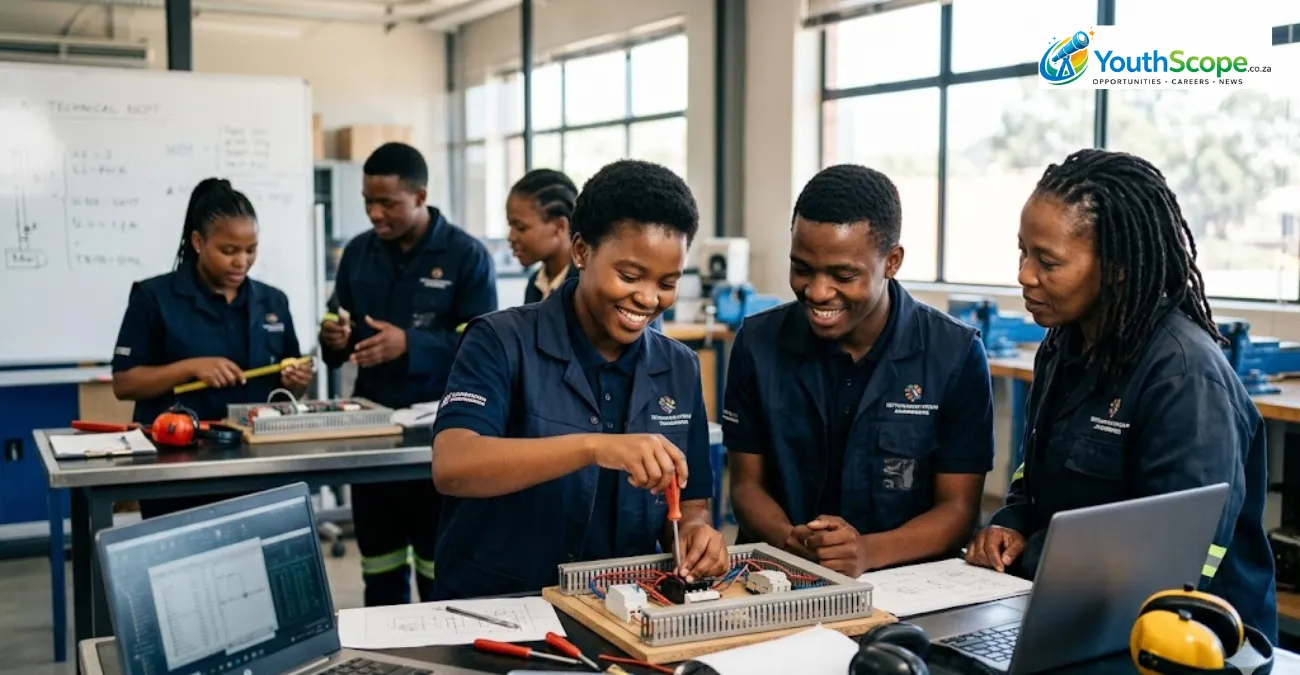
FoodBev SETA-Funded Millwright Programme Gives South African Youth a Powerful Technical Career Opportunity for 2026

Technical and engineering careers continue to offer some of the strongest employment opportunities in South Africa — especially for young people who are willing to build practical skills that industries urgently need.

But for many unemployed youth, the biggest struggle begins after finishing school or college. Having qualifications is important, yet many employers still expect workplace experience.

That is why the 2026 Millwright Training Opportunity funded by FoodBev SETA and offered through Tshwane South TVET College is receiving major attention among technical students and engineering graduates.

This programme gives young South Africans a valuable chance to move beyond theory and enter a career path linked to manufacturing, automation, industrial maintenance, food production, and engineering support industries.

For applicants with Electrical or Mechanical Engineering backgrounds, this opportunity could become the start of a long-term artisan career with strong growth potential.

What You Need to Know

Programme DetailsInformation
Programme NameMillwright Training Opportunity
Funded ByFoodBev SETA
InstitutionTshwane South TVET College
Programme TypeTechnical Training Opportunity
IndustryEngineering / Manufacturing
Closing Date15 May 2026
Age Requirement18 – 35 Years
Minimum QualificationGrade 12 with Technical Subjects OR NCV Level 4 OR N2–N6
Accepted FieldsElectrical Engineering / Mechanical Engineering
Documents RequiredCV and Certified ID Copy
Application MethodPhysical Submission

Why Millwright Careers Are Becoming More Valuable in South Africa

South Africa’s industrial sector still depends heavily on skilled artisans who can maintain, repair, and troubleshoot machinery.

Factories, food processing companies, manufacturing plants, mining operations, and production facilities all rely on technical professionals who understand both mechanical and electrical systems.

That is exactly why Millwrights remain highly employable.

As automation and industrial technology continue expanding, companies increasingly need multi-skilled workers who can solve technical problems quickly and keep production running efficiently.

For young people searching for artisan opportunities, SETA programmes, apprenticeships, engineering learnerships, or technical jobs in South Africa, Millwright training can open the door to stable and practical career opportunities.

What Exactly Does a Millwright Do?

Many people hear the word “Millwright” without fully understanding the role.

A Millwright is a highly skilled artisan responsible for working with industrial machinery and production systems.

Their work often includes:

  • Installing machinery
  • Repairing equipment
  • Troubleshooting technical faults
  • Maintaining industrial systems
  • Working with automation equipment
  • Inspecting electrical and mechanical components

Because Millwrights combine both electrical and mechanical knowledge, they are often considered multi-skilled technical professionals.

This makes them valuable across many industries.

Industries Where Millwrights Can Work

One of the biggest advantages of becoming a Millwright is career flexibility.

Qualified Millwrights may work in:

  • Manufacturing plants
  • Food production facilities
  • Beverage companies
  • Packaging industries
  • Mining operations
  • Automotive factories
  • Engineering companies
  • Industrial maintenance environments
  • Processing plants
  • Power generation facilities

As industries modernise and machinery becomes more advanced, technical artisan skills continue becoming more important.

Who Should Apply for This Opportunity?

This programme is ideal for technically minded young people who enjoy practical environments and problem-solving.

You should strongly consider applying if you are:

  • A TVET engineering student
  • An NCV engineering graduate
  • Studying Mechanical Engineering
  • Studying Electrical Engineering
  • Interested in artisan careers
  • Looking for entry-level technical opportunities
  • Passionate about working with machinery and systems

This opportunity may especially suit candidates who enjoy:

  • Hands-on technical work
  • Mechanical systems
  • Electrical equipment
  • Workshop environments
  • Industrial technology
  • Solving practical problems

Minimum Requirements for the Programme

Applicants must meet the following criteria:

Age Requirement

You must be:

  • Between 18 and 35 years old

Educational Requirements

Applicants must have ONE of the following:

Option 1:

Grade 12 with technical subjects including:

  • Mathematics
  • Physical Science

Option 2:

NCV Level 4 Engineering & Related Design

Option 3:

N2 to N6 qualification in:

  • Electrical Engineering
  • Mechanical Engineering

These requirements show that the programme is specifically designed for youth with technical or engineering backgrounds.

Important Documents You Need Before Applying

Applicants must prepare the following:

  • Updated Curriculum Vitae (CV)
  • Certified copy of South African ID

Before submitting your documents, make sure:

  • Your CV is professional and easy to read
  • Your contact details are correct
  • Your ID copy is clearly certified
  • Your information is accurate and complete

Incomplete applications may reduce your chances of being considered.

Where to Submit Your Application

Applications can be submitted to Tshwane South TVET College at the following campuses:

Head Office

85 Francis Baard Street
Pretoria
0001

Centurion Campus

TEK Base, College Street
Lyttelton
0157

Atteridgeville Campus

5 Khoza Street
Atteridgeville
0008

Pretoria West Campus

150 Industrial Road
Pretoria West
0183

Odi Campus

Molefe Makinta Highway
Mabopane
0190

Application Closing Date

The closing date for applications is:

15 May 2026

Applicants are encouraged to submit their applications early to avoid delays or last-minute issues.

Late applications may not be accepted.

Benefits of Joining a Millwright Programme

Technical artisan programmes can create long-term career opportunities for young people willing to commit themselves seriously.

Potential benefits include:

  • Practical technical experience
  • Exposure to industrial environments
  • Improved employability
  • Artisan career pathways
  • Opportunities for apprenticeships
  • Engineering support career growth
  • Factory maintenance experience
  • Manufacturing industry exposure

Technical skills remain among the most employable skills in South Africa’s industrial economy.

Expert Career Tips to Improve Your Application

Competition for SETA-funded opportunities can be very high.

Small improvements to your application can make a major difference.

Common Mistakes Applicants Make

Many candidates lose opportunities because they:

  • Submit incomplete applications
  • Use weak CVs
  • Forget contact details
  • Submit unclear certified documents
  • Apply without researching the programme

How to Make Your Application Stronger

To improve your chances:

  • Keep your CV neat and professional
  • Mention technical subjects clearly
  • Highlight workshop or practical exposure
  • Include engineering strengths
  • Double-check phone numbers and email addresses
  • Practice communication skills for interviews

Employers and training institutions often look for young people who show professionalism, discipline, reliability, and willingness to learn.

Why Technical Careers Should Not Be Overlooked

Many young people focus only on university pathways while ignoring technical careers that are often highly employable and financially rewarding.

South Africa continues to need skilled artisans across multiple sectors.

Millwright careers can lead to:

  • Apprenticeships
  • Permanent technical jobs
  • Industrial maintenance careers
  • Manufacturing roles
  • Engineering technician opportunities
  • Long-term artisan development

For motivated youth, technical training can become the foundation of a successful and stable future.

Explore More Opportunities:

Final Encouragement for Young Applicants

Opportunities like this do not only offer training — they offer direction, experience, and a chance to enter industries that continue to grow.

If you have technical abilities, enjoy solving problems, and want practical career skills that industries truly need, this Millwright opportunity could be worth serious consideration.

Do not underestimate the value of artisan careers.

Many successful technical professionals started with one opportunity exactly like this.

Apply early, prepare properly, and take your future seriously.

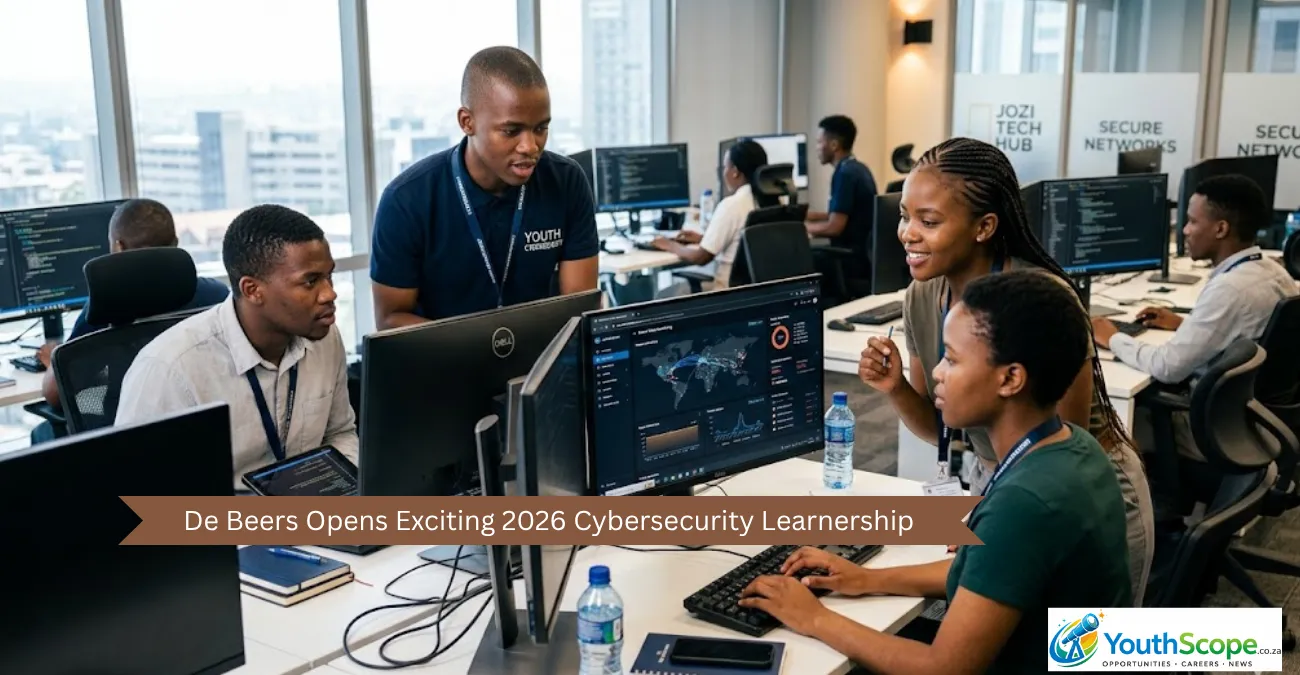
De Beers Opens Exciting 2026 Cybersecurity Learnership Opportunities for South African Youth

Cybersecurity is no longer a career of the future — it is happening right now, and companies across the world are urgently searching for skilled professionals who can protect digital systems from cyber threats.

For many unemployed South African youth, breaking into the tech industry can feel impossible without experience or expensive qualifications. That is why the 2026 De Beers Group Cybersecurity Learnership Programme could become a life-changing opportunity for young people who want to build a career in one of the world’s fastest-growing industries.

This 12-month cybersecurity learnership in Johannesburg offers practical workplace exposure, structured learning, and preparation for the internationally recognised CompTIA Security+ certification. Even better, the programme is designed for entry-level candidates who are eager to learn and grow.

Whether you recently completed matric, want to enter the IT industry, or are searching for 2026 learnerships in South Africa, this opportunity deserves serious attention.

What You Need to Know

Programme DetailsInformation
Programme NameDe Beers Group Cybersecurity Learnership Programme 2026
CompanyAnglo American / De Beers Group
Programme TypeLearnership
LocationJohannesburg, South Africa
Duration12 Months
IndustryCybersecurity / Information Management
Closing Date22 May 2026
Minimum QualificationGrade 12 with Mathematics and Science
Certification PreparationCompTIA Security+
Experience RequiredNone
Application MethodOnline Application

Why This Cybersecurity Learnership Matters in 2026

The digital economy is growing rapidly across South Africa and internationally. Banks, hospitals, mining companies, retailers, government departments, and online businesses all rely heavily on secure digital systems.

As cybercrime increases globally, organisations are investing billions into cybersecurity protection. This has created strong demand for skilled cybersecurity professionals, including entry-level candidates who can grow into specialist roles.

What makes this opportunity especially valuable is that it gives young people access to practical cybersecurity experience inside a global company environment — something that is normally very difficult to access without prior experience.

For many matriculants and unemployed youth, this Learnership could become the first step toward a stable and future-focused tech career.

What Learners Will Experience During the Programme

Unlike many basic training programmes, this Learnership exposes participants to real cybersecurity operations and practical workplace environments.

Learners will gain insight into multiple areas of cybersecurity, helping them understand how modern organisations defend themselves against digital threats.

Cybersecurity Operations Experience

Participants will learn how cybersecurity teams monitor and respond to suspicious digital activity.

This includes exposure to:

  • Security monitoring
  • Incident detection
  • Threat investigations
  • Security alerts
  • Incident response procedures

This type of workplace learning is extremely valuable because many companies want candidates who already understand how cybersecurity operations work in real business environments.

Learn About Cyber Threat Intelligence

Cyber threat intelligence has become one of the most important areas within global cybersecurity.

During the programme, learners may gain exposure to:

  • Threat analysis
  • Intelligence gathering
  • Threat reporting
  • Proactive cyber defence strategies

This helps learners understand how organisations identify potential risks before attacks happen.

Digital Forensics Exposure

Digital forensics is one of the most exciting and specialised areas of cybersecurity.

Learners may gain practical understanding of:

  • Evidence collection
  • Investigation procedures
  • Forensic tools
  • Cyber incident analysis
  • Legally compliant investigations

This field focuses on analysing digital evidence and investigating suspicious cyber activity professionally.

Human Cyber Risk and Awareness Training

Cybersecurity is not only about computers — people also play a major role in preventing cyber attacks.

The programme therefore includes exposure to:

  • Cybersecurity awareness campaigns
  • Safe online behaviour
  • User risk education
  • Social engineering awareness

These skills are increasingly valuable because many cyber attacks happen when users unknowingly click dangerous links or fall victim to scams.

A Big Advantage: CompTIA Security+ Certification Preparation

One of the strongest benefits of this Learnership is preparation for the internationally recognised CompTIA Security+ certification.

This certification is respected worldwide and is often recommended as one of the best entry-level cybersecurity qualifications for beginners.

The certification focuses on areas such as:

  • Network security
  • Threat management
  • Identity protection
  • Risk management
  • Security operations
  • Cryptography
  • Incident response

For many young South Africans, paying for professional cybersecurity certification independently can be financially difficult. This programme helps learners access valuable industry preparation while gaining practical workplace experience at the same time.

Having CompTIA Security+ preparation on your CV can strengthen your employability in future internships, graduate programmes, IT support roles, and cybersecurity careers.

Who Can Apply for the De Beers Cybersecurity Learnership?

This opportunity is ideal for young South Africans who are passionate about technology and digital careers.

Applicants should:

  • Be at least 18 years old
  • Have completed Grade 12
  • Have Mathematics and Science subjects
  • Be interested in cybersecurity and IT
  • Have problem-solving abilities
  • Communicate well in English
  • Work well with others
  • Be willing to learn new technologies

This programme may suit:

  • Matriculants interested in tech careers
  • Unemployed youth
  • Entry-level IT candidates
  • Young people interested in ethical hacking
  • Candidates wanting cybersecurity careers
  • Early career professionals looking to transition into IT

Skills That Could Help You Stand Out

Competition for cybersecurity learnerships in South Africa is usually very high.

Candidates who show genuine interest in technology may improve their chances significantly.

Helpful skills include:

  • Computer literacy
  • Curiosity about cybercrime and online security
  • Strong attention to detail
  • Analytical thinking
  • Problem-solving ability
  • Good communication skills
  • Teamwork

Even beginner-level cybersecurity knowledge from YouTube tutorials or free online courses can strengthen your application.

Benefits of Joining This Learnership

This programme offers more than just training.

Benefits may include:

  • Real workplace experience
  • Exposure to global cybersecurity environments
  • Professional skills development
  • Industry certification preparation
  • Networking opportunities
  • Career growth potential
  • Improved employability
  • Exposure to modern cybersecurity tools

Cybersecurity professionals are increasingly needed across industries including finance, mining, healthcare, government, insurance, and telecommunications.

This means the experience gained through this programme could open doors to future internships, graduate programmes, and permanent IT careers.

Important Documents You May Need

Before applying, make sure your documents are updated and professional.

Prepare:

  • Updated CV
  • Certified copy of ID
  • Grade 12 certificate
  • Academic transcripts if applicable
  • Professional email address
  • Supporting certificates if available

Make sure all information is accurate because shortlisted candidates may go through background checks and qualification verification processes.

How to Apply for the 2026 De Beers Cybersecurity Learnership

Applications must be submitted online through the official recruitment platform.

Before applying:

  • Update your CV properly
  • Double-check contact details
  • Use a professional email address
  • Prepare for interviews
  • Research basic cybersecurity concepts
  • Learn more about Anglo American and De Beers Group

Because this is a highly competitive opportunity, applicants should avoid rushed or incomplete applications.

Application Closing Date

The closing date for the De Beers Group Cybersecurity Learnership Programme 2026 is:

22 May 2026

Late applications may not be considered, so applicants are encouraged to apply as early as possible.

Expert Career Tips to Improve Your Chances

Many young applicants lose opportunities because of simple mistakes.

Here are important tips that can help you stand out professionally:

Common Mistakes Applicants Make

  • Sending incomplete CVs
  • Using unprofessional email addresses
  • Applying without researching the company
  • Ignoring spelling mistakes
  • Providing incorrect contact details
  • Arriving unprepared for interviews

How to Strengthen Your Application

To improve your chances:

  • Keep your CV clean and easy to read
  • Highlight computer skills and achievements
  • Mention leadership roles or projects
  • Practice interview questions
  • Learn basic cybersecurity terminology
  • Show enthusiasm for learning

Large companies often look for attitude, discipline, curiosity, and growth potential — not only experience.

Explore More Opportunities:

A Powerful Opportunity for South African Youth

Technology careers continue to grow rapidly across the world, and cybersecurity has become one of the most future-proof industries available today.

For young South Africans searching for learnerships, internships, graduate opportunities, or entry-level jobs in 2026, this programme offers something incredibly valuable: a genuine pathway into the cybersecurity industry.

You do not need to know everything already.

What matters most is your willingness to learn, your commitment to growth, and your ability to take this opportunity seriously.

For many successful professionals, careers begin with one opportunity — and this could be yours.

OUTsurance Opens R9,000 Learnership Opportunities for South African Youth With No Experience Needed

Finding a real entry point into the job market can feel almost impossible for many unemployed young South Africans — especially when most opportunities demand experience before giving anyone a chance.

That is why the Hastings Direct Learnership Opportunities 2026 through OUTsurance are attracting serious attention.

This 18-month learnership programme offers unemployed youth the chance to gain professional workplace experience, structured training, and a monthly stipend of R9,000 while building skills inside the financial services and insurance industry.

Even more encouraging is the fact that no previous work experience is required.

For young people looking for their first real career opportunity in a professional environment, this could become a valuable stepping stone toward long-term employment.

What You Need to Know

Quick Summary

CategoryDetails
ProgrammeHastings Direct Learnership Opportunities 2026
CompanyOUTsurance
IndustryFinancial Services & Insurance
Programme Duration18 Months
Monthly StipendR9,000
LocationSouth Africa
Experience RequiredNo previous work experience needed
Minimum QualificationMatric
Age Requirement18–35 years
Learnership TypeINSETA-accredited workplace learning
Application MethodOnline application

Why This Learnership Matters in 2026

Youth unemployment remains one of South Africa’s biggest challenges.

Many matriculants and graduates struggle because employers often ask for experience even in entry-level positions.

This learnership stands out because it is specifically designed for unemployed youth who are still trying to build workplace exposure and professional confidence.

Instead of expecting years of experience, the programme focuses on:

  • Structured workplace learning
  • Customer service training
  • Professional communication
  • Call centre experience
  • Insurance industry exposure

For many applicants, this may become their first opportunity to work inside a professional corporate environment.

What Is the Hastings Direct Learnership About?

The Hastings Direct Learnership is a structured workplace training programme offered through OUTsurance.

The programme allows selected learners to gain practical experience within a professional call centre and customer service environment linked to the financial services and insurance sector.

Participants will enter into a fixed-term learnership agreement while completing structured learning and workplace training.

This is not a permanent employment contract, but it provides valuable real-world experience that can improve employability and future career opportunities.

The programme is also linked to a regulated financial services environment under a FAIS Non-Financial Advice Giving Role.

What Learners Can Expect During the Programme

Successful learners will receive:

  • Structured workplace exposure
  • Practical customer service training
  • Call centre experience
  • Professional development support
  • Real corporate environment exposure
  • Industry-related skills development

Learners will also gain experience working within a fast-paced and customer-focused environment.

This type of exposure can help young people build confidence, communication ability and workplace discipline.

Who Can Apply?

The programme targets unemployed South African youth who want to start building careers in customer service, financial services or insurance.

Minimum Requirements

Applicants must have:

  • Matric certificate
  • South African citizenship
  • Computer literacy
  • Basic Microsoft Office knowledge
  • Age between 18 and 35 years
  • Unemployed status for the last 6 months
  • No previous participation in an INSETA learnership

Importantly, no previous work experience is required.

This makes the programme especially suitable for first-time job seekers.

What Skills Is OUTsurance Looking For?

Although experience is not needed, applicants should still demonstrate strong personal qualities.

Important Skills and Qualities Include

  • Good communication skills
  • Positive attitude
  • Willingness to learn
  • Professional behaviour
  • Teamwork ability
  • Adaptability
  • Problem-solving skills
  • Ability to multitask
  • Customer-focused mindset

Because the programme involves call centre work, learners should also be comfortable working in fast-paced environments.

Understanding the Working Hours

Applicants should understand that the programme includes shift-based schedules.

Expected Working Hours Include

  • Friday to Monday shifts of 9 hours
  • Saturday shifts of 8 hours
  • Sunday shifts of 5 hours

Learners will receive two weekdays off during the week.

One day each week will also be dedicated to training and qualification-related learning.

This schedule is important for applicants who are serious about customer service and call centre careers.

Will Learners Work on Public Holidays?

Yes.

Learners may be required to work on South African public holidays if those days fall within their scheduled shifts.

Applicants should prepare themselves for this type of work environment before applying.

The insurance and customer service industries often operate beyond traditional office hours.

Why This Opportunity Could Help Your Future

Many young people struggle to secure employment because they lack formal workplace exposure.

This learnership helps close that gap.

Key Benefits of the Programme

  • R9,000 monthly stipend
  • Professional workplace experience
  • Structured learning support
  • Exposure to the insurance industry
  • Improved employability
  • Practical communication skills
  • Corporate work experience
  • Opportunity to build confidence

For someone starting from zero experience, this can become an important career foundation.

Documents Applicants Should Prepare

Before applying, candidates should prepare:

  • Updated CV
  • Certified copy of ID
  • Certified Matric certificate
  • Clear contact details
  • Professional email address

Make sure all information is accurate and easy to read.

Expert Career Tip: How to Stand Out

One of the biggest mistakes applicants make is assuming that “no experience required” means preparation does not matter.

It still matters a lot.

Common Mistakes Applicants Make

  • Submitting messy CVs
  • Using unprofessional email addresses
  • Providing incorrect phone numbers
  • Uploading unclear documents
  • Ignoring instructions
  • Applying without checking details carefully

Smart Ways to Improve Your Chances

  • Keep your CV clean and simple
  • Highlight communication and computer skills
  • Show willingness to learn
  • Use a professional email address
  • Double-check your application before submitting
  • Keep your phone active after applying

In entry-level programmes, attitude and professionalism often matter just as much as qualifications.

How to Apply for the OUTsurance Learnership

Applications must be submitted online through the official OUTsurance application portal.

Applicants should complete the online process carefully and ensure all information is correct before submission.

Because no official closing date was provided, interested applicants should apply as soon as possible.

High-demand learnership opportunities often receive large numbers of applications quickly.

Explore More Opportunities:

Why Call Centre Experience Can Be Valuable

Many people underestimate the long-term value of customer service and call centre experience.

However, these roles help build highly transferable skills such as:

  • Communication
  • Problem-solving
  • Professional etiquette
  • Time management
  • Customer relations
  • Teamwork
  • Digital system experience

These skills are useful across many industries, including banking, retail, insurance, administration and corporate services.

Final Thoughts

The Hastings Direct Learnership Opportunities 2026 offer unemployed South African youth a realistic pathway into the professional working world.

With no previous experience required, a R9,000 monthly stipend and structured workplace training, this programme could become a major opportunity for young people trying to gain their first real corporate experience.

For motivated applicants willing to learn, communicate professionally and adapt to a customer-focused environment, this learnership may become the beginning of a long-term career journey in financial services and insurance.

Grade 10? You Can Still Apply: iLearn Opens SETA Learnership Opportunities for South African Youth

Thousands of young South Africans believe their future opportunities ended when they did not complete Grade 12. But that is not always true.

iLearn is giving qualifying youth another chance through SETA-accredited learnership opportunities designed to help unemployed South Africans gain workplace skills, practical experience, and nationally recognised qualifications.

For many applicants, especially those with only a Grade 10 pass, this could become the first real step toward employment, career growth, and long-term stability.

If you have been searching for learnerships in South Africa for 2026, this opportunity could be worth serious attention.

What You Need to Know About the iLearn Learnership Application

Quick Summary

  • Programme Type: SETA-accredited learnership opportunities
  • Minimum Qualification: Grade 10
  • Location: South Africa
  • Target Group: Unemployed youth aged 18–34
  • Who May Apply: South African citizens from previously disadvantaged groups
  • Disability Inclusion: Applicants living with disabilities are encouraged to apply
  • Training Style: Classroom learning plus workplace experience
  • Stipend: Paid monthly depending on SETA and programme level
  • Application Method: Online application submission
  • Career Fields: Depends on available learnership placements and employer needs

Why This Opportunity Matters for South African Youth

One of the biggest challenges facing young people in South Africa is access to opportunity.

Many internships, graduate programmes and learnerships require Grade 12 or tertiary qualifications. This often leaves Grade 10 and Grade 11 applicants feeling excluded from skills development opportunities.

The iLearn application pathway offers something different.

Instead of shutting the door completely, it creates a possible route into accredited workplace learning for qualifying candidates who may not yet have higher qualifications.

That matters because practical experience can sometimes become the bridge between unemployment and a real career.

What Is an iLearn Learnership?

A learnership is a structured learning programme that combines theoretical education with practical workplace training.

Unlike short courses that focus only on classroom learning, learnerships help participants build real-world job experience while studying toward an NQF-registered qualification.

This means selected learners can gain:

  • Workplace exposure
  • Industry knowledge
  • Practical skills
  • Professional experience
  • Nationally recognised qualifications

For first-time job seekers, this type of training can make a major difference when applying for future jobs.

Who Can Apply for the iLearn Learnership Opportunities?

The application process is aimed mainly at unemployed South African youth looking for skills development opportunities.

Applicants may qualify if they meet these general requirements:

  • South African citizen
  • Between 18 and 34 years old
  • Unemployed
  • Minimum Grade 10 qualification
  • Able to participate in full-time training
  • Ready for both theory and workplace learning

Applicants from previously disadvantaged backgrounds may be prioritised depending on placement needs.

People living with disabilities are also encouraged to apply.

Minimum Requirements Applicants Should Meet

Although Grade 10 is accepted, applicants still need to prepare properly.

Basic requirements generally include:

  • Grade 10 pass or higher
  • Valid South African ID
  • Availability for full-time learning
  • Willingness to complete assessments and workplace tasks
  • Required supporting documents ready

Meeting the minimum requirements does not guarantee selection, but it allows candidates to be considered for available placements.

Documents You Must Prepare Before Applying

One of the fastest ways to lose an opportunity is submitting incomplete or unclear documents.

Before starting the application, prepare the following:

Required Supporting Documents

  • Updated CV
  • Certified copy of ID
  • Proof of highest qualification
  • Proof of residence
  • Proof of SARS or income tax number
  • Disability documents if applicable

Make sure all documents are:

  • Clear and readable
  • Correctly certified if required
  • Uploaded in the correct format
  • Updated with current information

Blurry or incomplete documents can delay or weaken your application.

Opportunities for Applicants Living With Disabilities

The iLearn pathway also welcomes applications from people living with disabilities.

Where disability documentation is required, applicants may need:

  • A medical confirmation letter
  • Doctor’s contact details
  • Practice number
  • Supporting medical information

This information may be verified during the recruitment or vetting process.

Inclusive workplace learning opportunities remain important for improving equal access to employment in South Africa.

What Type of Training Will Selected Learners Receive?

Successful applicants may participate in two major learning components:

Theory Training

This includes structured learning sessions focused on knowledge, industry understanding and assessments.

Workplace Learning

Learners also gain practical experience inside a real working environment.

This combination helps participants develop confidence, workplace behaviour, communication skills and practical job readiness.

For someone with little or no work experience, that exposure can become extremely valuable.

Will Learners Receive a Monthly Stipend?

Yes, selected learners may receive a stipend during the programme.

The amount depends on:

  • The SETA involved
  • Learnership level
  • Employer funding
  • Programme structure

The stipend is meant to assist with basic participation costs such as:

  • Transport
  • Meals
  • Daily expenses

Applicants should avoid assuming a fixed amount unless it is officially confirmed during placement or shortlisting.

Why Some Learnership Applications Get Rejected

Many young people miss opportunities because they rush their applications.

Even strong candidates can be rejected because of avoidable mistakes.

Common Application Mistakes

  • Missing certified documents
  • Unclear uploads
  • Incorrect contact details
  • Outdated CVs
  • Unprofessional email addresses
  • False information
  • Ignoring instructions
  • Inactive cellphone numbers after applying

Recruiters often receive thousands of applications.

A clean, professional and organised submission immediately creates a better impression.

Expert Career Tip: How to Improve Your Chances

A Grade 10 qualification does not automatically disqualify you from success.

The key is professionalism.

Simple Ways to Stand Out

  • Keep your CV short and easy to read
  • Use a professional email address
  • Clearly list your highest grade passed
  • Double-check every document before uploading
  • Make sure your phone number works
  • Respond quickly if contacted

Employers often look for attitude, reliability and willingness to learn — not only marks.

A neat application already places you ahead of many careless applicants.

What Happens After You Apply?

Submitting an application does not guarantee immediate placement.

Some applications may remain on file while iLearn matches candidates to available opportunities.

Applicants may later be contacted for:

  • Additional information
  • Interviews
  • Assessments
  • Placement opportunities

This process can take time, so applicants should stay patient and continue applying for other internships, learnerships and jobs for youth in South Africa.

How to Apply for the iLearn Learnership Application

Applications must be submitted through the official iLearn application process.

Before applying:

  • Prepare all documents first
  • Complete the form carefully
  • Ensure all information is accurate
  • Double-check uploads before submitting

Incorrect information may affect your chances during verification.

Application Closing Date

Applicants are encouraged to apply as early as possible.

Some learnership opportunities may close once enough applications are received or when placements are filled.

Waiting until the last minute can increase the risk of missing out.

Why Learnerships Remain Important in South Africa

Learnerships continue to play a major role in helping unemployed youth gain workplace exposure and recognised qualifications.

For many South Africans, these programmes become the first real chance to:

  • Build work experience
  • Improve employability
  • Develop confidence
  • Gain professional references
  • Enter long-term career pathways

Even a single learnership can help open future opportunities in different industries.

Explore More Opportunities:

Final Thoughts

The iLearn Grade 10 Learnership Application pathway offers hope to young South Africans who may feel excluded from traditional career opportunities.

With workplace learning, practical exposure, and SETA-accredited training, this opportunity may help applicants take an important first step toward employment and career development.

While competition is high, preparation matters.

A professional CV, complete documents and careful attention to instructions can improve your chances significantly.

Sometimes one opportunity is all it takes to change your future.

SASSETA Could Change Your Future: Exciting Learnerships, Internships and Bursaries South African Youth Should Watch in 2026

For thousands of unemployed young South Africans, finding a real opportunity can feel impossible. Many graduates sit at home without experience, while matriculants struggle to enter the job market for the first time.

That is why SASSETA-funded programmes continue to attract attention across the country.

These opportunities are more than just training programmes. They give young people practical workplace experience, nationally recognised qualifications, monthly stipends, and a possible pathway into careers within policing, law, security, justice and public safety.

If you are searching for 2026 internships, learnerships, bursaries or entry-level opportunities in South Africa, this could be one of the smartest career paths to explore.

What You Need to Know About SASSETA Opportunities

Quick Summary

  • Programme Type: Learnerships, internships, bursaries and skills programmes
  • Sector: Safety, security, policing, justice and legal services
  • Who Can Apply: South African youth, graduates, matriculants and unemployed individuals
  • Age Group: Mainly youth aged 18–35
  • Funding: SASSETA-funded training and workplace programmes
  • Stipend: Usually between R3,500 and R6,000 depending on the programme
  • Qualification Levels: NQF Level 3 to NQF Level 5
  • Application Method: Online, email or in-person applications
  • Fields Covered: Security, policing, legal services, corrections and law enforcement

Why SASSETA Opportunities Matter More Than Ever

South Africa continues to face serious youth unemployment challenges. Many young people have qualifications but no experience, while others have the passion to work in safety and justice but do not know where to start.

The Safety and Security Sector Education and Training Authority (SASSETA) helps bridge that gap.

Its mission is to develop skilled professionals who can contribute to safer communities, stronger justice systems and better public protection services.

For young people, this means access to funded training opportunities that can lead to real employment and long-term career growth.

Instead of sitting at home waiting for a job, many learners gain workplace exposure while studying toward recognised qualifications.

What Exactly Is SASSETA?

SASSETA is one of South Africa’s official Sector Education and Training Authorities (SETAs).

The organisation focuses on skills development in sectors linked to:

  • Law enforcement
  • Private security
  • Policing
  • Corrections
  • Legal services
  • Justice administration
  • Intelligence and community safety

Through partnerships with employers, training providers and government institutions, SASSETA funds programmes designed to prepare young South Africans for careers in these important industries.

Who Can Apply for SASSETA-Funded Programmes?

Many opportunities are designed specifically for unemployed youth and entry-level job seekers.

You may qualify if you are:

  • A South African citizen
  • Between 18 and 35 years old
  • Currently unemployed
  • Not studying full-time
  • Interested in law, policing, justice or security careers
  • A matriculant or graduate looking for workplace experience

People living with disabilities are also strongly encouraged to apply for available programmes.

Even if you do not have work experience yet, some learnerships are designed to help beginners enter the workforce for the first time.

Popular SASSETA Learnerships and Career Fields

One of the biggest advantages of SASSETA programmes is the variety of career paths available.

Depending on your interests and qualifications, you may find opportunities in several specialised fields.

Learnerships Often Include:

  • General Security Practices (NQF Level 3)
  • Law Enforcement Officer Training (NQF Level 4)
  • Paralegal Practice (NQF Level 5)
  • Legal Secretary Training (NQF Level 5)
  • Close Protection Officer Training (NQF Level 5)

These programmes combine classroom learning with practical workplace training.

That means learners graduate with both theoretical knowledge and hands-on experience.

Short Skills Programmes That Can Boost Your CV

Not every opportunity lasts a full year.

SASSETA also supports short skills programmes that help young people develop targeted workplace skills.

These may include:

  • Crime prevention techniques
  • Conflict management
  • Court interpreting
  • Administrative support
  • Community safety practices

Short courses can strengthen your CV and improve your chances of securing permanent employment later.

Internship Opportunities for Graduates

Graduates often struggle because employers demand experience before offering jobs.

SASSETA-funded internships help solve this problem by placing graduates in real working environments where they can learn practical industry skills.

Internship opportunities may be available through:

  • Government departments
  • Municipalities
  • Legal organisations
  • Security companies
  • NGOs
  • Public safety institutions

This workplace exposure can make a major difference when applying for future jobs.

Bursaries That Help Students Continue Their Studies

For students who cannot afford tertiary education, SASSETA bursaries may provide valuable support.

Funding may cover:

  • Tuition fees
  • Accommodation
  • Textbooks
  • Meals and learning materials

Fields linked to law, criminal justice, policing and security studies are usually prioritised.

For many students, bursary funding becomes the key that allows them to continue studying without financial stress.

Documents You Should Prepare Before Applying

Many applicants lose opportunities because they wait until the last minute to collect important documents.

Prepare these early to avoid unnecessary delays.

Commonly Required Documents

  • Certified copy of your ID
  • Certified Matric certificate
  • Updated CV
  • Proof of residence
  • Academic records or qualifications
  • Affidavit confirming unemployment
  • Police clearance certificate (for some security programmes)

Ensure your documents are clear, updated and professionally organised.

How to Apply for SASSETA Opportunities

One important thing to understand is that SASSETA does not always advertise opportunities directly.

Applications are often managed through employers, training providers or partner organisations.

Where Opportunities Are Usually Advertised

  • Accredited training providers
  • SAPS and law enforcement institutions
  • Municipalities
  • Government departments
  • Youth employment platforms
  • NGO programmes

Application Methods

Depending on the programme, applications may be submitted:

  • Online
  • Via email
  • In person

Always follow the instructions carefully.

Missing documents or incorrect information can lead to automatic disqualification.

Trusted Training Providers to Watch

Several accredited providers regularly offer SASSETA-funded programmes.

Some well-known names include:

  • Security Academy
  • Justice College
  • Khulani HR Consulting
  • Lawhill College
  • SAPS Academy

These institutions may advertise internships, learnerships and short skills programmes throughout the year.

Checking their websites and social media pages regularly can help you stay ahead of new opportunities.

What Happens After You’re Accepted?

Being selected is only the beginning.

Most learnerships include:

  • Classroom-based learning
  • Workplace practical training
  • Assessments and assignments
  • Workplace logbooks

Learners are expected to remain disciplined, punctual and committed throughout the programme.

Completing the full programme successfully can improve your employability significantly.

Monthly Stipends and Financial Support

One reason many young people apply for SASSETA programmes is the financial support provided during training.

Typical monthly stipends may include:

  • Learnerships: Around R3,500 – R4,500
  • Internships: Around R4,500 – R6,000
  • Skills programmes: Varies by provider and programme type

Bursary recipients may receive additional educational support.

Importantly, these stipends do not need to be repaid.

They are meant to help learners participate fully in their training.

Where to Find the Latest SASSETA Opportunities in South Africa

Opportunities can open unexpectedly during the year.

To stay informed, regularly check:

  • The official SASSETA website
  • Social media pages
  • Accredited training provider websites
  • SA youth employment portals
  • Municipal career pages
  • Government opportunity platforms

Many applications close quickly due to high demand.

Early preparation can give you a major advantage.

Explore More Opportunities:

Expert Career Tip: How to Stand Out From Thousands of Applicants

Many young people apply for learnerships and internships using rushed applications filled with mistakes.

This immediately reduces their chances.

Common Mistakes Applicants Make

  • Submitting incomplete documents
  • Using outdated CVs
  • Ignoring application instructions
  • Applying after the closing date
  • Using unprofessional email addresses

Smart Ways to Improve Your Chances

  • Keep your CV short, clean and updated
  • Use a professional email address
  • Double-check all certified documents
  • Apply early instead of waiting for the deadline
  • Research the organisation before applying

Professionalism matters — even for entry-level opportunities.

Small details can separate successful applicants from rejected ones.

A Powerful Opportunity for South African Youth

Careers in safety, law enforcement and justice are important to South Africa’s future.

For unemployed youth, SASSETA-funded opportunities can provide more than just temporary training. They can create real pathways into stable careers with long-term growth potential.

Whether you dream of working in law enforcement, legal administration, community safety or security services, these programmes could help you take your first step toward that future.

The competition may be high, but preparation, persistence and professionalism can make all the difference.

Your career journey could begin with one application

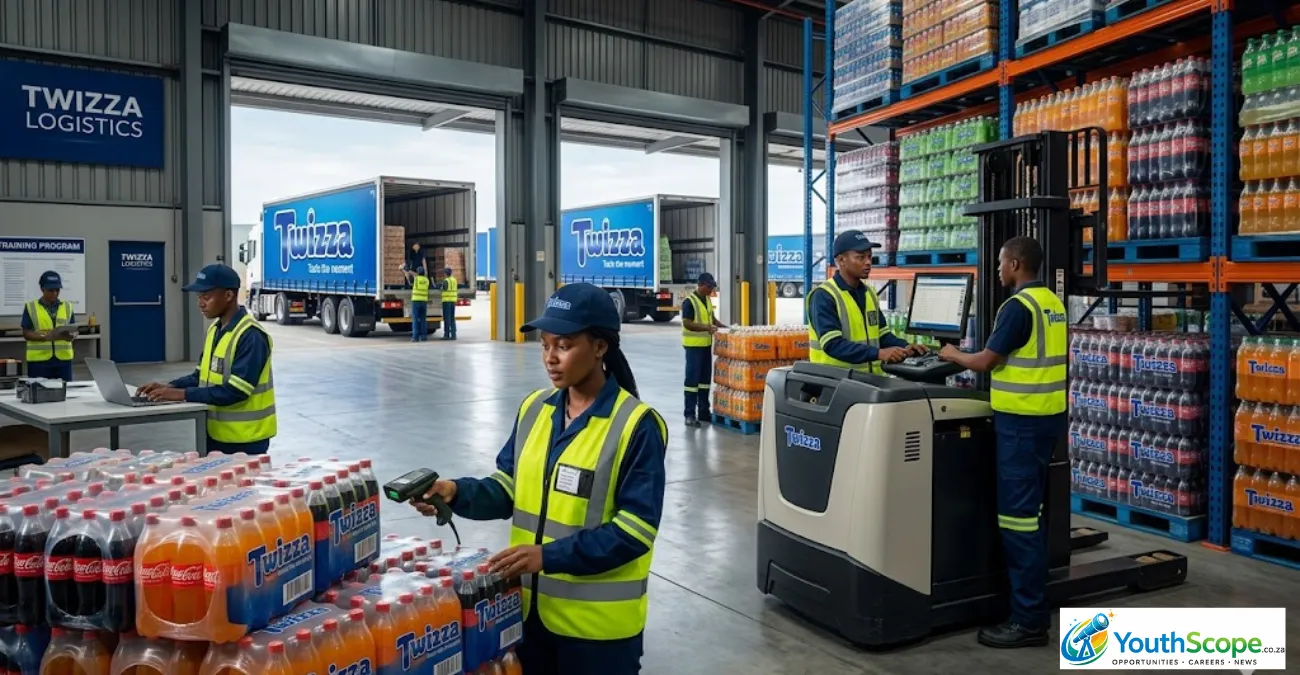
Twizza Logistics & Supply Chain Opportunities 2026 (WIL & Graduates) – Bellville FMCG Career Path

Application Closing Date: 29 May 2026
Location: Bellville, Western Cape, South Africa
Programme Duration: Work Integrated Learning (WIL) / Graduate Experience (duration depends on placement)
Monthly Stipend/Salary: Market Related
Organisation: Twizza
Qualification Requirements: Logistics or Supply Chain Management Diploma, Advanced Diploma, or Degree (WIL students must require workplace exposure)

South African students and graduates continue to face one major challenge when entering the job market: employers want experience, but experience is hard to get without a first opportunity.

The Twizza Logistics & Supply Chain Opportunities 2026 programme is designed to address exactly this gap. It gives students requiring Work Integrated Learning (WIL) and graduates needing workplace exposure a chance to build real experience in a fast-paced FMCG environment.

This opportunity is based in Bellville, Western Cape, and forms part of Twizza’s long-term talent development pipeline in logistics and supply chain management.

About the Twizza Logistics & Supply Chain Opportunity

This programme is offered by Twizza within the fast-moving consumer goods (FMCG) industry, which includes the production, distribution, and supply of everyday consumer products.

It is designed for:

  • Students who still need workplace exposure to complete their qualification (WIL)
  • Graduates who want to gain real industry experience

Participants will work in a real operational environment where logistics and supply chain processes are actively managed.

Instead of only classroom learning, candidates are exposed to actual business operations such as inventory movement, distribution systems, and procurement processes.

Why Is This Opportunity Important?

The logistics and supply chain sector is one of the most important parts of the South African economy. Every product that reaches a shop shelf depends on supply chain professionals.

However, many young people struggle to enter this field because employers require experience.

This opportunity helps bridge that gap by offering:

  • Practical workplace exposure in FMCG operations
  • Industry-relevant training and mentorship
  • Exposure to real supply chain systems
  • Improved employability for graduates and students
  • A pathway into long-term careers in logistics

Experience gained in FMCG environments is highly valued across industries such as retail, manufacturing, warehousing, and distribution.

Who Should Apply?

This opportunity is suitable for:

  • TVET College students needing WIL placement
  • University of Technology students
  • University graduates
  • Diploma or Advanced Diploma holders
  • Degree holders in logistics or supply chain fields
  • Youth interested in FMCG and logistics careers

Applicants should be motivated, willing to learn, and interested in operational business environments.

What Qualifications Are Needed?

Applicants must have or be studying toward qualifications such as:

  • Diploma in Logistics and Supply Chain Management
  • Advanced Diploma in Logistics and Supply Chain Management
  • Bachelor’s Degree in Logistics and Supply Chain Management
  • Related qualifications in supply chain or business operations

WIL applicants must be students who still require workplace training to complete their qualification.

What Will Participants Do?

Depending on placement, participants may gain exposure to:

Procurement and Supplier Management

  • Supplier communication
  • Order tracking
  • Purchase support
  • Procurement administration

Inventory Management

  • Stock control systems
  • Warehouse operations
  • Inventory reporting
  • Product tracking

Distribution and Transportation

  • Delivery coordination
  • Route planning
  • Transport scheduling
  • Fleet support operations

Supply Chain Coordination

  • Cross-department communication
  • Operational planning
  • Workflow tracking
  • Process monitoring

This exposure provides a full understanding of how FMCG supply chains operate.

Skills You Will Gain

This programme helps build both technical and workplace skills.

Technical Skills

  • Supply chain systems understanding
  • Inventory and stock management
  • Procurement processes
  • Data tracking and reporting

Workplace Skills

  • Communication and teamwork
  • Problem-solving ability
  • Time management
  • Attention to detail
  • Professional workplace behaviour

One of the most important skills developed is data handling using Microsoft Excel.

Why Excel Skills Matter in This Field

Excel is widely used in logistics and supply chain roles for:

  • Stock tracking
  • Inventory reports
  • Delivery schedules
  • Procurement monitoring
  • Data analysis

Useful Excel skills include:

  • Basic formulas
  • VLOOKUP
  • Pivot tables
  • Data filtering
  • Spreadsheet organisation

Candidates with strong Excel skills often have a competitive advantage.

Important Information About the Programme

This is a talent pipeline opportunity.

This means:

  • It is not a guaranteed job placement
  • Candidates may be contacted later when opportunities open
  • Twizza builds a database of potential future employees
  • Additional assessments may be required

Applicants should understand that selection may take place over time, not immediately after applying.

Minimum Requirements

Applicants must:

  • Not have participated in previous internships or WIL programmes
  • Be computer literate
  • Have Microsoft Office (especially Excel) knowledge
  • Show analytical and problem-solving ability
  • Have strong communication skills
  • Be detail-oriented
  • Be willing to learn and work in teams

Required Documents

Applicants should prepare:

  • Updated CV
  • Certified qualification copies
  • Certified ID copy
  • Academic transcripts (if available)
  • Proof of residence
  • Professional contact details

Documents should be saved in PDF format where possible.

How to Apply

Applications must be submitted online through the official Twizza recruitment platform.

Apply here:
Twizza Logistics and Supply Chain Opportunities 2026 (WIL & Graduates)

Closing Date: 29 May 2026

Applicants should ensure all documents are uploaded correctly before submission.

Practical Advice for Applicants

To improve your chances:

  • Keep your CV professional and updated
  • Highlight logistics-related subjects and skills
  • Include any computer or Excel experience
  • Use a professional email address
  • Check spelling and formatting carefully
  • Apply early before the deadline
  • Prepare for possible assessments

Simple, clear applications often perform better than rushed ones.

Career Opportunities After the Programme

Experience in FMCG logistics can lead to roles such as:

  • Supply chain assistant
  • Logistics coordinator
  • Inventory controller
  • Procurement assistant
  • Warehouse administrator
  • Distribution planner
  • Operations assistant

These careers exist in retail, manufacturing, transport, and consulting sectors.

Explore More Opportunities

If you are interested in similar programmes, also consider:

Applying to multiple opportunities increases your chances of success.

Final Thoughts

The Twizza Logistics & Supply Chain Opportunities 2026 programme offers a valuable entry point into one of South Africa’s most important industries.

For students and graduates struggling with the experience barrier, this opportunity provides real workplace exposure, industry learning, and a chance to build a strong foundation in FMCG supply chain operations.

If you meet the requirements, prepare your documents early and apply before 29 May 2026.

R3 500 Monthly Stipend Learnership: Wholesale and Retail Operations Programme 2026

Application Closing Date: Not specified (apply as soon as possible)
Location: Nationwide, South Africa
Programme Duration: 12 months
Monthly Stipend: R3 500
Organisation: Managed People Solutions
Qualification Requirements: Matric (National Senior Certificate), unemployed youth, no prior work experience required

Unemployed young South Africans now have a valuable opportunity to enter the retail industry through the Managed People Solutions Wholesale and Retail Operations Learnership Programme 2026. This structured programme offers both workplace experience and a formal qualification, making it an ideal starting point for young people who want to build a career in retail.

With a monthly stipend of R3 500, this learnership also helps participants cover basic living costs while gaining skills and experience.

About the Managed People Solutions Learnership Programme

The Managed People Solutions Learnership Programme is designed to help unemployed youth gain practical retail experience while studying toward a recognised qualification.

It combines classroom-based learning with real workplace training in retail stores. This means learners do not only study theory but also gain hands-on experience in day-to-day retail operations.

The programme focuses on developing young people into confident, skilled workers who understand how the retail environment operates.

Why Is This Opportunity Important?

Retail is one of the largest employment sectors in South Africa, offering opportunities in stores, supermarkets, warehouses, and customer service environments. However, many young people struggle to enter this industry due to lack of experience.

This learnership helps solve that problem by:

  • Providing structured workplace experience
  • Offering a recognised qualification
  • Supporting unemployed youth financially
  • Building practical retail and customer service skills
  • Improving long-term employability

For many young people, this programme is the first step into stable employment.

Who Should Apply?

This learnership is ideal for:

  • Unemployed youth aged 18–28
  • Matriculants with no work experience
  • Young people interested in retail careers
  • Applicants willing to learn and grow
  • Individuals seeking their first job opportunity

No previous work experience is required, making it accessible to first-time job seekers.

What Qualification Will You Receive?

Successful learners will work toward the:

National Certificate: Wholesale and Retail Operations (NQF Level 2)

This qualification helps learners understand:

  • Customer service in retail
  • Store operations and management basics
  • Stock handling and merchandising
  • Communication in the workplace
  • Professional behaviour and teamwork

It provides a strong foundation for entry-level retail careers.

What Does the Learnership Offer?

Participants will benefit from:

  • A 12-month structured learnership programme
  • Monthly stipend of R3 500
  • Workplace experience in retail environments
  • National Certificate: NQF Level 2 qualification
  • On-the-job training and mentorship
  • Exposure to real retail operations

This combination of training and experience improves both skills and confidence.

Where Are Opportunities Available?

This learnership is available across South Africa, including:

  • Gauteng
  • Western Cape
  • KwaZulu-Natal
  • Limpopo
  • Mpumalanga
  • Free State
  • North West
  • Northern Cape

Although some listings may highlight Johannesburg, applications are open nationwide.

Minimum Requirements

To qualify, applicants must:

  • Be aged between 18 and 28 years
  • Have completed Matric (National Senior Certificate)
  • Be unemployed
  • Have no prior work experience
  • Be willing to learn and work in a retail environment

A valid driver’s licence is advantageous but not compulsory.

What Will You Do During the Learnership?

Participants may be involved in:

  • Assisting customers in retail stores
  • Handling stock and inventory
  • Supporting sales operations
  • Learning cashier and store procedures
  • Maintaining store cleanliness and organisation
  • Working as part of a retail team

These tasks help learners understand how retail businesses operate daily.

Skills You Will Gain

This programme builds both technical and workplace skills, including:

Retail Skills

  • Customer service
  • Stock management
  • Sales support
  • Product knowledge

Workplace Skills

  • Communication
  • Teamwork
  • Time management
  • Professional behaviour

These skills are valuable for many entry-level jobs beyond retail as well.

Why This Learnership Matters

This programme is important because it helps young people overcome one of the biggest challenges in the job market: lack of experience.

By completing the learnership, participants can:

  • Improve their CV
  • Gain real work experience
  • Build confidence in a workplace setting
  • Increase employability
  • Access future job opportunities

It is a practical pathway from unemployment to meaningful work experience.

Required Documents

Before applying, prepare the following:

  • Updated CV
  • Certified copy of ID
  • Certified copy of Matric certificate
  • Correct contact details (phone and email)
  • Proof of residence (if requested)
  • Driver’s licence (if available)

Make sure all documents are clear, valid, and properly certified.

How to Apply

Applications must be submitted online through the Managed People Solutions recruitment platform.

Steps to apply:

  1. Visit the official application portal
  2. Create or log into your profile
  3. Complete all required personal and academic details
  4. Upload supporting documents
  5. Review your application carefully
  6. Submit before closing or removal of vacancy

Always ensure your contact details are correct to avoid missing updates.

Practical Advice for Applicants

To improve your chances:

  • Use a clear and updated CV
  • Highlight school achievements and skills
  • Include volunteering or informal work experience
  • Double-check all personal details
  • Apply early to avoid missing deadlines
  • Ensure documents are readable and certified

A complete and accurate application is more likely to be considered.

Career Opportunities After the Learnership

After completing this programme, you may qualify for roles such as:

  • Retail sales assistant
  • Cashier
  • Stock controller
  • Customer service consultant
  • Store assistant
  • Merchandiser
  • Supervisor (with experience)

Retail experience can also lead to careers in logistics, sales management, and business operations.

Explore More Opportunities

If you are interested in similar opportunities, also explore:

Applying for multiple programmes increases your chances of success.

Final Thoughts

The Managed People Solutions Wholesale and Retail Operations Learnership 2026 is a strong opportunity for unemployed South African youth who want to gain experience in the retail sector.

With a 12-month training period, R3 500 monthly stipend, and a recognised NQF Level 2 qualification, this programme can help you build a solid foundation for your career.

If you meet the requirements, prepare your CV and apply as soon as possible through the online application system.

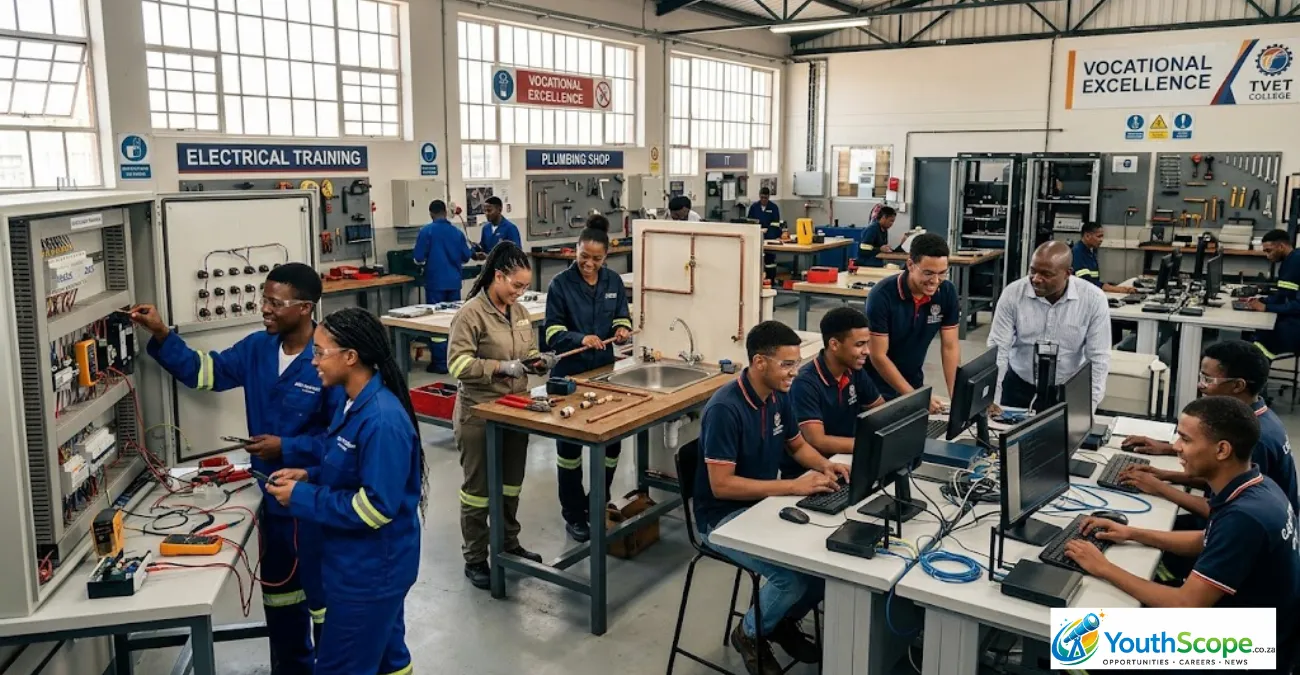
R2 500 Monthly Stipend Learnerships and Occupational Programmes at South West Gauteng TVET College 2026

Application Closing Date: 15 May 2026
Location: Florida Campus, Roodepoort, Gauteng, South Africa
Programme Duration: 12, 18 or 36 months
Monthly Stipend: R2 500
Organisation: South West Gauteng TVET College
Qualification Requirements: Matric, NC(V) Level 4, TVET qualification or relevant entry requirements depending on programme

South African youth now have an important opportunity to gain practical training and workplace experience through the 2026 learnerships, occupational programmes and apprenticeships offered by South West Gauteng TVET College.

This opportunity is especially valuable for unemployed youth, TVET graduates and matriculants who want to build real skills, earn a monthly stipend of R2 500, and improve their chances of long-term employment.

About the Opportunity

The South West Gauteng TVET College 2026 Learnerships and Occupational Programmes are designed to equip young people with practical skills that are directly linked to industry needs.

These programmes combine classroom learning with hands-on workplace training. This means participants do not only study theory but also gain real experience in their chosen field.

Training will take place at the Florida Campus and other accredited training centres, depending on the programme selected.

The opportunity is open to unemployed youth and prospective students who are ready to build a career through structured learning and workplace exposure.

Why Is This Opportunity Important?

South Africa continues to face high youth unemployment, and one of the biggest challenges is lack of experience. Many young people struggle to get jobs because they have qualifications but no practical training.

This programme helps solve that problem by offering:

  • Real workplace training experience
  • Skills that match industry demand
  • A monthly stipend to support learners
  • Exposure to different career fields
  • A structured path into employment or entrepreneurship

Fields such as engineering, IT, community development, business support and artisan trades continue to grow and need skilled workers. This programme helps bridge that skills gap.

Who Can Apply?

You may qualify if you are:

  • Unemployed youth in South Africa
  • Matriculants or NC(V) Level 4 graduates
  • TVET College graduates
  • Young people seeking practical training
  • Individuals interested in apprenticeships or learnerships
  • Applicants without prior work experience

This opportunity is ideal for young people who want to gain skills and improve their employability.

What Qualifications Are Needed?

Requirements depend on the programme you choose, but generally applicants should have:

  • Matric certificate or NC(V) Level 4
  • Relevant subject background for technical programmes
  • Basic literacy and numeracy skills
  • Interest in the chosen career field

Some programmes may require specific subjects such as Mathematics, Physical Science, or Business Studies, especially in technical and engineering-related fields.

What Will Participants Do?

Depending on the selected programme, participants may:

  • Attend structured training sessions
  • Complete practical workplace assignments
  • Work under supervision in real job environments
  • Assist in administrative or technical tasks
  • Participate in projects and fieldwork
  • Develop skills aligned to their career path

Programmes cover areas such as:

  • Community development
  • IT and digital technology
  • Early childhood development
  • Environmental services
  • Artisan trades like plumbing and electrical work
  • Business and office administration

Skills You Will Gain

These programmes are designed to build both technical and workplace skills.

Technical Skills

  • Trade-specific skills (e.g. welding, electrical work)
  • Computer and IT skills
  • Business and administration knowledge
  • Industry-specific tools and systems

Workplace Skills

  • Communication and teamwork
  • Problem-solving skills
  • Time management
  • Professional behaviour in the workplace

These skills improve your chances of finding employment after completing the programme.

Why This Opportunity Matters

This programme is more than training—it is a career-building pathway.

Many industries in South Africa are actively looking for skilled workers. By completing a learnership or apprenticeship, you position yourself for:

  • Entry-level jobs in your field
  • Permanent employment opportunities
  • Further studies or specialization
  • Self-employment and entrepreneurship

The R2 500 monthly stipend also helps learners support themselves while gaining experience.

Required Documents

Applicants must prepare the following:

  • Application letter with reference number
  • Updated CV (Curriculum Vitae)
  • Certified copy of ID
  • Matric certificate or NC(V) Level 4 certificate
  • Proof of residence
  • Bank confirmation letter
  • Affidavit confirming non-participation in other SETA-funded programmes
  • SARS registration letter (if required)

All documents must be certified and clearly readable.

How to Apply

Applications must be submitted in person.

Submit your application to:

South West Gauteng TVET College
Florida Campus
40/42 Goldman Street
Florida, Roodepoort

Important: Applications are only accepted through hand delivery. Late submissions will not be considered.

Practical Advice for Applicants

To improve your chances of success:

  • Apply early before the closing date
  • Ensure all documents are certified correctly
  • Write a clear and professional CV
  • Match your application to your strengths and interests
  • Avoid applying randomly without understanding the programme
  • Keep copies of everything you submit

Choosing the right programme is important. Select a career path that matches your interests and subjects.

Career Opportunities After the Programme

After completing these programmes, you may qualify for roles such as:

  • Electrician or plumber
  • Office administrator
  • Community development worker
  • IT technician or support assistant
  • Early childhood development practitioner
  • Security officer
  • Artisan or trade assistant
  • Entrepreneur or self-employed worker

These pathways can lead to both formal employment and self-employment opportunities.

Explore More Opportunities

If you are interested in similar programmes, also consider:

Applying to multiple opportunities increases your chances of success.

Final Thoughts

The 2026 Learnerships and Occupational Programmes at South West Gauteng TVET College provide a strong opportunity for unemployed youth to gain practical skills, workplace exposure and a monthly stipend of R2 500.

If you meet the requirements, make sure you prepare your documents early and submit your application before 15 May 2026.

Opportunities like this can be the first step toward building a stable and successful career.

SWGC WIL Opportunities 2026 Open for N6 Graduates With R3 500 Monthly Stipend

Many South African TVET graduates complete their N6 studies but struggle to secure the workplace experience needed to qualify for a National N Diploma. To help bridge this gap, South West Gauteng TVET College (SWGC), together with MICT SETA, W&R SETA, and FoodBev SETA, has opened applications for the 2026 Work Integrated Learning (WIL) Programme.

The programme offers qualifying N6 graduates an opportunity to gain the required workplace exposure while receiving a monthly stipend of R3 500 for 18 months.

What You Need

Before applying, make sure you have:

  • Completed an N6 qualification in a relevant field
  • Need 18 months workplace experience for a National N Diploma
  • Be currently unemployed
  • Certified copy of your ID
  • Updated CV
  • Proof of residence
  • SARS registration letter
  • Bank confirmation letter
  • N4 to N6 certificates
  • College completion letter confirming WIL requirement
  • Affidavit confirming you are not part of another SETA-funded programme

Quick Programme Overview

Programme Details

  • Programme: Work Integrated Learning (WIL) Opportunities 2026
  • Institution: South West Gauteng TVET College (SWGC)
  • Partners: MICT SETA, W&R SETA, FoodBev SETA
  • Monthly Stipend: R3 500
  • Programme Duration: 18 Months
  • Closing Date: 22 May 2026
  • Location: Florida Campus, Roodepoort

Why Work Integrated Learning Matters

Many students complete their academic studies but cannot receive their National N Diploma without practical workplace experience.

What Is WIL?

Work Integrated Learning (WIL) is structured workplace training linked to your qualification. For NATED programmes, students usually complete:

  • N4
  • N5
  • N6

After completing these levels, graduates still need workplace exposure before qualifying for the National N Diploma.

Without this experience:

  • Graduates cannot obtain the full diploma
  • Job opportunities become limited
  • Employers often prefer experienced candidates

This is why WIL opportunities are highly competitive across South Africa.

Fields Included in the Programme

The programme is available for qualifying N6 graduates in the following fields:

Management Assistant

Students may gain experience in:

  • Office administration
  • Scheduling
  • Record management
  • Communication support

Possible career paths include:

  • Administrative Assistant
  • Receptionist
  • Office Coordinator

Business Management

This field focuses on:

  • Business operations
  • Customer service
  • Project coordination
  • Administration systems

Graduates can work in both public and private sector organisations.

Human Resource Management

Participants may gain exposure to:

  • Recruitment support
  • Employee administration
  • Payroll processes
  • HR compliance

Human Resources remains one of South Africa’s most competitive career fields for TVET graduates.

Financial Management

Practical experience may include:

  • Bookkeeping
  • Financial administration
  • Budget support
  • Procurement processes

Marketing Management

Marketing students may assist with:

  • Marketing campaigns
  • Social media support
  • Brand communication
  • Customer engagement

Digital marketing experience is becoming increasingly valuable in the South African job market.

Monthly Stipend and Programme Duration

Successful candidates will receive:

R3 500 Monthly Stipend

The programme will run for:

18 Months

The stipend is designed to help learners cover:

  • Transport costs
  • Daily workplace expenses
  • Basic living needs

The 18-month period aligns with the workplace experience requirement needed for the National N Diploma.

Applicant Eligibility Requirements

To qualify, applicants must:

  • Have completed an N6 qualification in a relevant field
  • Require workplace experience for the National N Diploma
  • Be unemployed
  • Be available for the full 18-month programme
  • Provide a host employer accommodation letter where required

Required Application Documents

Applicants must submit:

  • Comprehensive CV
  • Certified ID Copy
  • Matric Certificate or NC(V) Level 4 Certificate
  • College completion letter
  • Proof of residence
  • Bank confirmation letter
  • SARS registration letter
  • Affidavit confirming no SETA-funded participation
  • N4 to N6 certificates

Important

All copies must be clearly certified. Incomplete applications may be disqualified.

Application Submission Details

Applications must be hand delivered to:

South West Gauteng TVET College – Florida Campus

40/42 Goldman Street
Florida, Roodepoort

Closing Date: 22 May 2026

Late applications may not be considered.

Important Notes for Applicants

Applicants should note the following:

  • The programme is expected to start on 1 June 2026
  • Incomplete applications will not be considered
  • Only shortlisted candidates will be contacted
  • If you do not receive feedback within 15 days after closing, consider your application unsuccessful

Expert Insight: The Biggest Mistake TVET Graduates Make

One of the most common reasons applications get rejected is missing or poorly certified documents. Many graduates also submit CVs that do not clearly explain their qualifications, computer skills, or practical abilities.

Pro Tip

To improve your chances:

  • Organise your documents neatly in the correct order
  • Use a professional and updated CV
  • Ensure certified copies are clear and recent
  • Double-check your contact details
  • Submit your application early to avoid last-minute problems

TVET WIL opportunities are highly competitive, and professional presentation can make a major difference.

Why This Opportunity Matters

For many young South Africans, workplace experience is the missing link between studying and employment. Programmes like this help graduates gain practical exposure, improve employability, and strengthen their chances of securing permanent work in the future.

Even though the stipend may be limited, the long-term value of practical experience can help open doors to future internships, learnerships, and full-time employment opportunities.

You Can Also Explore Youthscope

If you are interested in similar opportunities, you can also check:

Frequently Asked Questions (FAQ)

Who can apply for this programme?

Students who completed relevant N6 qualifications and still require workplace experience for their National N Diploma.

How much is the stipend?

Successful applicants will receive R3 500 per month.

How long is the programme?

The programme runs for 18 months.

Is this permanent employment?

No. This is a Work Integrated Learning placement for practical experience.

What is the closing date?

Applications close on 22 May 2026.

Can employed people apply?

The programme specifically targets unemployed graduates.

Where must applications be submitted?

Applications must be hand delivered to SWGC Florida Campus in Roodepoort.

The Building Company W&RSETA Learnerships 2026 – Application Guide for South African Youth

What You Need (Quick Checklist)

  • Updated CV (focused on retail or customer service skills)
  • Certified copy of your ID
  • Grade 12 certificate
  • A professional email address
  • A motivational letter (tailored to retail roles)
  • Proof you are currently unemployed
  • Access to the online application portal

About The Building Company W&RSETA Learnerships

The The Building Company, in partnership with Wholesale and Retail Sector Education and Training Authority, offers structured learnerships for 2026.

This programme combines classroom learning with real workplace experience, helping young South Africans build practical skills in the retail sector while earning a nationally recognised qualification.

Available Locations

You can apply in the following areas:

  • Kempton Park, Gauteng
  • Sea Point, Western Cape
  • Athlone, Western Cape
  • Knysna, Western Cape
  • Jane Furse, Limpopo

All locations provide the same training structure and workplace exposure.

Key Responsibilities

Learners are expected to actively participate in both training and store operations.

Training and Assessments

  • Attend all theoretical training sessions
  • Complete assignments and assessments
  • Submit a Portfolio of Evidence (PoE)

Workplace Experience

  • Assist customers with basic service
  • Replenish and merchandise stock
  • Support point-of-sale operations
  • Maintain store organisation and cleanliness

Professional Conduct

  • Follow company policies and procedures
  • Comply with health and safety standards
  • Maintain a workplace logbook
  • Engage with mentors and supervisors
  • Demonstrate punctuality and professionalism

Minimum Requirements

To qualify for this learnership, you must meet the following criteria:

  • Must be unemployed
  • Have a Grade 12 (Matric) certificate
  • Possess basic literacy and numeracy skills
  • Be a South African citizen
  • Have a clear criminal record
  • Be willing to work retail hours (including weekends)
  • Must not have completed a previous unemployed learnership

These requirements align with Wholesale and Retail Sector Education and Training Authority guidelines.

Why Choose This Learnership?

The The Building Company provides a supportive environment focused on practical skills and employability.

Key Benefits

  • Industry-recognised qualification
  • Hands-on retail experience
  • Improved job readiness
  • Exposure to real store operations
  • Ongoing mentorship and support

This programme helps you build confidence in customer service and retail processes.

How to Apply for W&RSETA Learnerships 2026

Follow these steps carefully:

Application Steps

  1. Choose your preferred location
  2. Access the online application portal
  3. Complete the application form
  4. Upload all required documents
  5. Submit before the deadline

Application Links by Location

Important Note

Ensure all information is accurate and complete. Incomplete applications may be automatically rejected.

Important Tips for Applicants

  • Apply early to avoid missing out
  • Prepare certified documents in advance
  • Double-check your contact details
  • Monitor your email regularly

A well-prepared application significantly improves your chances.

Expert Insight: Avoid This Common Mistake

Many applicants fail because they submit a generic CV with no retail focus.

Why this matters

Recruiters want candidates who show an understanding of customer service and store operations, even at a basic level.

Pro Tip

Update your CV to include:

  • Any customer-facing experience (school projects, volunteering, helping in a shop)
  • Skills like communication, teamwork, and problem-solving
  • Examples of handling responsibility or working with people

Even small experiences can make your application stand out.

FAQs About W&RSETA Learnerships

What is a W&RSETA Learnership?

A programme combining training and workplace experience, leading to a recognised qualification.

Do learners get paid?

Most learnerships offer a monthly stipend to support basic expenses.

How long does the programme last?

Typically 12 months, depending on the qualification.

Can I apply if I studied after Grade 12?

Yes, if you meet all requirements and have not completed a similar learnership.

You Can Also Explore Youthscope

If you are interested in similar opportunities, you can also check:

Final Advice

If you want to enter the retail industry, this learnership offers a clear and practical pathway. Focus on submitting a complete, accurate, and tailored application to improve your chances.

Eskom Electrical Technician Training Programme 2026 (Generators) – Application Guide Positions Available: 20

What You Need (Quick Checklist)

  • Updated CV (focused on electrical experience)
  • Certified copy of your ID
  • National Diploma in Electrical Heavy Current Engineering
  • Academic transcripts
  • Proof of practical training (TVET, apprenticeship, or workshop exposure)
  • A tailored motivational letter
  • Access to Eskom careers portal

Programme Overview

The Eskom Electrical Technician Training Programme offers a structured pathway into South Africa’s energy sector. This opportunity is part of Eskom’s Generator Services training pipeline, focusing on rotor and stator systems.

Key Details

  • Position: Electrical Technician in Training (Generators)
  • Location: Rosherville, South Africa
  • Business Unit: Turbine Generator Services – Works
  • Positions Available: 20
  • Reference Number: eskom_004677
  • Closing Date: 15 May 2026
  • Remuneration: Market-related

This programme is open to both internal and external applicants.

Role Purpose and Responsibilities

The trainee will support technical teams in maintaining generator reliability and safety.

Key Responsibilities

  • Inspect rotor and stator components
  • Test insulation and electrical balance
  • Assist with commissioning processes
  • Detect faults using diagnostic tools
  • Maintain accurate technical records

You will work under supervision while gaining hands-on industry experience.

Required Knowledge and Technical Competencies

Applicants must have a strong grounding in electrical engineering fundamentals.

Core Knowledge Areas

  • Electrical systems and component functions
  • Basic electrical theory and circuits
  • Reading technical drawings and schematics
  • Understanding safety standards and compliance

Working in high-voltage environments requires strict attention to regulations and procedures.

Essential Skills for the Programme

Technical Skills

  • Use of multi-meter and insulation tester
  • Operation of diagnostic equipment
  • Understanding fault detection processes

Soft Skills

  • Clear communication
  • Strong teamwork and collaboration
  • Ability to follow instructions accurately

These skills are critical for safe and efficient performance.

Personal Attributes Eskom Looks For

Eskom prioritises candidates who show:

  • Strong safety awareness
  • Willingness to learn and grow
  • Problem-solving mindset
  • Respect for high-voltage environments
  • Flexibility to work extended hours when needed

Minimum Requirements

Qualifications

  • National Diploma in Electrical Heavy Current Engineering

Experience

  • Basic hands-on electrical exposure
  • Apprenticeship or learnership participation
  • TVET practical training
  • Workshop or technician support experience

Even limited experience is acceptable if it is relevant and practical.

Why Apply for This Programme?

This programme offers a strong foundation for a career in power generation.

Key Benefits

  • Industry-relevant technical training
  • Exposure to large-scale generator systems
  • Mentorship from experienced engineers
  • Improved employability in the energy sector

Eskom provides a structured environment aligned with South Africa’s energy needs.

Employment Equity and Workplace Policy

Eskom supports employment equity and diversity.

  • Preference may be given to under-represented groups
  • Persons with disabilities are encouraged to apply
  • The workplace is smoke-free

Application Process

Follow these steps carefully to avoid disqualification:

How to Apply

  1. Visit the official Eskom careers portal
  2. Search using reference: eskom_004677
  3. Upload all required documents
  4. Submit before the closing date

Important Tip

If you do not receive feedback within 28 days after closing, consider your application unsuccessful.

Important Dates

  • Closing Date: 15 May 2026

Apply early to avoid last-minute issues and system delays.

Expert Insight: Avoid This Common Mistake

A major mistake applicants make is submitting a generic CV that doesn’t highlight practical electrical experience.

Why this matters

Recruiters at Eskom are looking for candidates who can demonstrate hands-on exposure, not just theory.

Pro Tip

Update your CV to clearly show:

  • Tools you’ve used (e.g. multi-meter, insulation tester)
  • Practical tasks completed during training
  • Any real-world electrical projects

Even small details can make your application stand out significantly.

FAQs About the Programme

Who can apply?

Anyone with a National Diploma in Electrical Heavy Current Engineering.

Is experience required?

Yes, but only basic practical exposure is needed.

Where is the programme based?

Rosherville, under Eskom’s Generator Services unit.

Is this a permanent job?

No, it is a training programme (internship).

What does Eskom look for?

Strong technical knowledge, safety awareness, and a willingness to learn.

You Can Also Explore Youthscope

If you are interested in similar opportunities, you can also check:

Final Advice

This is a competitive opportunity in a critical sector. Focus on accuracy, relevant experience, and a tailored application to improve your chances.

Bidvest Logistics Learnership Programme 2026–2027 for Unemployed Women with Disabilities

If you are an unemployed young South African woman living with a disability and looking for a practical entry into the logistics industry, the Bidvest Logistics Learnership Programme 2026–2027 offers a structured and credible pathway.

This is a 12-month, QCTO-accredited learnership designed to equip you with both theoretical knowledge and real workplace experience in one of South Africa’s most important economic sectors.

What You Need (Checklist)

Before applying, make sure you have:

  • Certified copy of your South African ID
  • Certified Matric (Grade 12) certificate
  • Updated CV
  • Proof of disability (if required)
  • Access to basic computer skills
  • Availability for a full-time 12-month programme

Learnership Overview

  • Programme: Unemployed Learnership (2026–2027)
  • Company: Bidvest International Logistics
  • Reference Number: BIL260422-1
  • Closing Date: 22 May 2026
  • Location: Gauteng, KwaZulu-Natal, Western Cape, Eastern Cape
  • Duration: 12 Months
  • Target Group: African females living with disabilities
  • Qualification: QCTO-registered learnership

Why This Learnership Matters in South Africa

The logistics and supply chain sector is a major employer in South Africa, but many young people struggle to enter due to a lack of experience.

This programme addresses that gap by offering:

  • Real workplace exposure
  • A nationally recognised qualification
  • Industry-relevant skills
  • A transition from unemployment to employability

Importantly, this intake focuses on inclusion, supporting African women living with disabilities—one of the most underrepresented groups in the workforce.

About Bidvest International Logistics

Bidvest International Logistics, part of the Bidvest Group, operates across:

  • Freight forwarding
  • Supply chain management
  • Warehousing and distribution
  • International logistics

Their programmes are aligned with the Quality Council for Trades and Occupations (QCTO), ensuring that your qualification is:

  • Accredited
  • Recognised by employers
  • Aligned with industry needs

What You Will Learn

This is a blended learnership, combining theory and practical training.

Programme Structure

  • Full-time 12-month programme
  • Training across multiple business divisions
  • Online modules via the BIL eLearning platform
  • Completion of a Portfolio of Evidence (PoE)

Key Learning Areas

You will gain exposure to:

  • Freight and logistics operations
  • Supply chain fundamentals
  • Workplace systems
  • Corporate communication
  • Professional conduct

By the end, you will be work-ready, not just qualified.

Who Should Apply

This is a designated opportunity, and you must meet all criteria.

Minimum Requirements

  • Grade 12 (Matric)
  • South African citizen
  • Aged 18–35 years
  • African female living with a disability
  • Available for full-time participation
  • Interest in logistics and transport

Skills That Will Help You Get Selected

Meeting the minimum requirements is not enough. You should also show:

  • Self-discipline and independence
  • Commitment to learning
  • Accountability
  • Professional behaviour
  • Basic computer literacy

Your Responsibilities During the Programme

If selected, you will be expected to:

  • Complete all theoretical modules
  • Participate in practical workplace training
  • Rotate across different departments
  • Submit a Portfolio of Evidence
  • Maintain professional conduct

This is a performance-based programme, with ongoing assessments.

How to Apply

Follow these steps:

  1. Register on the Bidvest recruitment platform
  2. Use reference number BIL260422-1
  3. Upload all required documents
  4. Submit your application before 22 May 2026

Important Scam Warning

Stay alert during your application:

  • No WhatsApp or Telegram recruitment
  • No payment required
  • No upfront banking details requested

Legitimate employers in South Africa do not charge application fees.

Expert Insight: Why Many Applicants Get Rejected

A common mistake is submitting a generic CV that does not match the role.

Many applicants list qualifications but fail to show:

  • Interest in logistics
  • Any relevant exposure
  • Clear career motivation

Pro Tip

Tailor your CV for this opportunity:

  • Add a short career objective focused on logistics
  • Mention any practical experience (even informal work)
  • Highlight your willingness to learn and grow

This small adjustment can significantly improve your chances.

Smart Application Strategy

To increase your success rate:

  • Apply early before the deadline
  • Prepare for screening assessments
  • Apply to 5–10 similar opportunities
  • Keep your documents updated and certified

You Can Also Explore Youthscope

If you are interested in similar opportunities, you can also check:

Frequently Asked Questions

Will I receive a stipend?

Most learnerships include a monthly stipend, but confirm during the application process.

Is this a permanent job?

No. It is a 12-month learnership, but it improves your employability.

Can I apply without Matric?

No. Grade 12 is required.

Can males apply?

No. This programme is specifically for African females living with disabilities.

What happens after completion?

You will receive a QCTO-recognised qualification and valuable workplace experience.

Paracon IT Learnership Programme 2026: AI, Data and Cybersecurity Opportunity for Graduates

What You Need

  • South African ID
  • Updated CV (PDF format)
  • Undergraduate Degree (NQF Level 7)
  • Proof of residence (Gauteng)
  • Active email address
  • Any relevant certificates or transcripts

Programme Overview

The Paracon IT Learnership Programme 2026 offers South African graduates a structured pathway into the tech industry. This 12-month programme focuses on Artificial Intelligence (AI), Data, and Cybersecurity, combining training with real workplace exposure.

  • Application Closing Date: 07 May 2026
  • Start Date: 01 June 2026
  • Location: Gauteng
  • Duration: 12 Months
  • Qualification Outcome: NQF Level 5 Specialised Certification
  • Training Provider: Torque IT (Adcorp Group)
  • Application Email: paracon.learnerships@adcorpgroup.com

Who Should Apply

This opportunity is designed for:

  • Graduates aged 18–29
  • Individuals with an Undergraduate Degree (NQF Level 7)
  • Candidates based in Gauteng
  • Youth interested in technology careers

It is especially suitable for those who are qualified but struggling to gain work experience.

What You Will Gain

Industry-Recognised Certification

You will earn a specialised NQF Level 5 certification in:

  • Artificial Intelligence (AI)
  • Data
  • Cybersecurity

This strengthens your CV and improves your job prospects.

Real Workplace Experience

You will:

  • Work in real IT environments
  • Gain exposure to industry professionals
  • Apply your knowledge in practical scenarios

In-Demand Digital Skills

You will build skills in:

  • Data analysis and handling
  • Cybersecurity fundamentals
  • AI applications and tools

These are critical skills in today’s job market.

Career Growth Opportunities

The programme prepares you for:

  • Entry-level IT roles
  • Graduate programmes
  • Junior tech positions

Why This Opportunity Matters

In South Africa, many graduates face an experience gap—having qualifications but lacking practical exposure. This learnership directly addresses that challenge by combining:

  • Structured training
  • Workplace experience
  • Industry-relevant skills

It is designed to move you from unemployed to employable in high-demand tech fields.

About the Providers

Paracon, part of the Adcorp Group, specialises in connecting skilled professionals with employers in high-demand sectors.

Torque IT delivers accredited ICT training aligned with real industry needs.

Together, they provide a clear pathway:
Training → Workplace Exposure → Career Opportunities

Minimum Requirements

To qualify, you must:

  • Be 18–29 years old
  • Be based in Gauteng
  • Hold an Undergraduate Degree (NQF Level 7)

Recommended (not required):

  • Background in IT or Computer Science
  • Basic understanding of digital technologies
  • Strong willingness to learn

How to Apply

Follow these steps:

  1. Prepare your updated CV
  2. Ensure your qualifications are clearly listed
  3. Email your application to: paracon.learnerships@adcorpgroup.com
  4. Use a clear subject line:
    “Application: Paracon IT Learnership 2026”

Important Dates

  • Closing Date: 07 May 2026
  • Start Date: 01 June 2026

Late applications are usually not considered, so apply early.

Expert Insight

A common mistake applicants make is sending generic CVs that do not highlight relevant skills. Even if you meet all the requirements, this can reduce your chances of being shortlisted.

Pro tip: Tailor your CV for this opportunity. Highlight:

  • Tech-related coursework
  • Projects or practical experience
  • Digital tools or platforms you’ve used

Also, show clear interest in AI, Data, or Cybersecurity. This helps recruiters see your potential quickly.

Frequently Asked Questions (FAQ)

Do I need an IT degree?

Not strictly required, but a related qualification improves your chances.

Is there a stipend?

Not specified. Confirm this during the application process.

Will I get a job after completion?

There is no guarantee, but the skills and experience improve employability.

Can I apply from outside Gauteng?

No. You must be based in Gauteng.

What makes this learnership different?

Its focus on AI, Data, and Cybersecurity aligns with future job market demands.

You Can Also Explore Youthscope

If you are interested in similar opportunities, you can also check:

Final Reminder

This is a career-focused opportunity, not just a learnership. Submit a strong, tailored application and apply before the deadline.

Sasol Learnership: Artisan Chemical Plant Operator (Secunda & Sasolburg) – 2026 Intake

Sasol is inviting applications for its Artisan Chemical Plant Operator Learnership Programme (2026 intake) based in Secunda and Sasolburg.

This is a 36-month fixed-term learnership designed to provide structured training and real workplace experience in the chemical and energy industry.

As one of South Africa’s leading global companies, Sasol offers learners the opportunity to build technical skills, industry knowledge, and workplace experience in a highly specialised environment.

What You Need

Before applying, ensure you have:

  • Grade 12 (Matric) or N3 qualification
  • Subjects in Mathematics / Technical Mathematics
  • English
  • Physical Science / Engineering Science
  • Access to apply online (CV and documents ready)
  • Willingness to complete 36 months of training

Learnership Overview

  • Programme: Artisan Chemical Plant Operator Learnership
  • Company: Sasol
  • Locations: Secunda & Sasolburg, South Africa
  • Duration: 36 Months (Fixed-Term Learnership)
  • Closing Date: 08 May 2026
  • Reference ID: 12032

This programme combines on-the-job learning with structured theoretical training.

About the Programme

The Sasol Learnership is designed to train future chemical plant operators through a combination of:

  • Workplace training
  • Structured institutional learning
  • Practical assessments and exercises

Learners will be exposed to real operations in the chemical and energy production environment, gaining skills that are highly valued in South Africa’s industrial sector.

Minimum Requirements

You must meet one of the following qualification paths:

Option 1: Grade 12 (Matric)

  • Mathematics or Technical Mathematics
  • English
  • Physical Science / Technical Science

OR Option 2: N3 Qualification

  • Mathematics
  • English
  • Engineering Science

Core Responsibilities

Selected learners will be expected to:

  • Participate in the learnership training programme
  • Complete assessments and evaluations
  • Take part in workplace readiness activities
  • Follow structured on-the-job learning tasks

The focus is on developing both technical competence and workplace discipline.

About Sasol

Sasol is a global integrated chemicals and energy company with over 75 years of experience.

The company focuses on:

  • Safe and sustainable production of energy and chemicals
  • Innovation and industrial development
  • Skills development for South African youth

Sasol also promotes diversity, inclusion, and employment equity, including support for persons with disabilities.

Employment Equity Commitment

Sasol is an equal opportunity employer and actively supports:

  • Youth development
  • Designated groups
  • Persons living with disabilities

Reasonable accommodation is provided to support inclusion in the workplace.

How to Apply

Applications are submitted through Sasol’s official recruitment system.

Make sure your CV and documents are ready before applying.

Only shortlisted candidates will be contacted.

Closing Date

08 May 2026

Applications submitted after the closing date may not be considered.

Expert Insight: Common Mistake to Avoid

Many applicants for technical learnerships like Sasol’s fail because they don’t meet subject requirements clearly on their CV.

Even if you passed Matric, missing or unclear listing of Mathematics or Physical Science can lead to automatic rejection.

Pro Tip to Stand Out

When applying:

  • Clearly list your subjects and marks (if available)
  • Match your qualifications exactly to the requirements
  • Keep your CV focused on technical subjects and career interest in engineering or plant operations

This helps recruiters quickly confirm that you are eligible for the programme.

Why This Learnership Matters

This Sasol programme is one of the strongest entry points into South Africa’s engineering and chemical industry.

It helps you:

  • Gain hands-on industrial training
  • Build skills for technical careers
  • Improve employability in energy and manufacturing sectors
  • Learn in a globally recognised company environment

It’s a powerful step toward becoming a qualified artisan chemical plant operator.

You Can Also Explore Youthscope

If you are interested in similar opportunities, you can also check:

Final Thoughts

The Sasol Artisan Chemical Plant Operator Learnership 2026 offers a rare opportunity to gain structured technical training and industry experience over 36 months.

If you meet the requirements, this is a strong pathway into a long-term technical career in South Africa’s energy and chemical sector.