
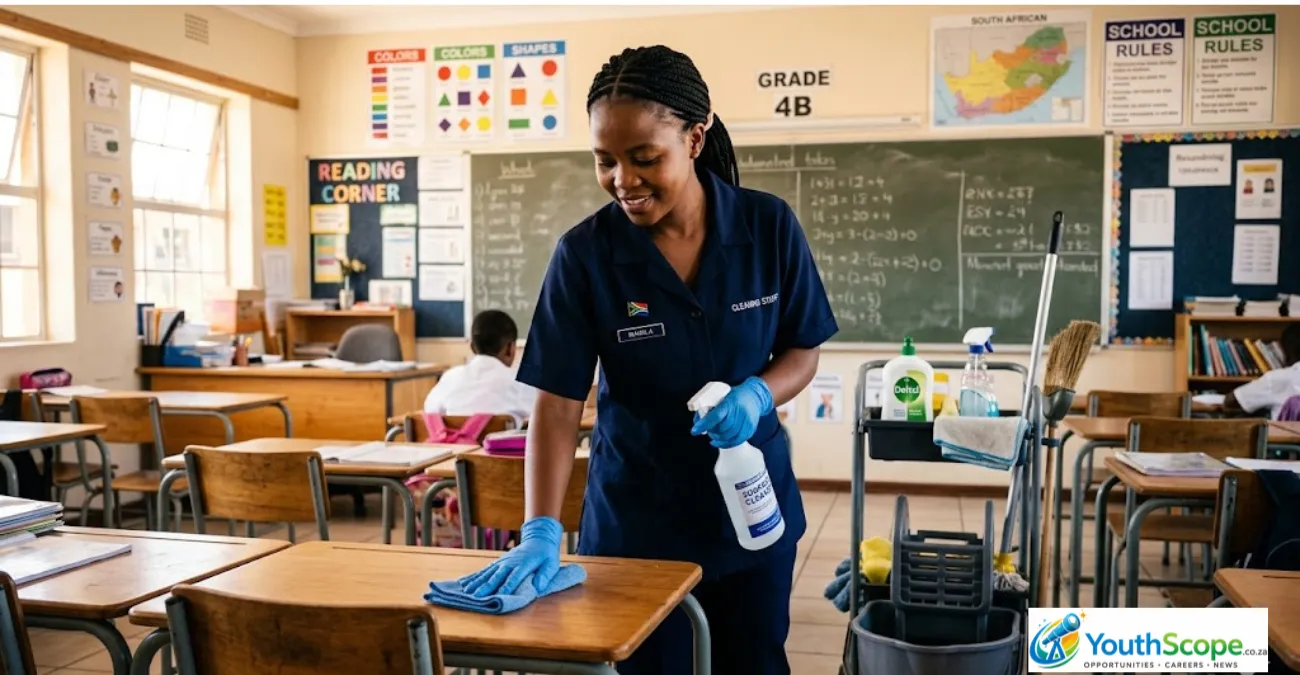
For many unemployed South Africans, school cleaner jobs can provide an important source of stable income and valuable work experience.
Every year, government departments, public schools, TVET colleges, and education institutions advertise classroom cleaner and general worker vacancies across South Africa. These jobs are especially important for people with limited qualifications, little work experience, or those looking for entry-level government employment opportunities.
Yet thousands of people miss these opportunities simply because they do not know where to apply, what documents are needed, or how the government application process works.
If you want to apply for a classroom cleaner job in 2026, this guide explains everything you need to know.
Quick Overview
| Item | Details |
|---|---|
| Job Type | School Classroom Cleaner |
| Country | South Africa |
| Common Employers | Schools, Departments of Education, TVET Colleges |
| Minimum Qualification | Usually Grade 9, Grade 10, ABET or equivalent |
| Experience Needed | Often not required |
| Application Method | Z83 form, CV, email or hand delivery |
| Salary Range | Depends on department and province |
| Main Duties | Cleaning classrooms, toilets, offices, school grounds |
Why Many South Africans Are Searching for Cleaner Jobs in 2026
South Africa continues facing high unemployment, especially among youth and entry-level job seekers.
Because of this, government cleaner vacancies are attracting thousands of applicants because they often offer:
- Stable monthly income
- Government employment benefits
- Entry-level opportunities
- No university qualification requirements
- Work experience opportunities
- Long-term employment potential
For many households, even a general worker or classroom cleaner position can make a major financial difference.
What Does a Classroom Cleaner Do?
Classroom cleaners help maintain clean, safe, and hygienic learning environments for learners, teachers, and staff.
Typical duties include:
- Sweeping and mopping classrooms
- Cleaning desks and furniture
- Sanitising surfaces
- Cleaning school toilets
- Emptying bins
- Cleaning windows
- Maintaining hygiene standards
- Assisting with school cleanliness during events
Some schools may also require cleaners to assist with basic maintenance or school ground cleaning.
Where Classroom Cleaner Jobs Are Usually Advertised
School cleaner vacancies are commonly advertised through:
- Provincial Department of Education websites
- Public Service Vacancy Circulars
- School notice boards
- Community newspapers
- Government job portals
- EPWP programmes
- TVET colleges
- Department of Public Works opportunities
Official government vacancy sources include:
Who Can Apply?
Requirements differ depending on the employer, but many classroom cleaner jobs require:
- South African citizenship
- Grade 9, Grade 10, or ABET qualification
- Ability to read and write
- Good communication skills
- Physical fitness
- Ability to work independently
Many positions do not require previous work experience.
This makes cleaner jobs suitable for:
- Unemployed youth
- Matriculants
- Entry-level job seekers
- Older job seekers
- People returning to work
Documents Needed When Applying
Most school cleaner applications require:
- Certified copy of South African ID
- Updated CV
- School qualification certificate
- Proof of residence
- References (if available)
Government jobs often also require the official Z83 application form.
What Is the Z83 Form?
The Z83 is the official government job application form used for public sector vacancies in South Africa.
You can download it here:
Many applicants get rejected because they complete the form incorrectly.
Step-by-Step: How to Apply for a Classroom Cleaner Job
Step 1: Find an Official Vacancy
Always apply through trusted and official sources.
Carefully read the advert for:
- Closing date
- Requirements
- Reference number
- Submission method
- Province and location
Step 2: Prepare Your Documents
Ensure your:
- CV is updated
- ID copy is certified
- Qualifications are attached
- Documents are clear and readable
Keep copies of everything.
Step 3: Complete the Z83 Form Correctly
Important tips:
- Fill in every section
- Sign the form
- Use the correct reference number
- Write clearly
- Attach your CV
An unsigned Z83 form can lead to automatic disqualification.
Step 4: Submit Your Application
Applications may be submitted:
- By email
- Online
- Hand delivery
- Courier
Some departments require documents merged into one PDF file.
Always follow the instructions exactly as written in the advert.
Step 5: Wait for Shortlisting
If shortlisted, you may be contacted for:
- Interviews
- Reference checks
- Criminal checks
- Document verification
Government departments usually contact only successful candidates.
Common Mistakes That Cause Rejections
Many applications fail because:
- The Z83 form is unsigned
- Wrong reference numbers are used
- Documents are missing
- CVs are outdated
- Applications are submitted late
Taking extra time to review your application can improve your chances significantly.
Mbalizuke Nkosi Expert Insight: How to Stand Out Professionally
One of the biggest mistakes job seekers make is submitting rushed or incomplete applications.
Even for entry-level cleaner jobs, professionalism matters.
To improve your chances:
- Use a clean and simple CV
- Ensure your phone number works
- Check spelling mistakes
- Submit applications before closing dates
- Keep copies of all documents
- Apply consistently instead of waiting for one vacancy
Government cleaner vacancies can receive thousands of applications, so attention to detail is extremely important.
Why School Cleaner Jobs Matter
Although some people overlook cleaner positions, these jobs play an important role in schools and public institutions.
Clean classrooms help:
- Protect learner health
- Improve learning environments
- Reduce illness
- Maintain school safety
- Support teachers and learners daily
For many workers, cleaner jobs also become stepping stones toward long-term employment opportunities.
Other Opportunities You Can Explore
While applying for cleaner jobs, you can also look into:
- EPWP opportunities
- School assistant programmes
- Government internships
- Learnerships
- TVET skills programmes
- Community work programmes
- General worker vacancies
Applying for multiple opportunities increases your chances of employment.
Important Warning About Job Scams
Never pay money for a government job.
Be careful of scammers asking for:
- Registration fees
- “Shortlisting payments”
- Interview payments
- Fast-track fees
Official government job applications are free.
Frequently Asked Questions (FAQ)
Do I need matric to become a school cleaner?
Not always. Many positions require only Grade 9, Grade 10, or ABET.
Can I apply without experience?
Yes. Many cleaner vacancies are entry-level positions.
Where can I find government cleaner vacancies?
Check government websites, vacancy circulars, schools, and provincial education departments regularly.
Is the Z83 form compulsory?
For most government vacancies, yes.
Can I email my application?
Some departments allow email applications, while others require hand delivery or online submissions.
How long does shortlisting take?
It varies depending on the department and number of applicants.
Explore More Opportunities:
Final Thoughts
School classroom cleaner jobs continue providing important employment opportunities for thousands of South Africans in 2026.
For unemployed youth, matriculants, and entry-level job seekers, these vacancies can provide valuable work experience, stable income, and a pathway into government employment.
The most important step is applying correctly, staying organised, and monitoring official vacancies regularly.
Opportunities may be competitive, but consistent applications and professional preparation can improve your chances significantly.
Disclaimer
This article is for informational purposes only. Vacancy requirements, salaries, and application procedures may differ depending on the department or school. Always verify information through official government sources before applying.
“Always verify opportunities from official providers before applying.”

Mbalizuke Nkosi is the editorial voice behind YouthScope.co.za, a South African youth-focused platform dedicated to providing reliable information on opportunities, education, and career development. The platform serves students, graduates, job seekers, and young professionals by delivering accurate, timely, and easy-to-understand content.
Through informative and professionally curated content, YouthScope.co.za aims to equip young people with the knowledge and resources needed to make informed decisions about their education and future careers.
For inquiries or support, please contact admin@youthscope.co.za.