
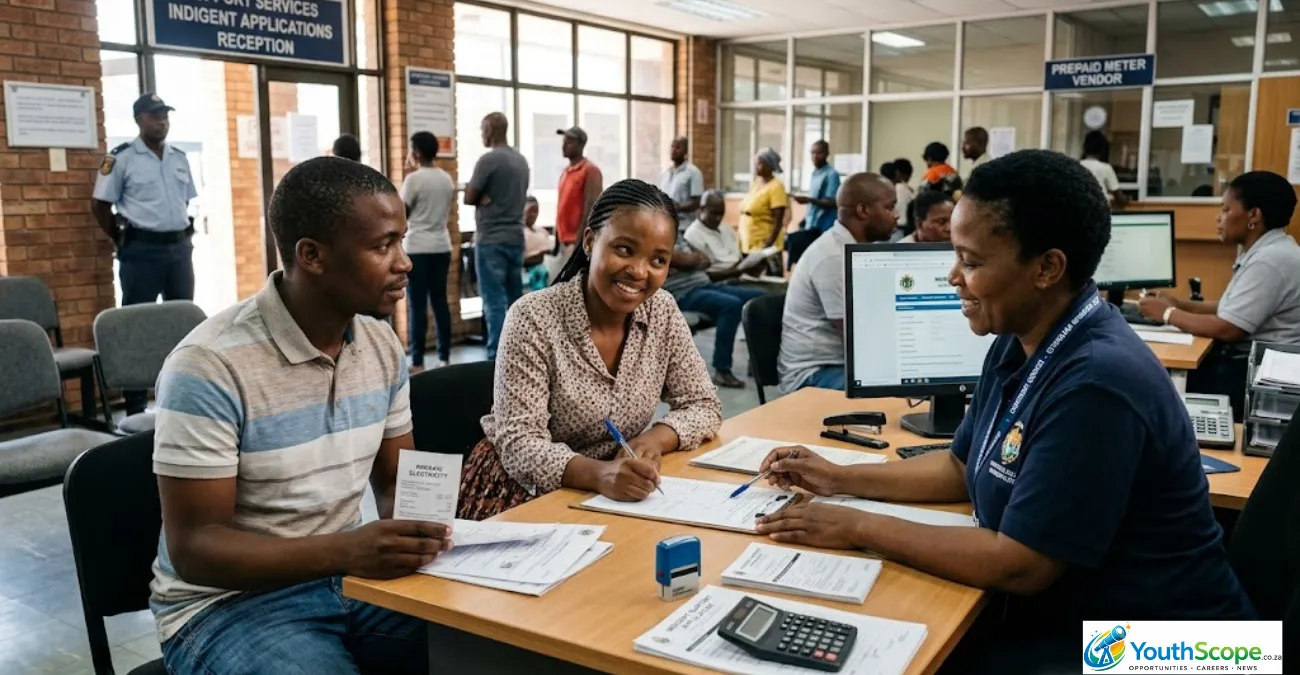
As electricity prices, water bills, and municipal rates continue rising across South Africa, millions of households are struggling to survive financially.
What many people do not realise is that municipalities across the country offer a special assistance programme designed to help low-income families access basic services at reduced costs — and in some cases, completely free.
This programme is called Municipal Indigent Support.
For qualifying households, it can provide:
- Free basic electricity
- Free water allocations
- Reduced municipal bills
- Refuse removal support
- Property rates rebates
- Sanitation assistance
Yet thousands of South Africans never apply because they assume they will not qualify or simply do not understand the process.
If your household is battling to keep up with municipal costs in 2026, this guide explains everything you need to know about applying for indigent support in South Africa.
What You Need to Know Quickly
| Topic | Details |
|---|---|
| What is it? | Municipal financial assistance for low-income households |
| Who qualifies? | South Africans with low or no household income |
| Main benefits | Free electricity, water support, rates rebates |
| Where to apply | Municipal offices or customer service centres |
| Online applications available? | Some municipalities allow online applications |
| Application cost | Free |
| Common documents needed | ID, proof of income, municipal account, proof of residence |
What Is Municipal Indigent Support?
Municipal Indigent Support is a social relief programme offered by local municipalities across South Africa to help struggling households afford essential municipal services.
The programme forms part of government efforts to protect vulnerable families from losing access to electricity, water, sanitation, and refuse removal because of financial hardship.
Every municipality has its own indigent policy, meaning:
- Income limits may differ
- Benefits may vary
- Application processes may change
However, the goal remains the same: helping financially vulnerable households survive difficult economic conditions.
Why More South Africans Are Applying for Indigent Support in 2026
The cost of living crisis continues affecting households across the country.
Many families are struggling with:
- Rising electricity tariffs
- Increasing water costs
- High unemployment
- Growing debt
- Expensive municipal bills
Because of this, more South Africans are turning to municipal assistance programmes for relief.
For some households, indigent support can reduce monthly expenses significantly and make basic survival easier.
What Benefits Can You Receive?
Depending on your municipality, approved households may qualify for several forms of support.
Free Basic Electricity
Many municipalities provide:
- Monthly free electricity units
- Prepaid electricity allocations
- Reduced electricity tariffs
Some households receive up to 50kWh of free electricity monthly.
Free Water Support
Approved households may receive:
- Free monthly water allocations
- Lower water tariffs
- Subsidised water services
Refuse Removal Assistance
Some municipalities reduce or completely remove refuse collection charges for qualifying households.
Sanitation Support
Sanitation and sewer charges may also be subsidised.
Property Rates Rebates
Low-income households, pensioners, and vulnerable residents may qualify for reduced property rates.
Who Qualifies for Municipal Indigent Support?
Each municipality has different qualifying requirements, but common factors include:
- South African citizenship or legal residency
- Low household income
- Unemployment
- SASSA grant dependency
- Disability status
- Pensioner status
- Child-headed households
- Informal settlement residency
Many municipalities prioritise:
- Older persons
- Disability grant recipients
- Child Support Grant beneficiaries
- Unemployed households
Common Income Thresholds
Income limits differ depending on the municipality.
Some municipalities require households to earn:
- Less than R4,000 per month
- Less than R5,000 per month
- Below combined state pension limits
It is important to check your municipality’s official indigent policy before applying.
Documents Usually Needed for Applications
Although requirements vary slightly, municipalities commonly request:
- Certified copy of South African ID
- Latest municipal account
- Proof of residence
- Proof of income
- Bank statements
- SASSA confirmation documents
- UIF proof (if applicable)
- Affidavit confirming unemployment
For Pensioners
You may also need:
- Pension slips
- SASSA confirmation
- Identity documents
For Informal Settlement Residents
Some municipalities may request:
- Ward councillor letters
- Proof of occupancy
Missing documents are one of the biggest reasons applications are delayed or rejected.
Step-by-Step Guide to Applying for Indigent Support
Step 1: Identify Your Municipality
You must apply through the municipality where you live.
Examples include:
- City of Johannesburg
- City of Tshwane
- City of Cape Town
- eThekwini Municipality
Visit the municipality’s official website or customer service centre for information.
Step 2: Check the Qualification Requirements
Before applying, confirm:
- The income threshold
- Whether tenants qualify
- Whether prepaid electricity users qualify
- Which documents are required
Some municipalities only assist property owners, while others also assist tenants.
Step 3: Prepare Your Supporting Documents
Ensure all paperwork is:
- Certified where required
- Clear and readable
- Recent and valid
Double-check everything before submission.
Step 4: Complete the Application Form
Application forms are usually available:
- At municipal offices
- Customer care centres
- Municipal websites
- Ward offices
Complete every section carefully and honestly.
Step 5: Submit Your Application
Applications are commonly submitted:
- In person
- Through municipal customer centres
- Via ward offices
- Online where available
Always request:
- A reference number
- Proof of submission
- A stamped copy if possible
Step 6: Municipal Verification Process
Municipalities may:
- Verify household income
- Conduct home visits
- Confirm SASSA records
- Review bank statements
- Verify occupancy details
This process helps prevent fraud and ensures assistance reaches qualifying households
Step 7: Approval or Rejection
If approved:
- Your municipal account may be adjusted
- Free electricity units may begin loading monthly
- Rates and service charges may be reduced
If rejected:
- You may request reasons
- You may appeal
- You can reapply after correcting issues
How Long Does Approval Take?
Approval times differ depending on the municipality.
Typical waiting periods range from:
- 14 days
- Up to 90 days in some cases
Delays often happen because:
- Documents are incomplete
- Verification is still pending
- Municipal accounts are problematic
- Information cannot be confirmed
Important Things Many Applicants Do Not Know
You May Need to Reapply Every Year
Many municipalities require annual renewal.
Beneficiaries may need to:
- Re-register yearly
- Update income information
- Submit fresh documents
Failure to renew may result in benefits stopping automatically.
Prepaid Electricity Users Can Also Qualify
Many people incorrectly believe prepaid electricity users cannot receive assistance.
In reality, many municipalities load free electricity units directly onto prepaid systems every month.
False Information Can Lead to Disqualification
Providing false information may lead to:
- Removal from the indigent register
- Municipal penalties
- Legal consequences
Always provide accurate information.
Common Reasons Applications Get Rejected
Applications are frequently declined because of:
- Income exceeding the threshold
- Missing documents
- Incorrect information
- Account ownership problems
- Unverified unemployment status
- Applicant not residing at the property
Carefully reviewing your application before submission can improve your chances.
Can SASSA Beneficiaries Apply?
Yes. Many SASSA beneficiaries qualify for indigent support.
This may include recipients of:
- Older Person’s Grant
- Disability Grant
- Child Support Grant
Some municipalities prioritise vulnerable grant-dependent households.
Can Unemployed Youth Apply?
Yes, especially if:
- You are responsible for the household
- Household income falls below the required threshold
- You can provide proof of unemployment
Young South Africans supporting unemployed households are increasingly applying for municipal relief programmes in 2026.
Mbalizuke Nkosi Expert Insight: How to Improve Your Chances of Approval
One of the biggest mistakes applicants make is submitting incomplete documents or assuming municipalities will contact them automatically.
To improve your chances:
- Make certified copies before submission
- Keep your reference number safe
- Follow up regularly
- Ensure your municipal account details are correct
- Ask for written reasons if rejected
Many successful applicants stay proactive throughout the process instead of waiting silently after applying.
Extra Advice for Struggling Households
If your household is under financial pressure, indigent support should not be your only relief strategy.
You can also explore:
- Government internship programmes
- Learnership opportunities
- SETA-funded skills training
- EPWP opportunities
- Community employment programmes
- Financial literacy support
Combining municipal assistance with skills development opportunities can improve long-term financial stability.
Frequently Asked Questions (FAQ)
Is indigent support the same as a SASSA grant?
No. Indigent support is specifically for municipal services like electricity, water, sanitation, and refuse removal.
Can I apply online?
Some municipalities allow online applications, while others require in-person applications.
Do tenants qualify?
Some municipalities allow tenants to apply, while others only assist account holders or property owners.
Is there an age limit?
No. Qualification is mainly based on household income and financial need.
Can pensioners qualify automatically?
Not automatically, but many pensioners qualify because of low income.
Do unemployed people qualify?
Yes, if they meet municipal income requirements.
Is it free to apply?
Yes. Applications are free.
Explore More Opportunities:
Final Thoughts
Municipal Indigent Support has become one of the most important financial relief programmes for struggling South African households.
With electricity, water, and municipal costs continuing to rise, many families could benefit from assistance they never realised existed.
Thousands of people only discover these benefits years later — after struggling unnecessarily with bills they may have received help with.
If your household is facing financial pressure, the most important step is simply checking whether you qualify and submitting an application.
Disclaimer
This article is for informational purposes only. Municipal indigent policies and qualifying requirements may differ across municipalities in South Africa. Always verify information through your local municipality before applying.
“Always verify opportunities from official providers before applying.”

Mbalizuke Nkosi is the editorial voice behind YouthScope.co.za, a South African youth-focused platform dedicated to providing reliable information on opportunities, education, and career development. The platform serves students, graduates, job seekers, and young professionals by delivering accurate, timely, and easy-to-understand content.
Through informative and professionally curated content, YouthScope.co.za aims to equip young people with the knowledge and resources needed to make informed decisions about their education and future careers.
For inquiries or support, please contact admin@youthscope.co.za.