
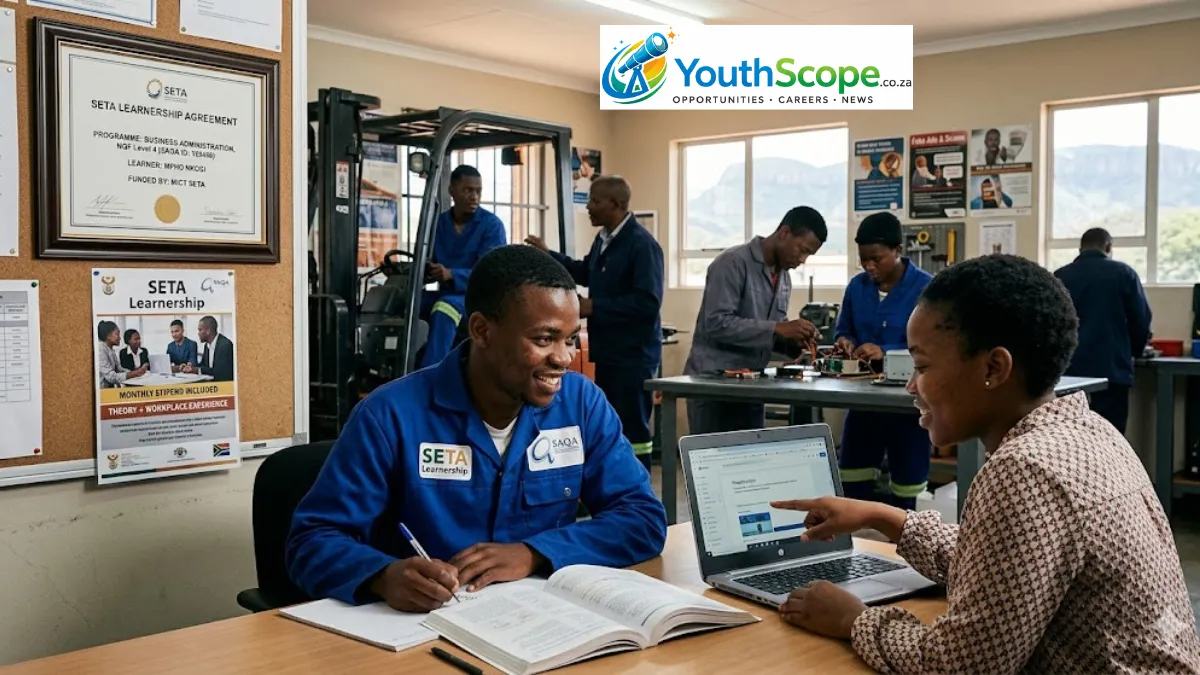
How to Apply for SETA Learnerships in 2026
SETA learnerships remain one of the most powerful ways for young South Africans to gain skills, earn experience, and receive a monthly stipend while studying. These programmes are funded through Sector Education and Training Authorities (SETAs) and are designed to help reduce unemployment by building job-ready skills.
If you are planning to apply in 2026, the process is simple — but you need to know where to look, what to prepare, and how to avoid scams.
This guide explains everything step by step.
What Is a SETA Learnership?
A SETA learnership is a structured programme that combines:
- Classroom learning (theory)
- Workplace training (practical experience)
- A nationally recognised qualification (NQF-aligned)
These programmes are offered across different industries such as:
- IT
- Banking
- Engineering
- Retail
- Healthcare
- Transport
The goal is to help you become employable with real skills.
Step-by-Step: How to Apply for SETA Learnerships in 2026
Step 1: Choose Your Career Path
Before applying, decide what field you want to enter.
Popular options include:
- MICT SETA → IT, cybersecurity, digital skills
- BANKSETA → Banking and finance
- merSETA → Engineering and motor industry
- HWSETA → Healthcare and social work
- TETA → Transport and logistics
- Services SETA → Admin, retail, business services
Choosing the right SETA improves your chances of selection.
Step 2: Check Entry Requirements
Most learnerships require:
- South African ID
- Matric certificate (some accept Grade 11 or 10)
- CV (updated and professional)
- Proof of residence
- Basic communication and numeracy skills
Some programmes may have additional requirements depending on the industry.
Step 3: Prepare Your Documents
Make sure you have clear and certified copies of:
- South African ID
- Matric certificate or latest school results
- CV (1–2 pages maximum)
- Qualifications (if available)
- Proof of address
Tip: Keep scanned copies ready for online applications.
Step 4: Find Open SETA Learnerships
You can find opportunities on:
Official sources:
- SETA websites (e.g. MICT SETA, BANKSETA, merSETA)
- Government career portals
- TVET colleges
Job platforms:
- Company websites
- Recruitment portals
- LinkedIn job posts
Important:
Always check that the learnership is registered and free to apply.
Step 5: Apply Online or via Email
Most 2026 applications are done online.
You may need to:
- Fill in an online form
- Upload your CV and documents
- Submit via email or recruitment portal
Some SETAs use systems like CV databases where you register once and get matched later.
Step 6: Wait for Shortlisting
If you meet the requirements:
- You may receive an SMS or email
- You could be invited for an interview
- Some programmes include assessments or tests
Response time can range from a few weeks to several months.
Step 7: Attend Interviews or Assessments
If shortlisted, you may be required to:
- Attend an interview
- Complete a basic skills test
- Provide additional documents
Be prepared to explain:
- Why you want the learnership
- Your career goals
- Your availability and commitment
Step 8: Sign the Learnership Agreement
If successful, you will sign a formal agreement between:
- You (the learner)
- Employer
- Training provider
This contract outlines:
- Duration (usually 12–24 months)
- Training structure
- Stipend amount
- Rules and responsibilities
Step 9: Start Training and Work
Once accepted:
- You attend classroom training
- You gain workplace experience
- You receive a monthly stipend
This is where you start building real job skills.
How Much Do You Get Paid in 2026?
SETA learnerships usually pay a monthly stipend, not a salary.
Typical ranges:
- R2,000 – R3,500 → Entry-level
- R3,500 – R5,500 → Standard programmes
- R5,500 – R8,000+ → Technical or scarce skills
The amount depends on the SETA and employer.
Common Mistakes to Avoid
Paying to apply
Real SETA learnerships are always free.
Using fake job links
Only apply through trusted sources.
Submitting incomplete CVs
A weak CV reduces your chances.
Missing deadlines
Applications close quickly.
Ignoring emails or SMS
You may lose your opportunity if you don’t respond.
Tips to Increase Your Chances
- Apply for multiple learnerships
- Keep your CV simple and professional
- Improve basic computer skills
- Check emails daily
- Apply early in the year (Jan–June is peak season)
- Focus on high-demand sectors like IT and engineering
Why SETA Learnerships Matter in 2026
SETA programmes are important because they:
- Reduce youth unemployment
- Provide real workplace experience
- Offer a pathway to permanent jobs
- Help you gain recognised qualifications
- Improve long-term career prospects
For many young South Africans, this is the first step into a career.
You Can Also Check:
Final Thoughts
Applying for SETA learnerships in 2026 is not complicated, but it requires preparation and consistency. If you follow the correct steps — choosing the right SETA, preparing documents, and applying early — you significantly improve your chances of success.
Stay focused, avoid scams, and apply widely across different sectors to increase your opportunities.
FAQs – How to Apply for SETA Learnerships
Do I need matric to apply for SETA learnerships?
Most programmes require matric, but some accept Grade 10 or 11 depending on the SETA.
Are SETA learnerships free?
Yes. You should never pay to apply for a SETA learnership.
How long do learnerships last?
Most run for 12 to 24 months.
Do I get paid during a learnership?
Yes, most learners receive a monthly stipend.
Where can I apply for SETA learnerships?
You can apply through SETA websites, company portals, TVET colleges, and verified job platforms.

Mbalizuke Nkosi is the editorial voice behind YouthScope.co.za, a South African youth-focused platform dedicated to providing reliable information on opportunities, education, and career development. The platform serves students, graduates, job seekers, and young professionals by delivering accurate, timely, and easy-to-understand content.
Through informative and professionally curated content, YouthScope.co.za aims to equip young people with the knowledge and resources needed to make informed decisions about their education and future careers.
For inquiries or support, please contact admin@youthscope.co.za.