Category Archives: Career Insights

Tired of Long Home Affairs Queues? Here’s How South Africans Can Book Appointments Online in 2026

For many South Africans, visiting Home Affairs often means waking up before sunrise, standing in long queues, and hoping to be assisted before the office becomes overcrowded.

But thousands of people still do not know that certain Home Affairs services can now be booked online before visiting an office or selected bank branch.

Using the online booking system correctly can help you save time, avoid unnecessary stress, and make the entire process far easier — especially for students, job seekers, graduates, and working South Africans who cannot afford to lose an entire day waiting in a queue.

If you need a Smart ID, passport, birth certificate, or document collection in 2026, this guide explains how to book a Home Affairs appointment online step by step.

Quick Overview

ItemDetails
ServiceHome Affairs Online Booking
CountrySouth Africa
Main PurposeBook appointments to reduce waiting times
Services AvailableSmart ID, Passport, Collections, Civic Services
Official PlatformeHomeAffairs
Registration CostFree
Main RequirementsSA ID number, cellphone number, email
Available AtSelected Home Affairs offices and bank branches
Booking MethodOnline appointment scheduling

Why More South Africans Are Booking Home Affairs Appointments Online

Home Affairs offices across South Africa continue experiencing extremely high demand.

Many people spend hours in queues for services such as:

  • Smart ID applications
  • Passport renewals
  • Birth certificate requests
  • ID collections
  • Replacement documents

Because of overcrowding, more South Africans are turning to online bookings to avoid wasting time.

Online appointment systems help people:

  • Reduce waiting times
  • Avoid arriving before sunrise
  • Select available dates and time slots
  • Prepare documents in advance
  • Avoid repeat visits
  • Access services at participating banks

For young people applying for jobs, internships, bursaries, learnerships, and university admissions, having updated documents quickly can be extremely important.

What Is eHomeAffairs?

Department of Home Affairs introduced the eHomeAffairs platform to modernise and digitise selected services.

The system allows South Africans to:

  • Apply for Smart ID cards
  • Apply for passports
  • Make online payments
  • Book appointments
  • Track applications
  • Schedule collections
  • Use participating bank branches

The platform is especially useful for people applying for:

  • First Smart IDs
  • Passport renewals
  • Lost or damaged IDs
  • Passport collections
  • Certain civic services

Step-by-Step Guide: How to Book a Home Affairs Appointment Online

Step 1: Visit the Official eHomeAffairs Website

Go to the official eHomeAffairs platform:

eHomeAffairs Portal

Always use the official government website to avoid scams or fake booking services.

Step 2: Register an Account

If you are using the platform for the first time:

  • Click “Register”
  • Enter your:
    • South African ID number
    • Full names
    • Cellphone number
    • Email address
    • Password

You will receive a One-Time Pin (OTP) to verify your account.

Once verified, log into your profile.

Step 3: Choose the Service You Need

After logging in, select the service you want.

Common options include:

  • Smart ID Card
  • Passport Application
  • Child Passport
  • Passport Renewal
  • ID Replacement
  • Collection Appointment

The system may request additional details depending on the service selected.

Step 4: Choose an Office or Bank Branch

You can then select where you want your appointment.

Options may include:

  • Home Affairs offices
  • Participating bank branches

Some major banks linked to eHomeAffairs include:

  • Absa
  • FNB
  • Nedbank
  • Standard Bank

Bank branches are often cleaner, faster, and less crowded than traditional offices, but appointment spaces fill quickly.

Step 5: Select an Available Date and Time

The platform will display available booking slots.

Choose:

  • Your preferred date
  • Available time slot

Morning appointments are usually better because offices become busier later in the day.

Step 6: Confirm Your Booking

Before finalising:

  • Review your details carefully
  • Confirm the appointment
  • Save or print the confirmation

You may receive:

  • SMS confirmation
  • Email confirmation
  • Booking reference number

Keep this information safe because officials may request it when you arrive.

Documents You May Need to Bring

The required documents depend on the service booked.

For Smart ID Applications

You may need:

  • Green ID book
  • Birth certificate for first-time applicants
  • Proof of payment if required

For Passport Applications

You may need:

  • Existing passport
  • Smart ID or green ID book
  • Passport photos if requested

For Child Applications

Parents or guardians may need:

  • Birth certificate
  • Parent IDs
  • Consent forms

Always verify requirements through official Home Affairs channels before your appointment.

Can You Book Home Affairs Appointments at Banks?

Yes. Some bank branches in South Africa work with Home Affairs to process selected services.

This allows qualifying clients to:

  • Apply for Smart IDs
  • Apply for passports
  • Complete biometrics
  • Collect documents

Many South Africans prefer bank branches because they are often:

  • Faster
  • Better organised
  • Less crowded
  • More comfortable

However, there are limitations:

  • Not all banks participate
  • Not all branches offer the service
  • Some branches assist only bank clients
  • Appointment slots fill quickly

Common Problems People Experience

Although the system is helpful, users sometimes encounter problems.

No Available Booking Slots

This is extremely common.

Try:

  • Logging in early mornings
  • Checking nearby towns or cities
  • Looking for cancellations
  • Trying different branches

OTP Not Received

SMS delays sometimes happen.

You can:

  • Wait a few minutes
  • Retry later
  • Confirm your cellphone number is correct

Website Errors or Slow Loading

The platform may become slow during peak periods.

Try:

  • Using another browser
  • Clearing browser cache
  • Using stable internet
  • Logging in during quieter hours

Tips to Avoid Home Affairs Queues Completely

Book as Early as Possible

Appointments can fill quickly.

Try booking:

  • Several weeks ahead
  • Early in the morning
  • Mid-week instead of Mondays

Arrive Before Your Appointment Time

Even with bookings, arriving early helps.

Aim to arrive:

  • 30 to 45 minutes early

Bring Every Required Document

Many delays happen because applicants arrive unprepared.

Double-check:

  • Certified copies
  • Original documents
  • Payment confirmations
  • Photos if needed

Avoid Peak Seasons

Home Affairs offices become extremely busy during:

  • December holidays
  • January registrations
  • NSFAS season
  • University registration periods

Use Bank Branches if Possible

Participating banks are often much faster than ordinary offices.

Who Should Use Online Bookings?

Online appointments are especially useful for:

  • Students
  • Job seekers
  • Graduates
  • Workers with limited leave days
  • Parents with children
  • Elderly people
  • Passport applicants

It can save many hours that would otherwise be spent standing in queues.

Is the Online Booking System Free?

Yes. Registering and booking through eHomeAffairs is completely free.

However, normal fees still apply for services such as:

  • Passports
  • ID replacements
  • Certain certificates

Be careful of scammers charging fake “booking fees” online.

Why This Matters for Students and Job Seekers

Many opportunities in South Africa require updated documents.

Without valid IDs or passports, young people can miss:

  • Learnership opportunities
  • NSFAS applications
  • Government jobs
  • TVET college admissions
  • Internship programmes
  • Bursary applications

Knowing how to access Home Affairs services efficiently can help avoid delays that affect education and career opportunities.

Mbalizuke Nkosi Expert Insight: How to Make Your Appointment Successful

One of the biggest mistakes applicants make is assuming the booking alone guarantees fast service.

Preparation still matters.

To improve your experience:

  • Save screenshots of confirmations
  • Arrive early
  • Bring extra document copies
  • Double-check requirements beforehand
  • Avoid relying on unofficial “agents”

Applicants who prepare properly usually complete the process much faster and avoid repeat visits.

Frequently Asked Questions (FAQ)

Can I visit Home Affairs without an appointment?

Yes. Some offices still accept walk-ins, but queues may be extremely long.

Is online booking available nationwide?

Yes, but appointment availability differs between offices and provinces.

Can I change or cancel my booking?

In many cases, yes. You can manage bookings through your eHomeAffairs account.

Do I need online banking?

Some services may require online payment methods linked to participating banks.

Are bank branches faster?

Usually yes, but spaces are limited and often fully booked quickly.

Can I collect my ID without booking?

Some collections still require queueing depending on the office or branch.

Explore More Opportunities:

Final Thoughts

The Home Affairs online booking system is helping many South Africans avoid long queues and save valuable time.

Whether you are applying for a Smart ID, passport, or collecting important documents, learning how to use eHomeAffairs properly can make the process far easier and less stressful.

For students, graduates, and job seekers especially, having updated documents quickly can open doors to education, employment, internships, bursaries, and government opportunities.

The key is simple: prepare early, book carefully, and always use official government platforms.

Disclaimer

This article is for informational purposes only. Home Affairs processes, appointment availability, and participating bank branches may change over time. Always verify information through official government channels before applying.

“Always verify opportunities from official providers before applying.”

Thousands of South Africans Could Get Free Electricity and Water in 2026 — Here’s How Municipal Indigent Support Works

As electricity prices, water bills, and municipal rates continue rising across South Africa, millions of households are struggling to survive financially.

What many people do not realise is that municipalities across the country offer a special assistance programme designed to help low-income families access basic services at reduced costs — and in some cases, completely free.

This programme is called Municipal Indigent Support.

For qualifying households, it can provide:

  • Free basic electricity
  • Free water allocations
  • Reduced municipal bills
  • Refuse removal support
  • Property rates rebates
  • Sanitation assistance

Yet thousands of South Africans never apply because they assume they will not qualify or simply do not understand the process.

If your household is battling to keep up with municipal costs in 2026, this guide explains everything you need to know about applying for indigent support in South Africa.

What You Need to Know Quickly

TopicDetails
What is it?Municipal financial assistance for low-income households
Who qualifies?South Africans with low or no household income
Main benefitsFree electricity, water support, rates rebates
Where to applyMunicipal offices or customer service centres
Online applications available?Some municipalities allow online applications
Application costFree
Common documents neededID, proof of income, municipal account, proof of residence

What Is Municipal Indigent Support?

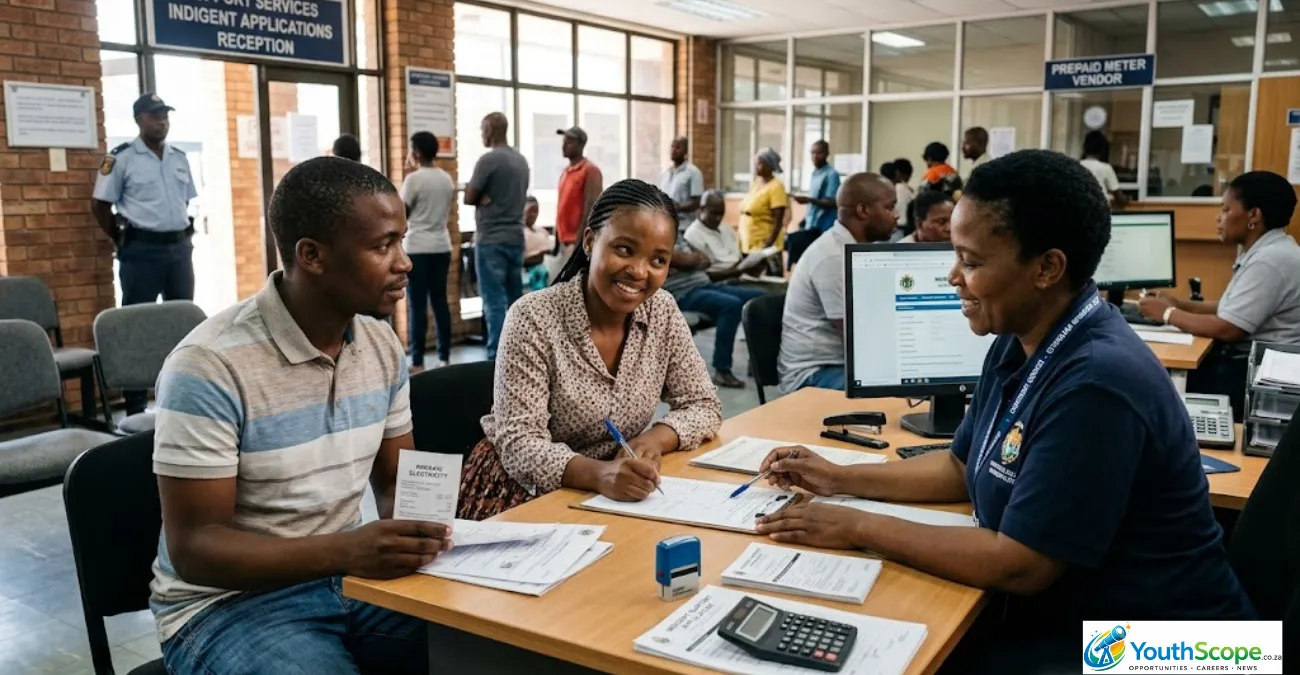
Municipal Indigent Support is a social relief programme offered by local municipalities across South Africa to help struggling households afford essential municipal services.

The programme forms part of government efforts to protect vulnerable families from losing access to electricity, water, sanitation, and refuse removal because of financial hardship.

Every municipality has its own indigent policy, meaning:

  • Income limits may differ
  • Benefits may vary
  • Application processes may change

However, the goal remains the same: helping financially vulnerable households survive difficult economic conditions.

Why More South Africans Are Applying for Indigent Support in 2026

The cost of living crisis continues affecting households across the country.

Many families are struggling with:

  • Rising electricity tariffs
  • Increasing water costs
  • High unemployment
  • Growing debt
  • Expensive municipal bills

Because of this, more South Africans are turning to municipal assistance programmes for relief.

For some households, indigent support can reduce monthly expenses significantly and make basic survival easier.

What Benefits Can You Receive?

Depending on your municipality, approved households may qualify for several forms of support.

Free Basic Electricity

Many municipalities provide:

  • Monthly free electricity units
  • Prepaid electricity allocations
  • Reduced electricity tariffs

Some households receive up to 50kWh of free electricity monthly.

Free Water Support

Approved households may receive:

  • Free monthly water allocations
  • Lower water tariffs
  • Subsidised water services

Refuse Removal Assistance

Some municipalities reduce or completely remove refuse collection charges for qualifying households.

Sanitation Support

Sanitation and sewer charges may also be subsidised.

Property Rates Rebates

Low-income households, pensioners, and vulnerable residents may qualify for reduced property rates.

Who Qualifies for Municipal Indigent Support?

Each municipality has different qualifying requirements, but common factors include:

  • South African citizenship or legal residency
  • Low household income
  • Unemployment
  • SASSA grant dependency
  • Disability status
  • Pensioner status
  • Child-headed households
  • Informal settlement residency

Many municipalities prioritise:

  • Older persons
  • Disability grant recipients
  • Child Support Grant beneficiaries
  • Unemployed households

Common Income Thresholds

Income limits differ depending on the municipality.

Some municipalities require households to earn:

  • Less than R4,000 per month
  • Less than R5,000 per month
  • Below combined state pension limits

It is important to check your municipality’s official indigent policy before applying.

Documents Usually Needed for Applications

Although requirements vary slightly, municipalities commonly request:

  • Certified copy of South African ID
  • Latest municipal account
  • Proof of residence
  • Proof of income
  • Bank statements
  • SASSA confirmation documents
  • UIF proof (if applicable)
  • Affidavit confirming unemployment

For Pensioners

You may also need:

  • Pension slips
  • SASSA confirmation
  • Identity documents

For Informal Settlement Residents

Some municipalities may request:

  • Ward councillor letters
  • Proof of occupancy

Missing documents are one of the biggest reasons applications are delayed or rejected.

Step-by-Step Guide to Applying for Indigent Support

Step 1: Identify Your Municipality

You must apply through the municipality where you live.

Examples include:

  • City of Johannesburg
  • City of Tshwane
  • City of Cape Town
  • eThekwini Municipality

Visit the municipality’s official website or customer service centre for information.

Step 2: Check the Qualification Requirements

Before applying, confirm:

  • The income threshold
  • Whether tenants qualify
  • Whether prepaid electricity users qualify
  • Which documents are required

Some municipalities only assist property owners, while others also assist tenants.

Step 3: Prepare Your Supporting Documents

Ensure all paperwork is:

  • Certified where required
  • Clear and readable
  • Recent and valid

Double-check everything before submission.

Step 4: Complete the Application Form

Application forms are usually available:

  • At municipal offices
  • Customer care centres
  • Municipal websites
  • Ward offices

Complete every section carefully and honestly.

Step 5: Submit Your Application

Applications are commonly submitted:

  • In person
  • Through municipal customer centres
  • Via ward offices
  • Online where available

Always request:

  • A reference number
  • Proof of submission
  • A stamped copy if possible

Step 6: Municipal Verification Process

Municipalities may:

  • Verify household income
  • Conduct home visits
  • Confirm SASSA records
  • Review bank statements
  • Verify occupancy details

This process helps prevent fraud and ensures assistance reaches qualifying households

Step 7: Approval or Rejection

If approved:

  • Your municipal account may be adjusted
  • Free electricity units may begin loading monthly
  • Rates and service charges may be reduced

If rejected:

  • You may request reasons
  • You may appeal
  • You can reapply after correcting issues

How Long Does Approval Take?

Approval times differ depending on the municipality.

Typical waiting periods range from:

  • 14 days
  • Up to 90 days in some cases

Delays often happen because:

  • Documents are incomplete
  • Verification is still pending
  • Municipal accounts are problematic
  • Information cannot be confirmed

Important Things Many Applicants Do Not Know

You May Need to Reapply Every Year

Many municipalities require annual renewal.

Beneficiaries may need to:

  • Re-register yearly
  • Update income information
  • Submit fresh documents

Failure to renew may result in benefits stopping automatically.

Prepaid Electricity Users Can Also Qualify

Many people incorrectly believe prepaid electricity users cannot receive assistance.

In reality, many municipalities load free electricity units directly onto prepaid systems every month.

False Information Can Lead to Disqualification

Providing false information may lead to:

  • Removal from the indigent register
  • Municipal penalties
  • Legal consequences

Always provide accurate information.

Common Reasons Applications Get Rejected

Applications are frequently declined because of:

  • Income exceeding the threshold
  • Missing documents
  • Incorrect information
  • Account ownership problems
  • Unverified unemployment status
  • Applicant not residing at the property

Carefully reviewing your application before submission can improve your chances.

Can SASSA Beneficiaries Apply?

Yes. Many SASSA beneficiaries qualify for indigent support.

This may include recipients of:

  • Older Person’s Grant
  • Disability Grant
  • Child Support Grant

Some municipalities prioritise vulnerable grant-dependent households.

Can Unemployed Youth Apply?

Yes, especially if:

  • You are responsible for the household
  • Household income falls below the required threshold
  • You can provide proof of unemployment

Young South Africans supporting unemployed households are increasingly applying for municipal relief programmes in 2026.

Mbalizuke Nkosi Expert Insight: How to Improve Your Chances of Approval

One of the biggest mistakes applicants make is submitting incomplete documents or assuming municipalities will contact them automatically.

To improve your chances:

  • Make certified copies before submission
  • Keep your reference number safe
  • Follow up regularly
  • Ensure your municipal account details are correct
  • Ask for written reasons if rejected

Many successful applicants stay proactive throughout the process instead of waiting silently after applying.

Extra Advice for Struggling Households

If your household is under financial pressure, indigent support should not be your only relief strategy.

You can also explore:

  • Government internship programmes
  • Learnership opportunities
  • SETA-funded skills training
  • EPWP opportunities
  • Community employment programmes
  • Financial literacy support

Combining municipal assistance with skills development opportunities can improve long-term financial stability.

Frequently Asked Questions (FAQ)

Is indigent support the same as a SASSA grant?

No. Indigent support is specifically for municipal services like electricity, water, sanitation, and refuse removal.

Can I apply online?

Some municipalities allow online applications, while others require in-person applications.

Do tenants qualify?

Some municipalities allow tenants to apply, while others only assist account holders or property owners.

Is there an age limit?

No. Qualification is mainly based on household income and financial need.

Can pensioners qualify automatically?

Not automatically, but many pensioners qualify because of low income.

Do unemployed people qualify?

Yes, if they meet municipal income requirements.

Is it free to apply?

Yes. Applications are free.

Explore More Opportunities:

Final Thoughts

Municipal Indigent Support has become one of the most important financial relief programmes for struggling South African households.

With electricity, water, and municipal costs continuing to rise, many families could benefit from assistance they never realised existed.

Thousands of people only discover these benefits years later — after struggling unnecessarily with bills they may have received help with.

If your household is facing financial pressure, the most important step is simply checking whether you qualify and submitting an application.

Disclaimer

This article is for informational purposes only. Municipal indigent policies and qualifying requirements may differ across municipalities in South Africa. Always verify information through your local municipality before applying.

“Always verify opportunities from official providers before applying.”

Thousands of South Africans Could Qualify for Compensation Fund Money — Here’s How to Claim What You Deserve

Many South Africans work in dangerous environments every day without realising that they may qualify for financial support if they get injured or become sick because of their jobs.

From construction workers and drivers to cleaners, miners, security guards and domestic workers, the Compensation Fund exists to help employees recover financially after workplace accidents or occupational illnesses.

Sadly, thousands of workers never claim because they do not understand the process, fear losing their jobs, or simply do not know their rights.

If you were injured at work, diagnosed with a work-related illness, or lost a loved one due to a workplace incident, this guide could help you understand how to access Compensation Fund benefits in South Africa.

What You Need to Know Quickly

TopicDetails
What is the Compensation Fund?Financial assistance for workers injured or made ill because of work
Managed byDepartment of Employment and Labour
Who can claim?Employees injured at work or diagnosed with occupational diseases
Can families claim?Yes, dependants may qualify after workplace deaths
Cost to applyFree
Common claimsInjuries, disability, medical costs, death benefits
Required documentsID, medical reports, employer forms, banking details
How to claimThrough employer, labour office, or Compensation Fund channels

Why the Compensation Fund Matters More Than Ever

For many families, losing an income because of a workplace injury can create immediate financial pressure.

Medical bills, transport costs, rehabilitation, and lost wages can quickly become overwhelming.

The Compensation Fund was created to protect workers during these difficult moments. Instead of employees having to fight expensive legal battles against employers, the fund provides financial support for approved workplace injury and occupational disease claims.

This protection applies across many industries in South Africa, including:

  • Construction
  • Mining
  • Security
  • Retail
  • Cleaning services
  • Agriculture
  • Transport and logistics
  • Government departments
  • Domestic work
  • Manufacturing and factories

Understanding How the Compensation Fund Works in South Africa

The Compensation Fund operates under the Compensation for Occupational Injuries and Diseases Act (COIDA).

Its role is to assist workers who:

  • Get injured while performing work duties
  • Develop illnesses because of workplace exposure
  • Become temporarily or permanently disabled
  • Need medical treatment after workplace accidents
  • Lose income during recovery
  • Pass away because of work-related incidents or diseases

The system is managed by the Department of Employment and Labour and forms part of South Africa’s worker protection framework.

Who Can Claim From the Compensation Fund?

You may qualify if:

  • You were injured while working
  • You developed an occupational illness
  • You became disabled due to a workplace incident
  • You suffered long-term health complications from workplace exposure
  • You are financially dependent on a worker who died because of a work-related injury or disease

Many South Africans wrongly believe casual workers or contract employees cannot claim. In many cases, workers still have rights under COIDA protections.

Domestic workers may also qualify for Compensation Fund benefits.

Common Workplace Injuries That May Qualify

Some of the most common claims include:

  • Falling from heights
  • Machinery accidents
  • Vehicle accidents during work duties
  • Chemical exposure
  • Burns
  • Broken bones
  • Head injuries
  • Hearing loss
  • Repetitive strain injuries
  • Lung diseases caused by workplace conditions

Workers in mining, manufacturing, construction, and transport industries often face higher workplace injury risks.

Occupational Diseases That Could Qualify for Compensation

Not all Compensation Fund claims involve sudden accidents.

Some workers develop illnesses slowly over time because of unsafe workplace conditions.

Examples include:

  • Occupational asthma
  • Lung diseases
  • Chemical poisoning
  • Skin conditions
  • Hearing damage
  • Mining-related diseases

Medical specialists may need to confirm that the illness is directly linked to workplace exposure.

What the Compensation Fund May Pay For

Depending on the severity of the case, workers or dependants may receive different types of support.

Temporary Disability Benefits

Workers who cannot work for a period after an injury may receive partial income replacement.

Permanent Disability Compensation

Employees with long-term disabilities may receive:

  • Ongoing payments
  • Pension support
  • Lump-sum compensation

Medical Expenses

The fund may cover:

  • Hospital treatment
  • Surgery
  • Medication
  • Rehabilitation
  • Medical consultations

Death Benefits for Families

Families of workers who passed away due to workplace injuries or occupational diseases may qualify for:

  • Funeral assistance
  • Pension support
  • Financial compensation

The Biggest Mistake Workers Make After Getting Injured

One of the most common reasons claims get delayed or rejected is late reporting.

Many workers wait too long because they:

  • Fear dismissal
  • Hope the injury improves
  • Do not understand the process
  • Trust employers to handle everything

If you are injured at work, act immediately.

You should:

  • Inform your employer as soon as possible
  • Visit a doctor or hospital immediately
  • Ensure the incident is officially recorded
  • Keep copies of all medical reports and paperwork

Fast action can significantly improve your chances of a successful claim.

Important Documents You May Need

The required documents may vary depending on the claim, but commonly include:

  • Certified copy of your South African ID
  • Medical reports
  • Employer accident report
  • Banking details
  • Proof of employment
  • Affidavit (if required)
  • Death certificate for dependant claims
  • Marriage or birth certificates for dependants

Always make copies of every document before submission.

Step-by-Step Guide to Claiming Compensation Fund Money

Step 1: Report the Injury Immediately

Notify your employer as soon as possible after the workplace injury or diagnosis.

Employers are responsible for reporting workplace incidents to the Compensation Fund.

Step 2: Get Medical Treatment

Visit a healthcare provider immediately.

Medical reports are critical because they explain:

  • The nature of the injury
  • Severity of the condition
  • Required treatment
  • Whether you can continue working

Step 3: Ensure the Claim Is Submitted

Employers usually complete and submit official Compensation Fund forms.

These may include:

  • Employer accident reports
  • Medical assessments
  • Employee details

If your employer refuses to cooperate, you can contact labour authorities directly.

Step 4: Follow Up on the Claim

Many claims take time to process.

Keep:

  • Reference numbers
  • Copies of forms
  • Medical receipts
  • Contact records

Regular follow-ups can help avoid unnecessary delays.

Step 5: Receive Payment if Approved

Approved claims may result in:

  • Bank payments
  • Medical service payments
  • Pension arrangements
  • Lump-sum compensation

The final amount depends on:

  • Injury severity
  • Medical evaluations
  • Income level
  • Disability assessment

Can You Claim if Your Employer Was Not Registered?

Yes, workers may still seek assistance even if employers failed to comply with registration requirements.

Employers are legally required to register and contribute to the Compensation Fund.

Workers should report non-compliant employers to labour authorities when necessary.

Why Some Compensation Fund Claims Take Long

Processing delays often happen because of:

  • Missing documents
  • Incorrect banking details
  • Incomplete medical reports
  • Employer non-cooperation
  • Late reporting
  • Verification delays

To avoid problems:

  • Keep copies of everything
  • Double-check forms carefully
  • Attend medical appointments
  • Follow up consistently

Mbalizuke Nkosi Expert Insight: How to Improve Your Chances of Approval

Many Compensation Fund applications fail because workers underestimate the importance of documentation.

One major mistake is relying entirely on employers to manage the process without keeping personal records.

To improve your chances:

  • Save every medical report and receipt
  • Request reference numbers immediately
  • Make certified copies of important documents
  • Follow up regularly instead of waiting silently
  • Communicate professionally with employers and officials

Workers who stay organised and proactive often experience fewer delays and better outcomes.

Why Many South Africans Never Claim Benefits They Deserve

Despite workplace protections, many workers still never submit claims.

Common reasons include:

  • Lack of awareness about COIDA
  • Fear of workplace retaliation
  • Confusion about the process
  • Misinformation from employers
  • Belief that casual workers do not qualify

This is why labour rights education remains so important for South African workers.

Extra Career Advice for South African Youth

Protecting your income also means improving your long-term employability.

Young South Africans can strengthen career opportunities through:

  • Learnership programmes
  • Government internships
  • SETA-funded skills training
  • Occupational health and safety courses
  • Labour law awareness programmes
  • Workplace safety certifications

These opportunities can improve job security and career growth over time.

Frequently Asked Questions

Can I claim years after the injury?

Possibly, although delays may complicate the process. It is best to seek assistance as soon as possible.

Can contract workers claim?

In many cases, yes. Contract and temporary workers may still qualify under COIDA protections.

Can domestic workers claim?

Yes. Domestic workers are covered under COIDA.

Is the Compensation Fund the same as UIF?

No. UIF supports unemployed workers, while the Compensation Fund assists workers injured or made ill through work.

Do I need a lawyer to claim?

Not always. Many claims are processed directly through Compensation Fund systems and labour structures.

Can mental health or stress claims qualify?

Some cases may qualify depending on medical evidence and workplace circumstances.

Explore More Opportunities:

Final Thoughts

The Compensation Fund exists to support South African workers during some of the most difficult moments of their lives.

Whether you suffered a workplace injury, developed an occupational disease, or lost a loved one because of a work-related incident, understanding your rights can make a major difference financially and emotionally.

Too many workers miss out on compensation simply because they delay taking action or do not know the process. Learning how the system works today could help protect your future tomorrow.

Disclaimer

This article is for informational purposes only and does not replace official legal or labour advice. Always verify processes and requirements through official government labour channels before applying.

“Always verify opportunities from official providers before applying.”