
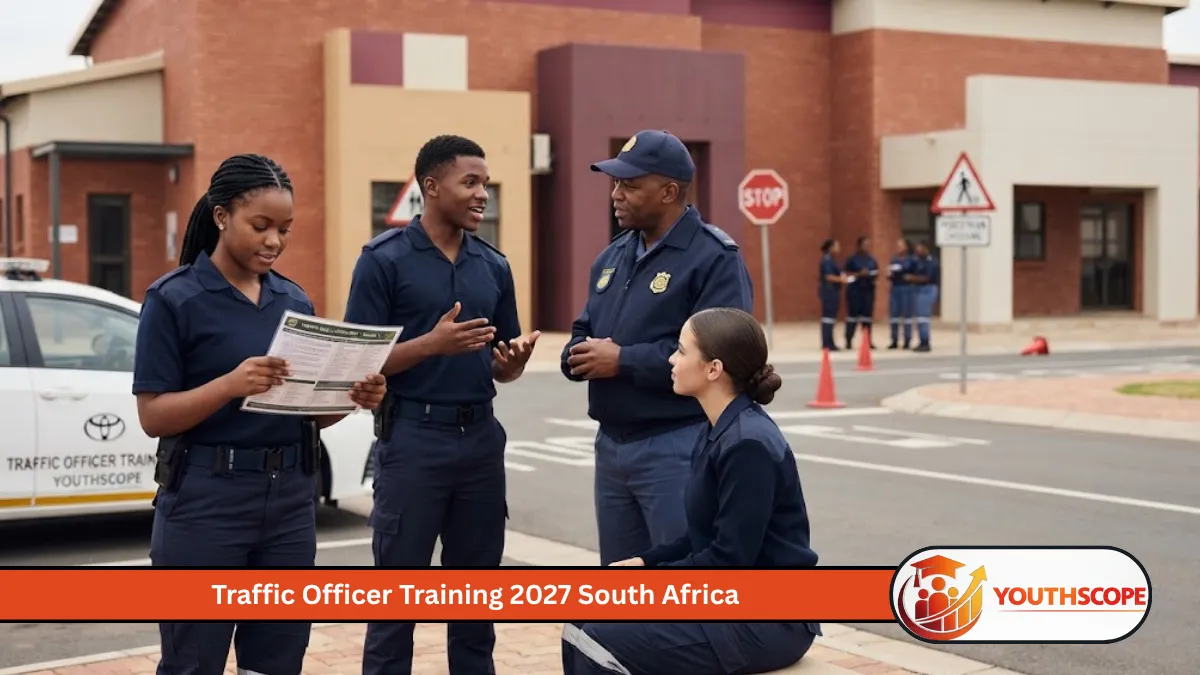
Editorial note: The 2027 Traffic Officer intake is not being presented as currently open. This is a career-preparation guide based on current RTMC information. Future recruitment adverts may introduce additional requirements.
Traffic Officer Training for 2027: Start Preparing Now
If becoming a Traffic Officer is one of your career goals for 2027, preparing early can give you more time to check your eligibility, organise your documents and understand how the official training pathway works.
The Road Traffic Management Corporation (RTMC) states that aspiring Traffic Officers must first be employed or appointed as trainees by a provincial department, municipality or relevant government agency before undertaking official Traffic Officer training. Current minimum requirements include Grade 12 or an equivalent qualification, a Code B manual driving licence, no criminal record, a medical certificate confirming the ability to undertake strenuous exercise and an age limit of 35.
Importantly, this article does not announce that a national 2027 Traffic Officer intake is currently open. Instead, it explains what prospective applicants can do now to prepare for legitimate opportunities when they are advertised.
Employer / Training Authority
Organisation: Road Traffic Management Corporation (RTMC)
Career: Traffic Officer
Opportunity Type: Traffic Officer trainee pathway
Location: South Africa; recruitment is conducted by relevant provincial authorities, municipalities or government agencies
Programme Duration: Depends on the official training programme and recruitment campaign
Employment Type: Traffic Officer trainee appointment/employment
Closing Date: Not specified. No national 2027 intake closing date is announced in this guide. Early preparation is encouraged.
The RTMC is responsible for training norms and standards and monitors Traffic Training Colleges. Its official information explains that a person seeking to become a Traffic Officer needs to be employed or appointed as a trainee before undertaking the formal training.
Why You Should Start Preparing Now
Waiting until a vacancy is advertised can leave applicants with very little time to address missing requirements.
Preparing early allows prospective applicants to:
- Check whether they have the required educational qualification.
- Work towards obtaining the required driving licence where necessary.
- Organise identification and qualification documents.
- Keep an updated CV ready.
- Learn about road safety and traffic-law concepts.
- Research legitimate recruitment channels.
- Understand the difference between official Traffic Officer training and private online courses.
- Avoid scams involving promises of guaranteed placement.
The RTMC specifically warns that individuals should not pay someone to secure a place at a Traffic Training College. Its information states that private individuals cannot simply enrol directly as Traffic Officer trainees; the relevant authority appoints or employs trainees and sends selected candidates for training.
Current Traffic Officer Requirements
According to the RTMC, the current minimum requirements include:
- Grade 12/Matric or an equivalent qualification.
- Code B driving licence for a manual-transmission vehicle.
- No criminal record.
- Medical certificate confirming that the applicant can undertake strenuous exercise.
- Applicant must not be older than 35 years.
- Appointment or employment as a trainee by an appropriate provincial, municipal or government authority.
The RTMC also states that the Occupational Certificate: Traffic Officer is an NQF Level 6 qualification with Qualification ID 97639. The learning programme includes knowledge, practical skills and workplace-experience components.
Individual recruitment campaigns can include additional selection criteria, so applicants should always read the specific advert carefully.
Salary / Stipend
Salary/Stipend: Not specified for a future 2027 intake.
The amount, if any, depends on the recruiting authority and the specific trainee advertisement. Prospective applicants should not assume that every Traffic Officer opportunity will offer the same stipend or salary.
An older RTMC information document states that local and provincial authorities normally cover training-related costs for selected trainees and may provide a monthly stipend, but future applicants should verify the financial arrangements in the specific official advert.
Documents Needed
Applicants should prepare commonly requested documents in advance, while remembering that the final checklist will depend on the recruiting authority.
- Updated CV
- Certified ID copy, if required
- Matric certificate or equivalent qualification
- Certified qualifications, if requested
- Copy of Code B manual driving licence
- Medical certificate, when required
- Other documents specified in the official recruitment advert
How to Apply
Because there is currently no national 2027 application deadline provided in this guide, applicants should not submit applications to unofficial websites or individuals claiming to offer guaranteed placement.
When an official Traffic Officer trainee opportunity is advertised:
- Visit the relevant provincial department, municipality or government agency’s official recruitment platform.
- Read the complete vacancy or trainee advertisement.
- Check the minimum and additional requirements.
- Prepare the requested documents.
- Complete the official application form or online application.
- Upload or submit the required supporting documents.
- Submit the application before the stated closing date.
- Keep proof of submission for your records.
The RTMC advises prospective applicants to check local and provincial authorities for Traffic Officer trainee vacancies and application information.
Official Application / Information Link
For current Traffic Officer requirements, training standards and official career information, applicants can use the Road Traffic Management Corporation (RTMC) official website.
The RTMC’s official Training Norms and Standards page provides the current minimum requirements and information about the Traffic Officer qualification.
Expert Guidance
Career expert YouthScope Editorial Team
YouthScope Editorial Team advises prospective Traffic Officer applicants to use 2026 as a preparation period rather than waiting for a 2027 advert to appear.
Check your Matric qualification, driving licence and documents early. If a future advert requires certified documents, obtain them according to the instructions in that advert. Most importantly, apply only through legitimate recruitment channels.
Do not pay an individual who claims they can guarantee a Traffic Training College place or Traffic Officer appointment. The RTMC’s official guidance specifically warns applicants about this type of activity.
Discover Latest:
- Latest Learnerships
- Internships
- Graduate Programmes
- Government Jobs
- Bursaries
- Apprenticeships
- Career Advice
- CV Writing Guide
- Interview Tips
Frequently Asked Questions
1. Are Traffic Officer applications for 2027 currently open?
This article does not announce an open national 2027 intake. Applicants should wait for and verify recruitment notices issued by legitimate provincial, municipal or government authorities.
2. What qualification do I need to become a Traffic Officer?
The RTMC currently lists Grade 12/Matric or an equivalent qualification as the minimum educational requirement.
3. Do I need a driving licence?
Yes. The current RTMC requirement is a Code B driving licence for a manual-transmission vehicle.
4. What is the age limit?
Current RTMC information states that applicants must not be older than 35 years. Future recruitment adverts should always be checked for the applicable requirements.
5. Can I register directly at a Traffic Training College?
The RTMC states that aspiring Traffic Officers first need to be employed or appointed as trainees by an appropriate authority. Selected trainees are then sent for the relevant training.
6. Is Traffic Officer training free?
Training arrangements depend on the recruiting authority and official programme. An RTMC information document says local and provincial authorities normally cover training costs for selected candidates, but applicants should verify the arrangements in the specific recruitment advert.
7. Do I need to be physically fit?
The current RTMC requirements include a medical certificate confirming that the applicant can undertake strenuous exercise.
8. What qualification is associated with formal Traffic Officer training?
The RTMC lists the Occupational Certificate: Traffic Officer at NQF Level 6, Qualification ID 97639. The programme includes knowledge, practical skills and workplace experience.
Disclaimer
YouthScope shares employment, internship, bursary, learnership and career-development information to help South Africans discover opportunities. We are not the recruiting organisation and do not charge application fees.
This article is a career-preparation guide and is not an announcement of an open 2027 Traffic Officer intake. Requirements, recruitment dates, locations, selection processes and financial arrangements may change. Always verify final information through the relevant official organisation before applying.
Opportunity Verification
Published by: YouthScope Editorial Team
Last Updated: 24 August 2026
Information Source: Official Road Traffic Management Corporation information
Status: Reviewed for accuracy
YouthScope shares career information to help South Africans discover opportunities. Applicants should confirm final requirements and recruitment dates with the relevant official organisation before applying.
Related Opportunities
- Astron Energy Learnerships and Skills Development 2026: What Opportunities Are Available?
- EWC Financial Management Trainee 2026: R4,500 Stipend
- Assistant Handyperson Training 2026: Grade 9–12 Applicants Can Earn R3,960 for 12 Months
- RENWIS Cybersecurity Defender Skills Programme 2026: 20 Places for Limpopo Youth
- KZN Provincial Treasury In-Service Training 2026: N4–N6 TVET Students Can Apply Before 28 August

The YouthScope Editorial Team publishes verified South African learnerships, internships, bursaries, graduate programmes, and career opportunities. Our team researches opportunities from official employers, government departments, SETAs, universities, and trusted organisations to provide accurate career information for South African youth.