
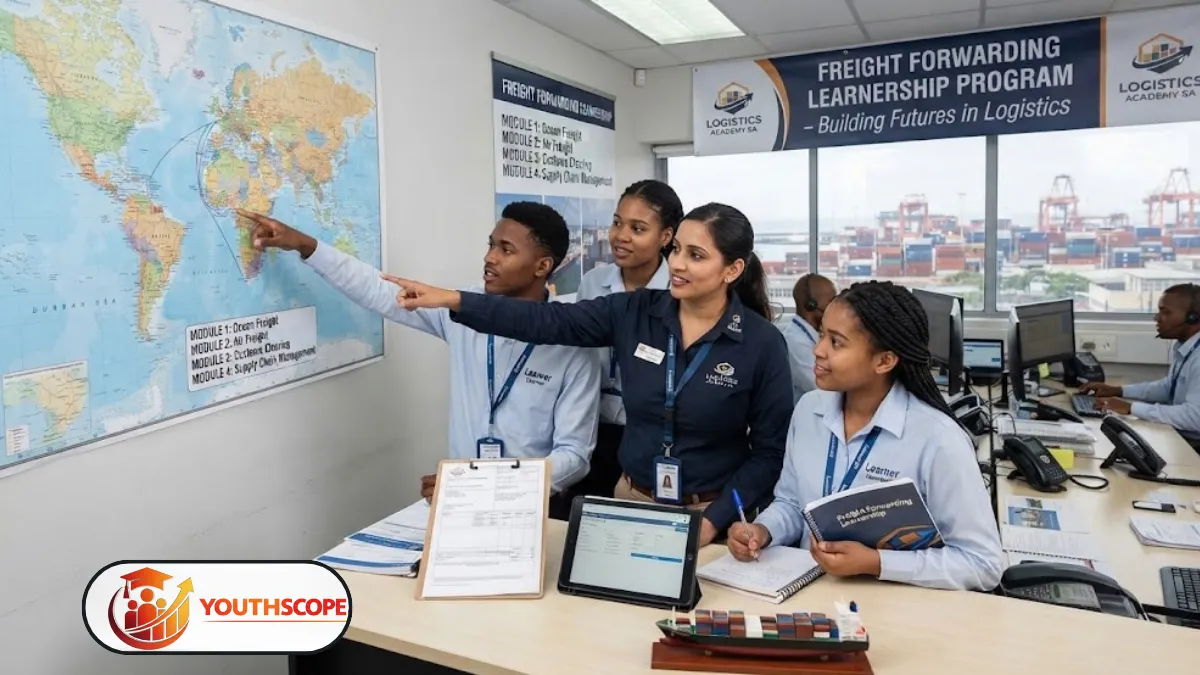
A career in logistics involves much more than transporting goods. International freight movements can involve customs procedures, documentation, trade rules, transport coordination, calculations and communication between different parties.
For South Africans interested in this side of the logistics industry, Edge Training offers information on a National Certificate: Freight Forwarding and Customs Compliance at NQF Level 3. The qualification carries 136 credits and is designed to develop foundational competencies for routine functions in the transport and logistics sector.
The programme covers areas including freight forwarding, customs compliance, international trade, logistics and surface freight. It also incorporates experiential learning alongside contact sessions.
Importantly, the available programme information does not confirm a specific 2026 intake closing date or establish that a particular 2026 learnership is currently open. Prospective applicants should therefore check Edge Training’s official application platform for the latest opportunities before submitting an application.
Quick Summary
The Freight Forwarding and Customs Compliance qualification provides an introduction to the processes involved in freight forwarding and international trade.
The qualification is listed as NQF Level 3, with SAQA ID 59365 and 136 credits.
Learning areas include customs and international trade, freight-forwarding operations, communication, mathematics, documentation and other logistics-related subjects.
Edge Training’s application platform allows prospective students to submit an application online. The platform also indicates that applicants should have information such as an SA ID number, CV and supporting documents available.
Freight Forwarding Learnership: What You Need to Know
Freight forwarding is an important part of the logistics chain.
When goods are transported between countries, the process can involve more than simply arranging a vehicle or shipment. Documentation, customs procedures, trade terms, cargo information and transport arrangements can all form part of the process.
The National Certificate: Freight Forwarding and Customs Compliance, identified as SAQA ID 59365, introduces learners to these areas at NQF Level 3.
The qualification is designed around practical and foundational knowledge for routine functions in the transport and logistics industry.
Qualification Details
| Detail | Information |
|---|---|
| Qualification | National Certificate: Freight Forwarding and Customs Compliance |
| SAQA ID | 59365 |
| NQF Level | 3 |
| Credits | 136 |
| Training provider | Edge Training |
| Industry | Transport and logistics |
| Current 2026 closing date | Not specified in the available information |
| Current 2026 intake status | Not confirmed in the available information |
| Application method | Online through Edge Training’s student application platform |
What Does the Freight Forwarding Qualification Cover?
The qualification combines several areas that are relevant to freight forwarding and logistics.
Rather than focusing only on transportation, the curriculum introduces learners to the administrative, regulatory and operational aspects of moving goods.
Customs and International Trade
Customs compliance is an important part of international freight.
The programme includes learning connected to the Customs and Excise Act, relevant regulations and documentary requirements associated with international trade.
Learners are also introduced to international commercial terms and concepts used in international trade.
This helps demonstrate why freight forwarding requires an understanding of both logistics and compliance.
Air, Surface and Multimodal Freight
The qualification covers different freight environments.
Learning areas include the airfreight forwarding environment, surface freight forwarding and administration associated with forwarding and clearing operations.
There is also learning related to multimodal surface freight import clearances.
This provides exposure to different ways goods can move through the logistics chain and the procedures associated with those movements.
Communication and Mathematics
Freight-forwarding work also requires general workplace skills.
The qualification includes occupational communication and mathematical components. These can be relevant when learners need to interpret information, communicate with other parties, work with documents or perform workplace calculations.
These subjects form part of the broader skill set required in transport and logistics environments.
The Programme Includes Experiential Learning
The qualification is structured to include both contact sessions and experiential learning.
The supplied qualification information allocates 30% to contact sessions and 70% to experiential learning in its notional-hours matrix.
The workplace component is relevant because logistics processes can be difficult to understand from theory alone.
For example, learning about import documentation provides background knowledge, while experiential learning can help learners understand how documents and procedures fit into an actual freight-forwarding environment.
Other Learning Areas
The qualification covers a range of additional topics connected to freight forwarding and logistics.
These include areas such as:
- Equipment and infrastructure used in international transport
- International commercial terms
- Geographic principles used when mapping trade routes
- Cargo handling
- Export documentation
- Dangerous goods
- Groupage processes
- Warehousing and storage
- Customer service
- Organisational ethics
- Invoicing and accounting principles
- Business operations
- The legal environment of the industry
The exact learning experience can depend on the relevant programme and learning components delivered by the provider.
Who May Benefit From the Qualification?
The qualification is intended for people who want to develop skills for the transport and logistics industry, including individuals already working in the sector and people seeking to enter it.
For a prospective learner, freight forwarding can be relevant if they are interested in a combination of:
- Logistics
- Administration
- International trade
- Customs procedures
- Documentation
- Communication
- Transport operations
- Practical workplace learning
The field can involve considerable attention to processes and documentation, so applicants should read the qualification information carefully before deciding whether it matches their career interests.
What Can You Do After Completing It?
Completing the qualification does not guarantee employment.
It can provide foundational knowledge and workplace exposure that may be useful when pursuing suitable opportunities in transport and logistics.
Employment will still depend on factors such as available vacancies, employer requirements, experience and the individual’s performance.
Learners can continue developing their skills after completing the qualification and look for relevant entry-level positions or further learning opportunities.
Keeping records of completed training, assessments and workplace experience can also help applicants demonstrate their qualifications when applying for future opportunities.
What Applicants Should Know Before Applying
Prospective applicants should distinguish between the qualification information and the requirements for a particular intake.
The Edge Training student application platform asks applicants to have information including an SA ID number, CV and supporting documents available. The platform also provides fields for qualification information and document uploads.
The application platform indicates that training opportunities and applications are offered free of charge.
Applicants should therefore be cautious of anyone claiming that a payment is required to secure an Edge Training opportunity.
Helpful applicant advice
Before uploading personal documents, make sure you are using the official Edge Training application platform.
Applicants should also check the current opportunity details rather than relying on an old advertisement, social-media post or forwarded message.
What Applicants Should Prepare
The application platform indicates that applicants should have:
- An SA ID number
- A CV
- Relevant supporting documents
- Qualification information where applicable
Applicants should follow the current online form for any additional information or documents specifically requested for the opportunity they are applying for.
How to Apply
Applicants interested in Edge Training opportunities can access the provider’s official student application platform:
Official application route:
Edge Training Student Applications
Applicants should complete the online form accurately and upload the requested information and supporting documents.
The application platform indicates that an Edge Training team member will contact applicants after their application has been reviewed.
Important Date
Closing date: Not specified in the available official information.
The supplied information does not confirm a specific 2026 closing date for a Freight Forwarding Learnership intake.
Applicants should therefore check the official Edge Training application platform for current programme availability and any applicable deadlines.
Is This a 2026 Learnership?
The available information describes the Freight Forwarding and Customs Compliance qualification, but it does not establish a confirmed 2026 intake with a specific closing date.
This distinction is important for applicants.
A qualification can remain available as part of a training provider’s programme offering without every intake necessarily being open for applications at a particular time.
For that reason, applicants should not assume that the existence of the qualification means a specific 2026 learnership intake is currently accepting applications.
Suggested
Relevant Youthscope content:
- UIF ITR Learnership 2026
- SBV Cash Processor Learnership 2026
- Latest learnerships in the Western Cape
- Welding and artisan opportunities
- Apprenticeships in South Africa
- Learnerships with stipends
- TVET and technical training opportunities
Why Freight Forwarding Skills Matter in Logistics
International logistics depends on coordination between different processes.
Goods may need to be documented correctly, transported according to the relevant arrangements and processed through applicable customs procedures.
A qualification that introduces learners to freight forwarding, customs compliance, trade and logistics can therefore provide a broad foundation for someone exploring this part of the transport industry.
The experiential-learning component also gives the qualification a workplace-oriented element.
Frequently Asked Questions
What is the Freight Forwarding and Customs Compliance qualification?
It is a National Certificate at NQF Level 3 covering foundational knowledge and skills related to freight forwarding, customs compliance and the transport and logistics industry.
What is the SAQA ID?
The qualification is listed with SAQA ID 59365.
How many credits does the qualification carry?
The qualification carries 136 credits.
Is there a confirmed 2026 closing date?
Not in the available information. Applicants should check Edge Training’s official application platform for current intake information and deadlines.
What should applicants have when applying?
Edge Training’s student application platform indicates that applicants should have an SA ID number, CV and supporting documents available.
Does completing the qualification guarantee a job?
No. A qualification can provide training and workplace exposure, but employment depends on vacancies, employer requirements and other selection factors.
Final Reminder
Freight forwarding combines logistics with documentation, customs, international trade, communication and practical operations.
The Edge Training National Certificate: Freight Forwarding and Customs Compliance provides a structured introduction to these areas at NQF Level 3.
Anyone interested in applying should use the official Edge Training application platform, check the latest intake information and avoid paying anyone who claims that payment is required to secure an application or training opportunity.
Most importantly, applicants should not assume that an older advertisement represents a currently open 2026 intake. The available information does not specify a current 2026 closing date.
Official Source
Edge Training — Student Applications
Edge Training Student Applications
The supplied programme information identifies the qualification as the National Certificate: Freight Forwarding and Customs Compliance, SAQA ID 59365, NQF Level 3, 136 credits.
Last Checked Date
1 October 2026
The article is based on the programme information supplied in this conversation. The supplied information does not establish a confirmed 2026 intake closing date.
Author/Updated Information
Written by: Mbalizuke Nkosi
Published: 1 October 2026
Updated: 1 October 2026
Information checked: 1 October 2026

Mbalizuke Nkosi is the editorial voice behind YouthScope.co.za, a South African youth-focused platform dedicated to providing reliable information on opportunities, education, and career development. The platform serves students, graduates, job seekers, and young professionals by delivering accurate, timely, and easy-to-understand content.
Through informative and professionally curated content, YouthScope.co.za aims to equip young people with the knowledge and resources needed to make informed decisions about their education and future careers.
For inquiries or support, please contact admin@youthscope.co.za.