
Category Archives: Career Guides

Youth aged 18–35 Unemployment in South Africa 2026: How SETA Is Creating Real Job Opportunities

Introduction

Youth unemployment remains one of the biggest challenges facing South Africa today. Millions of young people are struggling to find work, even after completing their education.

In 2026, however, Sector Education and Training Authorities (SETAs) are stepping up efforts to create real, practical job opportunities through learnerships, skills programmes, and workplace training.

This article explores how SETA is helping reduce unemployment and how you can benefit from these opportunities.

The Youth Unemployment Crisis in South Africa

South Africa has one of the highest youth unemployment rates in the world. Many young people face barriers such as:

  • Lack of work experience
  • Limited access to opportunities
  • Skills mismatch with job market demands
  • Economic challenges

This has made it difficult for graduates and school leavers to transition into the workforce.

What Is SETA and Its Role in 2026?

The Sector Education and Training Authority (SETA) is a government initiative responsible for:

  • Developing skills in specific industries
  • Funding training programmes
  • Promoting workplace experience
  • Improving employability

Each SETA focuses on a specific sector, such as:

  • Finance
  • Construction
  • Education
  • Transport
  • Services

How SETA Is Creating Job Opportunities in 2026

In 2026, SETA programmes are playing a critical role in addressing unemployment.

1. Learnership Programmes

Learnerships are one of the most effective tools used by SETA.

They offer:

  • Structured training
  • Real workplace experience
  • Monthly stipends

These programmes help young people gain both qualifications and experience, which employers value.

2. Skills Development Programmes

SETA funds short courses that focus on in-demand skills such as:

  • Digital skills
  • Administration
  • Technical trades
  • Entrepreneurship

These programmes are designed to prepare youth for immediate employment.

3. Internships and Work Experience

Many SETAs partner with companies to offer:

  • Internships
  • Apprenticeships
  • Workplace exposure

This helps bridge the gap between education and employment.

4. Funding and Bursaries

SETA also provides financial support for:

  • Further education
  • Vocational training
  • Critical skills programmes

This ensures that financially disadvantaged youth can still access opportunities.

You can also:

Real Impact of SETA in 2026

SETA initiatives are expected to:

  • Create thousands of job opportunities
  • Improve youth employability
  • Reduce poverty levels
  • Support economic growth

Many young South Africans have already benefited from SETA programmes, gaining skills that lead to permanent employment.

Who Can Apply for SETA Opportunities?

Most SETA programmes are open to:

  • South African citizens
  • Youth aged 18–35
  • Unemployed individuals
  • Matriculants and graduates

Requirements vary depending on the programme.

How to Access SETA Opportunities

Here’s how you can get started:

1. Visit Official SETA Websites

Each SETA advertises opportunities on its website.

2. Check Government Platforms

Look for updates on:

  • Department of Labour platforms
  • Public job portals

3. Apply Through Companies

Many companies offer SETA-funded learnerships.

4. Stay Updated

Follow:

  • Social media pages
  • Community notice boards
  • Local youth centres

Challenges Still Facing SETA Programmes

While SETA is making progress, challenges remain:

  • Limited number of placements
  • High competition
  • Lack of awareness among youth
  • Delays in programme rollout

Improving access and awareness is key to maximizing impact.

Tips for Young Job Seekers

To improve your chances:

  • Apply to multiple programmes
  • Build a strong CV
  • Gain basic digital skills
  • Stay informed about new opportunities
  • Be proactive and consistent

FAQs About Youth Unemployment & SETA

1. What is the main cause of youth unemployment in South Africa?

The biggest causes include lack of experience, skills mismatch, and limited job opportunities.

2. How does SETA help reduce unemployment?

By providing training, work experience, and funding for skills development.

3. Are SETA programmes free?

Yes, most programmes are fully funded and include stipends.

4. Can graduates apply for SETA programmes?

Yes, many programmes are open to graduates.

5. Where can I apply for SETA opportunities?

On SETA websites, company career pages, and government job portals.

Recent Posts

Conclusion

Youth unemployment in South Africa remains a serious issue, but SETA programmes in 2026 are offering real solutions.

Through learnerships, training, and workplace experience, SETA is helping thousands of young people gain the skills they need to succeed.

📌 If you are unemployed, now is the time to take advantage of these opportunities and build your future.

EPWP 2026: How to Apply for Expanded Public Works Programme Jobs in South Africa

Introduction

The Expanded Public Works Programme (EPWP) 2026 is opening doors for thousands of unemployed South Africans. If you’re looking for temporary work, skills development, and income support, this government initiative could be your next opportunity.

In this guide, we break down everything you need to know about EPWP jobs in 2026 — including how to apply, requirements, benefits, and tips to increase your chances of getting selected.

What is the EPWP?

The Expanded Public Works Programme (EPWP) is a South African government initiative aimed at reducing unemployment by creating short-term work opportunities.

It focuses on sectors such as:

  • Infrastructure (construction, maintenance)
  • Environment and culture
  • Social services
  • Community-based projects

You can also:

EPWP 2026 Job Opportunities

In 2026, EPWP is expected to offer over 100,000 job opportunities across provinces.

Common roles include:

  • General workers
  • Cleaners
  • Construction assistants
  • Community caregivers
  • Admin support staff

These jobs usually last between 3 to 12 months, depending on the project.

EPWP 2026 Requirements

To qualify for EPWP jobs, you typically need:

  • Be a South African citizen
  • Be unemployed
  • Be aged 18 years or older
  • Have a valid ID document
  • Reside in the area where the project is located

💡 Note: Some roles may require basic education or specific skills.

How to Apply for EPWP 2026

Follow these steps to apply:

1. Check Local Municipality Notices

Visit your nearest:

  • Municipality office
  • Ward councillor office
  • Community centers

EPWP opportunities are often advertised locally.

2. Register on the EPWP Database

Some municipalities require you to register on their local EPWP database.

You may need:

  • ID copy
  • CV (optional but recommended)
  • Proof of residence

3. Apply When Opportunities Open

Submit your application as instructed in the job advert.

Applications can be:

  • Online (in some provinces)
  • Physical submissions at local offices

4. Wait for Shortlisting

If selected, you may be contacted for:

  • Verification
  • Interviews (sometimes)
  • Placement

Benefits of EPWP Jobs

Working under EPWP comes with several benefits:

  • Monthly stipend (varies by project)
  • Work experience
  • Skills training opportunities
  • Improved employability

Tips to Increase Your Chances

Want to stand out? Try this:

  • Apply early when jobs open
  • Keep your documents ready
  • Register in multiple municipalities (if possible)
  • Stay informed through local announcements
  • Volunteer in community projects (adds experience)

Common Mistakes to Avoid

Avoid these errors when applying:

  • Submitting incomplete documents
  • Missing application deadlines
  • Providing incorrect contact details
  • Ignoring local job postings

FAQs About EPWP 2026

1. When will EPWP 2026 applications open?

Applications open throughout the year depending on available projects in your area.

2. How much does EPWP pay?

Stipends vary but usually range between R80 to R150 per day, depending on the role and location.

3. Can I apply online for EPWP jobs?

Some provinces allow online applications, but most require applying through local municipalities.

4. Do I need qualifications to apply?

Most EPWP jobs do not require formal qualifications, but basic literacy is helpful.

5. Can I apply more than once?

Yes, but selection depends on availability and eligibility criteria.

Recent Posts

Conclusion

The EPWP 2026 programme is a valuable opportunity for unemployed South Africans to gain work experience and earn an income. By staying informed and applying correctly, you can increase your chances of being selected.

Start preparing your documents today and keep an eye on local announcements — your next job opportunity could be just around the corner.

Durpro Workforce CV Registration 2026 – Upload Your CV & Get Jobs Paying Up to R6500/month

Start Your Career in 2026 with Durpro Workforce

If you’re looking for a way to break into the job market in 2026, registering your CV with Durpro Workforce Solutions could be one of the smartest moves you make.

Recruitment agencies like Durpro Workforce connect job seekers to high-demand industries such as finance, insurance, administration, customer service, and logistics — many of which offer stable income and long-term career growth.

Some placements and learnerships can offer earnings of up to R6500 per month, making this ideal for unemployed youth and entry-level candidates.

Programme Overview: Durpro Workforce CV Registration 2026

DetailInformation
CompanyDurpro Workforce Solutions
Opportunity TypeCV Database Registration
LocationAll Provinces (South Africa)
Monthly SalaryUp to R6500/month
IndustriesFinance, Insurance, Admin, Retail, Logistics
Experience RequiredEntry-Level / No Experience
Application MethodOnline CV Upload

What This Opportunity Is About

Durpro Workforce acts as a bridge between job seekers and employers, especially in industries known for:

  • High demand for workers
  • Strong career growth
  • Competitive salaries

By uploading your CV, you position yourself for:

  • Learnership programmes
  • Entry-level corporate jobs
  • Call centre and customer service roles
  • Administrative and office support jobs

You can also:

Why You Should Upload Your CV

Registering your CV increases your chances of being selected for multiple opportunities without applying repeatedly.

Key Benefits:

  • Access to paid learnerships and internships
  • Opportunities in high-income sectors
  • Increased visibility to recruiters
  • Faster job placement

This is especially useful if you’re searching for:

  • Jobs with no experience in South Africa
  • Entry-level jobs with monthly income
  • Learnerships with stipends

How to Upload Your CV (Step-by-Step)

Step 1: Visit the Official Website

 https://wfm.durpro.co.za/register

Step 2: Find the Registration Section

Look for:

  • “Submit CV”
  • “Register”
  • “Careers”

Step 3: Complete Your Profile

Provide accurate details:

  • Full name and surname
  • Contact information
  • Location (province/city)
  • Education and qualifications
  • Work experience (if any)

Step 4: Upload Your CV

Accepted formats:

  • PDF (recommended)
  • Word document

Your CV should include:

  • Education (Matric or higher)
  • Skills and competencies
  • Any experience (including informal work)

Step 5: Submit Your Application

Once submitted:

  • Your CV is stored in the recruitment database
  • Recruiters match you with suitable opportunities

High-Value Skills That Increase Your Chances

To stand out, include these in-demand skills:

  • Customer service and client support
  • Microsoft Office (Word, Excel)
  • Data capturing and admin skills
  • Communication and sales
  • Problem-solving and teamwork

These are highly valued in:

  • Banking and finance jobs
  • Insurance roles
  • Corporate administration careers

Documents You Should Prepare

  • Updated CV
  • Certified copy of ID
  • Matric certificate
  • Additional certificates (if available)

Having complete documents improves your chances of being selected.

What Happens After You Apply?

After uploading your CV:

  • Recruiters may contact you for interviews
  • You may be placed in jobs or learnerships
  • You can receive multiple opportunities over time

Common placements include:

  • Banking and finance roles
  • Insurance administration jobs
  • Retail and logistics positions
  • Call centre jobs

Career Opportunities You Can Access

Through Durpro Workforce Solutions, you may enter roles such as:

  • Administrative Assistant
  • Call Centre Agent
  • Retail Sales Consultant
  • Data Capturer
  • Finance or Insurance Clerk

Why This Opportunity Matters in 2026

With rising unemployment, recruitment agencies play a critical role in connecting youth to jobs.

Growing industries include:

  • Finance and banking
  • Insurance and healthcare administration
  • Logistics and retail

Uploading your CV puts you in a strong position to access these opportunities.

Frequently Asked Questions (FAQs)

1. Is Durpro Workforce registration free?

Yes, CV registration is typically free for job seekers.

2. Do I need work experience to apply?

No, this opportunity is ideal for entry-level candidates with little or no experience.

3. How much can I earn?

Some roles and learnerships offer up to R6500 per month, depending on the position.

4. Will I get a job immediately?

Not always. Your CV is stored and matched with opportunities as they become available.

5. Can I apply from any province?

Yes, this opportunity is open to candidates across South Africa.

Recent Posts

Final Thoughts

Uploading your CV with Durpro Workforce Solutions is a powerful step toward securing a job or learnership in 2026.

With earnings of up to R6500 per month, access to multiple industries, and long-term career growth, this opportunity is ideal for young South Africans entering the workforce.

 Register today and increase your chances of getting hired.

ECD Pilot Nutrition Programmes South Africa 2026: What You Need to Know

Early Childhood Development (ECD) is no longer just about education—it’s about nutrition, health, and overall child development. In 2026, South Africa is expanding ECD pilot nutrition programmes to support young children during their most critical growth years.

These programmes aim to improve school readiness, health outcomes, and long-term learning success.

What Are ECD Pilot Nutrition Programmes?

ECD pilot nutrition programmes are government and partner-led initiatives designed to provide:

  • Daily nutritious meals for children in ECD centres
  • Growth monitoring and health support
  • Nutrition education for caregivers and practitioners

These pilots are being tested in selected areas before being rolled out nationally.

Who Is Leading These Programmes?

The programmes are mainly driven by:

  • Department of Basic Education
  • Department of Health
  • UNICEF
  • World Food Programme

They often partner with NGOs and local municipalities.

Why Nutrition Matters in ECD

Children aged 0–5 experience rapid brain development. Poor nutrition can lead to:

  • Stunted growth
  • Poor concentration
  • Delayed cognitive development

Proper nutrition helps improve:

  • School readiness
  • Memory and learning ability
  • Physical health

You can also:

What Do Children Receive?

Depending on the programme, children may receive:

Daily Meals

  • Breakfast or morning snack
  • Lunch with balanced nutrients

Nutritional Support

  • Fortified foods
  • Vitamins and supplements (where needed)

Health Monitoring

  • Growth tracking
  • Basic health screenings

Where Are These Pilot Programmes Running?

Pilot programmes are typically rolled out in:

  • Rural communities
  • Low-income urban areas
  • Under-resourced ECD centres

Provinces like Limpopo, Eastern Cape, and KwaZulu-Natal are often prioritised due to higher levels of child poverty.

How ECD Centres Benefit

ECD centres participating in the programme receive:

  • Food supply support
  • Training for staff on child nutrition
  • Menu planning guidance
  • Monitoring and evaluation support

Opportunities for Youth and Practitioners

These programmes also create opportunities such as:

  • ECD practitioner roles
  • Nutrition assistants
  • Community health workers
  • Food preparation and supply roles

This aligns with broader skills development initiatives in South Africa.

Challenges Facing the Programme

While promising, some challenges include:

  • Limited funding for full national rollout
  • Infrastructure gaps in rural ECD centres
  • Monitoring and accountability issues
  • Food supply chain disruptions

What’s Next for 2026 and Beyond?

If pilot programmes are successful, South Africa may:

  • Expand nutrition support to all registered ECD centres
  • Integrate ECD feeding into national school nutrition schemes
  • Increase funding through public-private partnerships

Recent Posts

Final Thoughts

ECD nutrition programmes are a game-changer for early education in South Africa.

By combining learning + nutrition, these initiatives ensure children are not just in classrooms—but are healthy, focused, and ready to succeed.

For students, practitioners, and communities, this is more than support—it’s an investment in the country’s future.

Canon Collins RMTF Scholarship 2026 (South Africa) – Fully Guide for Postgraduate Students

If you’re planning to pursue a Master’s or PhD in South Africa, the Canon Collins Scholarship is one of the most respected funding opportunities available.

The Canon Collins Trust, in partnership with the Ros Moger and Terry Furlong Trust, offers funding to support postgraduate students committed to social justice and development in Southern Africa.

About the Canon Collins Scholarship

The Canon Collins RMTF Scholarship supports postgraduate study in South Africa for students from selected African countries.

Supported Levels:

  • Master’s Degree
  • PhD

Funding Duration:

  • Up to 2 years
  • Option to reapply for a 3rd year (based on progress)

What the Scholarship Covers

  • Funding between R20,000 – R100,000 per year
  • Support for:
    • Tuition
    • Living costs
    • Study-related expenses

Additional benefits:

  • Access to a scholars network
  • Annual conferences and events
  • Academic and professional development opportunities

Fields of Study (Very Important)

The scholarship is highly selective and only supports specific fields:

1. Justice

  • Law
  • Economics
  • Politics
  • Climate Justice (priority in 2026)

2. Education

  • Education policy
  • Teaching and learning systems

3. Humanities

  • Literature
  • History
  • Anthropology
  • Arts

⚠️ Not funded:

  • MBA
  • Medical sciences
  • Sports sciences
  • Most applied sciences (unless linked to climate justice)

Useful YouthScope Links:

Who Can Apply?

You must:

  • Be from one of these countries:
    • South Africa, Zimbabwe, Namibia, Botswana, Zambia, Malawi, Mozambique, Angola, Lesotho, Eswatini
  • Be living in one of these countries
  • Have a strong academic record (minimum second class upper or equivalent)
  • Be studying or applying to study at a South African university

Required Documents

Applicants must submit:

  • Degree certificates
  • Academic transcripts
  • CV
  • ID (passport / ID / driver’s licence)
  • Two reference letters

Additional (if applicable):

  • PhD proposal
  • Supervisor support letter
  • Writing sample (Master’s applicants)
  • Payslips (if employed)

STRICT RULE: AI USE IS BANNED

The Canon Collins Trust has a zero-tolerance policy on AI tools.

You CANNOT use:

  • ChatGPT
  • AI writing tools
  • Any automated editing tools

If detected:
Your application is immediately disqualified

How to Apply

Applications are submitted online via the official Canon Collins website.

Important Tips:

  • Complete ALL sections
  • Upload ALL required documents
  • Check grammar and formatting
  • Submit early (avoid last-minute issues)

Application Status

 Applications are currently CLOSED

  • Results are usually released: October (application year)
  • Late applications are NOT accepted

Why This Scholarship Matters

This is more than funding — it’s a leadership and impact programme.

It is ideal for students who want to:

  • Work in policy, law, or social justice
  • Influence education systems
  • Address climate and societal challenges

Pro Tip for Future Applications

If you want to apply next cycle:

Start preparing now:

  • Build a strong academic profile
  • Get involved in:
    • Community work
    • Policy or research projects
  • Develop a clear career purpose

Recent Posts

Final Thoughts

The Canon Collins RMTF Scholarship is one of the most competitive postgraduate funding opportunities in Southern Africa.

If your work aligns with justice, education, or humanities, and especially climate justice, this could be your pathway to advanced study and long-term impact.

Matric Rewrite 2026: How to Register for May/June Exams (NSC & SC Guide)

Matric Rewrite 2026: Improve Your Results This Year

If you’re not satisfied with your matric results, rewriting your exams can be a smart move. The Department of Basic Education has officially opened registrations for the May/June 2026 matric rewrite exams.

This is your chance to upgrade your marks, qualify for university, or unlock new career opportunities.

Important Matric Rewrite Dates for 2026

  • May/June Rewrite Registration Deadline: 6 February 2026
  • November 2026 Exam Registration Deadline: 13 March 2026

📌 Important Update:
The old February/March supplementary exams have been phased out. The May/June exams are now your first rewrite opportunity.

Who Can Apply for Matric Rewrites?

There are two main categories:

1. NSC (National Senior Certificate) Candidates

  • Must register in person
  • Register at:
    • Your school
    • Nearest district office

2. SC (Senior Certificate) Candidates

  • Can register:
    • At a district office
    • Online via e-Services South Africa

Useful YouthScope Links:

 Note:
SC candidates can only write in May/June, not November.

How to Register for Matric Rewrite 2026

For NSC Candidates:

  1. Visit your school or district office
  2. Complete the registration form
  3. Submit required documents

For SC Candidates:

  1. Go to your nearest district office OR
  2. Apply online via e-Services
  3. Complete your application

Why Rewrite Matric?

Rewriting can help you:

  • Improve your marks
  • Qualify for university admission
  • Access bursaries like National Student Financial Aid Scheme
  • Increase job opportunities

Many students upgrade their results and go on to successful careers.

Different Matric Pass Levels Explained

Understanding pass levels helps you set goals when rewriting.

Bachelor’s Pass

  • 50% in 4–5 subjects (including Life Orientation)
  • 30% in 2 other subjects
  • Fail only 1 subject

Allows entry into universities for degrees like law, medicine, etc.

Diploma Pass

  • 40% in 5 subjects (including Life Orientation)
  • 30% in 2 subjects
  • Fail only 1 subject

Allows study at universities of technology and colleges.

Higher Certificate Pass

  • 40% in Home Language
  • 40% in 2 other subjects
  • 30% in 3 subjects

Allows study at TVET and some private colleges.

Fail

  • Failing 2 subjects (0–29%) = overall fail

⚠️ But you can always rewrite and improve.

Important Things to Know

  • You can rewrite specific subjects or the full matric
  • Only shortlisted registrations may be processed depending on requirements
  • Late applications are usually not accepted

Tips to Pass Your Matric Rewrite

1. Focus on Weak Subjects

Target the subjects that lowered your overall result.

2. Create a Study Plan

Break down your time before exams into manageable goals.

3. Use Past Papers

Practice with previous exam papers to understand question patterns.

4. Seek Help

  • Teachers
  • Tutors
  • Study groups

What Happens After You Improve Your Results?

Once you pass or upgrade your marks, you can:

  • Apply to universities
  • Apply to TVET colleges
  • Qualify for funding like NSFAS
  • Enter the job market with better opportunities

Recent Posts

  1. 2027 University Applications Now Open in South Africa: Full List & Deadlines
  2. TUT4Life Login Guide 2026: How to Access Your Tshwane University of Technology Student Email
  3. SANParks Graduate Internship Programme 2026: Work at Kruger National Park (Stipend: R6,355.69 – R9,088.37 per month)
  4. Shoprite Graduate Programme 2026: Transport & Fleet Opportunity (Apply Before 22 March)
  5. Deloitte Graduate Programme 2026 / 2027: How to Apply, Requirements & Career Opportunities

FAQs About Matric Rewrite 2026

1. Can I rewrite only one subject?

Yes, you can rewrite specific subjects.

2. Are supplementary exams still available?

No, they have been replaced by the May/June exams.

3. Can I write in November instead?

NSC candidates can, but SC candidates cannot.

4. Where do I register?

At your school, district office, or online (for SC candidates).

5. Is rewriting matric worth it?

Yes, it can significantly improve your future opportunities.

Final Thoughts

Failing or underperforming in matric is not the end—it’s a second chance.

The Matric Rewrite 2026 gives you the opportunity to improve your results and move forward with confidence.

Apply Before the Deadline

Don’t miss your chance—register early and start preparing today.

2027 University Applications Now Open in South Africa: Full List & Deadlines

2027 University Applications Are Now Open – Start Early

If you’re planning to start university in 2027, now is the time to act. Several South African universities have already opened applications, while many others will open in the coming months.

Applying early gives you a better chance of acceptance, especially for competitive programmes.

Universities Open for 2027 Applications (March 2026)

From 1 March, applications are already open at:

  • University of the Witwatersrand (Wits)

KZN Universities (Apply via CAO)

The following universities require applications through the
Central Applications Office:

  • Durban University of Technology (DUT)
  • Mangosuthu University of Technology
  • University of Zululand
  • University of KwaZulu-Natal

Universities Opening in April 2026

The following institutions are expected to open applications in April:

  • Tshwane University of Technology
  • University of Johannesburg
  • University of Limpopo
  • Central University of Technology
  • North-West University
  • University of the Western Cape
  • University of Cape Town
  • University of the Free State
  • University of Pretoria
  • Rhodes University
  • Nelson Mandela University
  • Sefako Makgatho Health Sciences University
  • Stellenbosch University
  • Sol Plaatje University

Universities Opening Later in 2026

May 2026

  • University of Venda (Univen)
  • Cape Peninsula University of Technology

June 2026

  • Vaal University of Technology
  • University of Mpumalanga
  • Walter Sisulu University
  • University of Fort Hare

September 2026

  • University of South Africa (UNISA)

Useful YouthScope Links:

What is the CAO and How Does It Work?

The Central Applications Office (CAO) is a centralized system used mainly by universities in KwaZulu-Natal.

Instead of applying to each university separately, you can:

  • Submit one application
  • Apply to multiple institutions and courses

National Benchmark Tests (NBTs)

Some universities require the
National Benchmark Tests (NBTs) as part of the application process.

NBTs assess:

  • Academic readiness
  • Maths and language skills

📌 Tip: Book and write your NBTs early to avoid delays.

NSFAS Funding for 2027 Students

The National Student Financial Aid Scheme (NSFAS) provides funding to eligible students at all 26 public universities.

Funding Criteria:

  • Household income below R350,000/year → Full bursary
  • Income R350,000 – R600,000/year → Student loan

What NSFAS Covers:

  • Tuition fees
  • Accommodation
  • Food and transport
  • Study materials

NSFAS applications usually open later in the year.

Important Application Tips

1. Apply Early

University spaces fill up quickly—especially for competitive courses.

2. Apply Before NSFAS Opens

You don’t need NSFAS approval to apply for university.

Apply first, then apply for NSFAS later.

3. Apply to Multiple Universities

This increases your chances of acceptance.

4. Prepare Your Documents

  • ID copy
  • Matric results / Grade 11 results
  • Proof of payment (if required)

Why You Should Apply Now

  • Secure your place early
  • Avoid last-minute stress
  • Get time to plan funding and accommodation

💡 Applying early does not lock you in—you can still decline offers later.

Recent Posts

FAQs About 2027 University Applications

1. When should I apply for 2027 university admission?

As early as March 2026 when applications open.

2. Can I apply without final matric results?

Yes, universities use Grade 11 or mid-year Grade 12 results.

3. Do all universities use CAO?

No, only certain universities (mainly in KZN).

4. When does NSFAS open?

Usually in the last quarter of the year.

5. Can I change my course after applying?

Yes, most universities allow course changes before final acceptance.

Final Thoughts

Applying for university in South Africa is competitive, and early preparation is key.

With 2027 applications already opening, now is the perfect time to secure your future.

Start Your Application Today

Don’t wait—begin applying now to increase your chances of getting into your preferred university and programme

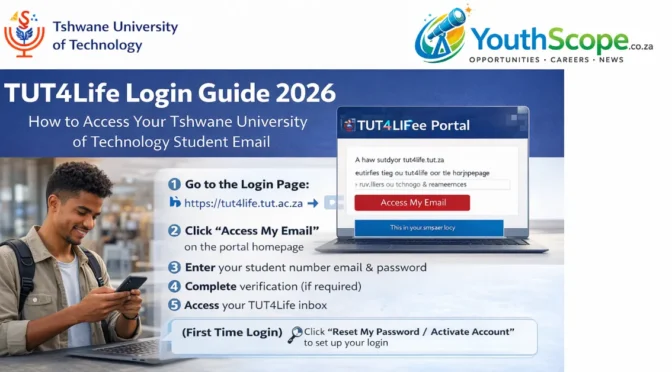
TUT4Life Login Guide 2026: How to Access Your Tshwane University of Technology Student Email

What is TUT4Life?

Tshwane University of Technology (TUT) introduced TUT4Life as an official student email system to support communication, learning, and academic updates.

Established in 2004 after the merger of three Technikons, TUT has grown into one of South Africa’s leading universities of technology, focusing on innovation, inclusivity, and practical learning.

Why TUT4Life is Important for Students

Your TUT4Life email account is more than just an inbox—it’s your official communication channel with the university.

Useful YouthScope Links:

With TUT4Life, you can:

  • Receive important university announcements
  • Access Blackboard notifications
  • Communicate with lecturers and fellow students
  • Stay updated on academic activities

 Important: Missing emails can mean missing deadlines, results, or critical updates.

How to Access TUT4Life Email (Step-by-Step Guide)

Follow these simple steps to log in to your TUT4Life account:

Step 1: Visit the TUT4Life Portal

Go to the official TUT4Life login page.

Step 2: Click on “Access my TUT4Life Email”

Step 3: Enter Your Student Email

  • Use the email address provided by TUT

Step 4: Enter Your Password

  • Type your password and click Submit

Step 5: Access Your Inbox

You will now have full access to your student email and notifications.

Common TUT4Life Login Issues (And Fixes)

1. Forgot Password

  • Use the password reset option on the login page
  • Contact TUT IT support if needed

2. Incorrect Email Format

  • Ensure you’re using your official student email

3. Login Page Not Loading

  • Check your internet connection
  • Try a different browser

4. Account Locked

  • Wait and retry or contact IT services

TUT Faculties You Can Access via TUT4Life

Once logged in, students can access information across TUT’s faculties, including:

  • Science
  • Engineering and Technology
  • Business and Management
  • Education
  • Humanities
  • Arts

About Tshwane University of Technology (TUT)

Tshwane University of Technology is known for:

  • Practical, career-focused education
  • Use of innovative technology in learning
  • Promoting access to higher education
  • Addressing unemployment and inequality

The university equips students with skills aligned to real-world industry needs.

Tips for Using TUT4Life Effectively

  • Check your email daily
  • Enable notifications on your phone
  • Keep your login details secure
  • Use it for all academic communication

 Pro Tip: Link your TUT4Life email to your mobile device for instant updates.

Recent Posts

FAQs About TUT4Life

1. What is TUT4Life used for?

It is your official student email used for communication, updates, and academic notifications.

2. Can I access TUT4Life on my phone?

Yes, you can log in via mobile browser or email apps.

3. What if I forget my password?

Use the password reset option or contact TUT support.

4. Is TUT4Life mandatory?

Yes, all students must use it for official communication.

5. Does TUT4Life include Blackboard notifications?

Yes, Blackboard updates are sent directly to your TUT4Life email.

Final Thoughts

The TUT4Life email system is an essential tool for every student at Tshwane University of Technology.

By checking it regularly and using it effectively, you can stay informed, organised, and ahead in your academic journey.

Start Using TUT4Life Today

Make sure you log in, stay updated, and never miss important university communication.

Skilled South Africans in Demand Abroad: Saudi Arabia Job Offers Surge in 2026

Saudi Arabia Jobs for South Africans 2026: High Salaries and Global Opportunities

South African professionals are increasingly being recruited for jobs abroad—and Saudi Arabia is leading the surge in 2026.

According to the latest data from
Pnet, job postings targeting South Africans from Saudi Arabia have nearly tripled year-on-year, offering high salaries and attractive relocation benefits.

For many professionals, this represents a life-changing opportunity.

Why South Africans Are in High Demand Globally

International employers are actively targeting South African talent for several reasons:

Key Advantages

  • Strong qualifications in engineering, IT, and healthcare
  • High levels of English fluency
  • Experience across diverse industries
  • Competitive labour costs compared to developed countries

💡 Key Insight:
South African professionals are seen as high-quality talent at competitive cost, making them attractive globally.

Saudi Arabia’s Rapid Growth Is Driving Demand

The hiring surge is closely linked to
Saudi Vision 2030.

This national development plan is focused on:

  • Expanding infrastructure
  • Growing healthcare systems
  • Diversifying the economy

As a result, demand for skilled workers is increasing rapidly.

Top In-Demand Jobs for South Africans in 2026

1. Healthcare Professionals

  • Nurses
  • Medical staff
  • Hospital administrators

Saudi Arabia plans to hire around 175,000 healthcare workers by 2030.

2. Engineers

  • Civil engineers
  • Mechanical engineers
  • Electrical engineers

3. IT and Tech Specialists

  • Software developers
  • Data analysts
  • Systems engineers

4. Finance Professionals

  • Accountants
  • Financial analysts
  • Auditors

Salary and Benefits: What You Can Expect

One of the biggest attractions is the compensation package.

Example: Registered Nurse Salary

  • Around R55,000+ per month (tax-free)

Additional Benefits

  • Free accommodation
  • Transport provided
  • Paid flights (to and from South Africa)
  • Health insurance
  • Visa and relocation support
  • Paid leave

These benefits often make international offers far more attractive than local jobs.

Useful YouthScope Links:

Global Job Market Trends (2021–2025)

The Pnet Job Market Trends Report highlights:

  • Foreign job ads increased from 1.6% (2021) → 2.2% (2025)
  • Saudi Arabia recorded a 174% increase in hiring South Africans
  • Australia remains a top destination (despite a 17% decline)
  • Other growing markets:
    • Namibia
    • Botswana
    • Netherlands

Why Saudi Arabia Stands Out

Saudi Arabia is now one of the fastest-growing recruiters of South African talent.

What Makes It Attractive

  • Tax-free salaries
  • Large-scale development projects
  • Strong demand for skilled workers
  • Full relocation support

Many local job offers struggle to compete with these packages.

Challenges to Consider Before Moving

While opportunities are strong, there are factors to think about:

Potential Challenges

  • Cultural differences
  • Distance from family
  • Contract-based employment
  • Work environment adjustments

It’s important to research thoroughly before accepting an offer.

What This Means for South Africa

This trend highlights two major realities:

1. Global Demand Is Increasing

South African professionals are highly valued worldwide.

2. Local Employers Face Competition

Companies in South Africa may struggle to retain skilled workers.

This could lead to:

  • Skills shortages
  • Increased salaries locally
  • More investment in training and retention

How to Apply for Jobs in Saudi Arabia

Step-by-Step Guide

Step 1: Update Your CV

Highlight:

  • Qualifications
  • Work experience
  • Certifications

Step 2: Use Job Platforms

Search on:

  • Pnet
  • LinkedIn
  • International recruitment agencies

Step 3: Verify Job Offers

Ensure:

  • Employer is legitimate
  • Contract details are clear
  • Benefits are confirmed

Step 4: Prepare Documents

You may need:

  • Passport
  • Qualifications (certified)
  • Medical checks
  • Police clearance

Step 5: Understand the Contract

Review:

  • Salary structure
  • Benefits
  • Duration of employment

Recent Posts

Frequently Asked Questions (FAQs)

1. Why are South Africans being recruited abroad?

Due to strong skills, qualifications, and global competitiveness.

2. Which country is hiring the most South Africans in 2026?

Saudi Arabia is one of the fastest-growing recruiters.

3. Are salaries really higher overseas?

Yes, many roles offer tax-free salaries plus benefits.

4. What jobs are most in demand?

Healthcare, engineering, IT, and finance roles.

5. Is it safe to work abroad?

Yes, but always verify job offers and contracts carefully.

Final Thoughts

The rise in Saudi Arabia job offers for South Africans in 2026 shows how valuable local talent has become on the global stage.

With high salaries, tax-free income, and full benefits, international opportunities are becoming increasingly attractive.

Should You Consider Working Abroad?

If you have in-demand skills and are open to relocation, this could be your chance to:

  • Earn more
  • Gain international experience
  • Advance your career

Just be sure to research and prepare before making the move.

Municipal Worker Salary Increase 2026: New Minimum Wage, Allowances & What It Means

Municipal Worker Salary Increase 2026: Full Breakdown of New Pay and Benefits

South Africa’s municipal workers are set to receive a salary increase in 2026, bringing higher wages and improved benefits across all municipalities.

The agreement affects over 295,000 municipal employees, making it one of the most significant public sector wage updates in recent years.

Key Salary Increases for 2026

The latest wage agreement includes a 4.75% increase across several components:

New Minimum Wage

  • Increased from R10,600 → R11,100 per month

This applies across all 257 municipalities starting July 2026.

Homeowners’ Allowance

  • Increased from R1,170 → R1,225

Medical Aid Contributions

  • Increased from R5,971 → Just under R6,100

These contributions are paid by employers to support employee healthcare.

Who Approved the Salary Increase?

The wage agreement was concluded through the
South African Local Government Bargaining Council.

It was officially signed in September 2024 after extended negotiations between:

  • Municipal employers
  • Labour unions

Useful YouthScope Links:

Implementation Timeline

  • Start Date: July 2026
  • Applies To: All municipalities (unless exempted)

Municipalities are required to implement the increases once their 2026–2027 budgets are approved.

Can Municipalities Avoid the Increase?

Yes—but only under strict conditions.

Municipalities may apply for exemption if:

  • They face serious financial constraints
  • They apply within 30 days of budget approval or before 30 June

However, exemptions are not easily granted.

Case Study: City of Tshwane Salary Dispute

The City of Tshwane provides a real example of how complex these agreements can be.

What Happened?

  • The city delayed implementing a 3.5% salary increase (from 2021)
  • It requested an exemption due to financial strain
  • Labour unions challenged the exemption

Outcome

  • The exemption was rejected
  • The municipality was ordered to:
    • Pay back pay
    • Adjust salaries

Payment Plan

Due to financial pressure:

  • Back pay will be spread from June 2026 → February 2029
  • Payments will start with lower-income workers first

This approach helps reduce financial strain while protecting workers.

Ongoing Salary Disputes

Another unresolved issue includes:

  • 5.4% salary increase for 2023–2024
  • Currently under legal review in the Labour Court

This shows that wage negotiations in the municipal sector are still evolving.

Future Salary Changes: What’s Coming Next?

Negotiations are already underway to create a uniform pay structure across all municipalities.

Key organisations involved:

  • South African Local Government Association (SALGA)
  • South African Municipal Workers’ Union (SAMWU)

Why This Matters

If successful, this could lead to:

  • Standardised salaries nationwide
  • Fairer pay across municipalities
  • Improved transparency

Role of Data in Salary Reform

A consulting firm has been appointed to support this process:

  • Collect payroll data from all municipalities
  • Analyse salary structures
  • Help design a fair wage system

Accurate data is critical for building a sustainable pay framework.

What This Means for Municipal Workers

Positive Impacts

  • Higher minimum wages
  • Improved benefits
  • Better financial stability

Challenges

  • Possible delays in some municipalities
  • Ongoing legal disputes
  • Budget constraints

Economic Impact in South Africa

This increase reflects broader trends:

  • Rising cost of living
  • Pressure to improve public sector wages
  • Need to retain skilled workers

Municipal workers play a critical role in service delivery, making fair pay essential.

Recent Posts

Frequently Asked Questions (FAQs)

1. What is the new municipal minimum wage for 2026?

The minimum wage will increase to R11,100 per month.

2. When will the increase take effect?

From July 2026, depending on municipal budget approvals.

3. How much is the salary increase?

4.75% increase across wages and benefits.

4. Can municipalities delay the increase?

Yes, but only if they apply for an exemption and meet strict conditions.

5. Will workers receive back pay?

In some cases (like Tshwane), yes—paid over time.

Final Thoughts

The Municipal Worker Salary Increase 2026 marks a major step toward improving wages and benefits in South Africa’s local government sector.

While challenges remain—especially around funding and implementation—the agreement provides:

  • Higher income
  • Better benefits
  • Long-term salary reform potential

Stay Updated

As negotiations continue and new agreements emerge, staying informed will help workers and job seekers understand their opportunities in the municipal sector.

TVET ECD Courses 2026: NQF Level 4 vs N4–N6 Educare (Which One Should You Choose?)

Choosing the right Early Childhood Development (ECD) course in 2026 could shape your entire career in education.

Today, TVET colleges offer two powerful pathways:

  • fast-track NQF Level 4 certificate
  • full N4–N6 Educare diploma

The difference? One helps you start working quickly, while the other opens doors to long-term teaching and career growth.

What Are TVET ECD Courses?

TVET (Technical and Vocational Education and Training) colleges provide practical, career-focused education in South Africa.

These programmes are:

  • Regulated by the Department of Higher Education and Training
  • Nationally recognised
  • Aligned with education sector standards

Many ECD programmes also align with requirements from the South African Council for Educators (SACE).

Why ECD Is a Smart Career Choice in 2026

Early Childhood Development is one of South Africa’s fastest-growing sectors.

Demand is increasing for:

  • Qualified ECD practitioners
  • Teaching assistants
  • Childcare professionals

This makes ECD a stable and meaningful career path.

Two Main TVET ECD Pathways in 2026

1. Occupational Certificate (NQF Level 4)

Best for: Quick entry into the workforce
Duration: ±12 months
Focus: Practical skills

What You’ll Learn

  • Childcare basics
  • Classroom support
  • Early learning activities
  • Child safety and development

Ideal If You:

  • Have Grade 10 or 11
  • Want to start working quickly
  • Prefer hands-on learning

This is the fastest way to become an ECD practitioner.

2. N4–N6 Educare Diploma

Best for: Long-term career growth
Duration:

  • 18 months theory
  • 18 months practical training

Useful YouthScope Links:

What You’ll Study

  • Educational psychology
  • Child health
  • Day-care management
  • Teaching methods

After completing N6 and practical training, you can obtain a National Diploma.

Ideal If You:

  • Have Matric (Grade 12)
  • Want a recognised diploma
  • Plan to grow into higher roles

Key Differences: Level 4 vs N4–N6 Educare

FeatureNQF Level 4N4–N6 Educare
Duration±12 months±36 months
Entry RequirementGrade 10/11Matric
FocusPracticalTheory + Practical
Career SpeedFastSlower start
Long-Term GrowthLimitedHigh

 Simple Rule:

  • Choose Level 4 if you want quick employment
  • Choose N4–N6 if you want long-term career growth

Top TVET Colleges Offering ECD Courses

Some colleges stand out for quality and industry exposure:

  • Northlink College (Western Cape) – Strong industry partnerships
  • False Bay TVET College (Western Cape) – High success rates
  • Orbit TVET College (North West) – Rural teaching focus
  • Tshwane South TVET College (Gauteng) – Urban placement opportunities

Always choose a college with Work-Integrated Learning (WIL) opportunities.

Entry Requirements

For NQF Level 4

  • Grade 10 or 11
  • Interest in working with children

For N4 Educare

  • Matric certificate

Required Documents

  • Certified ID copy
  • Proof of residence
  • Academic results

NSFAS Funding for TVET ECD Courses 2026

Many students qualify for funding through NSFAS.

What NSFAS Covers

  • Tuition fees
  • Accommodation
  • Transport allowance
  • Learning materials

⚠️ Important:
You must apply during the official NSFAS application period.

RELATED:

  1. 45 Paid ETDP SETA Internships Open for CJC N6 Graduates – Earn R4 000/Month!
  2. ETDP SETA ECD Learnerships 2026 (R3,000/Month Stipend) – Your Real Guide to Getting In
  3. ETDP SETA Learnerships 2026: Stipend, Requirements & How to Apply (Education Careers Guide)

Why TVET ECD Courses Are More Practical in 2026

TVET colleges are increasingly focusing on Work-Integrated Learning (WIL).

This means:

  • More time in real classrooms
  • Hands-on teaching experience
  • Job-ready skills

 Key Insight:
Employers value experience—and TVET programmes are designed to provide it.

How to Apply for TVET ECD Courses

Step-by-Step Guide

Step 1: Choose Your Programme

Decide between:

  • Level 4 (fast entry)
  • N4–N6 Educare (long-term growth)

Step 2: Apply to Colleges

Apply to multiple TVET colleges to increase your chances.

Step 3: Prepare Documents

Ensure all documents are:

  • Certified
  • Up to date

Step 4: Apply for NSFAS

Submit your funding application early.

Step 5: Track Your Application

Follow up with the college for updates.

Career Opportunities After ECD Courses

After Level 4

  • ECD Practitioner
  • Daycare Assistant
  • Preschool Assistant

After N4–N6 Educare

  • ECD Teacher
  • Daycare Manager
  • Education Administrator

Long-Term Growth

  • Registered Educator (with further study)
  • Education Specialist
  • School Manager

Recent Posts

Frequently Asked Questions (FAQs)

1. Which ECD course is best in 2026?

It depends on your goals—Level 4 for quick employment, N4–N6 for long-term growth.

2. Can I study ECD without Matric?

Yes, you can apply for NQF Level 4 with Grade 10 or 11.

3. Does NSFAS fund TVET ECD courses?

Yes, qualifying students can receive full funding.

4. How long does the Educare diploma take?

Approximately 3 years (including practical training).

5. Can I become a teacher after Educare?

Yes, with further qualifications and registration.

Final Thoughts

TVET ECD courses in 2026 offer two powerful career pathways into education.

  • Choose Level 4 if you want to start working quickly
  • Choose N4–N6 Educare if you want long-term career growth

With NSFAS funding, practical training, and strong job demand, TVET colleges remain one of the most accessible and career-focused options in South Africa.

Start Your Journey Today

Choose your path, apply early, and take the first step toward a career in education.

ETDP SETA Learnerships 2026: Stipend, Requirements & How to Apply (Education Careers Guide)

ETDP SETA Learnerships 2026: Get Paid While Building a Career in Education

A university degree is no longer the only path into education careers in South Africa.

The ETDP SETA Learnerships 2026 offer something even more powerful—real classroom experience, a monthly stipend, and a nationally recognised qualification at the same time.

If you want to work in schools, ECD centres, or education administration, this could be your fastest and most practical entry point.

What Is an ETDP SETA Learnership?

An ETDP SETA learnership is a structured, work-based training programme that combines:

  • Classroom learning
  • Practical workplace experience
  • A nationally recognised qualification (NQF-aligned)

📌 Most programmes run for 12 to 18 months.

Instead of studying first and working later—you do both at the same time.

Why This Learnership Is Powerful

Employers today want more than qualifications—they want experience.

 Key Insight:
A learnership is essentially a year-long job interview where you prove your skills while earning an income.

ETDP SETA Learnerships Available in 2026

The Education, Training and Development Practices Sector Education and Training Authority (ETDP SETA) focuses on high-demand roles in the education sector.

1. ECD Practitioner (Level 4 & 5)

Perfect for those who want to work in:

  • Crèches
  • Daycare centres
  • Pre-schools

One of the most in-demand learnerships in South Africa.

Useful YouthScope Links:

2. Teaching Assistants

Support teachers in public schools by:

  • Assisting in classrooms
  • Helping learners with activities
  • Supporting administrative tasks

Many roles are advertised through platforms like SAYouth.

3. Library & Information Services

Ideal if you’re interested in:

  • Books and digital resources
  • Data organisation
  • Library systems

4. Business Administration (Education Sector)

Focus areas:

  • Office administration
  • Record management
  • Communication support

ETDP SETA Learnership Stipend 2026

Participants receive a monthly stipend to support basic expenses.

Estimated Stipend Range

  • NQF Level 4: R3,000 – R3,500/month
  • NQF Level 5–6: R4,500 – R5,500/month
  • Graduate-level programmes: Up to R7,000/month

The exact amount depends on the programme and training provider.

Minimum Requirements

To apply, you typically need:

  • Be a South African citizen
  • Be aged 18–35 years
  • Have Grade 10–12 (depending on programme)
  • Show interest in education or community work

Important Rule: Avoid Double Funding

Many applicants get rejected for this reason.

You cannot apply if you are already funded, such as:

  • Receiving NSFAS funding
  • Enrolled in another SETA learnership

This is one of the most common disqualifiers.

How to Apply for ETDP SETA Learnerships 2026

Applications are usually handled through partners rather than directly.

Step-by-Step Application Guide

Step 1: Register on SAYouth

Create a profile on SAYouth.mobi and complete all your details.

Step 2: Check ETDP SETA Website

Look for:

  • Learnership announcements
  • Accredited training providers
  • Funding opportunities

Step 3: Visit TVET Colleges or SETA Offices

Some opportunities are advertised locally on notice boards.

Step 4: Prepare Required Documents

You will need:

  • Certified ID copy
  • Matric certificate
  • Updated CV
  • Police clearance (sometimes required)

Step 5: Apply Early

These programmes are highly competitive—late applications are rarely considered.

Why ETDP SETA Learnerships Matter in 2026

South Africa is investing heavily in education and skills development.

This creates demand for:

  • ECD Practitioners
  • Teaching Assistants
  • Education Administrators

RELATED:

  1. 45 Paid ETDP SETA Internships Open for CJC N6 Graduates – Earn R4 000/Month!
  2. ETDP SETA ECD Learnerships 2026 (R3,000/Month Stipend) – Your Real Guide to Getting In

Career Opportunities After the Learnership

Completing this programme opens doors to:

Entry-Level Roles

  • ECD Practitioner
  • Teacher Assistant
  • Admin Clerk

Mid-Level Careers

  • Education Coordinator
  • School Administrator
  • Library Assistant

Long-Term Careers

  • Qualified Teacher (with further study)
  • Education Manager
  • Training & Development Specialist

How to Stand Out (Expert Tips)

Common Mistakes

  • Incomplete applications
  • Ignoring eligibility rules
  • Applying late

What You Should Do

  • Show passion for education
  • Highlight volunteer or community work
  • Keep your CV clean and professional

Pro Tip

Mention:

  • Any experience working with children
  • Community involvement
  • Leadership or teamwork roles

This can significantly improve your chances.

Recent Posts

Frequently Asked Questions (FAQs)

1. Do I need a degree to apply?

No. Many programmes accept Grade 10–12.

2. Is the learnership paid?

Yes, you receive a monthly stipend.

3. How long does the programme last?

Typically 12 to 18 months.

4. Can I apply if I have NSFAS funding?

No. Double funding is not allowed.

5. Where do I apply?

Through SAYouth, ETDP SETA partners, or TVET colleges.

Final Thoughts

The ETDP SETA Learnerships 2026 offer one of the most practical ways to enter South Africa’s education sector.

With real experience, a recognised qualification, and a monthly stipend, you gain an advantage that traditional study alone cannot provide.

Start Your Application Early

Opportunities are limited and highly competitive—prepare your documents and apply as soon as applications open.

South Africa Disability Grant 2026: Everything Young People Need to Know

If you’re living with a disability in South Africa, managing money, school, or daily life can feel overwhelming. Luckily, the Disability Grant is here to help. In 2026, this grant gives R2,310 every month to people who can’t work because of a disability. That money can help with essentials like food, transport, electricity, and medical care, making life a little less stressful.

Here’s a full guide on who can get it, how to apply, and what to expect, all explained in a way young people can understand.

What Is the Disability Grant?

The Disability Grant is a type of social support provided by the South African Social Security Agency. Think of it as a monthly allowance for adults who can’t work due to a disability. Unlike a loan, it’s not something you pay back—it’s money meant to cover your basic needs so you can focus on living your life.

Who Can Apply?

If you’re thinking, “Can I get this grant?” here’s what you need to know:

  1. Age – You must be between 18 and 59 years old.
  2. Residency – You need to be a South African citizen, permanent resident, or a legally recognized refugee.
  3. Medical Condition – A doctor must confirm that your disability stops you from working for at least six months.
  4. Financial Situation – You must pass a means test, which checks your income and assets. If you earn too much or have too many resources, you won’t qualify.

Basically, the grant is for people who really need it and can’t earn money because of their disability.

South Africa Disability Grant 2026: Everything Young People Need to Know

How to Apply

Applying might feel scary, but it’s actually pretty straightforward. Here’s the step-by-step:

  1. Visit a SASSA office – This is where everything starts.
  2. Bring your documents, including:
    • Proof of identity (ID or smart ID)
    • Medical records from a licensed healthcare professional
    • Proof of where you live
    • Financial documents (bank statements, pay slips, or anything showing your income and assets)
  3. Medical assessment – A healthcare professional will check how serious your disability is and how long it might last.

Once SASSA approves your application, your grant starts right away. You don’t need to keep reapplying until SASSA asks for updated documents.

Useful YouthScope Links:

How Much Money Will You Get?

In 2026, the Disability Grant pays R2,310 per month. While it’s not a fortune, it’s enough to cover basic living costs like:

  • Groceries
  • Transport (bus, taxi, or Uber)
  • Electricity and water bills
  • Medication or doctor visits

This money can give you independence, especially if you’re studying or trying to manage your own budget for the first time.

When and How Do You Get Paid?

SASSA tries to make payments simple and predictable:

  • Payment Date: The first day of every month (sometimes the first week if the 1st falls on a weekend or public holiday)
  • Payment Methods:
    • Direct deposit into your bank account
    • SASSA card
    • Approved pay points

Even if you don’t take out the money immediately, it will stay in your account. This makes it easier to plan for bills, food, or even small personal goals like saving for a phone or laptop.

Keeping Your Grant

SASSA checks in from time to time to make sure you still qualify. This might include:

  • Updating medical records
  • Taking a new medical test

As long as you keep your documents current, you’ll keep getting your grant without interruptions.

Why the Disability Grant Matters for Young People

For teens and young adults, having a disability can make school, work, and daily life extra challenging. The Disability Grant isn’t just money—it’s a lifeline that helps you live independently. It allows you to:

  • Focus on school or studies without constantly worrying about money
  • Cover transport to school, work, or medical appointments
  • Get essential items like groceries, medication, and electricity

It’s about giving you freedom and stability, so you can live your life as fully as possible despite challenges.

Recent Posts

Final Thoughts

The South African Disability Grant is an important safety net for anyone living with a disability. In 2026, the R2,310 monthly payment can make a big difference, helping you cover essentials, stay independent, and plan for the future.

If you or someone you know might qualify, don’t wait—visit your nearest SASSA office, get your documents ready, and take the first step toward financial support and independence.

Short Courses and Accredited Training Through SETAs in 2026

Why SETA Short Courses Matter

SETAs (Sector Education and Training Authorities) don’t just run learnerships — they also fund short courses and accredited training programmes. These courses are perfect if you want:

  • Practical skills for quick employment
  • Recognised certification for your CV
  • Exposure to industry best practices

Whether you’re entering transport, finance, IT, or manufacturing, SETA short courses give you the edge employers look for in 2026.

Types of SETA Short Courses

  1. Skills Development Programmes
    • Focus: specific competencies like logistics, office administration, safety, or IT
    • Duration: days to a few weeks
    • Outcome: Certificate of Completion
  2. Occupational Short Courses
    • Focus: role-specific skills aligned to jobs
    • Duration: 1–6 months
    • Outcome: NQF-aligned certificate
  3. Workplace Readiness Programmes
    • Focus: teamwork, communication, safety, and basic industry practices
    • Often a stepping stone to learnerships or apprenticeships
  4. Technical & Trade Courses
    • Focus: welding, electrical, mechanical, or ICT support
    • Duration: varies by trade
    • Outcome: SETA-accredited certificate recognized by employers

Popular SETA Short Courses by Sector

TETA (Transport & Logistics)

  • Logistics & Supply Chain Basics
  • Road Safety & Compliance
  • Warehouse Operations

FASSET (Finance & Accounting)

  • Bookkeeping Basics
  • Payroll Administration
  • Financial Reporting

MERSETA (Manufacturing & Engineering)

  • Machine Operations
  • Welding & Fabrication
  • Quality Assurance

ICT SETA (Information Technology)

  • IT Support Fundamentals
  • Intro to Coding & Networking
  • Cybersecurity Awareness

ETDP SETA (Education & Training)

  • E-learning Facilitation
  • Classroom & Training Support
  • Educational Administration

Useful YouthScope Links:

Benefits of SETA-Accredited Training

  • Recognised Certification: Credible across South Africa
  • Employability Boost: Shows practical skills employers need
  • Flexible Learning: Many courses are part-time, online, or blended
  • Stepping Stone: Many short courses lead to learnerships or apprenticeships
Short Courses and Accredited Training Through SETAs in 2026

How to Access SETA Short Courses in 2026

  1. Find accredited providers
    • Check the SETA website for approved training providers
  2. Check funding options
    • Many SETA programmes are partially or fully funded
  3. Choose your course wisely
    • Align it with your career goals and current qualifications
  4. Prepare required documents
    • ID, CV, proof of education, and any prior certificates
  5. Apply and complete the course
    • Some include assessments, practical tasks, or projects

FAQs

Q: Are SETA short courses free?
A: Some are fully funded or subsidised, depending on the SETA and programme.

Q: Can I do multiple courses at once?
A: Yes, as long as you can commit to the workload and assessment requirements.

Q: Do short courses count toward a learnership?
A: Often yes — they can give you credits or prepare you for a full learnership programme.

Final Takeaway

SETA short courses and accredited training are fast, flexible, and recognised pathways to build your skills in 2026. Whether you want transport, finance, IT, or manufacturing experience, these courses can boost employability, add certifications to your CV, and lead to bigger career opportunities.

Recent Posts

Top Skills in Demand by SETAs in 2026 — What Employers Are Really Hiring For

 Why This Matters in 2026

As South Africa’s job market evolves, skills are the new currency. SETAs (Sector Education and Training Authorities) shape training and career pathways across industries — from transport and logistics (TETA) to manufacturing (Merseta), finance (Fasset), and IT (ICT SETA). Knowing which skills are in demand gives you a huge advantage when applying for learnerships, internships, apprenticeships, and jobs.

Whether you’re a learner, graduate, or job seeker, this guide highlights the top skills that 2026 employers and SETAs are actively looking for.

Top Cross‑Sector Skills Employers Want

1. Digital Literacy & Tech Skills

  • Basic computing and MS Office proficiency
  • Data entry & database handling
  • Digital communication (email, virtual meetings)
  • Intro to coding & data analytics
    Why it’s hot: All sectors are digitalising — even traditional jobs now require tech confidence.

2. Communication & English Proficiency

  • Clear written and verbal communication
  • Report writing basics
  • Client/customer engagement
  • Team collaboration
    Why it’s hot: Employers consistently rank communication as a top hire requirement — especially for admin, logistics, and service roles.

3. Problem Solving & Critical Thinking

  • Identify issues independently
  • Propose practical solutions
  • Adapt to unexpected work challenges
    Why it’s hot: Automation handles routine tasks — humans who think and solve are in demand.

4. Workplace Readiness & Professional Behaviour

  • Time‑keeping and discipline
  • Workplace etiquette
  • Respect for rules and safety
  • Reliability under supervision
    Why it’s hot: SETA‑aligned programmes and employers look for candidates who transition smoothly into real work environments.

Sector‑Specific Skills in Demand by SETA

Transport (TETA)

  • Logistics coordination basics
  • Customer service for transport operations
  • Safety compliance & awareness
  • Fleet/route planning fundamentals

Real jobs: Dispatch assistant, fleet coordinator, logistics admin.

Manufacturing (MERSETA)

  • Machine operations & maintenance basics
  • Quality assurance
  • Welding/fabrication fundamentals
  • Production planning support

Real jobs: Machine operator, production assistant, quality inspector.

Useful YouthScope Links:

Finance & Accounting (FASSET)

  • Bookkeeping & accounting software
  • Financial administration
  • Payroll fundamentals
  • Budgeting and reporting basics

Real jobs: Finance clerk, payroll assistant, accounts junior.

Information & Communication Technology (ICT SETA)

  • Coding fundamentals (Python, HTML, JavaScript)
  • Network support basics
  • Cybersecurity awareness
  • Helpdesk and support workflow

Real jobs: IT support, junior developer, network assistant.

Education & Training (ETDP SETA)

  • Classroom support techniques
  • e‑learning facilitation basics
  • Curriculum support skills
  • Student engagement strategies

Real jobs: Teaching assistant, training support, e‑learning coordinator.

Top Soft Skills That Set You Apart

Soft SkillWhy It’s in Demand
TeamworkEmployers want staff who work well with others
AdaptabilityWork environments are changing fast
InitiativeWorkers who take action get ahead
Customer FocusEspecially in services, logistics, retail
Emotional IntelligenceBetter workplace collaboration

How to Build These Skills in 2026

Practical steps you can take now:

  • Do short courses (online or provider‑based)
  • Volunteer or intern for hands‑on experience
  • Practice digital tools (Google Workspace, Excel)
  • Build a simple portfolio or project log
  • Attend networking or industry events

Tip: Many SETA learnerships give formal accreditation for these skills — which boosts employability fast.

Top Skills in Demand by SETAs in 2026 — What Employers Are Really Hiring For

FAQs — Skills Edition

Q: Do I need formal qualifications to develop these skills?
A: Not always — short courses and practical projects count, especially when backed by a SETA‑aligned programme.

Q: Are soft skills as important as technical skills?
A: Yes — most employers say soft skills are critical, especially in junior and entry roles.

Q: Can I learn these skills online?
A: Absolutely — many free and low‑cost platforms offer beginner versions of digital and workplace skills.

Final Takeaway

In 2026, skills matter more than ever. Employers want candidates who not only have qualifications but also show they can think critically, communicate clearly, work digitally, and behave professionally in the real world. Aligning your learning with these in‑demand skills will dramatically increase your chance of landing a job or learnership — no matter the SETA or sector.

Recent Posts