
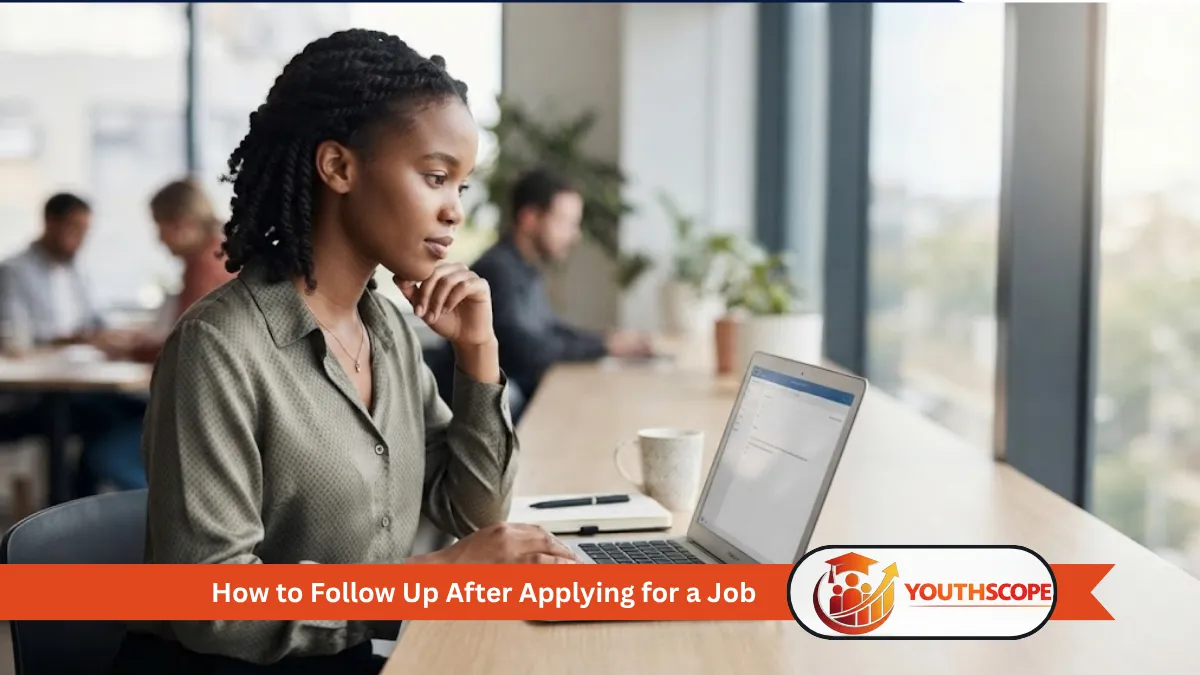
Applied for a Job and Heard Nothing? Here’s How to Follow Up Professionally
Quick Summary
Following up after submitting a job application can help you confirm that your application reached the employer and give you an opportunity to express continued interest in the position. However, the timing and wording matter.
A follow-up message should be brief, professional and relevant to the application. Job seekers should avoid sending repeated messages, demanding an immediate response or contacting employees through inappropriate channels.
If the vacancy provides a specific contact person or application process, follow those instructions before attempting another form of contact.
How to Follow Up After Applying for a Job
Submitting an application does not always mean you will receive an immediate response. Employers may still be reviewing applications, conducting interviews or waiting until the closing date before contacting shortlisted candidates.
A professional follow-up can therefore be useful when enough time has passed, particularly if the vacancy did not provide a specific instruction not to contact the employer.
The purpose is not to pressure the recruiter. Instead, the message should politely ask whether there is an update and reaffirm your interest in the position.
When Should You Follow Up on a Job Application?
There is no universal waiting period that applies to every employer.
The appropriate timing can depend on the vacancy, closing date and instructions provided by the employer.
A practical approach is:
- If the closing date has not passed: Check the vacancy instructions before following up.
- After the closing date: Allow the employer some time to review applications before making contact.
- If an employer gave you a specific timeframe: Use that timeframe as your guide.
- If you were told you would receive an update by a particular date: A follow-up after that date can be appropriate.
- If you have already followed up: Avoid sending repeated messages within a short period.
The closing date is particularly important. If applications are still open, the employer may not yet have started contacting shortlisted applicants.
What Should You Say in a Follow-Up Message?
Keep your message short and make it easy for the recipient to identify your application.
Include:
- Your name
- The position you applied for
- The date you submitted your application, if useful
- A brief expression of continued interest
- A polite request for an update
- Your contact details where appropriate
You do not need to repeat your entire CV or application.
Example Follow-Up Email
EmailFollow-Up on Job Application – [Position Name]
Follow-Up on Job Application – [Position Name]
Dear [Hiring Manager/Recruiter Name],
I hope you are well.
I am writing to follow up on my application for the [Position Name] position, which I submitted on [date]. I remain interested in the opportunity and would appreciate any update you may be able to provide regarding the application process.
Please let me know if any additional information is required from my side.
Thank you for your time and consideration.
Kind regards,
[Full Name]
[Phone Number]
[Email Address]
You can adjust the message depending on the employer’s communication style and the instructions included in the original vacancy.
Should You Follow Up by Email, Phone or WhatsApp?
Use the communication method provided by the employer whenever possible.
If the vacancy specifically provides an email address for enquiries, email is generally more appropriate than trying to find a recruiter’s personal contact details.
If the employer provides a telephone number and indicates that applicants may use it for enquiries, a short professional call may be appropriate.
For WhatsApp, only use the platform if the employer has provided a WhatsApp contact or specifically instructed applicants to communicate there.
Do not search for or contact a recruiter through a private social-media account simply because you cannot find an official contact channel.
What If the Job Advert Says “Do Not Contact Us”?
Follow the instruction.
Some employers explicitly state that only shortlisted candidates will be contacted or that applicants should not make follow-up enquiries.
In that situation, sending repeated emails or calls is unlikely to add useful information.
Instead, keep the application details for your records and continue looking at other suitable opportunities while waiting for an official response.
What If You Applied Through an Online Portal?
If you applied through an employer’s recruitment system, first check the application portal.
Depending on the employer and system, your application may have a status such as:
- Application received
- Submitted
- Under review
- Shortlisted
- Interview
- Closed
- Unsuccessful
The exact statuses vary between employers, so do not assume that a particular status means you have been shortlisted unless the employer explains it.
Also check your email, including your spam or junk folder, for messages from the employer.
What If You Have Not Received Any Response?
No response does not necessarily tell you what happened to your application.
The employer may still be reviewing applications, the recruitment process may have changed, or the organisation may have decided not to proceed with your application.
Unless the employer provides a specific update, avoid assuming that silence means either rejection or selection.
If an appropriate follow-up has already been sent and there is still no response, continuing to apply for other vacancies is sensible.
Common Job Application Follow-Up Mistakes
A follow-up is most useful when it remains professional.
Avoid:
Sending multiple messages every day
Repeated messages can become excessive. One polite follow-up is generally preferable to repeatedly asking for an update.
Demanding an answer
Avoid phrases that pressure the employer to respond immediately.
Repeating your entire application
The recruiter does not need your complete CV pasted into every follow-up message.
Contacting employees through personal accounts
Use official recruitment channels rather than attempting to reach employees through their private social-media profiles.
Ignoring the vacancy instructions
If the advert says that only shortlisted candidates will be contacted, take that instruction into account.
Using an overly casual message
A message such as “Hi, any update?” provides little context. Include the position title and enough information for the employer to identify your application.
What Applicants Should Prepare Before Following Up
Before sending your message, check:
- The exact job title
- The organisation’s name
- The date you submitted the application
- The vacancy closing date
- Any instructions about contacting the employer
- The email address or contact details supplied in the vacancy
- Your application reference number, if one was provided
This reduces the risk of sending inaccurate information.
A Simple Job Application Follow-Up Checklist
Before contacting the employer:
- Check whether applications have closed.
- Read the vacancy instructions again.
- Check your application portal, if applicable.
- Search your inbox and spam folder for a response.
- Use the employer’s official contact channel.
- Keep the message brief and professional.
- Avoid sending repeated follow-ups.
What Happens After You Follow Up?
The employer may respond with an update, request additional information, invite you to an interview or explain that the recruitment process is still underway.
They may also not respond.
A follow-up message is a way of communicating professionally with an employer; it does not guarantee an interview, selection or employment.
For this reason, job seekers should continue searching and applying for other suitable opportunities while waiting.
Suggested
Frequently Asked Questions
How long should I wait before following up on a job application?
There is no single waiting period for every vacancy. Consider the closing date, the employer’s instructions and any timeframe provided during the recruitment process.
Is it okay to follow up after applying online?
Yes, when the employer’s instructions allow enquiries. Use the official contact method provided in the vacancy rather than trying to locate private contact details.
Should I call after submitting a CV?
Only consider calling if the employer provides a suitable telephone contact and does not instruct applicants to avoid enquiries.
Can I follow up on WhatsApp?
Use WhatsApp only when the employer has provided it as an official communication channel or specifically instructed applicants to use it.
What should I say if I have not received a response?
Briefly identify yourself and the position you applied for, state when you submitted the application if relevant, and politely ask whether there is an update.
Does following up guarantee an interview?
No. Following up does not guarantee an interview, shortlisting or employment.
Final Reminder for Job Seekers
A good follow-up is short, respectful and relevant. Before contacting an employer, check the original vacancy for instructions, confirm the application status if an online portal is available, and use the official communication channel provided.
Most importantly, do not put all your hopes into one application. Keep applying for suitable opportunities while waiting for employers to respond.
Official Source
Not applicable — this is a Youthscope career guide rather than an article based on a specific vacancy or official programme announcement.
Last Checked Date
30 September 2026
Author/Updated Information
Written by: Mbalizuke Nkosi
Published: 30 September 2026
Updated: 30 September 2026
Information checked: 30 September 2026

Mbalizuke Nkosi is the editorial voice behind YouthScope.co.za, a South African youth-focused platform dedicated to providing reliable information on opportunities, education, and career development. The platform serves students, graduates, job seekers, and young professionals by delivering accurate, timely, and easy-to-understand content.
Through informative and professionally curated content, YouthScope.co.za aims to equip young people with the knowledge and resources needed to make informed decisions about their education and future careers.
For inquiries or support, please contact admin@youthscope.co.za.
4 thoughts on “How to Follow Up After Applying for a Job Professionally”