
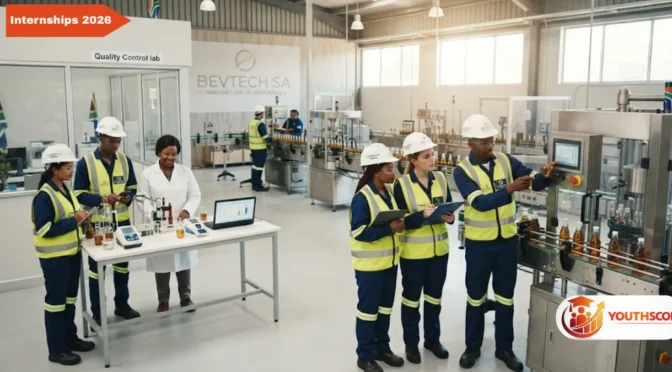
South African students looking for workplace experience before completing their National Diploma can now apply for the South African Breweries (SAB) In-Service Training Programme 2026.
The programme offers practical industry exposure at SAB breweries across South Africa, giving engineering, food science, biotechnology and microbiology students the opportunity to complete their required experiential learning while gaining valuable manufacturing experience.
With more than 39 brewery training opportunities and 14 quality training placements available, eligible students are encouraged to prepare their applications before the closing date.
SAB In-Service Training Programme 2026 Opens Opportunities for National Diploma Students
South African Breweries (SAB) has opened applications for its Brewery and Quality In-Service Training Programme 2026, providing students with an opportunity to gain practical workplace experience in one of South Africa’s largest manufacturing environments.
The programme is aimed at students who require P1/P2 training, experiential learning, or workplace exposure to complete their National Diploma qualifications.
Students studying engineering, food science, biotechnology and microbiology can gain hands-on exposure while working alongside experienced production and quality teams.
Opportunity Overview
Organisation: South African Breweries (SAB)
Programme Name: Brewery In-Service Training & Quality In-Service Training Programme 2026
Opportunity Type: In-Service Training / Experiential Learning / Internship Placement
Industry: Manufacturing / Food and Beverage
Location: Multiple SAB breweries across South Africa
Duration: Not disclosed
Available Opportunities:
- 39 Brewery Training opportunities
- 14 Quality Training opportunities
Target Applicants:
Third-year National Diploma students requiring workplace training before graduation.
The programme provides students with exposure to real manufacturing operations, production systems, laboratory processes, quality assurance and workplace safety practices.
Internship / Learnership / Bursary Breakdown
SAB Brewery In-Service Training Programme
The Brewery In-Service Training Programme is designed for students interested in production, engineering and manufacturing operations.
Successful students will gain exposure to:
- Brewing operations
- Process engineering
- Manufacturing systems
- Equipment operation
- Production monitoring
- Preventative maintenance
- Continuous improvement processes
- Quality control procedures
Students will work within SAB production environments and learn how large-scale beverage manufacturing operates from raw materials through to finished products.
Brewery Training Responsibilities
Students may assist with:
Operating Brewing Equipment
Learners will gain practical exposure to equipment such as:
- Brew houses
- Cellars
- Filtration systems
- Bright beer tanks
Monitoring Production Processes
Students will learn how to:
- Record production information
- Monitor process performance
- Identify production challenges
- Track deviations from targets
Equipment Inspection and Maintenance Support
Students may assist with:
- Equipment inspections
- Lubrication activities
- Cleaning procedures
- Reporting equipment issues
Quality Checks
Students will participate in:
- Product testing
- Quality analysis
- Laboratory recording
- Process verification
Production Team Communication
Students will develop workplace skills through:
- Shift meetings
- Team discussions
- Reporting processes
- Problem-solving activities
Quality In-Service Training Programme
The SAB Quality In-Service Training Programme focuses on laboratory operations, quality assurance and food safety.
This opportunity is suitable for students interested in scientific testing, microbiology and quality control.
Students will gain exposure to:
- Laboratory testing
- Sample analysis
- Quality assurance processes
- Food safety procedures
- Manufacturing quality standards
Quality Training Responsibilities
Successful candidates may assist with:
Laboratory Operations
Students will support laboratory teams by:
- Maintaining laboratory equipment
- Following quality procedures
- Keeping work areas compliant with standards
Sample Testing
Students may perform:
- Production sample analysis
- Laboratory testing
- Quality assessments
Reporting Quality Issues
Students will learn how to:
- Identify non-conformances
- Report quality concerns
- Support corrective actions
Available SAB Training Locations
Brewery In-Service Training Posts
Available opportunities include:
- Newlands Brewery – 3 posts
- Ibhayi Brewery – 3 posts
- Prospecton Brewery – 3 posts
- Alrode Brewery – 3 posts
- Chamdor Brewery – 6 posts
- Rosslyn Brewery – 6 posts
- Polokwane Brewery – 1 post
Quality In-Service Training Posts
Available opportunities include:
- Newlands Brewery – 2 posts
- Polokwane Brewery – 2 posts
- Prospecton Brewery – 3 posts
- Ibhayi Brewery – 3 posts
- Rosslyn Brewery – 3 posts
- Alrode Brewery – 1 post
Eligibility Requirements
Applicants must meet the following requirements:
Brewery In-Service Training Requirements
Applicants should:
- Be studying towards a National Diploma
- Be a third-year student
- Require experiential learning or workplace training
- Be studying one of the following:
- Chemical Engineering
- Food Science
- Mechanical Engineering
Additional requirements:
- Understanding of manufacturing processes
- Ability to work in teams
- Computer literacy
- Interest in brewing and production environments
Quality In-Service Training Requirements
Applicants should:
- Be third-year National Diploma students
- Be studying:
- Biotechnology
- Microbiology
Additional skills required:
- Strong computer skills
- Analytical thinking
- Good communication skills
- Problem-solving ability
- Attention to detail
- Accuracy and precision
- Good numeracy skills
- Sound judgement
Citizenship Requirements
Applicants should ensure they meet South African study and workplace training requirements.
Employment Status Requirements
The programme is aimed at students who require workplace exposure as part of their qualification.
Experience Requirements
Previous work experience is not required.
The programme is specifically designed for students who need practical industry training.
Stipend / Salary Details
A stipend amount for the SAB In-Service Training Programme 2026 has not been disclosed.
Applicants should confirm remuneration details directly with SAB during the application process.
Required Documents Checklist
Applicants should prepare:
- Updated CV
- Certified copy of South African ID
- Academic record
- Proof of registration
- Letter from institution confirming experiential learning requirement
- Any additional documents requested during application
How to Apply Step-by-Step
Step 1:
Update your CV and ensure your academic information is accurate.
Step 2:
Prepare supporting documents, including your ID, academic record and proof of registration.
Step 3:
Confirm that your National Diploma requires experiential learning or workplace training.
Step 4:
Submit your application through the official SAB application process before positions close.
Closing Date
Closing Date: 20 July 2026
Students are encouraged to apply as soon as possible and avoid waiting until the final day.
Related Opportunity
Youthscope
Frequently Asked Questions (FAQ)
1. Who can apply for the SAB In-Service Training Programme?
Third-year National Diploma students requiring experiential learning or workplace training can apply.
2. What qualifications are required?
For Brewery Training:
- Chemical Engineering
- Food Science
- Mechanical Engineering
For Quality Training:
- Biotechnology
- Microbiology
3. Is the opportunity open to unemployed youth?
Yes. The programme is suitable for students who require workplace exposure before completing their qualification.
4. Is there a stipend?
The stipend amount has not been disclosed.
5. How long does the programme last?
The duration has not been disclosed.
6. How do applicants apply?
Applicants should prepare their documents and apply through the official SAB application process before the closing date.
Why You Should Apply
Completing a qualification is important, but gaining workplace experience can significantly improve employment opportunities after graduation.
The SAB In-Service Training Programme allows students to:
- Gain manufacturing experience
- Develop technical workplace skills
- Improve their CV
- Understand industry operations
- Build professional networks
- Prepare for future employment opportunities
Practical exposure can help students transition from academic learning into professional careers.
Career Pathways
Students who complete experiential training in this programme may improve their opportunities in industries such as:
- Food and beverage manufacturing
- Production operations
- Quality assurance
- Laboratory services
- Process engineering
- Manufacturing technology
Possible future career pathways include:
- Process Technician
- Quality Technician
- Production Assistant
- Laboratory Technician
- Manufacturing Specialist
- Engineering Technician
Students may also continue developing their careers through further studies, professional certifications or graduate programmes.
Expert Guidance (Mbalizuke Nkosi)
Mbalizuke Nkosi advises students applying for experiential learning opportunities to treat the application process professionally.
“Students should prepare their documents early, ensure their qualification matches the opportunity requirements, and avoid submitting incomplete applications.
A strong CV, accurate academic information and proof that experiential learning is required can make the application process smoother.
Applicants should also apply early because workplace training opportunities at large companies often attract many students.”
Disclaimer
Applicants should verify all information through official South African Breweries (SAB) application channels.
Never pay money to anyone promising guaranteed placement.
Application decisions remain the responsibility of South African Breweries and successful candidates will be selected according to the organisation’s recruitment process.

Mbalizuke Nkosi is the editorial voice behind YouthScope.co.za, a South African youth-focused platform dedicated to providing reliable information on opportunities, education, and career development. The platform serves students, graduates, job seekers, and young professionals by delivering accurate, timely, and easy-to-understand content.
Through informative and professionally curated content, YouthScope.co.za aims to equip young people with the knowledge and resources needed to make informed decisions about their education and future careers.
For inquiries or support, please contact admin@youthscope.co.za.