
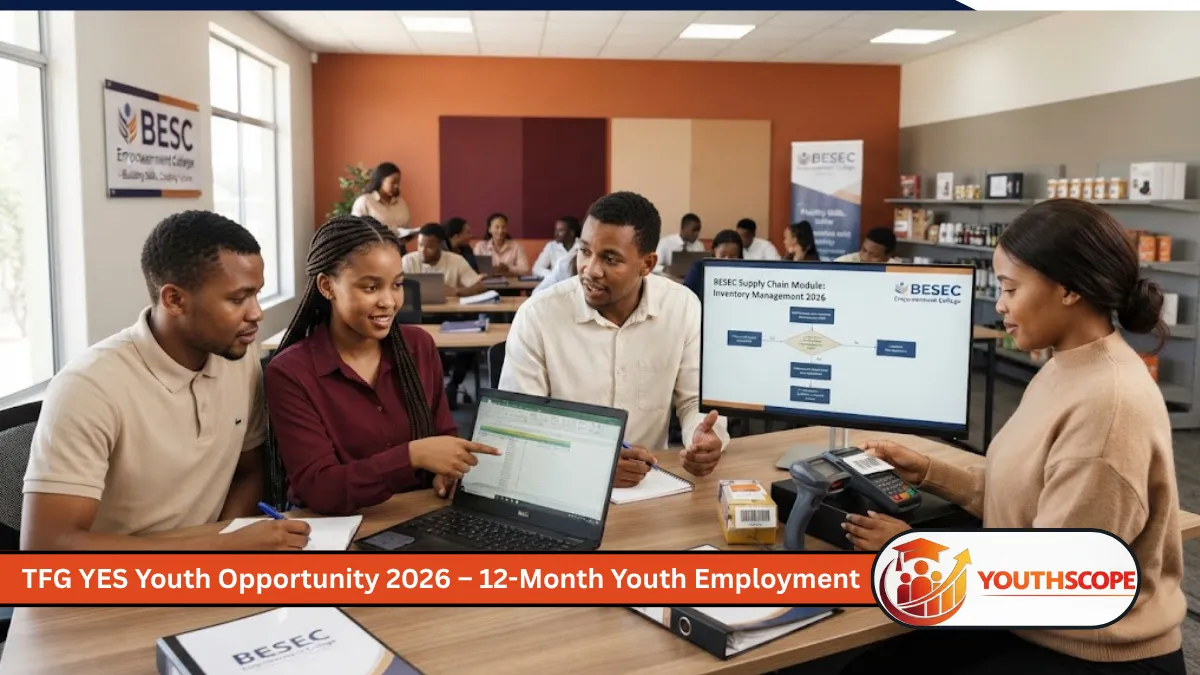
South Africans looking to develop practical workplace skills can explore BES Empowerment College (BESEC) Skills Development and Learnership Programmes 2026.
BESEC offers a range of learning pathways, including learnerships, Legacy Qualifications, QCTO Occupational Qualifications and Skills Programmes. The programmes cover fields such as business administration, management, wholesale and retail, logistics, human resources, water services, contact centre operations and chemical production.
Some programmes may be relevant to unemployed learners, while others can support employees and employers with workplace skills development. Because entry requirements, funding, availability and enrolment conditions can differ, prospective learners should confirm the details of their chosen programme directly with BESEC.
Employer / Training Provider
Organisation: BES Empowerment College (BESEC)
Programme: Skills Development, Learnerships and Occupational Qualifications
Location: South Africa
Programme Duration: Varies according to the programme
Employment Type: Skills development / learning opportunity
Target Group: Unemployed learners and employees, depending on programme
Closing Date: Not specified. Early applications are encouraged.
What Is BES Empowerment College?
BES Empowerment College (BESEC) is a South African skills development provider offering learning and workplace training programmes.
Its offerings include accredited learning options covering learnerships, occupational qualifications and skills programmes.
The programmes are intended to help learners develop practical capabilities that can be applied in real workplace environments.
For employers, BESEC also provides support with Skills Development initiatives, including learner sourcing, placement, registrations and programme coordination.
Accredited Learnership Programmes
BESEC lists a number of programmes under its Business Legacy Qualifications and Wholesale & Retail Legacy Qualifications.
Business Legacy Qualifications
Business-focused programmes include:
- Business Administration
- Generic Management
- Management
These learning pathways may be suitable for people interested in business operations, administration, supervision and management-related careers.
Wholesale and Retail Learnerships
BESEC also offers programmes focused on the wholesale and retail sector.
Listed programmes include:
- Wholesale and Retail Operations Supervision
- Wholesale and Retail Management
These programmes can be relevant to people interested in retail stores, wholesale operations, supervision and management.
QCTO Occupational Qualifications
BESEC also provides QCTO Occupational Qualifications aimed at developing practical competence for specific occupational roles.
Listed occupational programmes include:
- Store Person
- Project Manager
- General Sales Assistant
- Dispatching & Receiving Clerk
- Human Resource Manager
- Water Reticulation Practitioner
- Water Process Controller
- Contact Centre Management
- Chemical Production Machine Operator
These programmes span several industries, including retail, logistics, project management, human resources, water services, customer service and manufacturing.
Workplace Essential Skills Programme
BESEC also lists a QCTO Skills Programme called Workplace Essential Skills.
The programme focuses on practical workplace capabilities, including:
- Workplace health and safety
- Workplace induction
- Work ethics
- Teamwork
- Participation in meetings
- Maintaining a safe working environment
- Maintaining a productive workplace
A skills programme generally has a more targeted focus than a longer qualification-based learning pathway. Prospective learners should check the specific structure and outcomes of the programme before enrolling.
Learnerships vs Skills Programmes
Understanding the difference between a learnership and a skills programme is important before applying.
A learnership is generally a structured learning programme connected to a qualification and workplace learning.
A skills programme is generally more targeted towards specific skills or occupational competencies.
The best option depends on your career goals, existing education, workplace experience and the specific programme you qualify for.
Who Can Benefit From BESEC Programmes?
Depending on the specific programme, BESEC’s learning opportunities may be relevant to:
- Unemployed South Africans seeking workplace skills.
- Young people looking to improve their employability.
- Employees seeking additional workplace competencies.
- Individuals interested in business administration.
- People pursuing management careers.
- Individuals interested in wholesale and retail.
- People interested in logistics and store operations.
- Individuals interested in human resources.
- People interested in water-sector occupations.
- Individuals seeking occupational training.
Important: Eligibility is programme-specific. Being unemployed does not automatically mean that an applicant qualifies for every BESEC programme.
Are BESEC Programmes Free?
Funding / Fees: Not specified generally.
BESEC offers different types of programmes, and the funding arrangements or costs may vary between programmes and learner categories.
Applicants should confirm directly with BESEC whether their chosen programme is funded, employer-sponsored or subject to fees before making any payment or enrolment commitment.
Do not assume that every programme advertised by a training provider is automatically free.
Is There a Stipend?
Salary/Stipend: Not disclosed generally.
The information provided does not establish a universal monthly stipend for all BESEC programmes.
A stipend may depend on the particular funded programme, learnership arrangement, employer or intake. Applicants should confirm this directly with BESEC before applying.
Programme Duration
There is no single duration that applies to all BESEC programmes.
The duration depends on the learning pathway and qualification being offered.
For this reason, applicants should check the specific programme information before applying rather than assuming that every BESEC opportunity has the same duration.
What Skills Can Learners Gain?
BESEC’s programmes cover a broad range of workplace and occupational capabilities.
Depending on the programme, learners may develop skills in:
- Business administration
- Management
- Retail operations
- Supervision
- Sales
- Logistics
- Stock and dispatch operations
- Human resources
- Project management
- Customer service
- Contact centre operations
- Water services
- Manufacturing-related operations
- Workplace health and safety
- Professional communication
- Teamwork
The exact skills and qualification outcomes depend on the programme selected.
What Documents May Be Required?
BESEC’s requirements can differ between programmes.
Documents Needed
- Updated CV
- South African ID copy
- Copies of relevant qualifications
- Matric certificate, where applicable
- Academic records, where required
- Proof of residence, if requested
- Other supporting documents specified by BESEC
Applicants should only provide documents requested for the specific programme.
How to Apply for BESEC Skills Development Programmes
Step-by-Step Application Process
- Visit the official BESEC website.
- Open the Skills Development Programmes section.
- Review the available learning pathways.
- Select the programme that matches your career interests.
- Check the entry requirements carefully.
- Confirm whether the programme is currently accepting applications.
- Complete the learner application through the official website, where available.
- Upload or submit the requested supporting documents.
- Review your information before submitting.
- Keep proof of your application for your records.
Official Application Link
Official BESEC Skills Development Programmes:
https://besec.co.za/skills-development-programmes/
Applicants should use the official BESEC website to verify programme availability, requirements, funding arrangements and enrolment procedures.
Important Information for Applicants
Before applying, confirm:
- Whether your chosen programme is currently open.
- The minimum entry requirements.
- Whether the programme is intended for employed or unemployed learners.
- Whether workplace experience is required.
- The qualification or skills outcome.
- The programme duration.
- Whether the opportunity is funded.
- Whether any fees apply.
- Which documents must be submitted.
- Whether there is a specific application deadline.
Applicants should also be careful when responding to advertisements shared on social media or third-party websites. Verify the opportunity through BESEC’s official channels before providing personal information or making payments.
Expert Guidance
Career expert YouthScope Editorial Team advises applicants to prepare all required documents before applying. Ensure your CV is updated, your qualifications are certified where required, and submit your application well before the closing date to avoid technical issues. Always apply only through the employer’s official recruitment website and keep a copy of your confirmation for your records.
Discover Latest:
- Latest Learnerships
- Internships
- Graduate Programmes
- Government Jobs
- Bursaries
- Apprenticeships
- Career Advice
- CV Writing Guide
- Interview Tips
Frequently Asked Questions
Who can apply for BESEC programmes?
Depending on the programme, opportunities may be available to unemployed learners, young people and employees seeking additional workplace skills. Specific eligibility requirements must be confirmed for each programme.
Does BESEC offer learnerships?
Yes. BESEC lists learnerships under areas including Business Legacy Qualifications and Wholesale & Retail Legacy Qualifications.
What qualifications are available?
Listed pathways include Business Administration, Generic Management, Management, Wholesale and Retail Operations Supervision and Wholesale and Retail Management, as well as various QCTO Occupational Qualifications.
Are BESEC programmes accredited?
BESEC describes its offerings as including accredited learning programmes. Applicants should verify the accreditation and qualification details of the specific programme before enrolling.
Is there a stipend?
A universal stipend is not disclosed. Funding and stipend arrangements can vary according to the programme and learner placement.
Are the programmes free?
Not necessarily. Costs and funding arrangements can differ. Applicants should confirm the financial conditions of their chosen programme directly with BESEC.
Where are the programmes available?
BESEC provides skills development opportunities in South Africa. The location and workplace component, where applicable, depend on the specific programme.
Can unemployed people apply?
BESEC states that its skills programmes can create learning opportunities for both employed and unemployed learners. However, each programme may have its own entry requirements.
Disclaimer
Youthscope shares employment, internship, bursary and learnership opportunities from official employers and training providers to help South Africans access career opportunities. We are not the recruiting or training organisation and do not charge any application fees. Always verify information on the official organisation’s website before submitting an application.
Opportunity Verification
Published by: YouthScope Editorial Team
Last Updated: 27 August 2026
Information Source: BESEC programme information and official organisation channels
Status: Reviewed for accuracy
YouthScope shares career information to help South Africans discover opportunities. Applicants should confirm final details, availability, accreditation, funding and entry requirements with the official organisation before applying.
Related Opportunities
- Delta Blue Security Learnership: Earn R5,500 While Studying 12–18 months
- Boksburg Learnership 2026: Get an NQF 4, Grade 12, age 18–35 Production Technology Qualification
- LNEX Logistics Learnership 2026: Apply for R6,000 Monthly Stipend
- SDC Learnerships 2026: Why the Stipend Isn’t the Only Benefit
- U-Belong Learnership 2026: 12 Months of Training and Work Exposure

The YouthScope Editorial Team publishes verified South African learnerships, internships, bursaries, graduate programmes, and career opportunities. Our team researches opportunities from official employers, government departments, SETAs, universities, and trusted organisations to provide accurate career information for South African youth.