
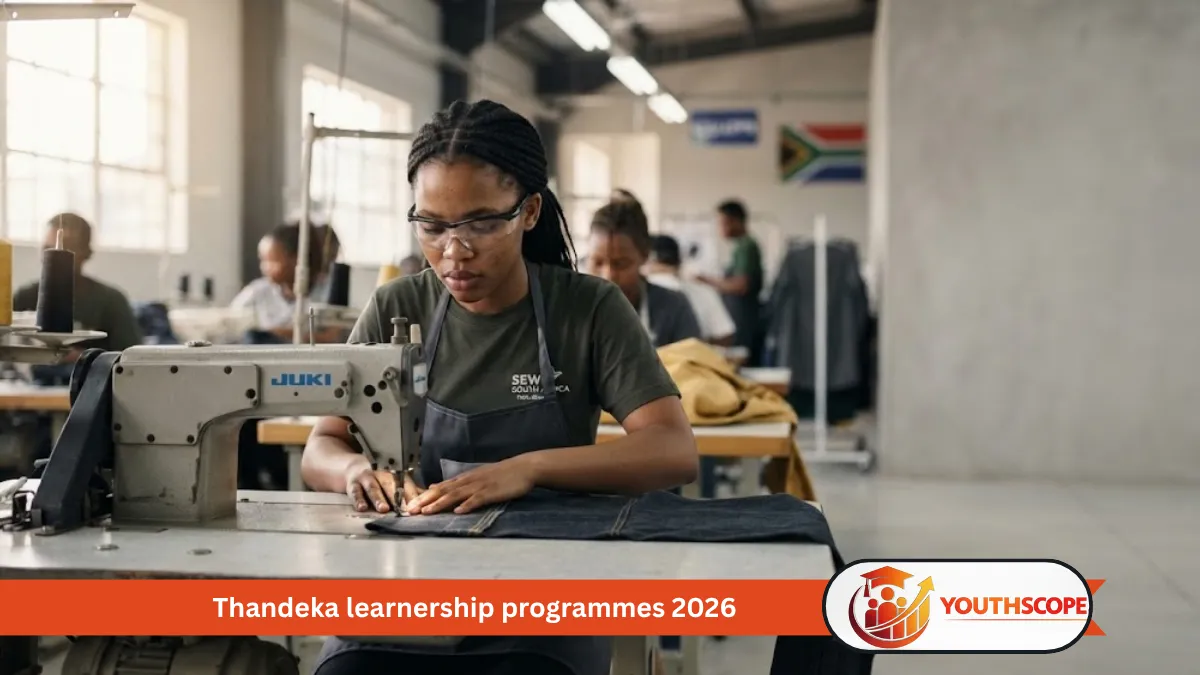
Thandeka Learnership Programmes offer South Africans access to accredited workplace-based training combining theoretical learning with practical factory experience.
The programmes run for 12 months and cover areas including clothing manufacturing, clothing and textile production, sewing-machine maintenance, and wholesale and retail distribution.
According to the information supplied for the programmes, learners can work towards nationally recognised NQF qualifications while receiving a monthly stipend.
Thandeka’s programme range includes qualifications from NQF Level 1 to Level 3, with the specific entry requirements depending on the programme selected.
Thandeka Learnership Programmes 2026: What You Need to Know
Thandeka’s learnership model combines theory with practical workplace exposure. This means participants are not limited to classroom-based training and can gain experience in a factory or workplace environment relevant to their chosen programme.
The available programmes cover different parts of the clothing, textile and retail sectors, making the opportunities relevant to applicants interested in practical manufacturing and distribution careers.
The programmes listed in the supplied information are accredited and carry NQF credits.
Programme Details
| Programme | NQF Level | Credits |
|---|---|---|
| General Certificate: Clothing Manufacturing Process | Level 1 | 120 |
| National Certificate: Clothing, Textiles, Footwear and Leather (CTFL) Manufacturing | Level 2 | 120 |
| National Certificate: Sewing Machine Mechanic | Level 3 | 122 |
| National Certificate: Wholesale and Retail Distribution | Level 2 | 120 |
The exact availability of each programme can depend on the current intake and training arrangements.
General Requirements
The supplied programme information indicates the following general requirements:
- Applicants should be South African citizens.
- The typical age range is 18 to 35 years.
- Educational requirements vary depending on the programme, with Grade 10, Grade 11 or Matric potentially applicable.
- The programmes can be available to unemployed individuals as well as employees in partner sectors, depending on the programme.
Applicants should not assume that the requirements for one Thandeka programme automatically apply to another.
For example, the minimum education level may differ between a clothing manufacturing programme and a higher-level technical programme.
What Does the Training Involve?
Thandeka’s programmes combine theory and practical factory-based training.
This structure is particularly relevant for applicants who want practical experience in industries where hands-on skills are important.
Depending on the selected programme, learners may develop skills related to:
- Clothing manufacturing processes
- Textile and garment production
- Sewing-machine maintenance
- Wholesale and retail distribution
- Workplace practices associated with the selected occupational area
The specific curriculum and practical activities depend on the qualification being completed.
1. Clothing Manufacturing Process
The General Certificate: Clothing Manufacturing Process is listed at NQF Level 1 and carries 120 credits.
This programme is focused on the fundamentals of clothing manufacturing processes.
Applicants interested in entering the clothing-production sector can consider whether this entry-level qualification matches their educational background and career plans.
2. CTFL Manufacturing
The National Certificate: Clothing, Textiles, Footwear and Leather Manufacturing is listed at NQF Level 2 with 120 credits.
The qualification provides training connected with the broader clothing, textile, footwear and leather manufacturing environment.
3. Sewing Machine Mechanic
The National Certificate: Sewing Machine Mechanic is listed at NQF Level 3 and carries 122 credits.
This programme is aimed at the technical side of clothing manufacturing, particularly skills associated with sewing machinery.
Applicants interested in machinery maintenance and technical work may find this track particularly relevant.
4. Wholesale and Retail Distribution
The National Certificate: Wholesale and Retail Distribution is listed at NQF Level 2 with 120 credits.
This programme provides an alternative to the manufacturing-focused tracks for applicants interested in distribution and retail-related work.
Is There a Stipend?
The supplied information states that Thandeka learnership programmes include monthly stipends.
However, the specific stipend amount was not provided in the information supplied for this article.
Applicants should therefore not rely on a particular rand amount unless the current official programme or intake announcement confirms it.
How to Apply
Applicants can make enquiries about Thandeka’s programmes through the organisation’s official contact channels.
The supplied information identifies the Thandeka Contact Page as one route for applications and province-based enquiries.
Application steps
- Visit the official Thandeka website.
- Review the available learnership programmes.
- Identify the programme that matches your education and career interests.
- Check the requirements for the current intake.
- Contact Thandeka through its official contact/application route.
- Follow the instructions provided for the relevant programme.
Applicants should use the official Thandeka website rather than relying on unofficial application links shared on social media.
What Applicants Should Prepare
The information supplied for this article does not provide one universal document checklist for every Thandeka programme.
Applicants should therefore check the specific intake before preparing or submitting documents.
Do not assume that every programme automatically requires a CV, certified ID, banking details or other documents unless the current official application instructions request them.
Closing Date
Closing date: Not specified in the information supplied.
Thandeka’s different programmes and intakes may have different application periods.
Applicants should check the official programme information or contact Thandeka directly for the current intake status and any applicable deadline.
Who Are These Learnerships Suitable For?
The programmes may be relevant to South Africans interested in practical careers in:
- Clothing manufacturing
- Textiles
- Footwear and leather manufacturing
- Sewing-machine maintenance
- Wholesale distribution
- Retail distribution
The most suitable programme depends on the applicant’s educational background, interests and the requirements of the available intake.
What Applicants Should Check Before Applying
Before submitting an application, applicants should confirm:
- The specific programme currently available
- The minimum education requirement
- The applicable age requirement
- Whether the intake accepts unemployed applicants, employees or both
- The location of the practical training
- The stipend applicable to that intake
- The application deadline
- The documents required
- The official application route
This is especially important because Thandeka offers several different qualifications and their requirements may not be identical.
Suggested
Frequently Asked Questions
How long are Thandeka learnership programmes?
The supplied information describes the programmes as 12-month training courses combining theory and practical workplace training.
What qualifications are available?
The listed programmes range from NQF Level 1 to NQF Level 3, covering clothing manufacturing, CTFL manufacturing, sewing-machine mechanics and wholesale and retail distribution.
Are Thandeka learnerships paid?
The supplied information states that the programmes include monthly stipends, but it does not provide a confirmed stipend amount.
What is the age requirement?
The supplied information gives a typical age range of 18 to 35 years. Applicants should confirm the exact requirement for their chosen programme.
Can unemployed people apply?
Yes. The supplied information indicates that unemployed individuals can participate, although some programmes may also be available to employees in partner sectors.
Where can I apply?
Applicants can use the official Thandeka website and contact page to make programme and application enquiries.
Final Reminder
Thandeka offers several learnership pathways rather than one single programme. Applicants should therefore select the qualification that matches their education and career interests and then confirm the requirements for the specific intake.
The programme, stipend, eligibility requirements and closing date can vary by intake, so applicants should verify the latest information directly with Thandeka before submitting an application.
Official Source
Thandeka Learnership Programmes
The programme information supplied also referenced existing Youthscope coverage of Thandeka programmes.
Last Checked Date
30 September 2026
This article is based on the programme information supplied in the request. The specific current intake, stipend amount and closing date should be reconfirmed against Thandeka’s latest official information before publication.
Author/Updated Information
Written by: Mbalizuke Nkosi
Published: 30 September 2026
Updated: 30 September 2026
Information checked: 30 September 2026

Mbalizuke Nkosi is the editorial voice behind YouthScope.co.za, a South African youth-focused platform dedicated to providing reliable information on opportunities, education, and career development. The platform serves students, graduates, job seekers, and young professionals by delivering accurate, timely, and easy-to-understand content.
Through informative and professionally curated content, YouthScope.co.za aims to equip young people with the knowledge and resources needed to make informed decisions about their education and future careers.
For inquiries or support, please contact admin@youthscope.co.za.
2 thoughts on “Thandeka Learnership Programmes 2026: 12-Month Training With Stipends”