
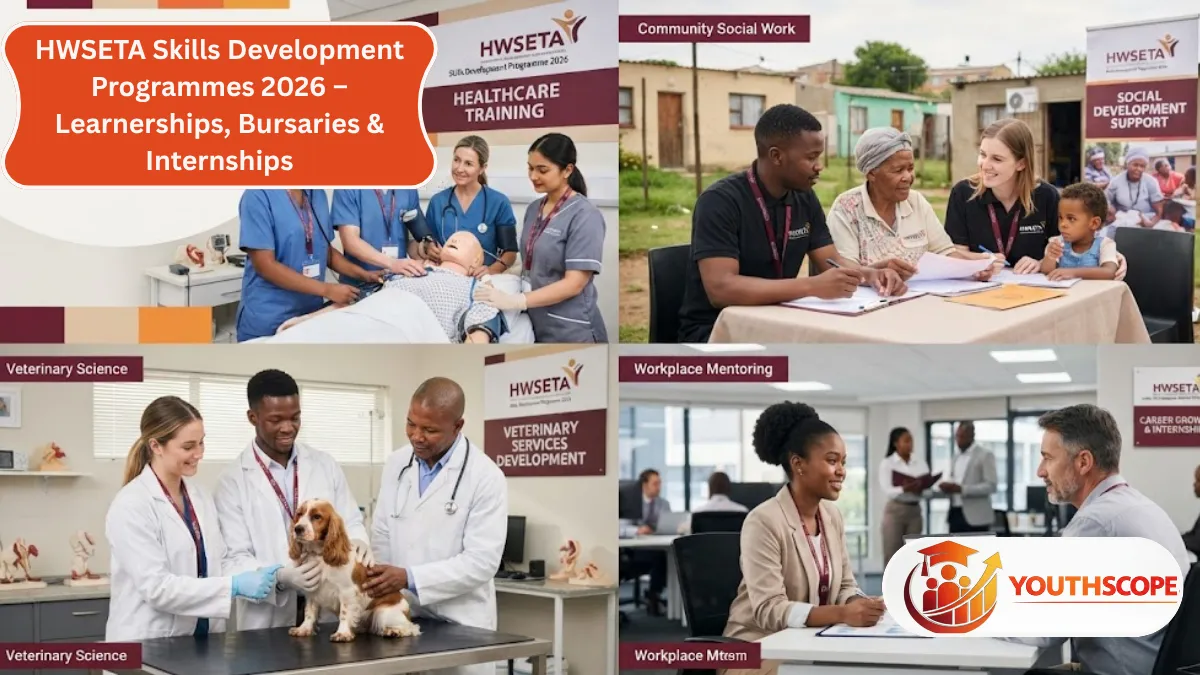
HWSETA Skills Development Programmes 2026: Your Guide to 7 Career Pathways
The Health and Welfare Sector Education and Training Authority (HWSETA) continues to play a vital role in developing skills for South Africa’s health, social development and veterinary sectors. Through partnerships with employers, universities, TVET colleges and accredited training providers, HWSETA supports thousands of learners, students and graduates every year.
Unlike a single national recruitment drive, HWSETA funds approved organisations, which later advertise learner opportunities such as learnerships, bursaries, internships, Work Integrated Learning (WIL), skills programmes and artisan development. If you’re looking to build a career in healthcare, social services or veterinary sciences, understanding these pathways can help you prepare for future opportunities.
Employer
| Item | Details |
|---|---|
| Organisation | Health and Welfare Sector Education and Training Authority (HWSETA) |
| Programme | Skills Development Programmes 2026 |
| Location | South Africa |
| Programme Types | Learnerships, Skills Programmes, Bursaries, WIL, Internships, Artisan Development |
| Employment Type | Skills Development Opportunities |
Closing Date
Closing Date: Varies by employer or institution.
The 2026–2027 Expression of Interest funding window closed on 20 February 2026. This deadline applied to employers and institutions seeking funding—not to individual learners. Recruitment for learners may open later through approved implementing organisations.
Seven HWSETA Career Pathways
1. Learnerships
Learnerships combine classroom-based learning with supervised workplace experience, leading to a registered occupational qualification or part-qualification.
2. Skills Programmes
Short occupational training programmes designed to build practical workplace skills in areas such as administration, community support and workplace health.
3. Bursaries
Financial support for eligible students studying priority qualifications in the health and welfare sector.
4. University Work Integrated Learning (WIL)
Practical workplace placements for university students whose qualifications require compulsory workplace training.
5. TVET Work Integrated Learning
Workplace exposure for TVET learners completing practical requirements for National Diplomas.
6. Internships
Structured workplace experience for university and TVET graduates who have already completed relevant qualifications.
7. Artisan Development
Training programmes that prepare learners for recognised trades through theory, practical training and workplace experience.
Who Can Apply?
Eligibility depends on the specific programme, but opportunities may target:
- South African citizens
- Grade 10, Grade 11 or Grade 12 learners
- TVET College students
- University students
- Graduates
- Unemployed youth
- Employed workers seeking further training
- Persons with disabilities (where specified)
- Applicants meeting qualification-specific requirements
Requirements
Requirements differ according to the programme but may include:
- South African ID
- Relevant school or tertiary qualification
- Academic transcript
- Proof of registration
- Updated CV
- Proof of residence
- Professional registration (where applicable)
- Availability for the full programme
- Certified supporting documents
Always follow the requirements in the official recruitment notice.
Salary / Stipend
Salary/Stipend: Varies by programme.
Some HWSETA-funded learnerships, internships and workplace placements include a learner allowance. However, HWSETA does not publish one standard stipend, and payment depends on the programme, host organisation and funding agreement.
Documents Needed
Applicants should prepare:
- Updated CV
- Certified South African ID copy
- Certified Grade 12 certificate (where applicable)
- Certified tertiary qualifications
- Academic transcript or statement of results
- Proof of registration (students)
- Proof of residence
- Institutional placement letter (where applicable)
- Professional registration (if required)
How to Apply
- Monitor the official HWSETA website and approved employers or institutions.
- Identify a programme that matches your qualification.
- Read the eligibility requirements carefully.
- Prepare all required supporting documents.
- Submit your application through the authorised recruitment channel before the closing date.
Official Application Link
Applications are submitted through approved employers, universities, TVET colleges and implementing organisations. Candidates should monitor the official HWSETA website and participating institutions for recruitment notices.
Expert Guidance (YouthScope Editorial Team)
Career expert YouthScope Editorial Team advises applicants not to confuse the HWSETA Expression of Interest funding process with learner recruitment. Funding applications are submitted by employers and educational institutions, while learners apply only after approved organisations advertise opportunities. Prepare your CV, certified documents and academic records in advance, and apply only through official recruitment channels.
Explore Related Opportunities
Ready to take the next step in your career? Browse these categories to find your perfect fit:
Career guides
Frequently Asked Questions (FAQ)
Does HWSETA recruit learners directly?
Not usually. Most opportunities are advertised by approved employers, universities, TVET colleges or training providers after receiving HWSETA funding.
What programmes does HWSETA support?
HWSETA supports learnerships, skills programmes, bursaries, internships, university WIL, TVET WIL and artisan development.
Is there a standard HWSETA stipend?
No. Allowances differ depending on the programme and funding agreement.
Who can apply?
Eligibility depends on the programme and may include school-leavers, TVET learners, university students, graduates and employed workers.
Does completing an HWSETA programme guarantee employment?
No. Completing a funded programme does not automatically guarantee permanent employment.
What documents are usually required?
Applicants generally need an updated CV, certified ID, qualifications, academic records and any additional documents specified in the recruitment notice.
Can TVET students apply?
Yes. HWSETA supports Work Integrated Learning and internship opportunities for eligible TVET learners and graduates.
Where can I find HWSETA opportunities?
Recruitment notices are usually published by approved employers, universities, TVET colleges and accredited training providers.
Disclaimer
YouthScope shares employment, internship, bursary and learnership opportunities from official employers to help South Africans access career opportunities. We are not the recruiting organisation and do not charge any application fees. Always verify information on the employer’s official website before submitting your application.
ARTICLE TRUST BOX
Opportunity Verification
✅ Published by: YouthScope Editorial Team
✅ Last Updated: 29 July 2026
✅ Information Source: Official HWSETA funding and programme information
✅ Status: Reviewed for accuracy
YouthScope shares career information to help South Africans discover opportunities. Applicants should confirm final details with the official organisation before applying.

The YouthScope Editorial Team publishes verified South African learnerships, internships, bursaries, graduate programmes, and career opportunities. Our team researches opportunities from official employers, government departments, SETAs, universities, and trusted organisations to provide accurate career information for South African youth.