
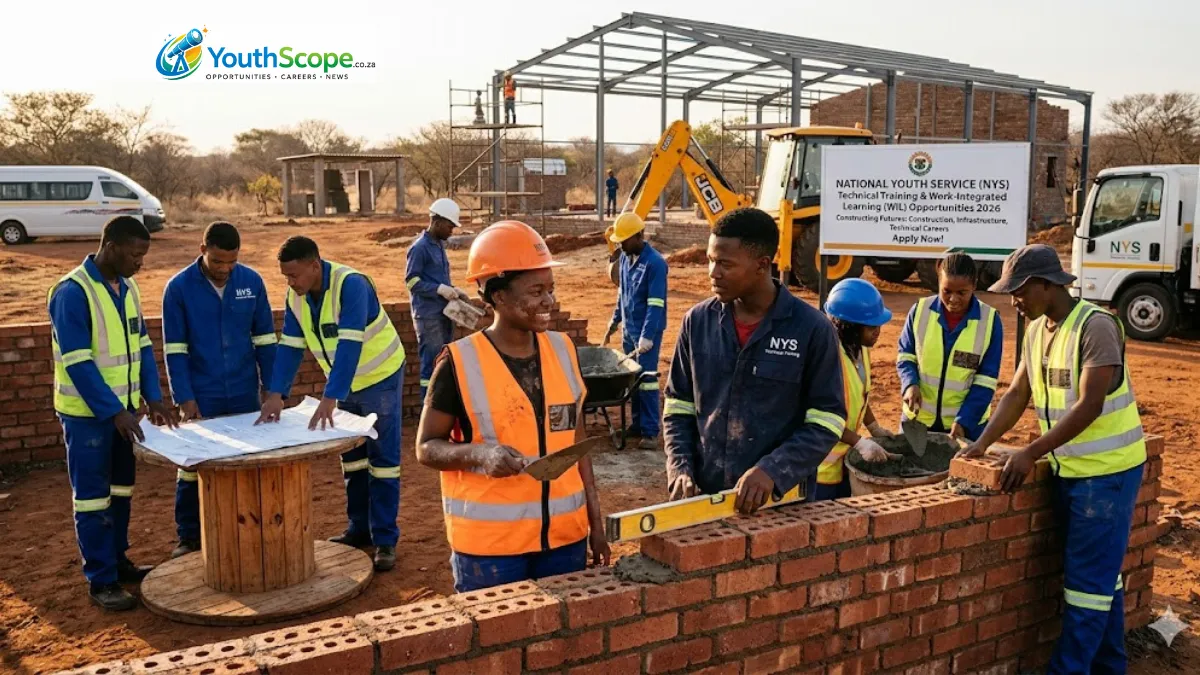
A new funded youth opportunity is giving unemployed South Africans a chance to gain practical skills, workplace experience, and daily financial support.
The NYS Technical Training and Work-Integrated Learning (WIL) Opportunities 2026 are now open for applications, offering a pathway into construction, infrastructure, and technical careers.
Unlike short-term programmes with little long-term value, this initiative combines accredited training, hands-on learning, and real project experience.
For many young people, this could be the opportunity that changes everything.
What Is the NYS Programme 2026?
The opportunity forms part of the Expanded Public Works Programme (EPWP) and focuses on helping unemployed youth gain practical training in the built environment sector.
Participants will be linked to the Construction of Ermelo Labour Centre project, where they will receive both classroom-based learning and workplace experience.
This is not a permanent job, but it is a funded development programme designed to improve future employability.
What Does the Programme Offer?
Successful applicants will benefit from a structured skills pathway that includes:
- Practical construction skills training
- Accredited learning opportunities
- Workplace exposure
- Daily stipend
- Exit support after completion
- Starter tools for future opportunities
This combination gives participants much more than temporary placement experience.
Quick Overview of the Opportunity
Key Details:
- Programme Name: National Youth Service Technical Training and WIL Programme
- Project: Construction of Ermelo Labour Centre
- Total Intake: 30 participants
- Duration: 9 to 12 months
- Qualification: Learnership in Building and Civil Construction
- NQF Level: Level 3
- SAQA ID: 65409
- Stipend: R150 per day (includes transport allowance)
- Age Requirement: 18 to 35 years
- Closing Date: 30 April 2026
Because spaces are limited, early preparation is important.
Two Training Streams Available
The programme has two separate streams to support different applicant needs.
1. Learnership Stream
This stream will accept 15 participants.
It offers a 12-month Learnership in Building and Civil Construction, combining theory with practical training.
Skills Exposure Includes:
- Civil works
- Bricklaying
- Carpentry
- Painting
- Plastering
- Paving
- General construction techniques
This is ideal for young people seeking entry-level construction skills.
2. Work-Integrated Learning (WIL) Stream
This stream will also take 15 participants.
It is designed for students who have completed the theory portion of their studies and now require workplace experience to graduate.
Suitable Applicants May Come From:
- Universities
- Universities of Technology
- TVET Colleges
Relevant Fields Include:
- Civil Engineering
- Building
- National Diploma Civil Engineering
Applicants must submit proof from their institution confirming the need for in-service training.
How Much Is the Stipend?
Participants will receive R150 per day.
This amount helps cover:
- Training attendance support
- Transport costs
- Participation expenses
The stipend can help unemployed youth stay committed during the programme.
Who Should Apply?
This opportunity is aimed at unemployed youth ready to commit to a structured development programme.
Ideal Applicants Include Those Who Are:
- Between 18 and 35 years old
- Currently unemployed
- Interested in construction or technical careers
- Available for 9 to 12 months
- Ready to start immediately if selected
Preference may be given to applicants living near the project area.
Minimum Requirements
Applicants must meet the requirements of their chosen stream.
General Requirements:
- Valid South African ID
- Grade 12 / Matric
- Unemployed
- Available full-time
- Ready to start immediately
Additional Eligibility:
Applicants may also qualify if they are:
- TVET students needing workplace training
- University students requiring WIL placement
Choosing the correct stream is important.
Required Documents
Applicants must submit a complete application.
Documents Needed:
- Updated CV
- Completed application form
- Certified copy of ID
- Certified qualifications
- Municipal proof of residence
WIL Applicants Must Also Include:
- Institution letter confirming need for in-service training
Incomplete applications may not be considered.
Where to Collect and Submit Forms
Application forms are available from:
- Msukaligwa Local Municipality
- Department of Employment and Labour
- 14 Declerck Street, Ermelo
Submission Point:
- Department of Employment and Labour, Ermelo
Selection Targets
Selection will follow EPWP transformation targets, including:
- 85% previously disadvantaged backgrounds
- 50% women participation
- 1% persons with disabilities
- 1% ex-offenders
These targets help widen access across communities.
Why This Opportunity Matters
Many youth programmes only offer short-term participation.
This one provides:
- Funded training
- Practical workplace experience
- Accredited outcomes
- Support after completion
- Better employability prospects
For young people entering the labour market, that combination is highly valuable.
You Can Also Check:
How to Improve Your Chances
Helpful Tips:
- Submit a clean, updated CV
- Ensure certified copies are clear
- Provide valid proof of residence
- Choose the correct stream
- Double-check all documents before submission
WIL applicants should ensure their institution letter clearly explains the need for workplace placement.
Final Thoughts
The NYS Technical Training and Work-Integrated Learning Opportunities 2026 offer a strong pathway for unemployed youth and qualifying students who want practical skills in construction and technical fields.
With a daily stipend, structured training, workplace exposure, and accredited outcomes, this programme offers more than temporary support.
It creates a realistic route into sectors where practical experience still matters.

Mbalizuke Nkosi is the editorial voice behind YouthScope.co.za, a South African youth-focused platform dedicated to providing reliable information on opportunities, education, and career development. The platform serves students, graduates, job seekers, and young professionals by delivering accurate, timely, and easy-to-understand content.
Through informative and professionally curated content, YouthScope.co.za aims to equip young people with the knowledge and resources needed to make informed decisions about their education and future careers.
For inquiries or support, please contact admin@youthscope.co.za.