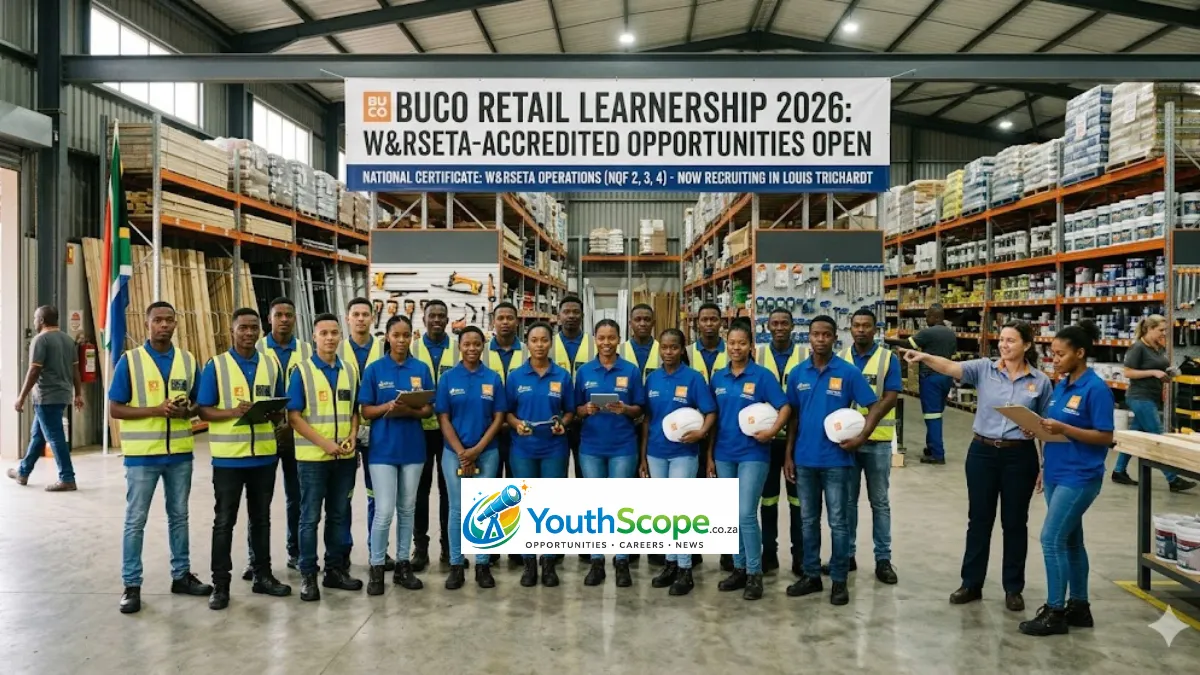
BUCO retail learnership 2026 W&RSETA-Accredited Opportunities Open

What the BUCO Learnership Offers

This isn’t a typical entry-level job; it’s a development-focused program. The successful candidate will navigate two distinct areas of growth:

1. Formal Education

  • Completion of a Portfolio of Evidence (PoE).
  • Structured assessments and assignments moderated by W&RSETA.
  • Classroom-based theory sessions to understand the “why” behind retail operations.

2. Practical In-Store Experience

  • Customer Service: Learning how to assist and guide shoppers effectively.
  • Merchandising: Mastering stock replenishment and attractive product displays.
  • Point-of-Sale: Gaining exposure to transaction systems and till duties.
  • Store Maintenance: Maintaining high standards of housekeeping and safety.

You can also Check:

Minimum Requirements: The “Checklist”

To qualify for this specific intake, you must tick every box below. Note that BUCO is looking for a first-time learner for this program.

RequirementDetail
NationalityMust be a South African Citizen
EducationMinimum of Grade 12 (Matric)
SkillsBasic numeracy and literacy are essential
LegalA clear criminal record is required
ExperienceMust be currently unemployed
Strict RuleMust NOT have completed a previous unemployed learnership

Why This Opportunity Matters

Most retail jobs require “2 years of experience,” but this learnership is designed to be that experience. Participants build a foundation in:

  • Workplace Discipline: Punctuality, professional conduct, and accountability.
  • Retail Operations: Understanding how a major store functions from the warehouse to the front counter.
  • Health & Safety: Learning the strict SHE protocols required in a hardware environment.

How to Apply Successfully

Since this is a single opening, your application needs to be error-free to stand out.

  • The Portal: Applications are only accepted through the official BUCO/The Building Company online portal.
  • The CV: Keep it simple. Ensure your Grade 12 results and contact details are the most visible parts of the document.
  • The Deadline: There is no fixed closing date listed. In the world of online recruitment, this means the vacancy can close the moment a sufficient number of quality applications are received. Apply immediately.

Insider Tip: Highlight your willingness to work retail hours, including weekends and public holidays. In this sector, “availability” is often just as important as “ability.”

Frequently Asked Questions (FAQ)

Q: Can I apply if I have already done a SETA learnership elsewhere?

A: No. BUCO has specified that this role is for individuals who have not previously completed an unemployed learnership. This ensures the opportunity goes to someone who hasn’t had this level of support before.

Q: Is there a stipend included?

A: While the specific amount isn’t listed in the initial advert, all SETA-accredited learnerships in South Africa are required to provide a monthly stipend to cover transport and basic expenses.

Q: What happens after the 12 months?

A: You will receive a nationally recognized retail qualification. While permanent employment is not guaranteed, having “BUCO” and a completed learnership on your CV makes you a top-tier candidate for any retail group in the country.

Q: Do I need to pay to apply?

A: Never. BUCO will never ask for “processing fees” or “uniform deposits” during the application phase. Always use the official portal.
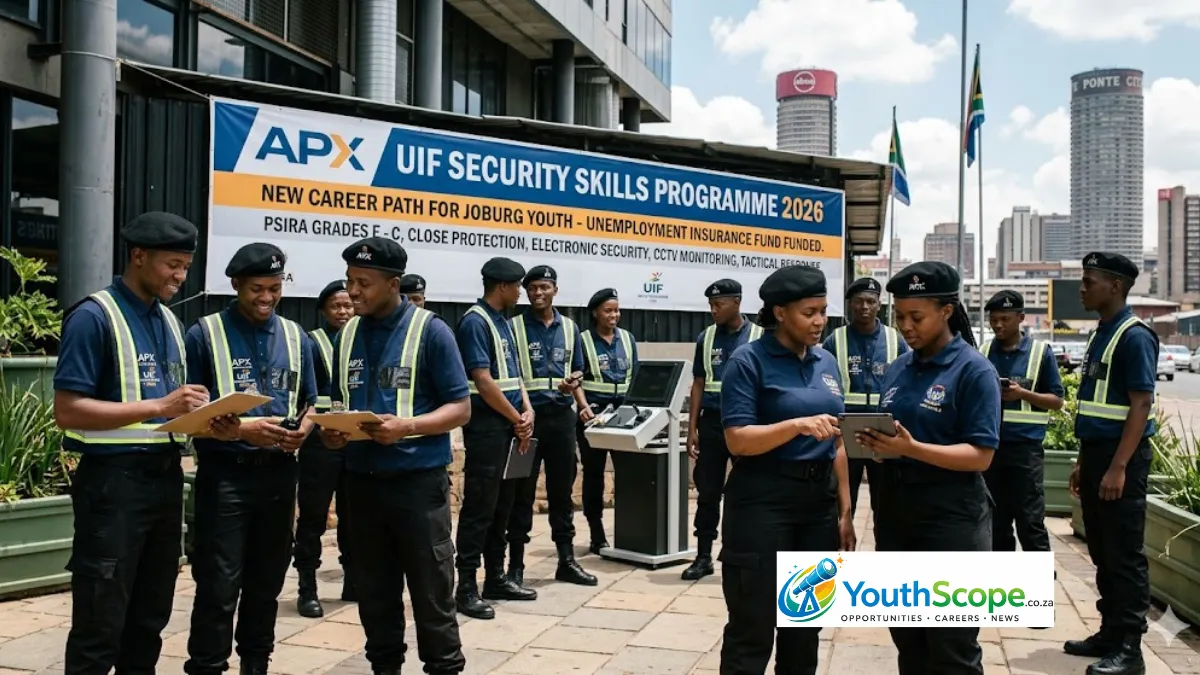
APX UIF Security Skills Programme 2026 New Career Path for Joburg Youth

A specialized security training opportunity has launched, offering young South Africans a structured route into the private security sector. The APX UIF Security Skills Programme is currently accepting online applications, combining professional certification with a monthly stipend to bridge the gap between unemployment and a specialized career.

Unlike general youth campaigns, this is a skills-focused program designed to produce work-ready individuals for one of the country’s most consistent industries.

Quick Program Overview

Before you start your application, here are the core pillars of the 2026 intake:

  • Training Outcome: PSIRA Grade EDC Preparation
  • Duration: 6 Months
  • Monthly Stipend: R2,000
  • Target Age: 18 to 28 years old
  • Location: Strictly City of Joburg (Gauteng)

Are You Eligible? Check the Strict Criteria

The current application form is highly specific. To avoid a rejected application, ensure you meet these exact requirements:

  1. Location-Locked: This intake is only for residents of City of Joburg areas. This includes Soweto, Roodepoort, the CBD, Midrand, and Alexandra. The form is currently locked to Gauteng only.
  2. Education: The program is inclusive of various education levels. You can apply if your highest standard passed is Grade 10, 11, 12 (Matric), or a tertiary qualification (N-levels, Certificate, or Diploma).
  3. Age Limit: You must be between 18 and 28 years of age.

Required Documents for Upload

The online form requires digital copies of your documents. You cannot complete the submission without uploading:

  • Certified ID Copy: Must not be older than 3 months.
  • Highest Qualification: A certificate matching the grade you selected on the form.
  • Updated CV: A clear, readable document detailing your history and contact info.

Pro Tip: Rename your files before uploading. Use simple names like “ID_Copy_Certified.pdf” or “Matric_Certificate.pdf” to ensure the system processes them correctly.

The Application Process: Step-by-Step

The application is hosted on an official online form that uses a multi-page verification system.

  • Step 1: Enter personal details and physical address (must be in Joburg).
  • Step 2: Provide education and next-of-kin information.
  • Step 3: Upload your documents.
  • Step 4: Email/OTP Verification. You must verify your email address during the process before the final “Submit” button becomes active.

You can also Check:

Frequently Asked Questions (FAQ)

Q: What is PSIRA Grade EDC? A: PSIRA (Private Security Industry Regulatory Authority) grades determine what level of security work you can perform. Grade E is the entry level, followed by D and C. This program prepares you for all three, making you a highly employable “Grade C” security officer.

Q: Can I apply if I live in Pretoria or Ekurhuleni? A: The current live form is specifically restricted to City of Joburg areas. Applications from outside this municipality may be filtered out during the screening process.

Q: Do I need a Matric certificate to apply? A: No. The form allows for candidates with Grade 10 or 11 to apply, provided they have the documentary proof of their highest grade passed.

Q: Is the R2,000 stipend paid every month? A: Yes, the promoted stipend is intended to cover basic transport and living costs for the duration of the six-month training period.

Final Thought: In the security industry, a PSIRA registration is the “golden ticket” to employment. This UIF-linked program doesn’t just offer a stipend; it offers the legal accreditation needed to work in the private sector. Apply early, as regional intakes of this nature fill up rapidly.

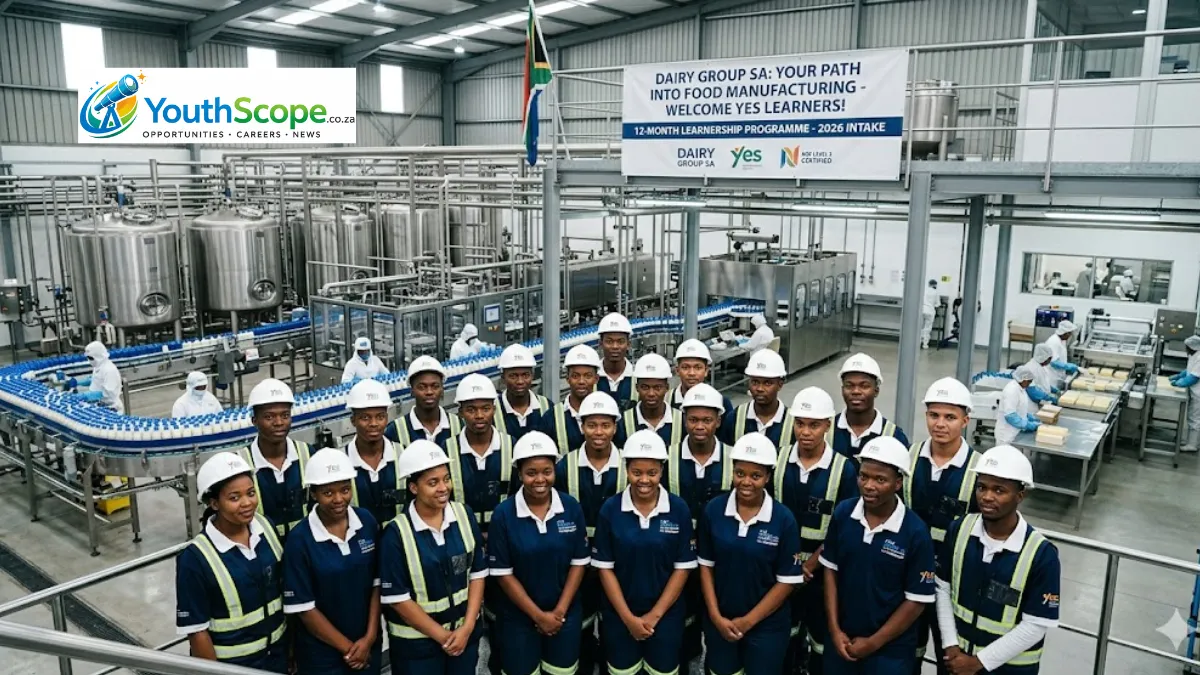
Dairy Group SA Launches 12-Month YES Learnership: Your Path into Food Manufacturing

Dairy Group SA has announced a high-impact YES Programme Learnership, offering job seekers a 12-month fixed-term contract within the food production sector. Based in Gqeberha (Port Elizabeth), this role is specifically designed for those who want to move beyond “observation” and gain gritty, hands-on experience on a manufacturing floor.

This is a fast-paced environment where the focus is on cheese production, quality control, and industrial hygiene.

Urgent: The Closing Date is TODAY

According to the latest vacancy listings, the closing date for this intake is April 13, 2026. Because this is a high-urgency window, candidates are encouraged to submit via the SAYouth portal immediately.

Quick Fact Sheet

  • Duration: 12-Month Fixed-Term Contract
  • Stipend: R5,000 per month (Reported)
  • Location: Port Elizabeth (Eastern Cape)
  • Reference Number: 2036942 (SAYouth)

You can also Check:

What the Role Entails: Inside the Factory

This is not a desk job. Successful learners will be integrated into the daily operations of a cheese manufacturing facility. Key responsibilities include:

  • Production Support: Packing, boxing, and cutting cheese (diced, grated, or blocks).
  • Quality & Science: Taking half-hourly samples for pH testing and reporting quality inconsistencies.
  • Heavy Lifting: Moving and draining cheese-filled trolleys and supporting the Cooker Stretcher area.
  • Sanitation: Rigorous cleaning of equipment and floors to maintain strict food safety standards.
  • Efficiency: Working on the mozzarella line to actively reduce waste.

Minimum Requirements

Dairy Group SA is looking for candidates who already have a basic understanding of the industrial environment. You will need:

  • Education: Grade 12 or an equivalent qualification.
  • Experience: At least 1 year of experience in a similar production or factory role.
  • Technical Knowledge: Familiarity with GMP (Good Manufacturing Practices) and factory health and safety protocols.
  • Soft Skills: Exceptional attention to detail, punctuality, and the ability to work in a high-pressure team.

How to Apply

To ensure your application reaches the right desk, you must follow the official digital route:

  1. SAYouth Portal: This vacancy is hosted on the SAYouth.mobi network. You must be a registered member to apply.
  2. Search Reference: Use the reference number 2036942 to find the specific Dairy Group listing.
  3. Update Your CV: Ensure your experience in food handling, packing, or cleaning is highlighted at the top of your profile.

Frequently Asked Questions (FAQ)

Q: What is the YES Programme? A: The Youth Employment Service (YES) is a business-led initiative that creates 12-month work experiences for unemployed youth to bridge the gap between “no experience” and “work-ready.”

Q: Does this learnership guarantee a permanent job? A: No. While the contract is for 12 months, the skills and “Practical Credibility” gained in a food manufacturing setting are highly sought after by other dairy and FMCG (Fast-Moving Consumer Goods) companies.

Q: What is GMP knowledge? A: GMP stands for Good Manufacturing Practices. It refers to the system for ensuring that products are consistently produced and controlled according to quality standards. In food manufacturing, this heavily involves hygiene and contamination prevention.

Q: Can I apply if I don’t live in Port Elizabeth? A: Yes, but the role is site-specific. You would be responsible for your own transport and accommodation in the area.

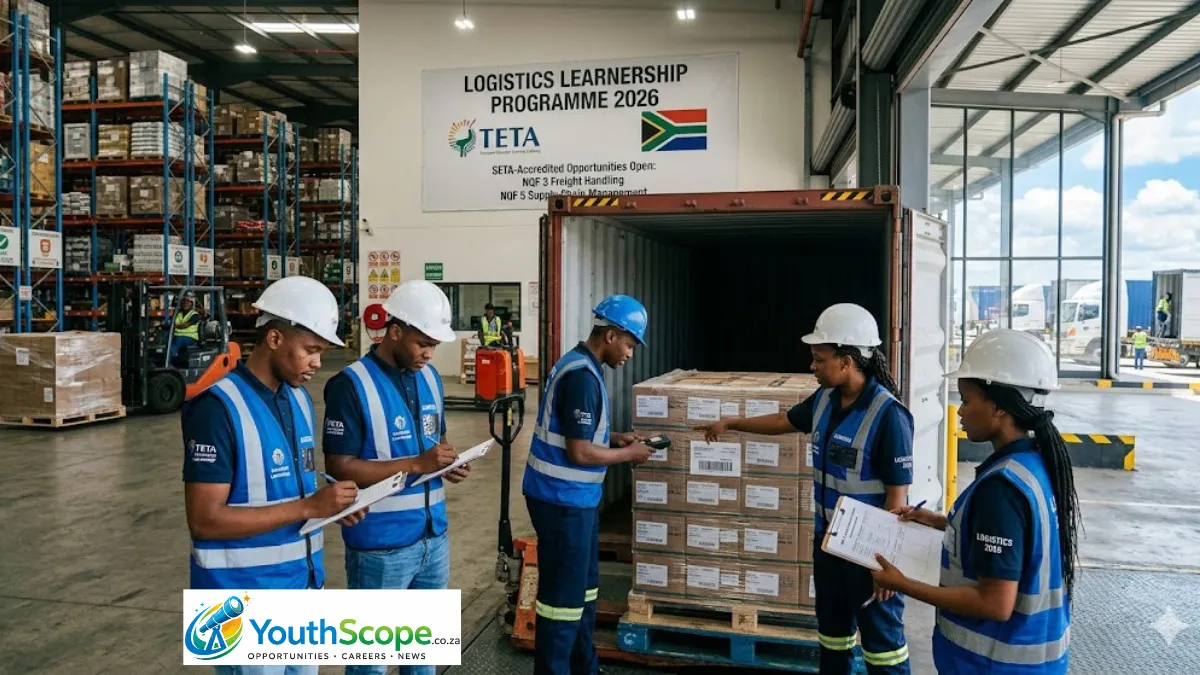
New R5,800/Month Logistics Learnership: 2026 SETA-Accredited Opportunities Open

A new SETA-accredited logistics learnership is generating significant buzz among South African job seekers this week. Offering a competitive R5,800 monthly stipend, the program provides a direct entry point into the high-demand world of warehousing, supply chain, and transport.

Unlike desk-bound internships, this opportunity is built for those who prefer hands-on, practical work in real-world distribution hubs.

At a Glance: Key Program Details

The program is being rolled out across four major economic hubs, making it one of the more accessible national intakes this quarter.

  • Monthly Stipend: R5,800
  • Accreditation: SETA-Accredited (National Qualification)
  • Locations: Mpumalanga, KwaZulu-Natal, Western Cape, and Gauteng
  • Sector: Warehousing & Supply Chain

What You’ll Be Doing: The “Practical” Path

Logistics is the backbone of the economy, and this learnership focuses on “movement.” If you enjoy fast-paced environments and physical activity, this curriculum covers:

  • Stock Handling & Inventory: Learning how to track and move goods efficiently.
  • Dispatch & Packaging: The science of getting products ready for the road.
  • Warehouse Safety: Mastering SHE (Safety, Health, and Environment) protocols.
  • Systems Operations: Gaining exposure to basic logistics software and processes.

You can also Check:

Minimum Requirements

To keep the entry barrier low but the standards high, the following criteria have been set:

  1. Physical Fitness: Must be able to lift at least 10kg (Essential for warehouse work).
  2. Commitment: Must be willing to work in a warehouse environment for the full duration of the program.
  3. Qualifications: A Grade 12 (Matric) certificate is highly recommended.
  4. Soft Skills: Basic communication, punctuality, and a strong willingness to learn.

How to Apply: The Email Submission Route

This recruitment process uses a direct email submission method. To ensure your application isn’t ignored by recruiters, follow these professional steps:

  • Prepare Your Pack: Have your updated CV, certified ID copy, and Matric certificate ready in PDF format.
  • The Contact: Send your application to denzil@rixtransport.com.
  • The Subject Line: Use a clear subject like “Application: Logistics Learnership 2026 – [Your Province]”.
  • The Body: Briefly state your location and any previous experience in packing, stock, or retail.

Insider Tip: Recruiters in this sector look for reliability. Mentioning any previous experience involving manual labor or stock counting at the very top of your CV can give you a significant advantage.

Frequently Asked Questions (FAQ)

Q: Is there a cost to apply for this learnership? A: No. Legitimate learnerships, especially SETA-accredited ones, will never ask you to pay an application fee. If you are asked for money for “admin” or “medical” fees, it is a scam.

Q: Do I need a driver’s license? A: While not explicitly listed as a minimum requirement, a driver’s license is always an advantage in the transport and logistics sector.

Q: Can I apply if I live outside the listed provinces? A: You can, but keep in mind that the placement options are specifically for Mpumalanga, KZN, Western Cape, and Gauteng. You would likely need to relocate at your own expense.

Q: What happens after the learnership ends? A: While permanent employment isn’t guaranteed, completing a SETA-accredited program significantly boosts your CV, making you a “work-ready” candidate for any warehouse or supply chain company in South Africa.

Final Thought: For unemployed youth, the biggest barrier to entry is “zero experience.” This learnership bridges that gap, providing both a paycheck and a professional qualification in a growing industry. Submit your application early to avoid missing out!

Sibanye-Stillwater Mining Learnerships 2026: 24 Opportunities Now Open

Mining giant Sibanye-Stillwater has quietly launched a major recruitment drive for its 2026 Learner Miner intake. While many job seekers might overlook the listings as a single vacancy, the company has actually released five separate adverts totaling 24 positions.

For those looking to break into the mining sector, the scale of this intake is a rare opportunity—but it requires a “surgical” approach to the application process.

The “Hidden” Numbers: 5 Adverts, 24 Spots

The recruitment portal is currently split into specific regional and site-based reference numbers. To ensure your application isn’t discarded, you must apply to the specific requisition that matches your location or qualifications.

Reference NumberPositionsClosing Date
BTX 00703201 Position23 April 2026
DRF 00703707 Positions25 April 2026
KLF 00703774 Positions27 April 2026
RPM 00703464 Positions01 May 2026
KND 00703678 Positions01 May 2026

What You Need to Qualify

While the core requirement is a Grade 12 or NQF 4 equivalent, Sibanye-Stillwater has added specific “gatekeeper” criteria that vary by advert.

1. The Mathematics Factor

Take note: The DRF (0070370) posting is stricter than the others. It explicitly requires Pure Mathematics and English. Applicants with Technical Maths or Literacy may be disqualified for this specific site.

2. General Requirements

  • Medical Fitness: Must pass a “Fit for Work” assessment for underground or heavy industrial areas.
  • Security: A clean security screening record is non-negotiable.
  • Licensing: A valid driver’s license is highly preferred (and required for some roles).
  • Advantage: Prior experience in a mining or industrial environment will move your CV to the top of the pile.

How to Apply Without Making Mistakes

With 24 spots spread across different deadlines, the margin for error is slim. Follow this checklist:

  • Don’t “Bulk Apply”: Treat each reference number as a separate job. Match your skills to the specific advert.
  • The 14-Day Rule: Sibanye-Stillwater typically operates on a “no news is bad news” policy. If you don’t hear back within 14 days of the closing date, consider your application unsuccessful.
  • Early Submission: The first deadline is April 23. Don’t wait for the May 1st deadline to upload documents; portal traffic often spikes on closing days, causing technical errors.

Applications must be submitted through the official Sibanye-Stillwater online recruitment portal.

You can also Check:

Safety and Training: What to Expect

This isn’t just a classroom course. Successful candidates will enter a high-responsibility environment where Safety (SHE) is the primary metric of success. You will be expected to:

  1. Complete all modular workplace development on schedule.
  2. Identify and report hazards immediately.
  3. Utilize prescribed safety equipment (PPE) at all times.

Insider Tip: Keep a record of the specific Requisition Number (e.g., BTX AD0015440) you applied for. If you get called for an interview, you’ll need to know exactly which site you are being considered for.

Frequently Asked Questions (FAQ)

Q: Can I apply for more than one Learner Miner position?

A: Yes, provided you meet the specific requirements for each reference number. However, ensure your qualifications (like Pure Maths for the DRF post) align with the specific advert.

Q: Does Sibanye-Stillwater accept emailed CVs?

A: No. All applications must be submitted via the official Sibanye-Stillwater online recruitment portal. Beware of recruitment fraud; the company will never ask for payment to secure a learnership.

Q: What happens after I submit my application?

A: Shortlisted candidates will undergo pre-screening and psychometric evaluations. If you pass these, you will be invited to a panel interview.

Q: I have Math Literacy; can I still apply?

A: You can apply for most of the posts (BTX, KLF, RPM, KND) as long as you have a Grade 12/NQF 4. However, you will likely be excluded from the DRF intake, which specifically asks for Pure Maths.

The 90-Day Pivot: Short Courses That Can Change Your Life in 2026

In South Africa’s 2026 job market, the “three-year degree” is no longer the only ticket to a stable income. With the rapid expansion of the green economy, AI integration, and a booming freelance sector, a targeted 3-month short course can often provide a faster return on investment (ROI) than traditional university routes.

Whether you are looking to escape a dead-end job or want to start a side hustle, here are the most impactful courses you can complete in under 90 days.

1. Solar PV Installation & Maintenance

South Africa’s shift toward renewable energy has created a massive vacuum for skilled technicians. While a full electrical engineering degree takes years, a Solar PV Mounting or Installation short course is specifically designed to get you on-site and earning within months.

  • Impact: Immediate employability in the private residential and commercial sectors.
  • Top Providers: Specialized energy academies and SETA-accredited trade schools (e.g., Green Solar Academy).
  • Timeframe: 2 weeks to 3 months for certification.

2. Digital Marketing & AI Content Strategy

In 2026, simply knowing “how to post on Instagram” isn’t enough. Companies are desperate for people who can use AI tools (like ChatGPT, Midjourney, and Jasper) to automate marketing funnels and analyze consumer data.

  • Impact: High potential for remote freelance work or joining digital agencies.
  • Top Providers: MANCOSA skillME, iQ Academy, and Red & Yellow.
  • Key Skills: SEO, AI-driven content creation, and data tracking.

You can also Check:

3. Cybersecurity Essentials

With the rise of remote work and digital banking in SA, cyber-attacks are at an all-time high. You don’t need to be a coding genius to start; an entry-level course in Cybersecurity Risk Management or Ethical Hacking Foundations can land you a role as a security analyst.

  • Impact: One of the highest-paying entry-level fields in tech.
  • Top Providers: Wits Plus, Unisa SBL, and UCT Online.

4. Data Analytics & Power BI

Data is the “new gold” for South African retail and finance sectors. Learning how to clean data in Excel and visualize it using Power BI or Tableau turns you into an indispensable asset for any management team.

  • Impact: Ideal for “career-pivoters” coming from admin or retail backgrounds.
  • Focus: Turning raw numbers into business strategy.

5. Project Management (Agile & Scrum)

Modern South African businesses have moved away from rigid hierarchies toward “Agile” workflows. A 3-month course in Project Management—especially one focusing on Scrum or Kanban—teaches you how to lead teams and deliver results under pressure.

  • Impact: Opens doors to leadership roles in construction, IT, and NGOs.
  • Top Providers: Unisa Graduate School of Business Leadership (SBL) and Wits Plus.

Quick Comparison: Which One Is For You?

Course CategoryBest For…Estimated Cost (2026)
Solar TechHands-on workers, entrepreneursR10,000 – R18,000
Digital MarketingCreatives, freelancersR5,000 – R12,000
Data AnalyticsAnalytical minds, admin staffR8,000 – R15,000
Project MgmtAspiring managers, organizersR12,000 – R25,000

FAQ: How to ensure your course is worth it?

1. Is the course SETA-accredited?

In South Africa, accreditation by a SETA (Sector Education and Training Authority) ensures the course meets national standards and is recognized by local employers. Always ask for the provider’s accreditation number.

2. Can I study while working?

Yes. Most 2026 short courses from institutions like Wits Plus or iQ Academy are offered in hybrid or fully online formats with evening sessions, specifically designed for working adults.

3. Will this actually get me a job?

While no course guarantees a job, those with practical projects (e.g., a portfolio of data dashboards or a certified solar installation) carry significantly more weight in interviews than purely theoretical certificates.

Pro Tip: If you’re currently unemployed, look for Learnerships or Bursaries specifically for short-term technical skills. Many “Green Economy” initiatives in SA are currently subsidizing solar and wind energy training.

Which of these industries sparks your interest the most for a career change?

The 2026 Entry-Level Landscape: From Zero Experience to Full-Time Income

In a market often characterized by the “you need experience to get experience” paradox, 2026 has brought a wave of new opportunities for South African youth. With the expansion of the Youth Employment Service (YES) and the rise of the “Global Hub” model—where international companies hire South Africans for remote support—the barrier to entry has never been lower.

If you have a Matric certificate and a “can-do” attitude, these seven roles are currently hiring for immediate starts.

1. Retail Readiness & Store Assistants

Large retailers like Shoprite, Pick n Pay, and Mr Price are continuously hiring through “Retail Readiness” programs. These are specifically designed for people who have never held a job.

  • The Role: Stocking shelves, assisting customers, and basic inventory management.
  • Why it works: Many companies provide 3–4 weeks of paid training before you officially start.
  • Who is hiring: Keep an eye on the Shoprite Careers portal for their Retail Readiness Programme (RRP).

2. Remote Customer Support Specialist

South Africa has become a top destination for UK and US companies looking for “neutral-accent” customer service.

  • The Role: Handling customer inquiries via live chat, email, or phone.
  • The Setup: Many of these roles are 100% remote, though you will need a stable fiber/LTE connection.
  • Salary Range: R8,000 – R15,000 per month depending on the shift (UK/US hours pay more).

3. Warehouse & Logistics General Worker

With the 2026 boom in e-commerce (led by Takealot and Amazon.co.za), logistics hubs in Johannesburg, Cape Town, and Durban are desperate for “General Workers.”

  • The Role: Picking, packing, and sorting parcels for delivery.
  • Immediate Start: Companies like DHL and Feltex Automotive frequently open “Yes 4 Youth” learnerships that transition into full-time roles.

4. Virtual Assistant (VA)

Global small business owners are increasingly hiring South African VAs to handle their “digital chores.”

  • The Role: Scheduling appointments, managing emails, and basic data entry.
  • The Edge: If you know how to use Google Workspace, Slack, and Canva, you are already ahead of 90% of applicants.
  • Platform to use: Check Hirezar or Somewhere.com for SA-specific VA listings.

5. Paid Learnerships (The “Artisan” Route)

If you want to get paid while you learn a trade, a learnership is your best bet.

  • Current Openings (April 2026): Gold Fields and Assmang Khumani are currently recruiting for Engineering, Fitter, and Millwright learnerships.
  • The Benefit: You receive a monthly stipend (approx. R3,500 – R6,000) and walk away with a NQF-accredited qualification.

6. AI Data Annotator & Annotator

As AI models become more localized, tech companies need South Africans to “label” data in local languages (isiZulu, isiXhosa, Afrikaans, etc.).

  • The Role: Identifying objects in images or transcribing short audio clips.
  • Requirement: Just a smartphone or laptop.
  • Platform: Look at Toloka or Remotasks for immediate micro-tasking work.

7. Hospitality & Front-of-House

The tourism sector has rebounded fully in 2026. Hotels like the Radisson Group are consistently looking for porters, waiters, and junior receptionists.

  • The Role: Greeting guests and ensuring a smooth “check-in” experience.
  • The “Superhero” Factor: These roles value personality and “soft skills” over a long CV. If you are well-spoken and helpful, you can start next week.

You can also Check:

FAQ: Starting Your Career in 2026

Do I need a CV if I have no experience?

Yes. Instead of a “Work History” section, focus on your “Skills and Attributes.” List things like: “Punctual,” “Fast Learner,” “Fluent in 3 Languages,” or “Proficient in Social Media.”

Where are the best places to look for these jobs?

Avoid generic Facebook groups (which are often full of scams). Stick to:

  1. SAYouth.mobi (Zero-rated/free to use)
  2. Indeed South Africa
  3. Puff & Pass (For learnerships)
  4. LinkedIn (Set alerts for “Entry Level”)

What is the “YES” program?

The Youth Employment Service (YES) is a partnership between the government and big business. If a job is a “YES initiative” role, it means they are required to hire someone with no experience and provide 12 months of quality workplace exposure.

How can I make my application stand out?

In 2026, Digital Literacy is the baseline. Mention that you are comfortable using AI tools (like ChatGPT or Gemini) to assist with tasks—this shows you are forward-thinking and efficient.

Pro Tip: If you’re applying for remote work, do a “Speed Test” of your internet and include a screenshot in your application. It proves you have the tools to do the job from day one.

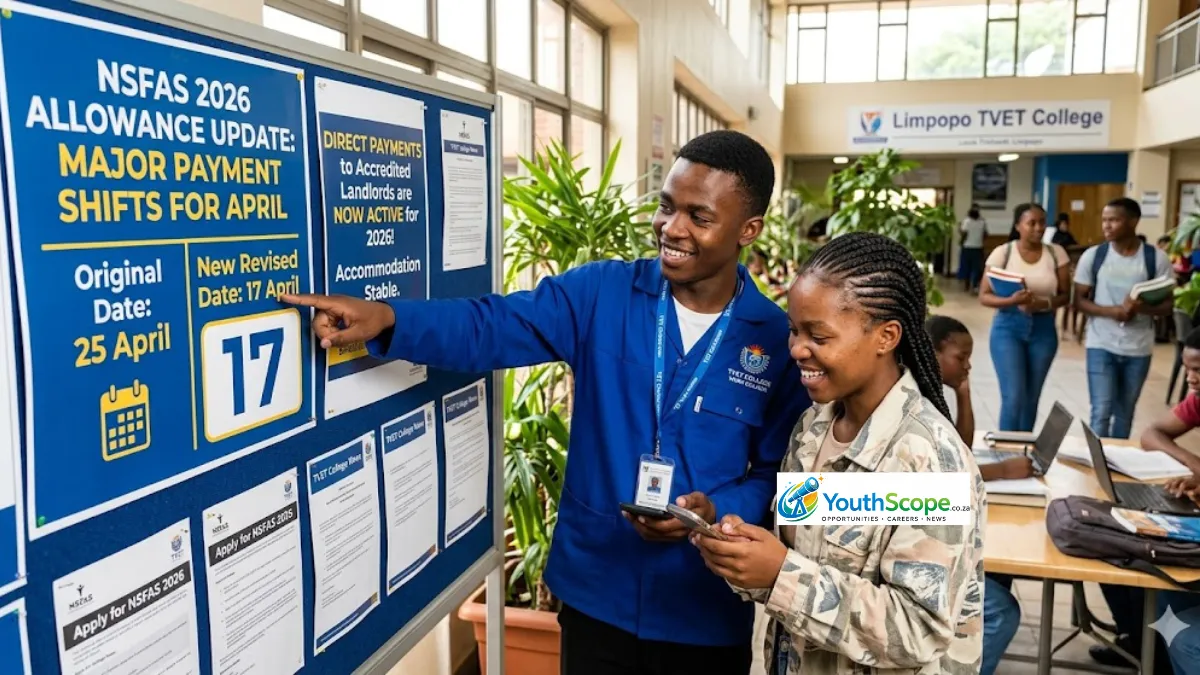
NSFAS 2026 Allowance Update: Major Payment Shifts for April

The National Student Financial Aid Scheme (NSFAS) has implemented a revised payment structure for 2026 to ensure smoother transitions between semesters. The most significant news for April 2026 is a major change to the payment date, which will require students to adjust their budgets immediately.

The April 2026 “Early Payment” Shift

For TVET college students, the standard payment date has been officially moved forward.

  • Original Payment Date: 25 April 2026
  • New Payment Date: 17 April 2026
  • The Reason: This 8-day advancement is intended to provide students with earlier access to funds for mid-semester expenses, though it creates a longer “gap” until the May disbursement.

2026 Official Allowance Payment Schedule

Most universities and TVET colleges have standardized their monthly cycles for the remainder of the 2026 academic year.

Monthly Disbursement Targets

Institution TypeStandard Payment Date
TVET Colleges25th of every month (except April)
Traditional Universities30th of every month
UNISA (Distance)29th of every month

Remaining 2026 Payment Cycles

According to the latest 2026 funding cycle documents, the “Cycle” dates for general disbursements are as follows:

  • Cycle 4: Monday, 04 May 2026
  • Cycle 5: Monday, 01 June 2026
  • Cycle 6: Monday, 06 July 2026
  • Cycle 7: Monday, 03 August 2026
  • Cycle 8: Monday, 31 August 2026
  • Cycle 9: Monday, 05 October 2026
  • Cycle 10 (Final): Monday, 02 November 2026

NSFAS 2026 Allowance Amounts

The 2026 annual totals have seen a slight adjustment to account for inflation. Students can expect the following estimated yearly breakdowns (split into 10 monthly installments):

  • Learning Material (Book) Allowance: Up to R5,460 (usually a once-off payment at the start of the year).
  • Living Allowance: Approximately R17,160 per year.
  • Personal Care Allowance (TVET): Approximately R3,167 per year.
  • Accommodation: * Metro: Up to R52,000 per year.
    • Non-Metro: Up to R42,640 per year.

You can also Check:

Critical To-Do List for Students

To avoid the “Payment Pending” status on your portal, ensure these three things are updated:

  1. Bank Account Verification: NSFAS now pays TVET allowances directly into personal bank accounts rather than through third-party “fintech” apps alone. Ensure your banking details on the myNSFAS portal match your ID exactly.
  2. Registration Data: Payments are only triggered once your institution (University or TVET) uploads your 2026 registration data. If your status still says “Funding Eligible” but not “Paid,” visit your campus Financial Aid office.
  3. The “Early Pay” Budget: Since the April payment arrives on the 17th, you must make it last until May 4th. Avoid “luxury” spending in the first week to cover transport and food for the extended month-end period.

FAQ

Why haven’t I received my April allowance yet?

If your registration was submitted late (after the April cut-off), your payment will be rolled over to the next “payment run,” which typically happens on the 14th of the following month.

Is the direct payment system still using eZaga/Norraco?

In 2026, NSFAS has transitioned toward more university-led distribution and direct bank transfers to minimize service fees. Check with your specific institution to see if they are using an internal system or the NSFAS direct bank upload.

Does NSFAS pay during the June/July holidays?

Yes. The 10-installment cycle covers the academic year, including the mid-year break, to assist with ongoing accommodation and living costs.

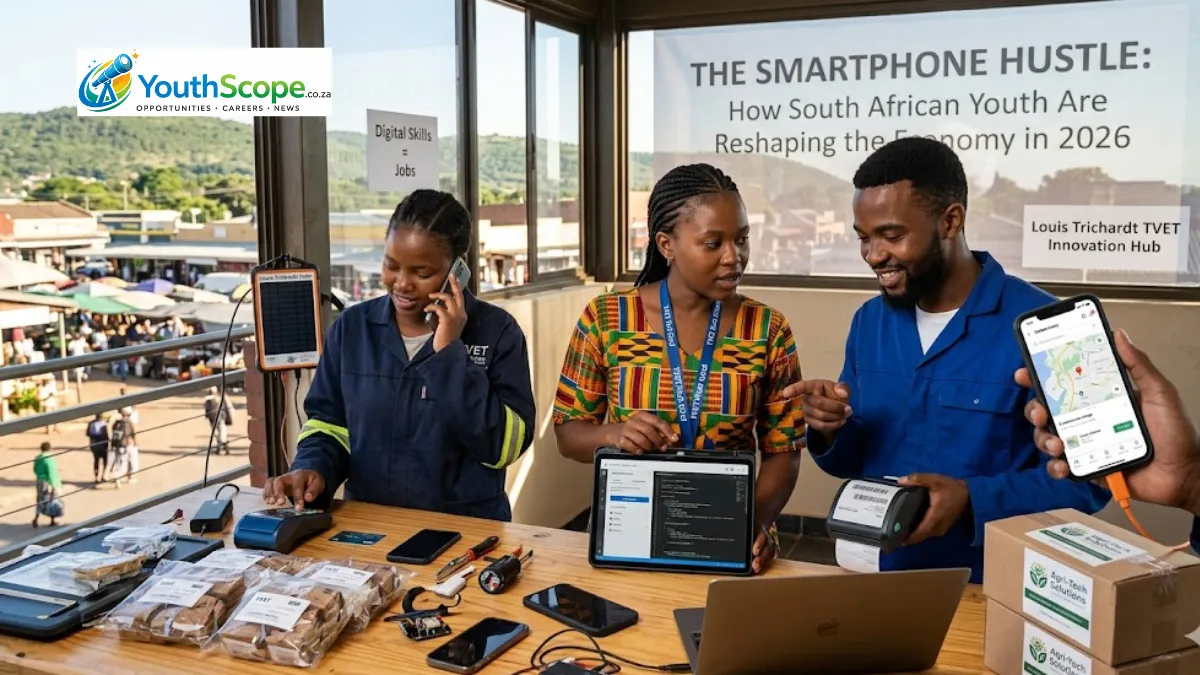
The Smartphone Hustle: How South African Youth Are Reshaping the Economy in 2026

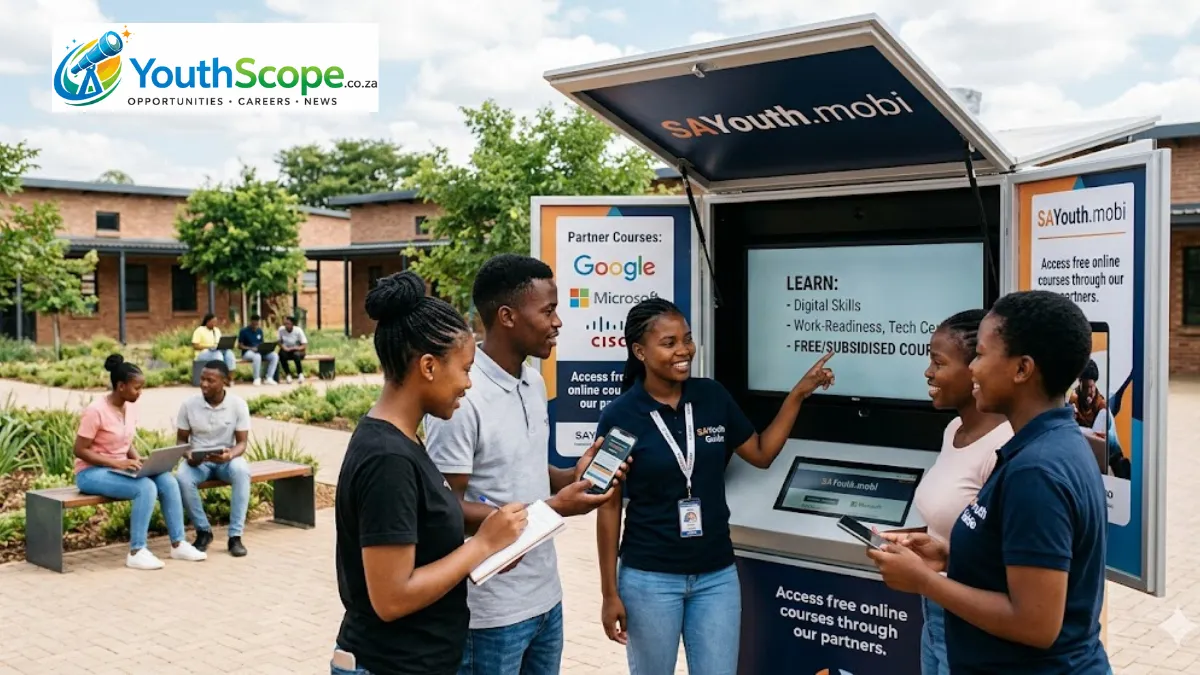
In 2026, the traditional office cubicle has a new rival: the smartphone. Across South Africa, from the bustling streets of Soweto to the coastal hubs of Durban, young entrepreneurs and “side-hustlers” are leveraging mobile technology to bypass high unemployment rates. By turning a handheld device into a storefront, a classroom, or a workstation, the youth are proving that access is the new currency.

Here is how the South African “Phone Economy” is operating right now.

1. The WhatsApp Commerce Revolution

WhatsApp has evolved from a messaging app into South Africa’s most powerful decentralized marketplace.

  • The “Status” Storefront: Small-scale entrepreneurs use WhatsApp Status to showcase everything from thrifted fashion and baked goods to tech repairs.
  • Seamless Payments: With the rise of tools like iK Pay Link, sellers no longer need expensive card machines. They simply send a secure payment link via chat, allowing customers to pay instantly with their cards—solving the “trust gap” in remote sales.

2. The Rise of “Agentic” Gig Apps

2026 has seen the launch of localized platforms designed specifically for the South African landscape.

  • Uptooyoo: Launched in early 2026, this app allows “kasi hustlers” and digital pros alike to list services—ranging from plumbing and pet grooming to AI prompt engineering—and build a verified reputation within their local communities.
  • Yoma: This UNICEF-supported digital marketplace allows youth to complete “challenges” and upskill, earning digital tokens that can be redeemed for airtime, data, and grocery vouchers.

3. Micro-Tasking for Global AI

As global AI companies (like Google, Meta, and OpenAI) race to improve their models, they need human feedback. South African youth are filling this gap using platforms like Toloka and Amazon Mechanical Turk.

  • What they do: Record simple voice clips in local languages, identify objects in videos, or rate the “helpfulness” of AI responses.
  • The Benefit: It requires no startup capital and can be done during a taxi commute or between classes.

4. Short-Form Content & “Faceless” Channels

Content creation is no longer just for “influencers.” In 2026, the trend has shifted toward niche expertise and faceless channels.

  • TikTok & YouTube Shorts: Creators are using AI-powered mobile editing tools to build channels that focus on local tips (e.g., “Best cheap eats in Braamfontein”) or educational “explainer” videos.
  • Monetization: Income is generated through the Creator Fund, affiliate marketing for local brands, or by using their channel as a portfolio to land social media management gigs for small businesses.

5. Mobile-First Tutoring

With the 2026 education system leaning heavily toward hybrid learning, mobile tutoring is a major income stream for university students.

  • SAYouth & Think Digital: Platforms now allow students to offer CAPS-aligned tutoring via video calls. High-performing students are making a living by teaching STEM subjects or helping younger learners with digital literacy.

You can also Check:

FAQ: Making Money via Smartphone

Is it really possible to make a full-time living from a phone?

While many use it for “top-up” income (R2,000–R5,000/month), those who specialize—such as high-level social media managers or specialized tutors—can exceed the earnings of many entry-level office jobs. Success usually depends on consistency and data management.

Which apps are the most “data-friendly”?

Apps like SAYouth.mobi and certain educational platforms are zero-rated (free to use) on major networks like MTN and Vodacom. For creators, using “Lite” versions of editing apps and uploading content during off-peak hours (night-time data) is a common strategy to save costs.

Do I need a high-end iPhone to start?

No. Most gig economy apps (Uptooyoo, Toloka) are optimized for entry-level Android devices. As long as the phone has a functional camera, GPS, and a stable internet connection, the “digital doors” are open.

How do I avoid “online job” scams?

If an app or person asks you to pay an “activation fee” or “training fee” before you start working, it is almost certainly a scam. Legitimate platforms like Umuzi, Yoma, and Upwork are free to join and take a percentage of your earnings after you get paid.

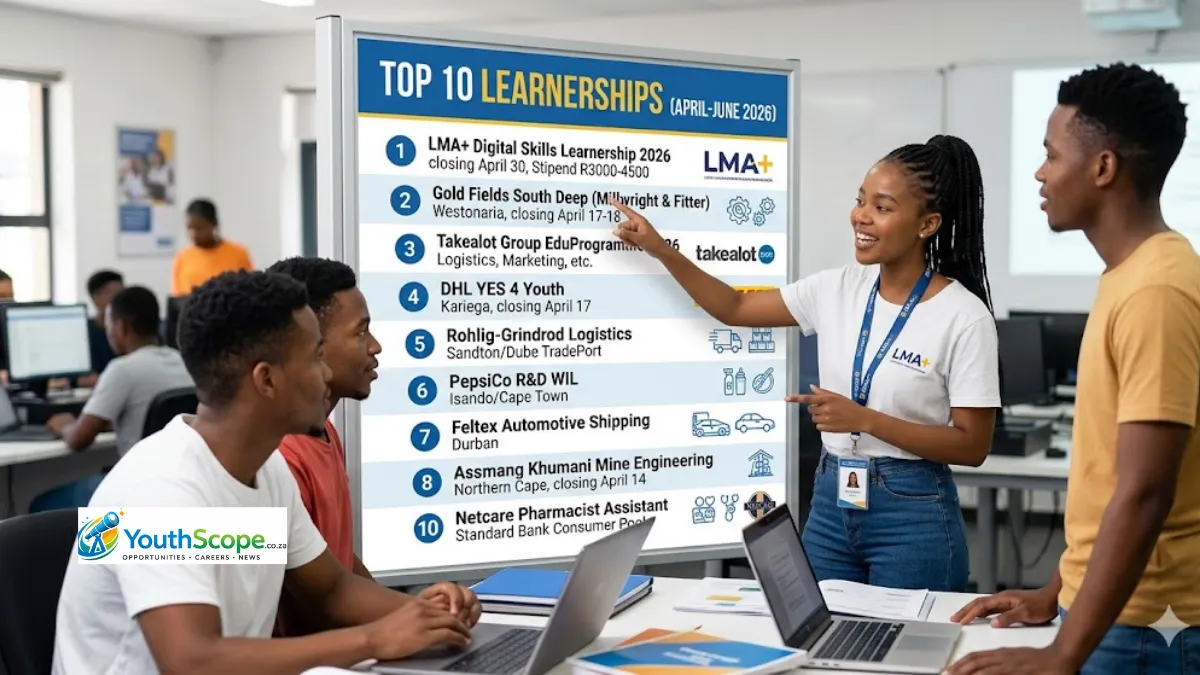
Top 10 Learnerships You Can Apply for Right Now (April–June 2026)

The second quarter of 2026 has arrived, and with it, a surge of new vocational opportunities aimed at tackling South Africa’s youth unemployment. From high-tech remote coding to heavy-duty engineering at the mines, the current “learnership window” is diverse and competitive.

If you are a matriculant or a graduate looking to “earn while you learn,” here are the top 10 programmes currently accepting applications. Note: Several of these close within the next 7 days.

1. Siyavula & Umuzi Remote Tech Learnership

  • Sector: Information Technology / Digital
  • Closing Date: Rolling Intake (April/May 2026)
  • Focus: Data Science, Web Development, and UI Design.
  • Why apply: This is a 100% remote NQF Level 5 programme. You can study from anywhere in SA without commuting costs. It includes a stipend and a potential 3-month internship placement upon completion.

2. Gold Fields Engineering Learnership (Fitter/Millwright)

  • Sector: Mining & Engineering
  • Closing Date: 17–18 April 2026
  • Location: South Deep Gold Mine, Westonaria.
  • Why apply: High-intensity technical training at one of the world’s deepest mines. Ideal for those looking for a “Red Seal” trade qualification in mechanical engineering.

3. DHL Supply Chain “Yes 4 Youth” Programme

  • Sector: Logistics & Supply Chain
  • Closing Date: Mid-April 2026
  • Location: Kariega (Uitenhage), Eastern Cape.
  • Why apply: Part of the global Deutsche Post DHL Group, this programme offers 5 positions focused on logistics operations and supply chain management.

4. Standard Bank Business & Commercial Banking (BCC)

  • Sector: Finance & Banking
  • Closing Date: May 2026 (Check portal for specific branch dates)
  • Requirement: Matric or 3-year Diploma.
  • Why apply: This is a premium entry point into the banking sector. You’ll gain experience in client relationship management and tailored financial solutions.

5. Feltex Automotive Shipping Learnership

  • Sector: Manufacturing / Supply Chain
  • Closing Date: 17 April 2026
  • Location: Durban, KwaZulu-Natal.
  • Why apply: Focused on becoming a Supply Chain Practitioner, this is perfect for those interested in the logistical “backbone” of the automotive industry.

6. ASSMANG Khumani Artisan Skills Training

  • Sector: Manufacturing & Mining
  • Closing Date: 14 April 2026
  • Location: Northern Cape.
  • Why apply: Targeted at unemployed youth in the Northern Cape, this programme offers portable skills training in engineering and artisan trades.

7. SAPS Police Trainee Intake 2026/2027

  • Sector: Safety & Security
  • Closing Date: Expected June 2026 (Online Portal)
  • Requirement: 18–35 years, No criminal record.
  • Why apply: The South African Police Service has fully digitized its recruitment. This 24-month programme (BPDLP) is the definitive path to becoming a permanent Police Constable with a starting salary (after training) of over R238,000 per annum.

8. MICT SETA Cybersecurity Technician

  • Sector: IT / Security
  • Closing Date: June 2026 Window
  • Focus: Ethical hacking and network defense.
  • Why apply: As cyber threats rise in 2026, this NQF Level 4/5 qualification is currently one of the most “job-guaranteed” paths in the country.

9. Shoprite Group Retail Operations

  • Sector: Wholesale & Retail
  • Closing Date: Rolling (Check Shoprite Careers Portal)
  • Location: Nationwide (Limpopo, Gauteng, KZN).
  • Why apply: Shoprite remains the largest private employer in SA. Their learnerships often lead directly to permanent roles as cashiers, floor managers, or stock replenishers.

10. Transnet Work Integrated Learning (Technical)

  • Sector: Transport & Logistics
  • Closing Date: Varies by province (Q2 Intake)
  • Focus: Electrical (Heavy Current), Mechanical, and Electronics.
  • Why apply: Aimed at students who have completed their S4/S5 theory, this 12-month WIL programme provides the practical hours needed to graduate.

Application Checklist for April 2026

To avoid immediate disqualification, ensure you have the following ready in digital (PDF) format:

  1. Certified ID Copy: Must not be older than 3–6 months.
  2. Certified Matric Certificate: Ensure the barcode/certificate number is clearly visible.
  3. Short CV: Keep it to 2 pages; highlight any volunteer work or short courses.
  4. Proof of Residence: Critical for location-based learnerships like the mining or municipal roles.

You can also Check:

Frequently Asked Questions

What is the average stipend for 2026 learnerships?

Depending on the sector and NQF level, stipends generally range from R3,000 to R7,000 per month. Technical and banking learnerships tend to be on the higher end.

Can I apply for more than one learnership?

Yes, you can apply for as many as you like. However, you can only be registered on one SETA-funded learnership at a time. If you are already in a programme, you must complete it before starting another.

Why was my application rejected?

The most common reasons in 2026 are outdated certification (older than 6 months), missing the age requirement (usually 18–35), or failing the online aptitude tests used by companies like SAPS and Standard Bank.

Expert Tip: Many companies now use AI-driven screening. When applying online, ensure your CV includes keywords specific to the role (e.g., “Data Analytics,” “Safety Compliance,” or “Customer Service”) to pass the initial automated filter.

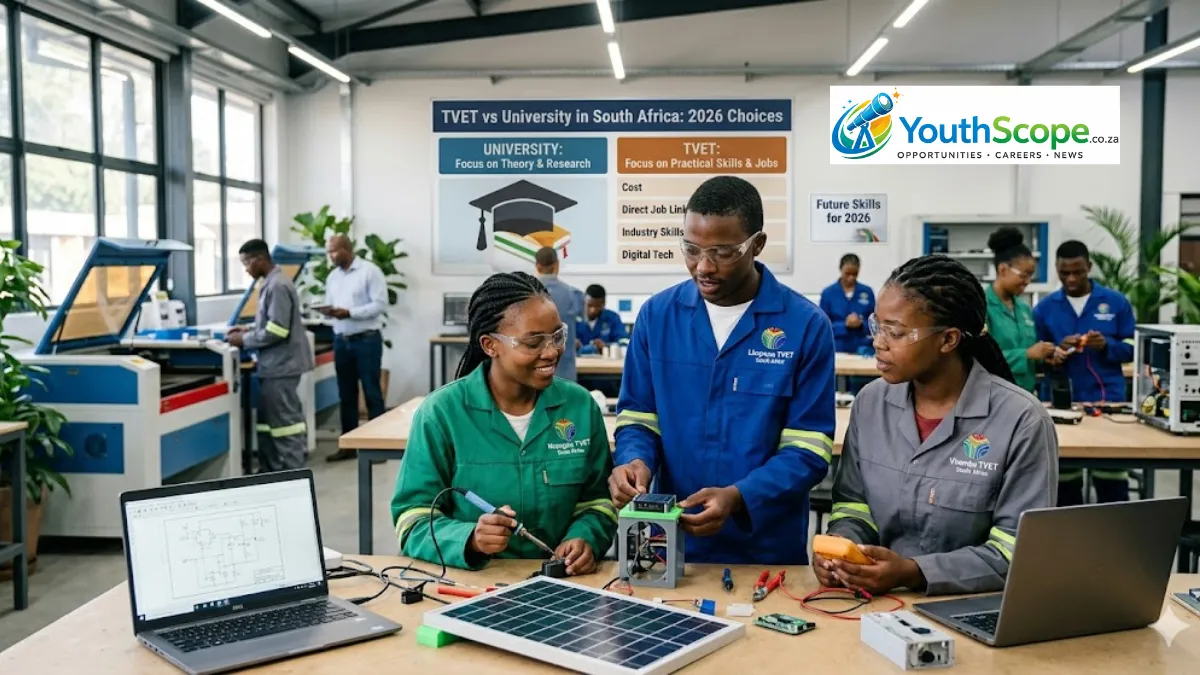
The Great Pivot: Why South African Youth are Choosing TVET over University in 2026

For decades, the South African “dream” for matriculants was singular: get a Bachelor’s pass, head to a top-tier university, and secure a degree. But as we move through 2026, the narrative has fundamentally shifted. The “Degree-or-Bust” era is being replaced by a pragmatic, skills-first movement that is seeing record interest in Technical and Vocational Education and Training (TVET) colleges.

Driven by a combination of extreme university placement competition, the rise of the “Green Economy,” and the immediate need for “work-ready” skills, young South Africans are no longer viewing TVETs as a “Plan B.” They are a strategic first choice.

The Numbers Game: Why Universities are Overflowing

The class of 2025 produced over 650,000 passes, yet the public university system remains structurally capped. In 2026, many major universities reported receiving applications at a rate 30 times higher than their available first-year seats.

This bottleneck has forced a national conversation about where the other 500,000+ students go. While 46.4% of candidates achieved a Bachelor’s pass, the reality is that thousands of these students are finding their way into TVET occupational programmes instead of traditional lecture halls.

TVET vs. University: The 2026 Comparison

The choice between these two paths now comes down to Learning Style and Speed to Income.

FeatureUniversity (Traditional)TVET College (Vocational)
Learning FocusTheoretical and AbstractPractical and Hands-on
Duration3–4 Years Minimum18 Months Theory + 18 Months Practical
Industry ReadinessOften requires post-grad internshipsGraduates with 18 months of work experience
CostHigh (R50k – R100k+ per year)Lower (R10k – R30k per year)
NSFAS SupportFull funding availableFull funding + growing accommodation parity

The “Red Seal” Advantage: Earning Potential in 2026

One of the biggest drivers for the TVET surge is the Artisan Shortage. In 2026, a “Red Seal” qualified artisan—such as a Diesel Mechanic, Solar Electrician, or Boiler Maker—often enters the workforce with higher earning potential than a general Humanities or Management university graduate.

Top In-Demand TVET Sectors:

  • Renewable Energy: With South Africa’s aggressive pivot toward green energy, Solar Technicians are among the fastest-hired graduates.
  • Coding & AI: Modern TVET campuses, like the uMasinga TVET Smart Campus, are now offering high-tech diplomas in Data Analytics and Cybersecurity.
  • Infrastructure: Civil construction and welding remain the “economic nerve center” of the developing nation.

Breaking the Stigma: TVET is Not for “Failures”

Historically, TVET colleges suffered from a perception problem, often labeled as places for students who “couldn’t make it” into university. In 2026, government and industry leaders are actively dismantling this myth.

The introduction of QCTO-accredited occupational programmes has seen a 99% success rate in some sectors, far outperforming traditional academic routes. Furthermore, a new dual-enrolment model is being explored, allowing students to register for modules at both a college and a university simultaneously—bridging the gap between the two worlds.

The Role of Funding: NSFAS and SETAs

Funding remains the ultimate gatekeeper for South African students. While NSFAS continues to provide the bulk of support, SETAs (Sector Education and Training Authorities) have stepped up in 2026, providing over R2 billion in bursaries specifically for TVET and trade-related learning.

This diversification of funding means that a student choosing the vocational route often has more “Learn-while-you-Earn” opportunities through paid apprenticeships than their university counterparts.

You can also Check:

FAQ: Making the Choice in 2026

Is a TVET diploma worth as much as a University degree?

In terms of the National Qualifications Framework (NQF), a TVET National N-Diploma is generally at NQF Level 6, while a Bachelor’s degree is NQF Level 7. However, in practical trades, employers value the NQF 6 + Practical Experience more than a theoretical degree.

Can I go to University after attending a TVET college?

Yes. This is called Articulation. Many students complete a TVET diploma and then “articulate” into a university degree with credits, often finishing their degree in less time.

Which is better for starting my own business?

TVET colleges are specifically designed for entrepreneurship. Because you learn a physical skill (like plumbing, catering, or coding), you graduate with the ability to sell a service immediately, whereas university degrees often prepare you for corporate employment.

Are TVET applications still open for 2026?

While annual registrations for many public TVETs closed in late February, short skills programmes and occupational courses often have rolling intakes throughout the year.

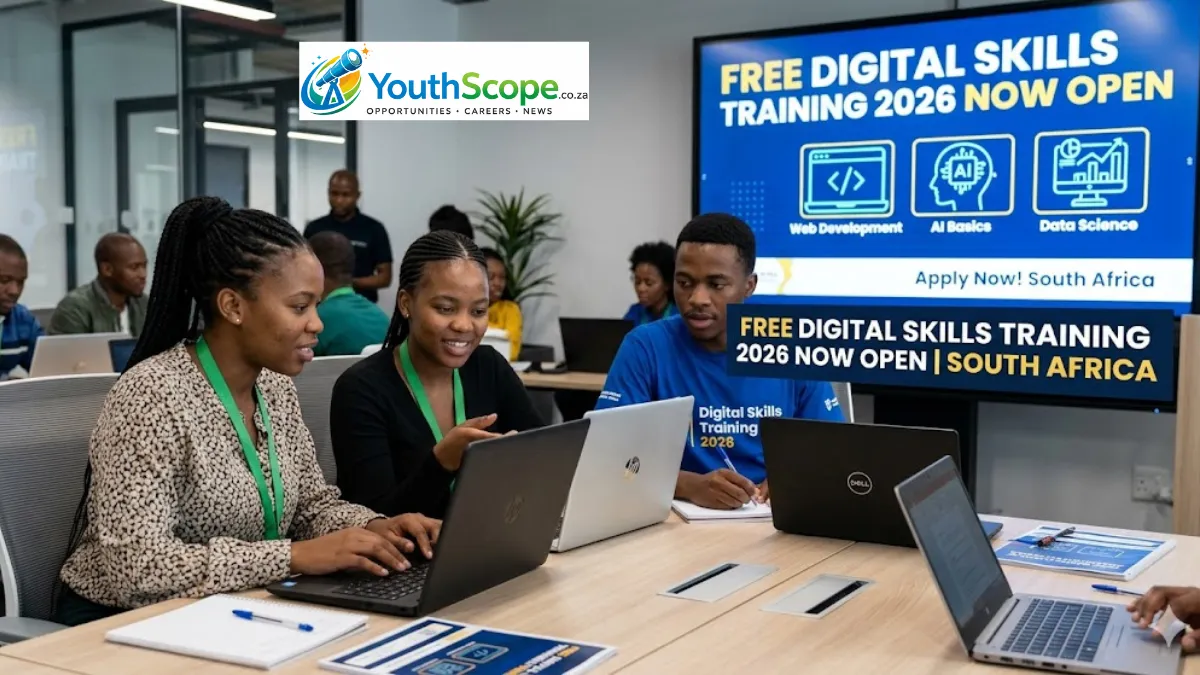
Future-Proof Your Career: Free Digital Skills Training 2026 Now Open in South Africa

The digital divide in South Africa is facing its most significant challenge yet. As of April 2026, a wave of high-impact, fully funded digital skills programmes has launched across the country. Spearheaded by a landmark partnership between the Department of Higher Education and Training (DHET) and Google South Africa, these initiatives aim to equip thousands of South Africans with the tools needed to thrive in an AI-driven economy.

Whether you are a public servant, an unemployed graduate, or a student at a TVET college, the window to secure your spot in these prestigious programmes is narrowing.

The Google & DHET Partnership: 10,000 Scholarships Unleashed

In late March 2026, Deputy Minister Dr. Mimmy Gondwe officially signed a Memorandum of Understanding (MoU) with Google South Africa. This agreement isn’t just a formality—it’s a massive investment in human capital.

Key Highlights of the Google Scholarship:

  • 10,000 Google Career Certificates: Scholarships covering high-demand fields including AI Essentials, Cybersecurity, and Data Analytics.
  • Focus on Inclusivity: Priority is being given to students and educators in rural and township communities to ensure equitable access to the digital economy.
  • Infrastructure Support: Google is deploying ChromeOS Flex to revitalise existing hardware in public universities and TVET colleges, turning older machines into high-speed AI workstations.

National School of Government (NSG) Digital Skills Programme

For those already within the public sector, the National School of Government, in collaboration with NEMISA and Microsoft, has opened its 2026 intake. This programme is designed to modernize the South African workforce from the inside out.

Available Courses & Deadlines:

  1. AI Fluency: A one-month intensive course on generative AI tools for productivity.
  2. Introduction to Cybersecurity: Essential training to protect government networks.
  3. Mobile Digital Literacy: Foundational skills for the 4IR era.

CRITICAL DEADLINE: All training for the NSG 2026 cycle must be completed by 31 July 2026.

Opportunity Tracker: Active Applications (April 2026)

If you are looking to apply today, here are the most urgent opportunities currently accepting applications:

ProgrammeTarget AudienceClosing DateKey Benefit
NEMISA Graduate InternshipsUnemployed Graduates (NQF 5-8)13 April 202612-month paid internship in Web/Graphic Design & Content.
MICT SETA WSP/ATREmployers & Training Providers30 April 2026Funding window for workplace digital skills training.
Google Career CertificatesTVET/University StudentsRolling IntakeGlobally recognized certification in Data & AI.

How to Apply: A Step-by-Step Guide

Securing a spot in a funded programme requires more than just interest; it requires precision. Follow these steps to ensure your application isn’t disqualified:

  1. Verify Your Documents: Ensure you have certified copies of your South African ID and Matric Certificate (not older than 6 months).
  2. Target the Right Portal: * For Public Servants: NSG eLearning Portal
    • For Graduates: Email your CV directly to the relevant NEMISA department (e.g., web@nemisa.co.za).
  3. Check for Zero-Rating: Many of these platforms are zero-rated by major networks like Vodacom and MTN, meaning you can study without using your own data.

Why 2026 is the “Year of AI” for South Africa

The South African government’s aggressive push into AI training isn’t accidental. Estimates suggest that AI could add R172 billion to the South African economy by unlocking new efficiencies. By training 10,000 youth and thousands of public servants, the country is positioning itself as the “AI Hub of Africa.”

You can also Check:

Frequently Asked Questions (FAQ)

1. Are these courses really free?

Yes. These programmes are fully funded by the DHET, MICT SETA, or corporate partners like Google and Microsoft. There are no tuition fees for eligible candidates.

2. Can I apply if I am currently unemployed?

Absolutely. The NEMISA Internships and Google Career Certificate scholarships are specifically designed to help unemployed youth and graduates enter the job market.

3. What is the age limit for these programmes?

Most youth-focused learnerships and internships (like those through MICT SETA) require applicants to be between 18 and 35 years old. The NSG courses for public servants do not have an age limit.

4. Do I need a laptop to participate?

While a laptop is recommended for complex courses like Data Analytics, many foundational courses are optimized for mobile digital literacy and can be completed on a smartphone.

5. Will I receive a certificate?

Yes. Successful completion of these programmes results in either an accredited NQF-level certificate or a globally recognized Google Career Certificate, both of which significantly boost CV credibility.

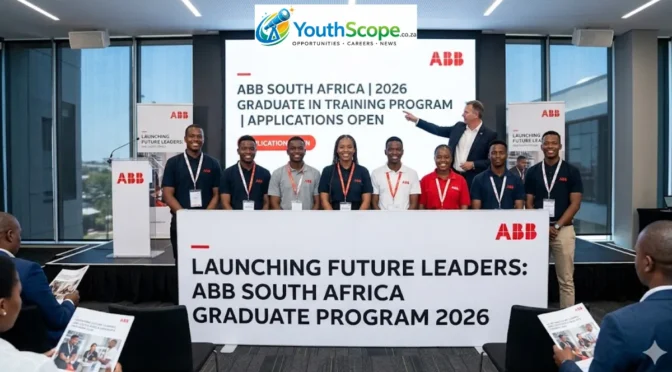
Electrifying Careers: ABB South Africa Launches 2026 Graduate In Training Program

JOHANNESBURG — Global industrial technology giant ABB has officially opened the application window for its 2026 Graduates In Training (GIT) program. Aimed at the country’s most ambitious recent graduates, the initiative is designed to transform academic potential into industrial excellence within the fields of electrification and automation.

Positioned as a premier talent incubator, the program moves beyond traditional internships by utilizing a globally recognized development framework. ABB is seeking “growth-minded” individuals ready to navigate the complexities of commercial strategy and industrial sales in a rapidly evolving Southern African market.

The 70:20:10 Model: A Blueprint for Rapid Maturity

What distinguishes the ABB experience is its strict adherence to the 70:20:10 Model of Learning. This framework ensures that trainees are not mere observers but active contributors to the company’s mission.70:20:10 Learning Model diagram, AI generated

Getty Images

How the Journey is Structured:

  • 70% Experiential Learning: The bulk of the program involves “learning by doing.” Graduates are embedded in live projects, meeting real-world deadlines, and supporting active sales teams on the front lines.
  • 20% Social Learning: Trainees develop through mentorship and networking. This involves regular engagement with senior leadership and building a collaborative peer network with fellow trainees.
  • 10% Formal Education: The final component consists of targeted classroom sessions designed to sharpen technical “hard” skills and essential “soft” skills, such as advanced negotiation and leadership.

Driving the Commercial Engine: Your Responsibilities

Graduates entering the 2026 cohort will be integrated into ABB’s commercial and business divisions. The role is high-stakes, requiring a blend of analytical prowess and interpersonal confidence.

Key Performance Areas:

  1. Market Intelligence: Decoding complex data and customer insights to steer ABB’s regional commercial strategies.
  2. Strategic Acquisition: Assisting sales teams in identifying, winning, and retaining major industrial clients.
  3. Relationship Management: Cultivating high-level stakeholder relationships to ensure long-term business sustainability.
  4. Cross-Functional Synergy: Working across diverse departments to deliver integrated technology solutions to a global customer base.

You can also Check:

Minimum Requirements: The 65% Benchmark

ABB maintains a high-performance culture with rigorous entry standards. To be considered for the 2026 intake, candidates must meet the following baseline criteria:

1. Educational Background

  • Target Degrees: A completed Bachelor’s Degree in Commerce, Business Administration, Marketing, or a related field.
  • Academic Performance: A minimum cumulative average of 65% is mandatory.

2. Eligibility & Nationality

  • Experience: Designed for early-career professionals with no more than 2 years of post-qualification work experience.
  • Citizenship: This program is open to South African citizens only.

3. Core Competencies

  • Data Literacy: The ability to interpret metrics for high-stakes decision-making.
  • Customer Confidence: Comfort in engaging with stakeholders at all corporate levels.
  • Communication: Exceptional English proficiency, specifically in technical reporting and verbal presentations.

Summary Table: ABB Graduate Intake 2026

FeatureDetails
Program TypeGraduate In Training (GIT)
Learning Model70:20:10 (Experience, Social, Formal)
Academic Cut-off65% Aggregate Minimum
Target QualificationsCommerce, Marketing, BBA
Experience LimitMaximum 2 Years Post-Graduation
LocationABB Regional Offices (South Africa)

Frequently Asked Questions (FAQ)

Is the ABB Graduate Program a permanent position?

The program is initially a structured fixed-term training contract. However, ABB utilizes this program as its primary talent pipeline; high-performing graduates are frequently transitioned into permanent roles within the global organization.

What does “Market Intelligence” actually involve in this role?

You will be tasked with looking at industrial trends, competitor activity, and shifting customer needs. You’ll use this data to help ABB decide which products to prioritize and how to price them effectively in the Southern African market.

How can I make my application stand out?

Beyond the 65% average, ABB values business acumen. Highlight any university projects or part-time work where you analyzed data to solve a problem or worked within a diverse team to meet a specific goal.

Does ABB provide relocation or travel assistance?

While the program offers a highly competitive stipend, daily travel to and from ABB’s regional offices is typically the responsibility of the trainee.

How to Apply

Prospective candidates must apply via the ABB South Africa Careers Portal.

Important Note: You must have your full academic transcripts ready for upload. ABB performs a strict verification of the 65% average during the initial screening phase. Incomplete applications or those without transcripts will not be considered.

Turn your degree into an international career with a global technology leader. Apply for the ABB 2026 Graduate Program today.

Takealot Group Opens 2026 N6 Internship and Experiential Learning Intake

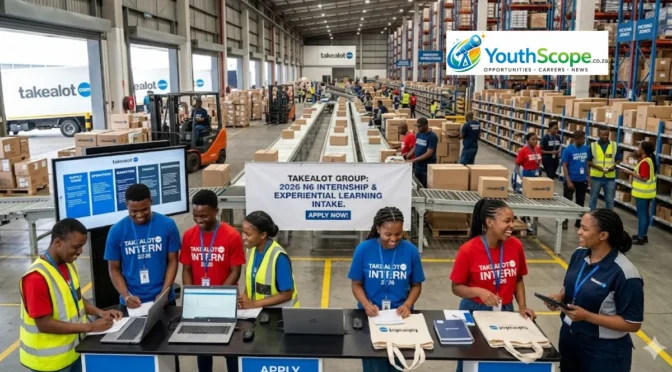
CAPE TOWN — Takealot, the undisputed titan of South African e-commerce, has officially invited the next generation of professionals to step into the “engine room” of digital retail. The company has launched its 2026 N6 Internship and Experiential Learning program, specifically targeting unemployed South African N6 TVET graduates.

The 18-month program is more than just a training cycle; it is a critical bridge for graduates who require practical workplace exposure to finalize their National Diplomas. In a country where youth unemployment remains a challenge, Takealot is offering a high-velocity environment where “learning by doing” isn’t just a catchphrase—it’s the daily operational standard.

The 2026 N6 Menu: Where Do You Fit?

Takealot has streamlined its intake to ensure that every functional area of the business—from the technical infrastructure to the human element—is supported by fresh talent.

Internship Streams & Qualification Requirements:

Internship StreamRequired N6 TVET Qualification
HR PayrollFinance / Human Resources
Learning & DevelopmentHuman Resource Management
Logistics & DispatchLogistics / Supply Chain / Operational Efficiency
Legal & Office AdminLegal Secretary / Office Administration
Marketing (CRM)Marketing
Project AdministrationElectrical Engineering / Construction / Project Management
Risk & SecurityRisk Management / Cyber Security
Supply ChainSupply Chain / Management Science
Public PolicyCommunications / Events / Project Management

The “Un-Corporate” Culture: Beyond the Desk

Takealot describes its workplace as a “high-velocity” environment, but it balances that intensity with a culture designed to foster genuine professional and personal growth.

  • Elite Mentorship: Interns are not “coffee runners.” Each participant is paired with industry leaders who provide structured guidance through the complexities of modern retail.
  • Global Learning Hub: Takealot provides free, unlimited access to world-class online courses via ProsusAcademy, Udacity, and Coursera, allowing interns to gain global certifications alongside their practical hours.
  • Comprehensive Wellness: Beyond the professional scope, interns have access to confidential counseling, legal support, and financial guidance as part of a robust employee wellness program.
  • The Vibe: The culture favors agility over hierarchy. From open-plan offices to social events like mini-golf and hiking trips, the program emphasizes building a professional network that lasts.

Minimum Requirements: The Essentials

To ensure a fair and competitive selection process, Takealot has outlined strict baseline criteria for the 2026 cycle.

Candidates must meet the following:

  1. Academic Status: Must have successfully completed an N6 TVET qualification in a relevant field.
  2. Employment Status: Must be currently unemployed and ready to begin the 18-month cycle.
  3. Citizenship: Valid South African ID is mandatory.
  4. Prior Experience: Preference is given to those who have not previously participated in a SETA-funded internship program.
  5. Digital Savvy: Proficiency in Microsoft Office Suite (Excel, Word, PowerPoint) is non-negotiable.

How to Apply: A Step-by-Step Guide

Takealot processes all applications through its centralized digital portal. Due to the high volume of applicants, early submission is strongly advised.

  1. Portal Visit: Navigate to the Takealot Careers Portal.
  2. Select Your Stream: Choose the specific N6 internship that matches your qualification from the list above.
  3. Document Upload: You will need a clear PDF of your N6 Transcript, your ID copy, and a polished, updated CV.
  4. Residency Screening: Be prepared to answer questions regarding your location. While Takealot operates nationally, roles are primarily located in Cape Town (Head Office), Johannesburg (Midrand), and Durban.

Pro Tip: Takealot often fills these positions on a “first-come, first-served” basis. If you meet the requirements, do not wait for a closing date—apply immediately.

Frequently Asked Questions (FAQ)

Does Takealot provide a stipend?

Yes. Takealot offers a market-related remuneration package. While the exact figure varies by stream, it is highly competitive within the retail sector and includes perks such as free parking at corporate hubs.

What happens after the 18 months?

The primary goal is the completion of your National Diploma. While permanent employment is not a guarantee, Takealot frequently uses its internship pool to fill junior permanent roles. An internship here is widely considered a “digital gold star” on any CV.

Is this the same as the Graduate Program?

No. This specific intake is for N6 TVET graduates requiring experiential learning. Takealot runs a separate “Graduate Internship” for those holding Bachelor’s or Honors degrees. Ensure you apply for the correct stream to avoid automatic disqualification.

Can I apply for multiple streams?

It is best to apply for the single stream that most closely aligns with your N6 qualification. Applying for multiple, unrelated streams may flag your application as “unfocused.”

You can also Check:

Final Thoughts

For an N6 graduate, there is perhaps no better place to learn the “future of work” than at Takealot. In an era where e-commerce is the backbone of the economy, having 18 months of experience at South Africa’s top online retailer is a career-defining move.

Ensure your transcripts are ready and your CV is tailored. Apply for the Takealot 2026 intake today.

Scatec Opens Applications for Elite 2026 Graduate Programme in Cape Town

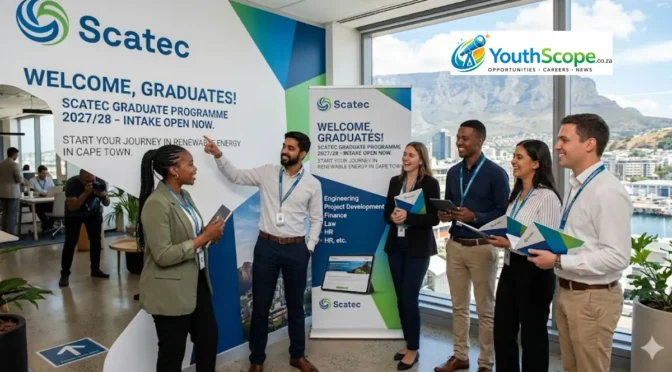
CAPE TOWN — In a major move to bolster South Africa’s green economy, global renewable energy giant Scatec has officially launched the application window for its 2026 Graduate Programme. This 24-month intensive development track is widely regarded as one of the most prestigious entry points into the sustainable energy sector, aiming to transform high-potential graduates into industry-ready experts.

As South Africa continues its transition toward a decentralized energy grid, Scatec’s “Integrated Independent Power Producer” (IPP) model provides a unique vantage point for young professionals to witness the entire lifecycle of renewable energy projects—from initial development to long-term operations.

The 24-Month Roadmap: A Blueprint for Excellence

Scatec’s programme is not a simple internship; it is a standardized corporate initiative designed to meet global competency benchmarks. The 24-month journey is anchored by rigorous oversight and specialized support systems.

Core Pillars of Development:

  • Bi-Annual Performance Benchmarking: Every six months, graduates undergo comprehensive reviews to track their evolution against international energy standards.
  • The Mentorship Matrix: Each participant is paired with an industry veteran (Mentor) and a peer (Buddy) to navigate the technical and cultural complexities of the renewable energy market.
  • Specialized Training Modules: Learning is “fit-for-purpose,” meaning a data analyst will receive different technical upskilling than a solar engineer, ensuring every graduate is a specialist in their niche.

2026 Target Fields: Where Innovation Meets Career

Scatec is casting a wide net for the 2026 intake, seeking talent across multiple disciplines to support its diverse portfolio of solar, wind, hydro, and storage solutions.

Recruitment Sectors:

SectorRelevant Fields of Study
Technical & EngineeringElectrical Engineering, Mechatronics (Undergrad or Postgrad)
Data & TechnologyIT, Information Systems, Data Analytics, Artificial Intelligence
Business & StrategyBusiness Development, Finance, Accounting, Supply Chain, Logistics
Sustainability & LawEnvironmental Studies, Legal, Compliance, Quantity Surveying
People & BrandHR Management, Industrial Psychology, Communication, Marketing

Entry Requirements: The 65% Academic Standard

Scatec maintains a high-performance culture, and the baseline criteria for the 2026 cycle are non-negotiable. Applicants must demonstrate academic excellence and a clear commitment to the green transition.

Minimum Criteria:

  1. Academic Excellence: A completed university qualification with a minimum cumulative average of 65%.
  2. Early Career Status: Applicants must have less than 24 months of professional work experience.
  3. Legal Requirements: Must be a South African citizen with a clear criminal record.
  4. Location: The program is strictly based at Scatec’s regional headquarters in Cape Town.

Required Documentation:

  • An updated, professional CV.
  • Full academic transcripts (crucial for verifying the 65% average).
  • Certified copies of academic qualifications.

How to Apply for Scatec 2026

The application process is exclusively digital. Given the prestige of the program, candidates are encouraged to ensure their documentation is meticulous before submission.

  • Step 1: Visit the official Scatec Careers Portal.
  • Step 2: Search for the “Graduate Programme 2026 – Cape Town” listing.
  • Step 3: Complete the digital application and upload the required document pack.

Frequently Asked Questions (FAQ)

Is the Scatec Graduate Programme a paid position?

Yes. Scatec offers a highly competitive salary and benefits package designed to attract top-tier talent in the specialized renewable energy field.

Can final-year students apply?

Yes. If you are currently in your final year of study, you may apply provided you will have your completed qualification and full academic transcripts by the start of the 2026 intake.

What sets Scatec apart from other energy firms?

Scatec utilizes a “Front-to-End” approach. They develop, build, own, and operate their power plants. This ensures graduates get exposure to the full lifecycle of a project—from the first shovel in the ground to the digital monitoring of energy output years later.

Is relocation assistance provided for those outside Cape Town?

The program is based in Cape Town. While specific relocation packages vary, successful candidates living in other provinces will be expected to relocate to the Western Cape for the duration of the 24-month contract.

You can also Check:

Final Thoughts: A Career Shield in the Green Economy

As global markets shift toward decarbonization, “Green Skills” are becoming the most valuable currency in the professional world. A 24-month tenure at Scatec provides more than just experience; it provides a “career shield,” equipping young South Africans with the expertise needed to lead the most important industrial shift of the 21st century.

Don’t delay—power your future and apply for the Scatec 2026 intake today.

Internships, Learnerships, Youth Opportunities, News & Careers