Tag Archives: Internships Programme 2026 

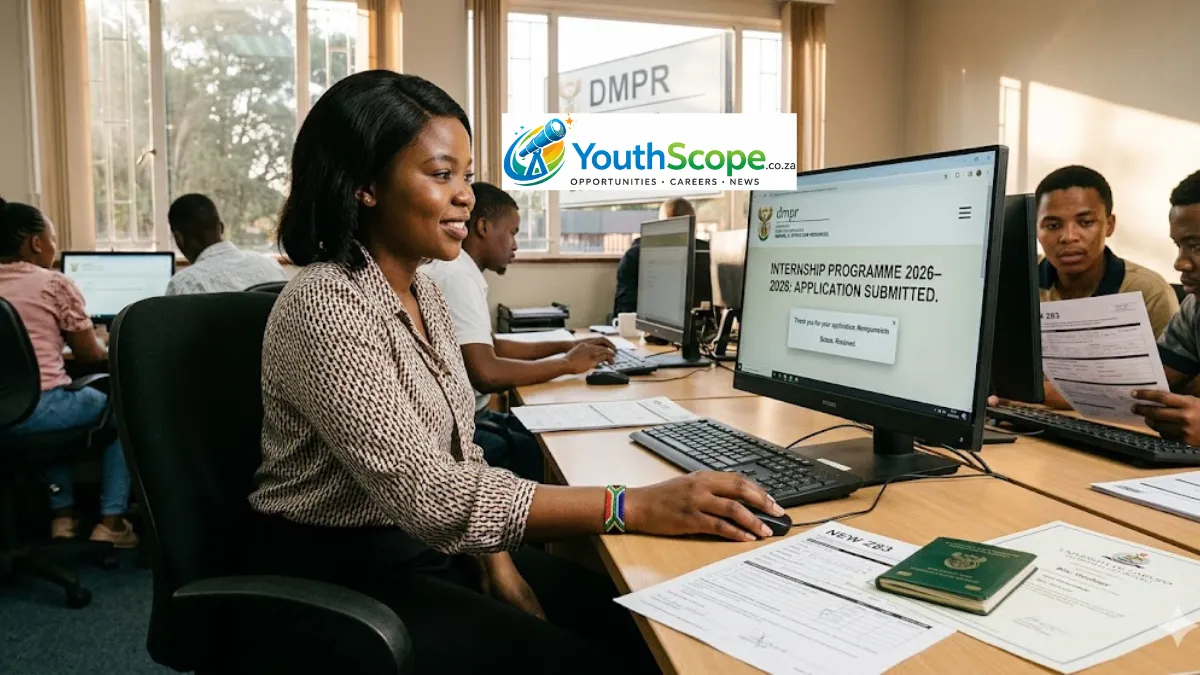
DMPR Internship Programme 2026–2028 Now Open in South Africa

The Department of Mineral and Petroleum Resources (DMPR) has opened applications for its Internship Programme 2026–2028, offering one of the strongest government workplace opportunities for graduates and TVET students in South Africa.

This 24-month programme is designed to help young people gain practical experience in sectors such as mining, petroleum regulation, finance, environmental management, law, logistics, GIS, administration, and economics.

With placements available across several provinces, the programme gives candidates a chance to develop valuable skills while earning a monthly stipend.

Applications close on 08 May 2026.

Quick Overview

  • Programme Name: Department of Mineral and Petroleum Resources Internship Programme
  • Duration: 24 Months
  • Cycle: 2026–2028
  • Closing Date: 08 May 2026
  • Locations: Multiple provinces in South Africa
  • Eligibility: Unemployed graduates and TVET students needing experiential training
  • Application Method: DMPR e-Recruitment Portal or manual submission
  • Important Rule: Previous government interns may not apply

Monthly Stipend

  • Diploma / Degree / Honours: R7 860.50
  • Master’s Degree: R9 482

Why This Internship Matters

The DMPR plays an important role in regulating South Africa’s mineral and petroleum sectors. Interns gain practical exposure in areas linked to:

  • Mining governance
  • Fuel regulation
  • Environmental compliance
  • Public administration
  • Economic planning
  • Supply chain systems
  • Legal and regulatory services
  • Community development

This can create strong future opportunities in both public and private sectors.

Internship Locations Nationwide

Successful applicants may be placed in:

  • Pretoria
  • Braamfontein
  • Witbank
  • Polokwane
  • Welkom
  • Kimberley
  • Port Elizabeth
  • East London
  • Cape Town
  • Klerksdorp
  • Mafikeng
  • Durban

This broad placement structure increases access for applicants from different provinces.

Internship Streams and Reference Numbers

Head Office Pretoria

  • DMPR INTERN 01 – Investment Promotion
  • DMPR INTERN 02 – Petroleum Compliance and Enforcement
  • DMPR INTERN 03 – Mineral and Petroleum Titles Registration
  • DMPR INTERN 04 – Petroleum Licensing and Fuel Supply
  • DMPR INTERN 05 – Petroleum Licensing and Fuel Supply
  • DMPR INTERN 06 – Fuel Pricing Mechanism
  • DMPR INTERN 07 – Office of the CFO
  • DMPR INTERN 08 – Demand, Acquisition and Contract Management
  • DMPR INTERN 09 – Financial Accounting and Reporting
  • DMPR INTERN 10 – Management Accounting
  • DMPR INTERN 11 – Legal Services
  • DMPR INTERN 12 – Human Resources
  • DMPR INTERN 13 – Technical Support Unit
  • DMPR INTERN 17 – Fuel Levies and Margins
  • DMPR INTERN 18 – Petroleum Licensing and Fuel Supply

Gauteng – Braamfontein

  • DMPR INTERN 14 – Mine Economics
  • DMPR INTERN 15 – Mineral Laws Administration
  • DMPR INTERN 16 – Mineral Information Management

Mpumalanga – Witbank

  • DMPR INTERN 19 – Mine Economics
  • DMPR INTERN 20 – Mineral Information Management
  • DMPR INTERN 21 – Mineral Laws Administration
  • DMPR INTERN 22 – Petroleum Licensing and Fuel Supply

Limpopo – Polokwane

  • DMPR INTERN 23 – Mine Economics
  • DMPR INTERN 24 – Mineral Laws Administration
  • DMPR INTERN 25 – Mineral Information Management
  • DMPR INTERN 26 – Petroleum Licensing and Fuel Supply

Free State – Welkom

  • DMPR INTERN 27 – Mine Economics
  • DMPR INTERN 28 – Social and Labour Plan

Northern Cape – Kimberley

  • DMPR INTERN 29 – Mineral Laws Administration

Eastern Cape

  • DMPR INTERN 30 – Mine Environmental Management (Port Elizabeth)
  • DMPR INTERN 31 – Petroleum Licensing and Fuel Supply (East London)

Western Cape – Cape Town

  • DMPR INTERN 32 – Social and Labour Plan
  • DMPR INTERN 33 – Mine Economics

North West

  • DMPR INTERN 34 – Social and Labour Plan (Klerksdorp)
  • DMPR INTERN 35 – Mineral Information Management (Klerksdorp)
  • DMPR INTERN 36 – Petroleum Licensing and Fuel Supply (Mafikeng)

KwaZulu-Natal – Durban

  • DMPR INTERN 37 – Mine Economics
  • DMPR INTERN 38 – Mineral Information Management
  • DMPR INTERN 39 – Mineral Laws Administration
  • DMPR INTERN 40 – Petroleum Licensing and Fuel Supply

Fields of Study Accepted

Applicants with qualifications in relevant fields are encouraged to apply, including:

  • Economics
  • Finance
  • Accounting
  • Law
  • Public Administration
  • Supply Chain Management
  • Logistics
  • Human Resource Management
  • Environmental Sciences
  • GIS / Geomatics
  • Geology
  • Mining Engineering
  • Mine Survey
  • Development Studies
  • Social Sciences
  • Community Development
  • Office Administration
  • Office Management Technology

TVET students needing workplace exposure may also apply.

Who Should Apply?

This opportunity is ideal if you are:

  • Unemployed
  • Between 18 and 35 years old
  • A graduate seeking experience
  • A TVET student needing practical training
  • Interested in mining or petroleum sectors
  • Interested in public service careers
  • Interested in environmental or regulatory work

Not Eligible

Applicants who previously benefited from a government internship programme may not apply.

What the Stipend Helps Cover

Interns receive monthly support for:

  • Transport
  • Meals
  • Basic living expenses

Accommodation is not provided, so location planning is important.

Required Documents

Applicants must submit:

  • Completed new Z83 Form
  • Detailed CV

Shortlisted candidates may later be asked for:

  • Certified qualifications
  • Certified ID copy
  • Academic transcripts
  • Institutional letter (for experiential students)

Incomplete applications may be disqualified.

How to Apply

Applications can be submitted through:

  • DMPR e-Recruitment Portal
  • Postal submission
  • Courier submission
  • Hand delivery at Trevenna Campus, Pretoria

If applying for more than one internship stream, submit a separate Z83 form for each reference number.

Selection Process

Shortlisted candidates may go through:

  • Qualification verification
  • Citizenship checks
  • Criminal screening
  • Financial record checks
  • Security clearance

If you do not receive feedback within three months, consider the application unsuccessful.

Tips to Improve Your Chances

Apply strategically by choosing internships that match:

  • Your qualification
  • Your preferred province
  • Your long-term career goals

Examples

  • Economics graduates → Fuel Pricing / Mine Economics
  • Law graduates → Mineral Laws Administration
  • Environmental graduates → Mine Environmental Management
  • HR graduates → Human Resources

Applying for multiple relevant streams can improve your chances.

You can also Check:

Frequently Asked Questions

Can TVET students apply?

Yes. Students needing experiential training must provide a confirmation letter from their institution.

Can I apply for more than one stream?

Yes. Submit separate Z83 forms for each reference number.

Is accommodation provided?

No. Interns must arrange their own accommodation.

Do I need previous work experience?

No prior work experience is required.

Can previous government interns apply?

No. Previous beneficiaries are not eligible.

Closing Date

Applications close on 08 May 2026.

This is a valuable opportunity for graduates and TVET students seeking respected government experience in high-demand sectors across South Africa.

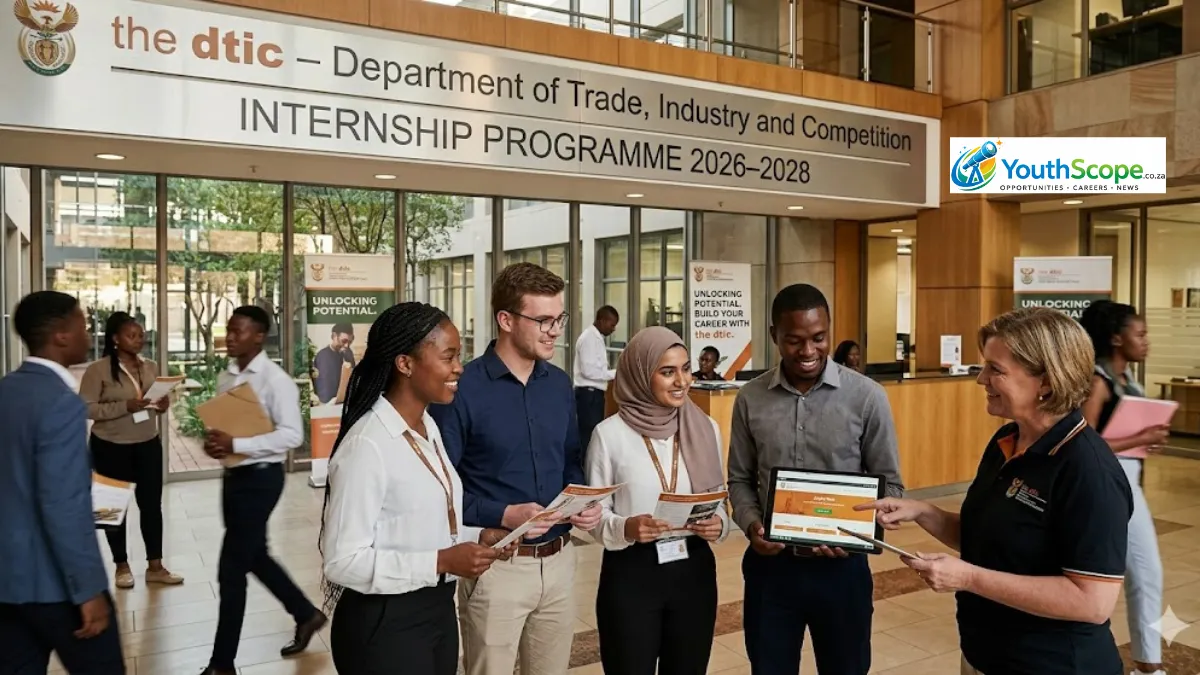
The dtic Internship Programme 2026–2028 Opens for Graduates in South Africa

Graduates seeking valuable government experience now have an excellent opportunity through the Department of Trade, Industry and Competition (the dtic) Internship Programme 2026–2028.

This structured 24-month internship programme is designed to give unemployed South African graduates practical workplace exposure in areas linked to economic growth, industrial development, trade policy, finance, governance, and administration.

For young professionals aiming to build careers in government or related sectors, this internship can be a strong first step.

Applications close on 06 May 2026, and all successful candidates will be placed in Sunnyside, Pretoria.

Quick Overview

  • Programme Name: the dtic Graduate Internship Programme 2026–2028
  • Department: Department of Trade, Industry and Competition
  • Duration: 24 Months
  • Start Date: 01 July 2026
  • End Date: 30 June 2028
  • Location: Sunnyside, Pretoria
  • Monthly Stipend: R7 860.50
  • Minimum Qualification: NQF Level 6 or higher
  • Application Methods: Email, Post, Hand Delivery
  • Closing Date: 06 May 2026
  • Equity Preference: African males and persons with disabilities

Why This Internship Matters

The dtic plays a major role in South Africa’s economic development. Interns gain exposure to national programmes that support:

  • Industrial expansion
  • Trade promotion
  • Regulatory systems
  • Economic planning
  • Public sector administration
  • Business competitiveness

This experience can strengthen future applications for jobs in:

  • National departments
  • Provincial government
  • Municipalities
  • State-owned entities
  • Regulatory agencies
  • Private sector corporate roles

Fields of Study Accepted

Applications are open to unemployed graduates with qualifications at NQF Level 6 or above in relevant fields.

Public Administration and Governance

  • Public Management
  • Public Administration

Business and Management

  • Business Management
  • Business Administration

Human Resources

  • Human Resource Management
  • Human Resource Development

Communication

  • Communication
  • Public Relations

Legal Studies

  • Law

Information Technology

  • Software Development

Economic Sciences

  • Economics
  • Statistics
  • Econometrics
  • Development Studies

Agriculture and Forestry Economics

  • Agricultural Economics
  • Forestry Science

Finance and Auditing

  • Accounting
  • Financial Management
  • Cost and Management Accounting
  • Internal Auditing
  • Auditing
  • Risk Management

Natural Sciences

Major subjects including:

  • Microbiology
  • Biochemistry
  • Biotechnology
  • Bioengineering

Engineering and Industrial Fields

  • Mining Engineering
  • Metallurgy Commerce

Workplace Safety

  • Occupational Health and Safety

Supply Chain and Logistics

  • Supply Chain Management
  • Procurement

International Relations

  • International Politics

Internship Duration and Monthly Stipend

Selected graduates will serve in the programme from:

01 July 2026 to 30 June 2028

Participants will receive a monthly stipend of:

R7 860.50

This is a workplace training opportunity and not permanent employment, but it offers highly valuable experience.

Skills and Competencies Needed

Applicants should demonstrate:

  • Professional behaviour
  • Integrity
  • Strong communication skills
  • Deadline management
  • Attention to detail
  • Analytical thinking
  • Ability to work under pressure
  • Willingness to learn
  • Teamwork skills

Knowledge of government systems may be an added advantage.

Who Should Apply?

You should strongly consider applying if you are:

  • Unemployed
  • A South African citizen
  • Qualified at NQF Level 6 or higher
  • Interested in public service careers
  • Interested in economic development work
  • Looking for structured workplace exposure
  • Building a long-term career path

Internship Location

All successful applicants will be based at:

the dtic Campus
Corner of Meintjies and Robert Sobukwe Streets
Sunnyside
Pretoria

Applicants outside Pretoria should begin relocation planning early.

How to Apply

Candidates may use one of three official application methods.

Option 1: Email Application

Send your application to:

intern2026@thedtic.gov.za

Use this subject line format:

Intern2026 – Field of Study

Example:

Intern2026 – Public Management

Option 2: Postal Application

Send to:

The Director: Human Resources Management
Private Bag X84
Pretoria
0001

Option 3: Hand Delivery

Deliver applications to:

the dtic Campus
Corner of Meintjies and Robert Sobukwe Streets
Sunnyside
Pretoria

Important: Z83 Form Requirement

Applicants must submit:

  • Completed and signed new Z83 Form only

Do not include these documents unless requested later:

  • CV
  • Certificates
  • Academic transcripts

Many applicants are rejected for not following these instructions.

Documents to Prepare in Advance

Even though they are not required initially, keep these ready:

  • Certified ID copy
  • Qualification certificates
  • Academic transcripts
  • Updated CV

These may be requested during shortlisting.

You can also Check:

Enquiries

For questions about the programme, contact:

  • Donald Mathavha – 012 394 3864 / 064 850 9379
  • Teaman Nghunyule – 012 394 1563 / 060 998 0775
  • Ursula Pitse – 012 394 1852
  • Vusi Mazibuko – 012 394 5608

Tips to Improve Your Chances

To submit a stronger application:

  • Apply before the deadline
  • Use the correct email subject line
  • Complete the Z83 form carefully
  • Choose the correct study field
  • Keep your documents ready
  • Follow all instructions exactly

It is also wise to apply for multiple graduate opportunities at the same time.

Frequently Asked Questions

Is this permanent employment?

No. It is a 24-month internship programme.

Can TVET graduates apply?

Only applicants with NQF Level 6 or higher qualifications may apply.

Is relocation necessary?

Yes. Placements are based in Pretoria.

Do I need work experience?

No previous experience is required.

Can previous interns apply?

Yes, if currently unemployed.

Will shortlisted candidates be interviewed?

Yes. Shortlisted applicants are normally contacted for the next stage.

Closing Date

Applications close on 06 May 2026.

Graduates interested in public sector careers should not miss this opportunity to gain respected government experience through the dtic Internship Programme.

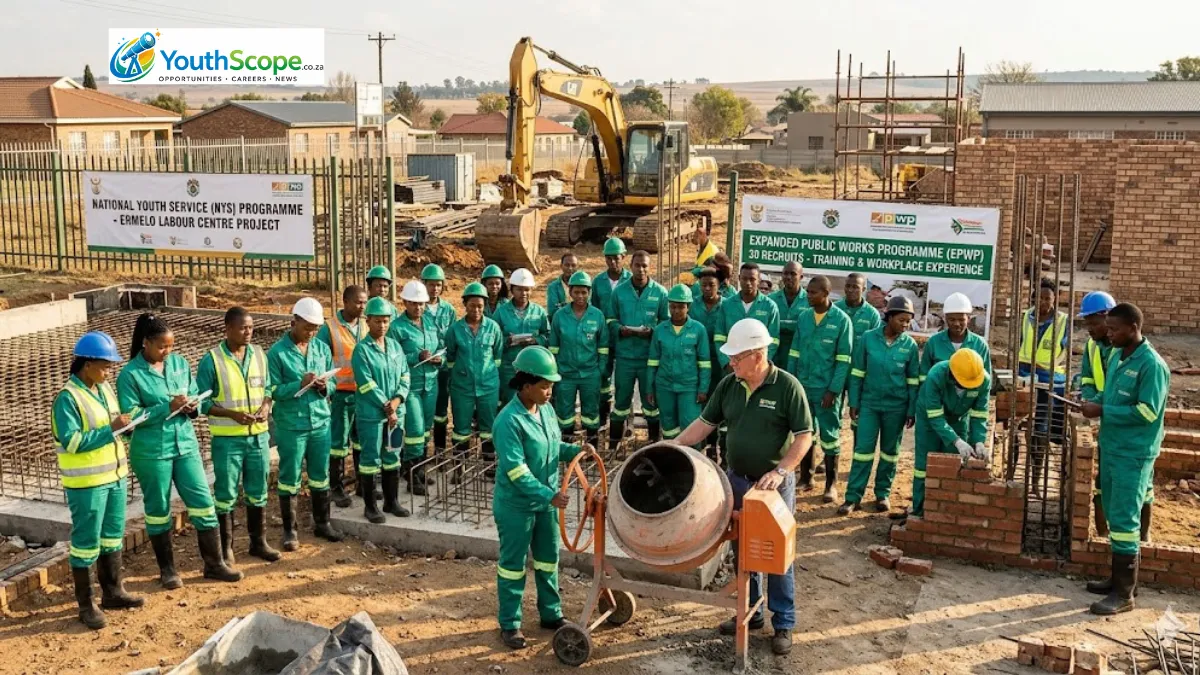
NYS Ermelo Programme 2026 Opens 30 Paid Construction Training Opportunities for Youth

Unemployed young people living in or near Msukaligwa Local Municipality (Ermelo) now have access to a valuable career-building opportunity in the construction and infrastructure sector.

The National Youth Service (NYS) Programme, funded through the Expanded Public Works Programme (EPWP), is recruiting 30 participants for a structured training and workplace experience programme linked to the construction of the Ermelo Labour Centre.

This initiative offers practical skills, accredited training, workplace exposure, and financial support, making it one of the strongest entry-level pathways currently available for youth interested in technical trades and the built environment sector.

Quick Overview

  • Programme Name: National Youth Service (NYS) Technical Training & Work-Integrated Learning Programme
  • Project: Construction of Ermelo Labour Centre
  • Total Intake: 30 Participants
  • Programme Duration: 9 to 12 Months
  • Qualification: Learnership in Building and Civil Construction
  • NQF Level: Level 3
  • SAQA ID: 65409
  • Daily Stipend: R150 (includes transport allowance)
  • Location: Msukaligwa Local Municipality, Ermelo
  • Age Requirement: 18 to 35 years
  • Closing Date: 30 April 2026

What the Programme Offers

Successful applicants will benefit from:

  • Practical construction skills training
  • Accredited qualification opportunities
  • Workplace experience on a real project
  • Daily stipend support
  • Exit assistance after completion
  • Starter tools for selected participants

Most importantly, it creates a practical stepping-stone into South Africa’s construction industry, which remains one of the most accessible employment sectors for youth.

Two Training Streams Available

The programme is divided into two separate pathways depending on your qualifications and current status.

Part A: Learnership Programme (15 Participants)

This stream is ideal for unemployed youth who want formal training in construction trades.

Qualification Details

  • Learnership: Building and Civil Construction
  • NQF Level: 3
  • SAQA ID: 65409
  • Duration: 12 Months

Training Includes

  • Civil works
  • Bricklaying
  • Carpentry
  • Painting
  • Plastering
  • Paving
  • General construction techniques

Career Opportunities After Completion

This pathway may help you enter roles such as:

  • Construction assistant
  • Site worker
  • Bricklaying trainee
  • Carpentry trainee
  • Paving support worker

It can also lead to future artisan training opportunities.

Part B: Work-Integrated Learning (WIL) Placement (15 Participants)

This stream is designed for students who have completed theory studies and still need workplace experience to graduate.

Eligible Students

Applicants from:

  • Universities
  • Universities of Technology
  • TVET Colleges

Relevant Study Fields

  • Civil Engineering
  • Building Studies
  • National Diploma Civil Engineering

Duration

  • 12 months workplace placement

Applicants must provide a letter from their institution confirming the need for in-service training.

This is especially useful because many students struggle to secure WIL placements.

Stipend Provided

Participants will receive:

R150 per day

This includes:

  • Attendance support
  • Transport allowance
  • Practical training participation support

While not permanent employment, it is a funded development opportunity with recognised outcomes.

Who Should Apply?

You should consider applying if you are:

  • Between 18 and 35 years old
  • Unemployed
  • Living in Msukaligwa Local Municipality
  • Interested in construction or technical work
  • Available for full-time participation
  • Ready to commit for 9 to 12 months

Preference will be given to youth living close to the project site.

Minimum Requirements

Applicants must meet one of the following:

  • Have Grade 12 qualification
    or
  • Be a TVET student needing workplace training
  • Be a university student requiring WIL placement

Applicants must also:

  • Have a valid South African ID
  • Be unemployed
  • Not be studying currently (except WIL applicants)
  • Be available immediately if selected

Required Documents

Prepare the following:

  • Updated CV
  • Completed application form
  • Certified ID copy
  • Certified qualification copies
  • Municipal proof of residence

Additional for WIL Applicants

  • Letter from institution confirming need for in-service training

Incomplete applications may not be considered.

Where to Collect Application Forms

Forms are available at:

Msukaligwa Local Municipality

Ermelo

Department of Employment and Labour

14 Declerck Street
Ermelo

Where to Submit Applications

Applications must be submitted to:

Department of Employment and Labour (DOEL) Ermelo

Selection Targets

The programme follows EPWP inclusion targets:

  • 85% previously disadvantaged backgrounds
  • 50% women participation
  • 1% persons with disabilities
  • 1% ex-offenders

These targets help improve fair access to opportunities.

Important Notes

Applicants should understand that this programme:

  • Is not permanent employment
  • Is a structured training opportunity
  • Combines classroom and practical learning
  • Supports future employability
  • Requires immediate availability after selection

If you are not contacted within two weeks after the closing date, consider your application unsuccessful.

You can also Check:

Tips to Improve Your Application

  • Certify documents early
  • Keep your CV simple and clear
  • Submit proof of residence
  • Apply before the deadline
  • Highlight any practical skills or interest in construction

Because only 30 places are available, early application is important.

Final Thoughts

The NYS Ermelo Programme 2026 is an excellent opportunity for unemployed youth and students seeking practical experience in construction, infrastructure, and technical trades. With a daily stipend, accredited training, and hands-on workplace exposure, it can become a strong foundation for future employment.

If you qualify, make sure to apply before 30 April 2026.

SARB Graduate Development Programme 2026 Opens Elite Career Path for South African Graduates

For ambitious South African postgraduates aiming to build careers in finance, economics, or policymaking, the South African Reserve Bank (SARB) Graduate Development Programme 2026 is one of the country’s most respected opportunities.

This is far more than a standard graduate internship. It is a structured pathway into central banking, monetary policy, financial markets, research, and national economic decision-making.

For many successful applicants, it becomes the first step toward a long-term career inside one of South Africa’s most influential institutions.

Quick Overview

  • Programme Name: SARB Graduate Development Programme 2026
  • Organisation: South African Reserve Bank (SARB)
  • Location: Pretoria Head Office
  • Duration: 12 Months
  • Programme Period: February 2027 to January 2028
  • Closing Date: 30 April 2026
  • Minimum Qualification: Honours Degree (NQF Level 8)
  • Career Fields: Economics, Finance, Law, IT, Risk, Data and more
  • Potential Outcome: Opportunity for permanent placement

What Is the SARB Graduate Development Programme?

The programme is a one-year professional development initiative designed to prepare talented graduates for careers in central banking and related specialist fields.

Participants receive practical work exposure, structured learning, and mentorship while contributing to real projects within the Reserve Bank.

This makes it one of the strongest graduate opportunities in South Africa for academically strong candidates.

What Graduates Will Gain

Departmental Work Experience

Participants are placed in departments where they may:

  • Work on live projects
  • Assist with research and reporting
  • Support financial and policy-related tasks
  • Contribute to strategic initiatives

SARB Academy Training

Graduates also receive formal training in:

  • Central banking systems
  • Monetary policy fundamentals
  • Economic analysis
  • Financial markets
  • Regulatory frameworks

Professional Skills Development

Beyond technical learning, candidates can build:

  • Communication skills
  • Public speaking confidence
  • PowerPoint and presentation ability
  • Professional etiquette
  • Leadership potential
  • Team collaboration skills

Real Workplace Exposure

Unlike some programmes where graduates only observe, SARB participants are expected to contribute meaningfully.

This may include:

  • Producing reports
  • Supporting research teams
  • Working alongside experienced professionals
  • Building valuable professional networks

That kind of practical exposure can significantly strengthen future career prospects.

Permanent Employment Opportunities

One of the biggest attractions of the programme is the possibility of long-term employment.

At the end of the programme, some graduates may receive permanent offers.

Who May Be Absorbed?

Typically, top performers who:

  • Deliver strong results
  • Show professionalism
  • Demonstrate integrity and accountability
  • Work well independently and in teams
  • Show genuine interest in central banking careers

This makes the programme highly competitive and highly rewarding.

Accepted Fields of Study

Applicants with postgraduate qualifications in the following areas may apply:

  • Economics
  • Econometrics
  • Statistics
  • Public Finance
  • Accounting
  • Auditing
  • Law
  • Financial Mathematics
  • Financial Engineering
  • Information Technology
  • Digital Technology
  • Investment Management
  • Portfolio Management
  • Mathematics
  • Quantitative Analysis
  • Business Analysis
  • Risk Management
  • Actuarial Science
  • Fintech
  • Policy Research

Minimum Requirements

To qualify, applicants must generally meet these requirements:

  • South African citizenship
  • Completed Honours degree (NQF Level 8)
  • Minimum average of 65%
  • Strong academic performance
  • Excellent communication skills
  • Interest in finance, economics, or policy work
  • Strong analytical thinking
  • Willingness to learn

How to Apply

Applications must be submitted online before the deadline.

APPLY FOR THE SOUTH AFRICAN RESERVE BANK (SARB) GRADUATE DEVELOPMENT PROGRAMME 2026 HERE

Application Tips

Prepare the following:

  • Updated CV
  • Academic transcripts
  • Qualification documents
  • Tailored motivation/application
  • Proof of achievements or research work

Before submitting:

  • Check all documents carefully
  • Highlight analytical strengths
  • Show interest in economic impact and public service
  • Keep your CV professional and focused

How to Improve Your Chances

Build Analytical Thinking

  • Follow economic news
  • Understand inflation, interest rates, and markets
  • Practice interpreting data

Strengthen Communication

  • Learn to explain complex ideas clearly
  • Practice presentations
  • Improve writing skills

Position Yourself Well

  • Mention research projects
  • Include leadership roles
  • Show curiosity and initiative

This programme looks beyond qualifications alone.

Career Paths After the Programme

Within SARB

Graduates may progress into roles such as:

  • Economist
  • Research Analyst
  • Financial Analyst
  • Policy Advisor
  • Risk Specialist

You can also Check:

Outside SARB

The experience can also lead to careers in:

  • Investment Banking
  • Asset Management
  • Consulting
  • Government Policy
  • International Institutions such as IMF or World Bank

Many former central bank professionals later move into senior leadership roles.

Important Closing Date

Applications close on 30 April 2026.

Late submissions may not be considered, so early preparation is recommended.

Final Thoughts

The SARB Graduate Development Programme 2026 is one of South Africa’s premier opportunities for high-performing Honours graduates. With structured training, real institutional exposure, and the possibility of permanent employment, it offers an exceptional launchpad into finance, economics, policy, and leadership careers.

If you meet the academic requirements and want to build a future with impact, this is an opportunity worth serious consideration.

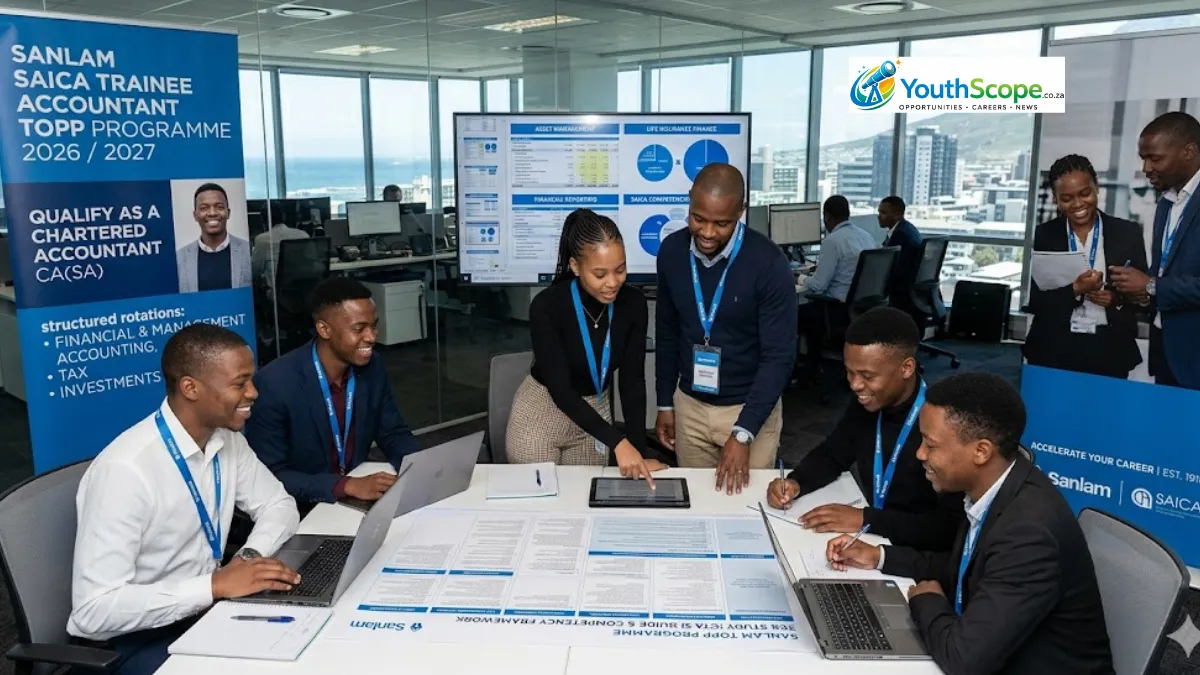
Sanlam CA Traineeships 2026 / 2027 Open Career Path for Future Chartered Accountants

Sanlam has opened applications for its SAICA Trainee Accountant TOPP Programme 2026 / 2027, creating an excellent opportunity for accounting graduates who want to qualify as Chartered Accountants in South Africa.

This three-year SAICA-aligned training programme offers structured professional development, rotational exposure across key business units, and practical experience within one of Africa’s leading financial services groups.

For aspiring CA(SA) candidates, this could be a career-changing opportunity.

What Is the Sanlam CA Traineeship Programme?

The Sanlam CA Traineeship is a professional training contract designed for graduates pursuing the CA(SA) designation.

The programme follows SAICA standards and provides trainees with practical workplace experience across different business functions while they complete required competencies.

Instead of gaining experience in only one department, trainees rotate through multiple areas of the organisation to develop broad commercial and financial knowledge.

Why This Programme Stands Out

Choosing the right training environment can strongly influence a future finance career.

Sanlam offers trainees exposure to a respected corporate brand with operations across major financial sectors.

Business areas may include:

  • Sanlam Fintech
  • Sanlam Life and Savings
  • Sanlam Investment Group
  • Sanlam Allianz
  • Santam

This rotational model helps graduates understand how finance, governance, risk, and strategy work in real business environments.

What Trainees Will Learn

The programme is designed to build both technical and professional competencies required in modern finance careers.

Areas of development include:

  • Financial reporting
  • Taxation
  • Internal audit
  • Governance and compliance
  • Risk management
  • Business strategy
  • Ethical decision-making
  • Problem-solving skills
  • Digital business awareness

This balanced training approach prepares graduates for more than exams—it prepares them for leadership and professional growth.

Who Can Apply?

Applicants must meet the following minimum requirements:

  • CTA qualification or SAICA-recognised postgraduate qualification
  • Minimum academic average of 60%
  • Eligible to write the Initial Assessment of Competence (IAC)
  • Basic Microsoft Office skills

Added advantage:

  • Participation in university societies or community organisations
  • Leadership or volunteer experience

Sanlam appears to value well-rounded candidates who combine academics with initiative and responsibility.

Qualities That Can Strengthen Your Application

Sanlam is looking beyond qualifications alone.

Strong candidates should demonstrate:

  • Solid accounting and finance knowledge
  • Analytical thinking
  • Teamwork and independence
  • Professional ethics
  • Good communication skills
  • Willingness to learn and adapt

These qualities often separate average applicants from standout trainee candidates.

How Long Does the Programme Run?

The traineeship runs for approximately three years.

This allows enough time for trainees to build meaningful practical experience, rotate through different departments, and complete professional training requirements.

For graduates seeking a long-term professional route rather than a short internship, this is a major advantage.

Why Rotational Exposure Matters

One of the biggest strengths of this programme is the chance to work across multiple business units.

Benefits of rotation include:

  • Broader finance knowledge
  • Better commercial awareness
  • Increased adaptability
  • Exposure to different career paths
  • Stronger long-term professional profile

This kind of experience can be valuable later in careers linked to leadership, audit, risk, strategy, or finance management.

How to Improve Your Application

Competition for CA training programmes is usually high.

Tips for a stronger application:

  • Clearly highlight your CTA or postgraduate qualification
  • Include your academic average if above 60%
  • Mention IAC eligibility
  • Add leadership or volunteer experience
  • Show teamwork and professionalism
  • Keep your CV clean and easy to read

Recruiters should quickly see your academic readiness and career potential.

How to Apply

Applications must be submitted through the official Sanlam careers portal.

Closing Date:

31 May 2026

Only shortlisted candidates will be contacted, so submitting a complete and professional application is important.

You can also Check:

Why This Opportunity Is Worth Serious Attention

Sanlam offers a strong platform for future Chartered Accountants through:

  • SAICA-aligned training
  • Exposure to a leading financial services group
  • Rotational learning across major business units
  • Practical development in key finance disciplines
  • Strong long-term career potential

This is more than a graduate opportunity—it is a professional foundation.

Final Thoughts

The Sanlam CA Traineeships 2026 / 2027 programme is an excellent opportunity for South African graduates who want to build a serious path toward becoming a CA(SA). With structured training, valuable corporate exposure, and strong career development support, it can open doors in finance, audit, strategy, and risk management.

Eligible candidates should apply early and prepare a strong application before the closing date.

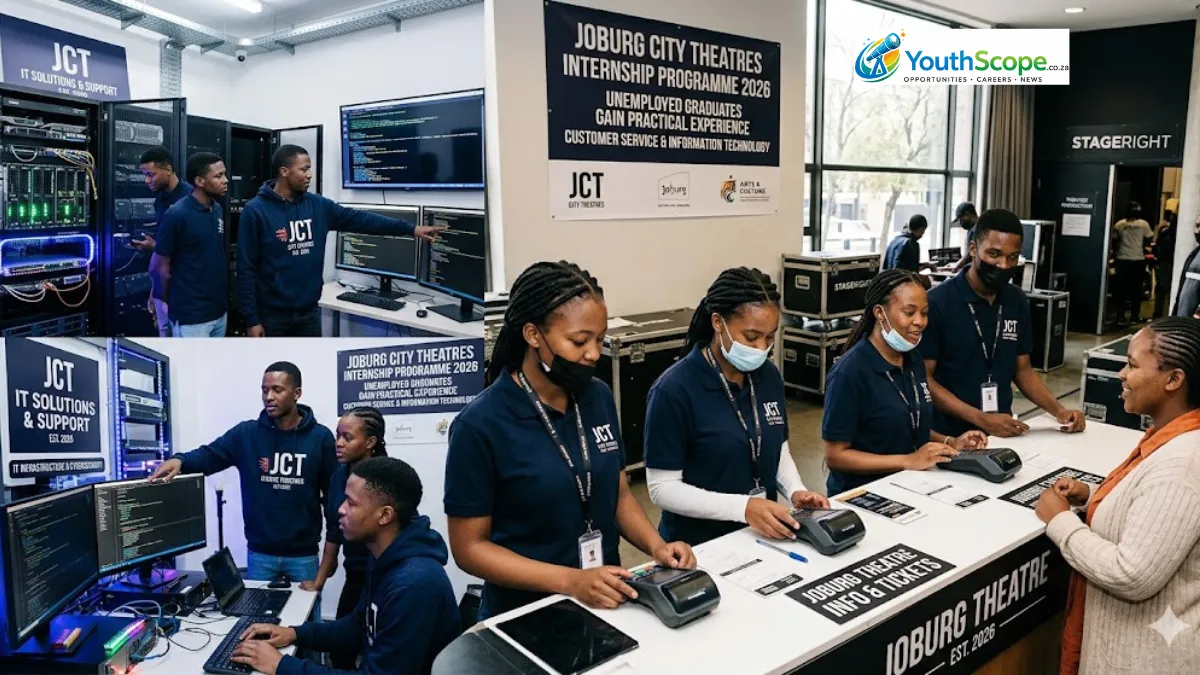
Joburg City Theatres Internships 2026 Open Paid Opportunities for Johannesburg Graduates

Joburg City Theatres has opened applications for its Internship Programme 2026, offering unemployed graduates the chance to gain practical workplace experience in customer service and information technology.

The programme runs for up to 24 months and includes a monthly stipend of R6,094, making it a valuable opportunity for young professionals looking to build experience in a respected municipal cultural institution.

What Is the Joburg City Theatres Internship Programme?

The Joburg City Theatres Internship Programme is designed to help graduates transition from academic study into the workplace through structured practical experience.

Instead of classroom learning, selected candidates will work in real operational environments linked to theatre services, administration, customer engagement, and IT systems.

This gives interns hands-on exposure while strengthening their professional skills.

Why This Internship Matters

Many graduates struggle to secure their first job because employers often ask for experience.

This programme helps solve that challenge by offering:

  • Practical workplace exposure
  • Paid internship support
  • Experience in a recognised public institution
  • Professional development over two years
  • Improved employability after completion

For graduates, this can be a valuable first step into long-term careers.

Internship Positions Available

Joburg City Theatres is recruiting for two internship categories.

Customer Services Intern

This role is based at Soweto Theatre, Jabulani.

Position details:

  • Reference Number: CS/ST/04/2026
  • Location: Soweto Theatre
  • Required Qualification: Diploma in Public Administration

This internship may suit graduates interested in administration, service delivery, and working directly with the public.

IT Intern

This role is based at Joburg Theatre, Braamfontein.

Position details:

  • Reference Number: IT/JT/04/2026
  • Location: Joburg Theatre
  • Required Qualification: Diploma in Information Technology
  • Number of Posts: 2

This is a strong option for graduates looking to gain experience in technical support, networking, and IT operations.

Who Can Apply?

Applicants must meet the following requirements:

  • South African citizen
  • Between 18 and 35 years old
  • Must live within the Johannesburg community
  • Completed Diploma qualification
  • No previous internship experience in a similar field
  • Basic computer literacy
  • Good communication skills

A diploma is required. Matric alone does not qualify for this programme.

What Interns Will Gain

Participants can expect practical experience in areas such as:

Customer Service Pathway:

  • Front desk and client service operations
  • Administrative systems
  • CRM processes
  • Event support environments

IT Pathway:

  • Technical support tasks
  • Systems troubleshooting
  • Networking support
  • IT operations exposure

Interns will also gain valuable workplace discipline and communication skills.

Monthly Stipend

Successful applicants will receive a monthly stipend of:

R6,094

This financial support helps make the programme more accessible while interns gain career-building experience.

Why Johannesburg Residency Matters

Applicants must live within the Johannesburg community.

Municipal entities often prioritise local residents to support community employment and operational convenience.

Applicants should ensure their address and supporting details clearly confirm Johannesburg residency.

How to Apply

Applications must be submitted by email only.

Email Address:

jobapplications@joburgtheatre.com

Correct Subject Lines:

  • Customer Services Intern: CS/ST/04/2026
  • IT Intern: IT/JT/04/2026

Using the correct reference number is important for proper processing.

Required Documents

Applicants must submit:

  • Updated CV
  • Certified copy of ID (certified within the last 3 months)
  • Certified copy of qualification

Incomplete or unclear applications may be disqualified.

Closing Date

Applications close on:

24 April 2026 before midnight

Late applications may not be considered. Early submission is strongly recommended.

You can also Check:

Tips to Strengthen Your Application

To improve your chances:

  • Use the correct reference number in the email subject line
  • Match your qualification clearly to the position
  • Keep your CV relevant and professional
  • Ensure documents are clear and certified
  • Highlight admin, customer service, or IT-related experience
  • Double-check all attachments before sending

A clean and organised application can stand out quickly.

Final Thoughts

The Joburg City Theatres Internships 2026 offer a valuable paid opportunity for Johannesburg-based graduates seeking practical workplace experience. With a monthly stipend of R6,094, up to 24 months of training, and exposure within a recognised municipal institution, this programme can help young graduates build strong career foundations.

Eligible applicants should apply before 24 April 2026 to avoid missing out.

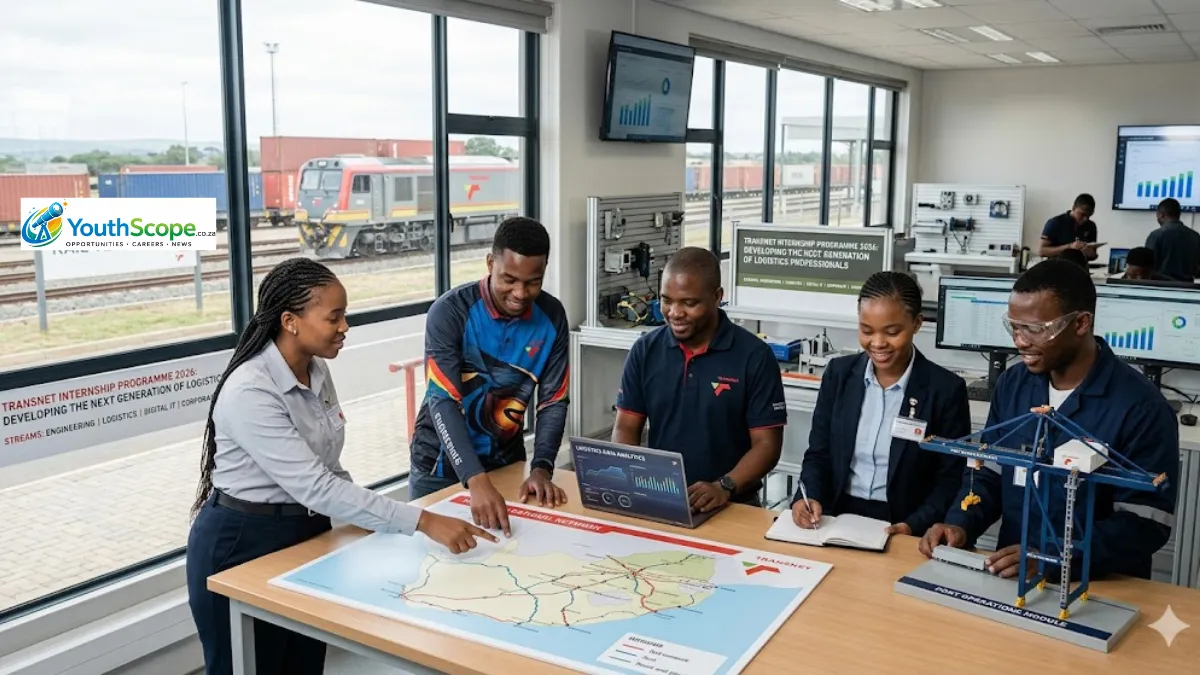
Transnet Internship Programme 2026 – Graduate Opportunities Now Open

Introduction

The Transnet Internship Programme 2026 is one of the most important graduate development opportunities in South Africa, offering unemployed graduates a structured pathway into the country’s logistics, transport, engineering, and corporate sectors. As a major state-owned enterprise responsible for rail, ports, and pipelines, Transnet plays a key role in the South African economy, and its internship programmes are designed to develop the next generation of skilled professionals.

Each year, thousands of graduates apply for Transnet internships due to their strong reputation, structured training, and real workplace exposure. The 2026 intake continues this tradition, focusing on youth empowerment, skills development, and employability.

What is the Transnet Internship Programme 2026?

The Transnet Internship Programme 2026 is a 24-month structured graduate development programme that combines theoretical training with hands-on workplace experience.

The programme is designed for unemployed South African graduates who want to gain practical experience in real working environments while being mentored by industry professionals.

According to official programme structures, interns are placed in various departments depending on their qualifications and career interests, including engineering, finance, IT, logistics, and corporate services.

Programme Overview and Structure

The internship is not just work experience—it is a structured learning journey.

Key features include:

  • Duration: 24 months (2 years)
  • Structured training plan
  • Workplace exposure in Transnet divisions
  • Mentorship from experienced professionals
  • Performance assessments every 6 months

The goal is to improve employability by combining academic knowledge with real-world industry experience.

Fields Available in Transnet Internship Programme 2026

Transnet offers opportunities across multiple disciplines, depending on operational needs and graduate qualifications.

1. Engineering and Technical Fields

  • Mechanical Engineering
  • Electrical Engineering
  • Civil Engineering
  • Industrial Engineering

2. Business and Corporate Fields

  • Finance
  • Accounting
  • Human Resources
  • Business Management

3. ICT and Data Fields

  • Information Technology
  • Computer Science
  • Data Science
  • Systems Analysis

4. Logistics and Supply Chain

  • Freight Logistics
  • Supply Chain Management
  • Operations Management

5. Risk and Compliance

  • Risk Management
  • Safety Management
  • Environmental Compliance

These fields reflect Transnet’s broad operational scope across South Africa’s transport and logistics infrastructure.

Minimum Requirements for Transnet Internship 2026

To qualify for the programme, applicants must meet specific academic and personal criteria.

Academic Requirements

Applicants must have:

  • A Diploma or Degree (NQF Level 6 or higher)
  • Qualification from a recognised university or university of technology
  • Relevant field of study aligned with available internship roles

General Requirements

  • Must be a South African citizen
  • Must be unemployed at the time of application
  • Must have no prior full-time work experience in the field
  • Age typically between 18 and 35 years

Personal Attributes

Transnet looks for candidates who are:

  • Motivated and eager to learn
  • Team players
  • Good communicators
  • Responsible and disciplined
  • Able to work in structured environments

Application Process for Transnet Internship 2026

Applying for the Transnet Internship Programme is done online through official recruitment portals.

Step-by-Step Guide:

  1. Prepare your documents:
    • Certified ID copy
    • Updated CV
    • Academic transcript or qualification certificate
  2. Search for the correct internship vacancy based on your qualification
  3. Complete the online application form carefully
  4. Submit before the closing date
  5. Wait for shortlisting feedback
  6. Attend assessments or interviews if selected

Important: Only online applications are accepted, and late submissions are not considered.

Selection Process

The Transnet selection process is competitive and includes several stages:

  • Application screening
  • Shortlisting based on qualifications
  • Psychometric testing
  • Interviews
  • Medical and background checks (if required)

Only candidates who meet all criteria and pass assessments are considered for placement.

Benefits of the Transnet Internship Programme

The Transnet Internship Programme 2026 offers several key benefits:

1. Real Work Experience

Interns gain exposure to real operational environments in one of South Africa’s largest state-owned enterprises.

2. Structured Training

The programme includes formal training sessions combined with on-the-job learning.

3. Mentorship

Each intern is guided by experienced professionals in their field.

4. Career Development

The programme significantly improves employability and career readiness.

5. Networking Opportunities

Interns interact with professionals across different sectors of Transnet.

Closing Dates for Transnet Internship 2026

Closing dates vary depending on the specific internship post, but recent intakes show:

  • Some programmes closing between March and May 2026
  • Example: Certain 2026 graduate programmes close around 6 May 2026

Applicants are strongly encouraged to apply early, as positions fill quickly.

Why the Transnet Internship Programme is Important

South Africa faces high youth unemployment, especially among graduates with no experience. The Transnet Internship Programme helps bridge this gap by providing:

  • Skills development
  • Workplace exposure
  • Industry training
  • Pathways to permanent employment

This makes it one of the most valuable graduate opportunities in the country.

You can also Check:

FAQ – Transnet Internship Programme 2026

1. Who can apply for Transnet internships?

Unemployed South African graduates with a diploma or degree (NQF Level 6 or higher).

2. Is the internship paid?

Yes, interns typically receive a monthly stipend during the programme.

3. Do I need experience to apply?

No, the programme is designed for graduates with little or no work experience.

4. How long is the internship?

It runs for 24 months (2 years).

5. Where are internships based?

Mostly in Johannesburg, Durban, Cape Town, and other Transnet operational areas.

6. When should I apply?

As soon as applications open, ideally before March–May 2026 deadlines.

Conclusion

The Transnet Internship Programme 2026 is a powerful gateway for South African graduates looking to enter the workforce. With structured training, mentorship, and real-world experience, it provides a strong foundation for long-term career growth in logistics, engineering, ICT, and corporate services.

If you meet the requirements, applying early is essential due to high competition and limited spaces.

IEC Opens 2026 Civic Education & Research Internships With 24-Month Programme in Centurion

April 2026 — Electoral Commission of South Africa has opened applications for its 2026 Internship Programme, offering two positions in Civic Education and Research at its National Office in Centurion.

The 24-month internship is designed to give unemployed graduates practical experience within a Chapter 9 constitutional institution, supporting democratic processes, public participation, and stakeholder engagement.

With a structured development approach and a monthly stipend, the programme is drawing interest from graduates looking to build careers in public administration and governance.

Internship Focused on Civic Education and Democratic Processes

The programme is hosted within the Outreach division of the Electoral Commission of South Africa, specifically in Civic Education and Research.

Interns will support initiatives aimed at:

  • Promoting voter education and awareness
  • Conducting research related to democratic participation
  • Engaging with stakeholders across different sectors

This makes the internship particularly relevant for graduates interested in governance, public policy, and civic engagement.

Two Internship Positions Available

The intake includes:

  • Position: Intern – Civic Education & Research
  • Number of Posts: 2

These roles are structured to provide both administrative and research-related experience within a national institution.

Programme Duration and Stipend

  • Duration: 24 months
  • Stipend: R10 144.04 per month

The two-year duration allows interns to gain meaningful experience and develop practical skills in a professional environment.

Key Responsibilities and Learning Areas

Successful candidates will assist with a range of activities, including:

  • Administrative support for Civic Education and Research
  • Working with the Outreach Management System (OMS)
  • Stakeholder coordination and communication
  • Preparing reports, presentations, and meeting minutes
  • Managing documentation and filing systems
  • Supporting outreach campaigns and research projects
  • Assisting with logistics and general office operations

This combination of tasks provides a well-rounded introduction to both administrative and research functions in the public sector.

Minimum Requirements for Applicants

To qualify, applicants must:

  • Have Matric / Grade 12 / N3 / NTC Level 4
  • Hold a Bachelor’s Degree or National Diploma in:
    • Public Administration
    • Political Sciences
  • Be 35 years old or younger
  • Be unemployed

Applicants must also meet the following conditions:

  • Must not have previously worked in their field of study
  • Must not have participated in an internship programme before

These criteria are aimed at first-time entrants into the workforce.

Skills and Competencies Required

Electoral Commission of South Africa is looking for candidates with:

  • Strong written and verbal communication skills
  • Computer literacy (Microsoft Office)
  • Ability to learn new systems and tools
  • Good organisational and time management skills
  • Ability to work both independently and in teams
  • Professionalism and strong interpersonal skills

These competencies reflect the demands of working in a structured and public-facing institution.

Important Conditions to Note

Applicants should be aware of the following:

  • Preference will be given to persons with disabilities
  • Candidates must not have a high political party profile
  • Background checks will include qualification, criminal, and credit verification
  • Only shortlisted candidates will be contacted

If no feedback is received by 07 June 2026, applicants should consider their application unsuccessful.

Required Documents

Candidates must submit:

  • Updated comprehensive CV
  • Certified copies of qualifications
  • Certified copy of ID document
  • Driver’s licence (if applicable)

Incomplete applications will not be considered.

How to Apply

Applications must be submitted through the official Electoral Commission of South Africa recruitment platform.

Applicants are encouraged to prepare all required documents in advance and ensure accuracy before submission.

Why This Internship Stands Out

Internships within constitutional institutions are limited and highly competitive.

What makes this opportunity notable is:

  • Placement within a Chapter 9 institution
  • Direct involvement in civic education and democratic processes
  • Extended 24-month development period
  • Structured exposure to research and stakeholder engagement

For graduates interested in governance and public sector careers, this programme offers a credible and impactful starting point.

You can also Check:

Final Outlook

The 2026 Internship Programme from Electoral Commission of South Africa provides a valuable opportunity for graduates to gain experience in civic education, research, and public administration.

With two positions available and a strong focus on democratic engagement, the programme is well-suited to candidates looking to contribute to South Africa’s governance landscape.

Applicants who meet the requirements should submit complete applications before the closing date.

FAQ: IEC Internship Programme 2026

1. How many positions are available?
There are two internship positions available.

2. What is the closing date?
Applications close on 21 April 2026.

3. How long is the internship?
The programme runs for 24 months.

4. What is the monthly stipend?
R10 144.04 per month.

5. Who can apply?
Unemployed graduates in Public Administration or Political Sciences who have not previously completed an internship.

6. Where is the internship located?
At the IEC National Office in Centurion.

7. When will I know if I am shortlisted?
If you do not receive feedback by 07 June 2026, consider your application unsuccessful.

GIBB Opens 2026 Graduate Municipal Engineer Role With Focus on Infrastructure Design and Development

April 2026 — GIBB has opened applications for its 2026 Graduate Engineer: Municipal position, offering civil engineering graduates an opportunity to work on real-world infrastructure projects across South Africa.

The role sits within the company’s Integrated Infrastructure (WIIG) Sector and is aimed at early-career engineers looking to build technical expertise in municipal infrastructure design, planning, and project coordination.

Unlike short-term internships, this is a permanent entry-level position, making it a strong career starting point for graduates in civil engineering.

Graduate Role Focused on Municipal Infrastructure Development

The Graduate Municipal Engineer position at GIBB is designed to support infrastructure projects that directly impact communities.

Successful candidates will contribute to the design and delivery of essential public infrastructure, including:

  • Road networks
  • Stormwater systems
  • Water supply and sanitation infrastructure

This places graduates at the centre of development projects that support urban growth and service delivery.

Exposure to Real Engineering Projects From the Start

Graduates joining GIBB will be involved in practical engineering work from early in their careers.

Key areas of exposure include:

  • Urban infrastructure planning and design
  • Project coordination and technical support
  • Engineering problem-solving in live project environments
  • Collaboration with multidisciplinary teams

The role also includes participation in both greenfield (new developments) and brownfield (existing infrastructure upgrades) projects.

Core Responsibilities of the Role

The Graduate Municipal Engineer will be expected to:

  • Design and coordinate civil infrastructure systems
  • Prepare and review technical reports and presentations
  • Develop contract documentation for engineering projects
  • Ensure compliance with quality management standards
  • Investigate infrastructure challenges and recommend solutions
  • Contribute to project delivery within defined timelines

Graduates may also be required to take ownership of certain deliverables under supervision, building independence over time.

Minimum Requirements and Eligibility

To be considered, applicants must meet the following criteria:

  • Hold a BSc Eng or BEng Degree in Civil Engineering
  • Have 0–3 years of experience in civil infrastructure design (advantageous but not required)

This makes the opportunity suitable for both recent graduates and those with limited early-career experience.

Key Competencies in Focus

GIBB is seeking candidates who demonstrate:

  • Strong technical and analytical ability
  • Attention to detail in engineering design
  • Effective communication and teamwork
  • Problem-solving and decision-making skills
  • Good planning and organisational capabilities
  • An innovative and proactive mindset

These competencies reflect the demands of working in a professional engineering consulting environment.

Skills Development and Career Benefits

Graduates can expect to build a strong technical foundation through:

  • Hands-on infrastructure design experience
  • Exposure to large-scale municipal projects
  • Development of report writing and presentation skills
  • Opportunities to work with experienced engineers and project teams

As a permanent role, this position also offers long-term career growth within the organisation.

Employment Details

  • Company: GIBB
  • Position: Graduate Engineer: Municipal
  • Reference Number: GIB-396
  • Job Type: Permanent
  • Work Level: Graduate / Entry-Level
  • Location: South Africa
  • Salary: Market-related
  • Employment Equity: Applicable

Applicants should ensure they include all required documentation when applying.

Required Documents

Candidates must prepare:

  • Certified copies of qualifications
  • Academic transcripts

Submitting complete and accurate documentation is essential for consideration.

How to Apply

Click here to apply for GIBB Graduate Engineer: Municipal 2026:

Required Documents:

  • Certified copies of qualifications
  • Academic transcripts

Why This Opportunity Stands Out

Graduate engineering roles that combine permanent employment with practical project exposure are highly valued in the industry.

What makes this opportunity from GIBB notable includes:

  • Direct involvement in infrastructure development
  • Exposure to real engineering challenges
  • Work on projects that impact communities
  • Long-term career growth potential

For civil engineering graduates, this role offers a meaningful entry point into the consulting and infrastructure development space.

Final Outlook

The 2026 Graduate Engineer: Municipal role at GIBB provides a strong foundation for graduates looking to build careers in civil infrastructure and municipal engineering.

With practical experience, technical development, and exposure to impactful projects, the position offers more than a typical graduate role.

Candidates who meet the requirements are encouraged to prepare their applications and submit them through the official platform.

You can also Check:

FAQ: GIBB Graduate Engineer Municipal 2026

1. Is this an internship or permanent role?
This is a permanent graduate-level position.

2. What qualification is required?
A BSc Eng or BEng in Civil Engineering.

3. Do I need experience to apply?
No, but up to 3 years of experience is advantageous.

4. What kind of projects will I work on?
Municipal infrastructure such as roads, water systems, and stormwater networks.

5. Where is the job located?
The position is based in South Africa, depending on project needs.

6. What documents are required?
Certified qualifications and academic transcripts.

7. What is the reference number?
GIB-396.

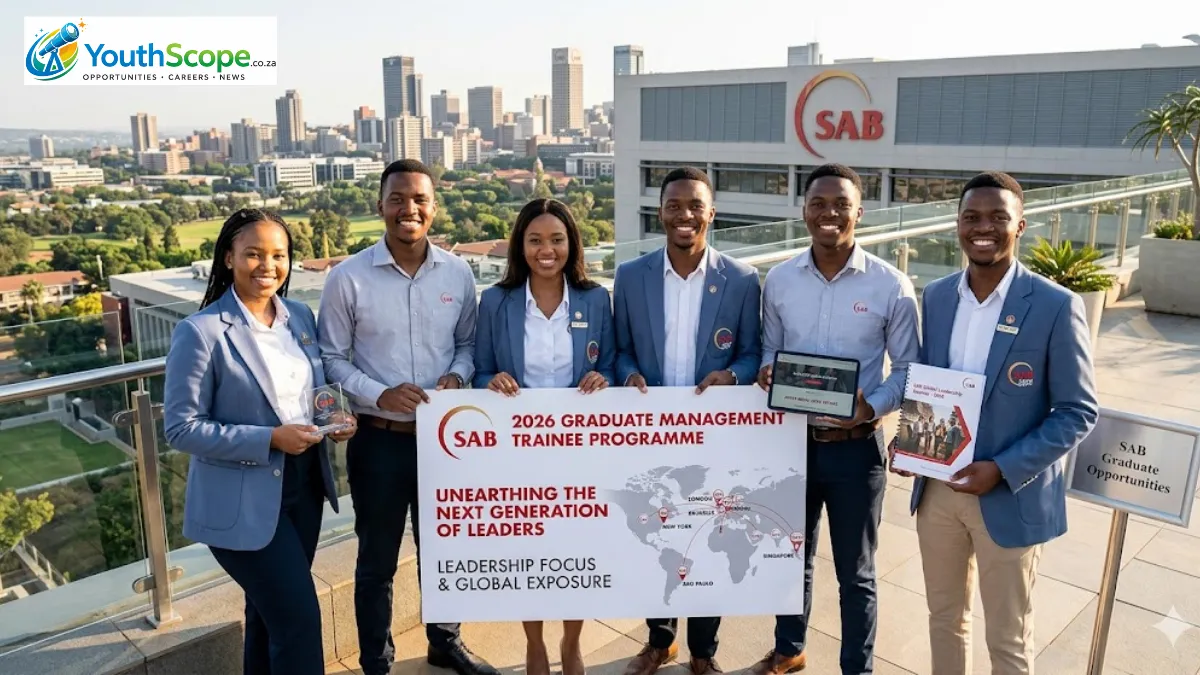
SAB Opens 2026 Graduate Management Trainee Programme With Leadership Focus and Global Exposure

April 2026 — South African Breweries (SAB) has officially opened applications for its 2026 Graduate Management Trainee (GMT) Programme, offering recent graduates a fast-tracked pathway into leadership roles within one of the world’s largest brewing groups.

Based in Johannesburg, the programme is widely recognised as one of South Africa’s most competitive graduate opportunities, combining structured development, rotational exposure, and real business impact from the outset.

With a legacy spanning more than three decades, the GMT programme continues to attract ambitious graduates seeking careers in global business environments.

Leadership Development Programme Built for Future Managers

The GMT Programme at South African Breweries is designed to identify and develop high-potential graduates into future leaders.

Rather than focusing on entry-level support roles, the programme places participants into high-impact environments where they are expected to contribute to real business outcomes.

Graduates will take part in:

  • Structured leadership development training
  • Rotational placements across key departments
  • Exposure to strategic decision-making processes
  • Hands-on project work in operational environments

This approach positions the programme as a long-term leadership pipeline rather than a standard graduate intake.

Exposure Across Sales, Supply Chain, and Business Operations

Participants in the GMT Programme will rotate across multiple business areas, gaining a broad understanding of how the organisation operates.

Key exposure areas include:

  • Sales (front-line roles): Direct engagement with markets and customers
  • Supply Chain: Operations within breweries and distribution networks
  • Additional business functions: Based on organisational needs

This cross-functional experience enables graduates to develop both commercial and operational insight.

Programme Structure Focused on Strategic Growth

The programme is built around three key strategic pillars:

  • Leading and growing product categories
  • Digitising and monetising business ecosystems
  • Optimising operations for efficiency and performance

Graduates will experience these strategies in action through placements in field offices, breweries, and operational sites.

Global Exposure Through International Network

As part of a global brewing group operating in nearly 50 countries, South African Breweries offers graduates exposure beyond local markets.

Participants benefit from:

  • Insight into international business operations
  • Collaboration within a global organisation
  • Opportunities to learn from diverse teams and markets

This global perspective is a key attraction for candidates aiming to build international careers.

Who Should Apply?

The programme is targeted at graduates who demonstrate strong leadership potential and a willingness to grow in a dynamic environment.

South African Breweries is looking for candidates who:

  • Take ownership and accountability
  • Show strong problem-solving ability
  • Work effectively in teams
  • Are ambitious, curious, and driven
  • Are adaptable and open to relocation

These qualities reflect the demands of a fast-paced, performance-driven business environment.

Minimum Requirements and Eligibility

To be considered, applicants must:

  • Hold a Bachelor’s Degree
  • Be able to communicate effectively in English
  • Have no more than 2 years of full-time work experience
  • Have little to no formal work experience (internships are advantageous)

This makes the programme suitable for recent graduates or those in the early stages of their careers.

What Graduates Will Gain

Participants in the GMT Programme can expect a range of professional and career benefits:

  • Accelerated leadership development
  • Practical, hands-on business experience
  • Exposure to senior leadership and decision-making
  • A full-time role upon successful completion
  • Access to a strong alumni network of GMT graduates

The combination of training, experience, and post-programme placement makes this one of the more career-focused graduate programmes available.

Application Details at a Glance

  • Company: South African Breweries (SAB)
  • Programme: Graduate Management Trainee (GMT) Programme
  • Location: Johannesburg
  • Application Closing Date: 30 June 2026
  • Job Type: Full-time graduate programme

Applications must be submitted through the official SAB careers platform.

Why This Programme Is Highly Competitive

Graduate programmes that offer both leadership development and guaranteed placement are relatively rare.

What makes this opportunity from South African Breweries stand out includes:

  • Strong global brand and reputation
  • Structured leadership pipeline
  • Cross-functional rotational exposure
  • International business context
  • Long-term career growth potential

For many graduates, the GMT Programme represents a fast-track entry into management within a global company.

You can also Check:

Final Outlook

The 2026 Graduate Management Trainee Programme from South African Breweries offers a high-impact opportunity for graduates looking to build leadership careers in a global business environment.

With its focus on real-world experience, strategic exposure, and long-term development, the programme stands out as a premium graduate pathway in South Africa.

Candidates who meet the requirements are encouraged to prepare strong applications and apply before the closing date.

FAQ: SAB Graduate Management Trainee Programme 2026

1. What is the closing date for applications?
Applications close on 30 June 2026.

2. Do I need work experience to apply?
No. The programme is designed for recent graduates, though internships are beneficial.

3. Where is the programme based?
The programme is based in Johannesburg, with potential exposure to various operational locations.

4. What degree is required?
A Bachelor’s Degree in any relevant field.

5. Will I get a job after the programme?
Yes, successful completion leads to full-time placement.

6. What areas will I work in?
Sales, supply chain, and other business functions.

7. Is relocation required?
Yes, candidates must be willing to relocate if necessary.

Bidfreight Port Operations Opens 2026 Internships Across South Africa’s Major Ports

April 2026 — Bidfreight Port Operations (BPO), a division of Bidvest Group Ltd, has opened applications for its 2026 Internship Programme, offering unemployed South African youth a structured entry into the port logistics and maritime sector.

The 12-month programme, set to begin on 1 July 2026, will place successful candidates across key ports including Durban, Richards Bay, Gqeberha, and Saldanha Bay—providing hands-on exposure to real-world port operations.

Internship Programme Designed for Maritime and Logistics Careers

The BPO Internship Programme is aimed at graduates looking to build careers in shipping, logistics, and port operations.

Through structured workplace experience, participants will gain insight into how large-scale port environments operate, including cargo handling, transport coordination, and terminal management.

Unlike purely theoretical internships, this programme focuses on practical exposure within active port operations.

Internship Fields Available

Bidfreight Port Operations is offering opportunities across multiple disciplines, allowing graduates from different academic backgrounds to apply.

Available fields include:

  • Finance / Accounting
  • Human Resources
  • SHERQ (Safety, Health, Environment, Risk, and Quality)
  • Mechanical Engineering

This range reflects the diverse skill sets required to support modern port and logistics operations.

Locations Across Major South African Ports

Successful applicants will be placed at one of the following operational sites:

  • Durban
  • Richards Bay
  • Gqeberha
  • Saldanha Bay

Each location plays a strategic role in South Africa’s logistics network, giving interns exposure to high-volume trade and maritime activity.

Programme Duration and Start Date

  • Start Date: 01 July 2026
  • Duration: 12 months
  • Contract Type: Fixed-term

The one-year structure provides sufficient time for participants to gain meaningful experience and develop industry-relevant skills.

Minimum Requirements for Applicants

To qualify, candidates must meet the following criteria:

  • Be a South African citizen
  • Be between 18 and 29 years old
  • Be currently unemployed
  • Hold a relevant tertiary qualification
  • Achieve a minimum 60% academic average

These requirements are designed to target early-career graduates who are ready to transition into the workplace.

Practical Exposure in Port Operations

Interns will gain hands-on experience in key areas of port logistics, including:

  • Stevedoring (cargo loading and unloading)
  • Warehousing and storage operations
  • Terminal management systems
  • Transport and shipping coordination

This exposure provides a comprehensive view of how goods move through ports and supply chains.

Programme Benefits and Career Value

Participants in the programme can expect:

  • Real-world experience in a professional port environment
  • Exposure to maritime logistics systems and processes
  • Development of technical and operational skills
  • Improved employability in logistics and shipping industries

While the programme does not guarantee permanent employment, it provides a strong foundation for future roles within the sector.

Important Application Details

  • Application Closing Date: 30 April 2026
  • Application Method: Online only
  • Late Applications: Not accepted

Applicants are encouraged to apply early and ensure all required information is submitted correctly.

Why This Internship Stands Out

Internships in the maritime and port logistics sector are relatively limited compared to other industries.

What makes this opportunity from Bidfreight Port Operations notable is:

  • Placement across multiple major ports
  • Exposure to real operational environments
  • Availability of multiple career fields
  • Alignment with South Africa’s logistics and trade infrastructure

For graduates interested in logistics, engineering, or supply chain operations, this programme offers a practical and industry-relevant starting point.

How to Apply

Click here to apply for Bidfreight Port Operations Internship Programme 2026

Important:

  • Applications must be submitted online only
  • Late applications will not be considered

Final Outlook

The 2026 Internship Programme from Bidfreight Port Operations presents a valuable opportunity for young graduates to gain hands-on experience in one of South Africa’s most important economic sectors.

With placements across key ports and exposure to core logistics operations, the programme is well-suited to candidates looking to build careers in shipping, transport, and maritime services.

Graduates who meet the criteria should prepare their applications and submit them online before the closing date.

You can also Check:

FAQ: Bidfreight Port Operations Internships 2026

1. When do applications close?
Applications close on 30 April 2026.

2. How long is the internship?
The programme runs for 12 months.

3. Where will interns be placed?
At ports in Durban, Richards Bay, Gqeberha, or Saldanha Bay.

4. What fields are available?
Finance, HR, SHERQ, and Mechanical Engineering.

5. Is permanent employment guaranteed?
No, the programme does not guarantee permanent placement.

6. What is the minimum academic requirement?
A relevant qualification with at least a 60% average.

7. How do I apply?
Applications must be submitted online via the official application link.

West Coast District Municipality Opens 2026 Financial Services Internships With Treasury and Auditing Exposure

April 2026 — West Coast District Municipality has opened applications for its 2026 Financial Services Internship Programme, offering three positions to unemployed graduates seeking practical experience in municipal finance and auditing.

The opportunity, based in Moorreesburg in the Western Cape, forms part of the Municipal Finance Management Internship Programme (MFMIP), a structured initiative aimed at developing financial skills within local government.

With a competitive stipend and direct exposure to municipal budgeting and treasury functions, the programme is attracting attention from graduates interested in public sector finance careers.

Three Internship Positions Available in Financial Services

The internship intake includes a total of three positions within the Financial Services department:

  • Internal Auditing — 1 position
  • Finance & Supply Chain Management — 2 positions

Each role is designed to provide hands-on experience in core municipal finance functions, helping graduates build practical skills aligned with government financial systems.

Programme Structured Around Municipal Finance Training

The internship is delivered under the Municipal Finance Management Internship Programme (MFMIP), which aligns with the requirements of South Africa’s Municipal Finance Management Act (MFMA).

Through this structure, participants will gain exposure to:

  • Municipal budgeting processes
  • Treasury operations
  • Financial reporting and controls
  • Risk management and auditing practices

Unlike general internships, this programme is specifically tailored to prepare graduates for careers in municipal finance and governance.

Contract Duration and Stipend Details

Successful candidates will be appointed on a 12-month contract, with the possibility of renewal for an additional year based on performance and programme requirements.

The stipend ranges between:

  • R96 000 and R144 000 per annum (all-inclusive)

This makes the programme both a learning opportunity and a financially supportive entry point into the public sector.

Minimum Requirements for Applicants

To be considered, applicants must meet the following criteria:

  • Be a South African citizen
  • Be between 21 and 35 years old
  • Hold a 3-year Bachelor’s Degree or National Diploma in:
    • Accounting
    • Economics
    • Finance

Applicants must also have studied at least one of the following as a major:

  • Risk Management
  • Auditing

In addition, candidates must be willing to sign an internship agreement and commit to the full duration of the programme.

Practical Experience Across Key Financial Areas

Interns will work within the Municipal Budget and Treasury Office, gaining exposure to real financial operations within local government.

Key learning areas include:

  • Internal audit processes and compliance
  • Supply chain and procurement systems
  • Financial administration and reporting
  • Budget planning and execution

This experience is designed to build both technical and administrative competencies required in public finance roles.

Programme Benefits and Career Value

The internship offers several long-term advantages for graduates:

  • Practical experience in government finance systems
  • Structured training aligned with MFMA regulations
  • Opportunity to earn credits toward a Municipal Finance Management qualification
  • Development of professional skills in auditing and financial administration

For graduates aiming to build careers in public sector finance, the programme provides a recognised entry pathway into municipal financial management.

Important Application Conditions

West Coast District Municipality has outlined several key conditions for applicants:

  • Full participation in training and workplace assignments is required
  • All municipal policies and procedures must be followed
  • Late applications will not be accepted
  • Applications via fax or email will not be considered

Applicants who do not receive feedback within 60 days of the closing date should consider their application unsuccessful.

Required Documents Checklist

Candidates must prepare and submit the following:

  • Completed application form
  • Comprehensive CV
  • Certified copies of:
    • Qualifications
    • South African ID
    • Driver’s licence (if applicable)

Incomplete applications may not be considered, so attention to documentation is essential.

How to Apply

Applications can be submitted through the official municipal vacancies page:

Alternatively, candidates may submit applications in person or by post to:

Human Resources: Recruitment and Selection
West Coast District Municipality
58 Lang Street
Moorreesburg, 7310

Enquiries: Ms PS Boer – 022 433 8400

Why This Internship Is Worth Considering

Public sector internships are often highly competitive, particularly those linked to structured national programmes like the MFMIP.

What makes this opportunity stand out is its combination of:

  • Direct exposure to municipal finance systems
  • Structured, accredited training
  • Competitive stipend
  • Clear alignment with long-term public finance careers

For graduates interested in auditing, budgeting, or government finance, this programme offers a practical and credible starting point.

Final Outlook

The 2026 Financial Services Internship Programme from West Coast District Municipality provides a focused opportunity for graduates to gain real-world experience in municipal finance and treasury operations.

With three positions available and a structured development framework, the programme is well-suited to candidates seeking to enter the public sector with practical skills and recognised training.

Applicants who meet the requirements are encouraged to prepare their documents carefully and submit their applications before the deadline.

You can also Check:

FAQ: West Coast District Municipality Internships 2026

1. How many internship positions are available?
There are three positions available in Financial Services.

2. What is the application closing date?
Applications close on 17 April 2026 at 14h00.

3. Where is the internship located?
The programme is based in Moorreesburg, Western Cape.

4. What qualifications are required?
A Bachelor’s Degree or National Diploma in Accounting, Economics, or Finance with relevant majors.

5. What is the stipend?
Between R96 000 and R144 000 per year.

6. How long does the internship last?
12 months, with the possibility of extension.

7. Can I apply via email?
No, only online or physical applications are accepted.

Standard Bank Opens 2026 CIB Finance Graduate Programme for Postgraduates Across Diverse Fields

April 2026 — Standard Bank of South Africa has opened applications for its 2026 Corporate and Investment Banking (CIB) Finance Graduate Programme, targeting postgraduate students from a wide range of academic backgrounds.

Unlike traditional finance graduate roles, this programme is not limited to candidates with strictly finance-focused degrees. Instead, it offers a broader entry point into banking, with a strong emphasis on practical exposure, strategic finance, and long-term development within one of South Africa’s leading financial institutions.

The programme runs between 24 and 36 months and is designed to build future finance professionals who can operate effectively in complex, high-performance banking environments.

Finance Role Extends Beyond Traditional Functions

According to Standard Bank of South Africa, the CIB Finance function plays a central role in protecting financial resources, strengthening controls, and supporting business decision-making.

For graduates, this means the opportunity goes beyond routine financial reporting. Instead, participants will gain exposure to:

  • Financial performance analysis
  • Risk identification and management
  • Governance and control frameworks
  • Market dynamics and business strategy
  • Innovation and data-driven decision-making

This broader scope reflects how finance roles within Corporate and Investment Banking have evolved to become more strategic and integrated with overall business performance.

Programme Built Around Real Business Impact

The 2026 intake is structured as a full-time development programme, placing graduates directly into the Corporate and Investment Banking environment from the outset.

Rather than shadowing senior staff, participants will engage in meaningful work that contributes to real business outcomes. This includes supporting financial processes, analysing data, and working alongside experienced professionals in high-impact areas of the bank.

This approach positions the programme as a career-building opportunity rather than a short-term graduate placement.

Open to Diverse Postgraduate Degrees

One of the defining features of this programme is its openness to candidates from varied academic backgrounds.

Standard Bank of South Africa confirms that applicants must have completed—or be completing—a postgraduate qualification in 2026. Importantly, degrees are not limited strictly to finance, although auditing-focused qualifications are excluded.

This creates opportunities for graduates in fields such as:

  • Economics and business-related disciplines
  • Engineering and quantitative fields
  • Data-focused or analytical programmes
  • Other relevant postgraduate studies aligned to finance and problem-solving

However, candidates are expected to demonstrate how their academic background connects to financial analysis, business insight, or decision-making.

Minimum Requirements and Eligibility Criteria

To be considered for the programme, applicants must meet the following requirements:

  • Be a South African citizen
  • Hold or be completing a postgraduate qualification in 2026
  • Have no more than two years of work experience
  • Achieve a minimum academic average of 65% across all years of study
  • Submit full university transcripts as part of the application

Documentation plays a critical role in the application process. Missing transcripts or incomplete academic records may affect a candidate’s chances, even if they meet the academic threshold.

Skills and Attributes in Focus

Standard Bank of South Africa is not only assessing academic performance but also looking for graduates with strong personal and professional attributes.

Key qualities include:

  • Analytical and critical thinking
  • Curiosity and willingness to learn
  • Resilience in high-performance environments
  • Strong communication skills
  • Ability to collaborate effectively
  • Confidence and accountability

The bank also highlights the importance of financial awareness and a genuine interest in markets, business performance, and strategic decision-making.

What Graduates Can Expect

Participants in the CIB Finance Graduate Programme will gain direct exposure to the inner workings of a major banking institution.

Key benefits include:

  • Hands-on experience in Corporate and Investment Banking finance
  • Exposure to governance, controls, and financial strategy
  • Opportunities to work on real business challenges
  • Development of technical and analytical skills
  • Insight into how finance supports organisational performance

This level of exposure is particularly valuable for graduates aiming to build long-term careers in finance, banking, or investment-related fields.

Programme Duration Signals Long-Term Development

The programme runs for 24 to 36 months, offering a longer development cycle than many graduate programmes.

This extended timeframe allows participants to:

  • Build deeper technical expertise
  • Gain broader exposure across finance functions
  • Develop professional confidence and decision-making skills

It also reflects Standard Bank of South Africa’s commitment to developing future leaders within its Corporate and Investment Banking division.

Application Details at a Glance

  • Company: Standard Bank of South Africa
  • Business Segment: Corporate & Investment Banking
  • Programme: CIB Finance Graduate Programme
  • Job Type: Full-time
  • Reference ID: 80450756A-0001
  • Programme Duration: 24–36 months
  • Location: Johannesburg (30 Baker Street)
  • Application Method: Official Standard Bank careers portal

Applicants are encouraged to ensure all required documents, particularly academic transcripts, are uploaded before submission.

Why This Programme Is Drawing Attention

Graduate programmes within Corporate and Investment Banking are among the most competitive in the financial sector.

What makes this opportunity stand out is its combination of:

  • Broad eligibility across postgraduate disciplines
  • Strong focus on strategic finance and innovation
  • Practical, hands-on exposure from day one
  • Extended development period
  • Clear alignment with long-term career growth

For graduates who may not come from a traditional finance background but have strong analytical capabilities and interest in banking, this programme offers a rare entry point.

Final Outlook

The 2026 CIB Finance Graduate Programme from Standard Bank of South Africa presents a compelling opportunity for postgraduates seeking a meaningful start in Corporate and Investment Banking.

With its emphasis on real-world experience, strategic finance, and openness to diverse academic backgrounds, the programme is positioned as more than a standard graduate intake.

Candidates who meet the requirements are advised to prepare thoroughly, align their applications with the programme’s expectations, and submit through the official portal while applications remain open.

You can also Check:

FAQ: Standard Bank CIB Finance Graduate Programme 2026

1. Who can apply for this programme?
Postgraduate students completing their qualifications in 2026 or those who have already graduated, with up to two years of work experience.

2. Do I need a finance degree?
No. Diverse postgraduate degrees are accepted, although auditing-focused qualifications are excluded.

3. What is the minimum academic requirement?
A minimum average of 65% across all years of study.

4. How long does the programme run?
Between 24 and 36 months.

5. Where is the programme based?
At Standard Bank’s Corporate and Investment Banking offices in Johannesburg.

6. What documents are required?
Applicants must submit full university transcripts along with their application.

7. What kind of experience will I gain?
Hands-on exposure to financial analysis, governance, risk management, and business performance within a banking environment.

Standard Bank Opens 2026 Credit Operations Graduate Programme With Permanent Roles and 18-Month Rotation

April 2026 — Standard Bank of South Africa has officially opened applications for its 2026 Personal & Private Banking (PPB) Credit Operations Graduate Programme, offering qualifying Honours graduates a structured pathway into banking operations with permanent employment from the start.

The programme, which runs for 18 months, is positioned as a hands-on development opportunity rather than a traditional graduate intake. With exposure to credit operations, risk, governance, analytics, and business transformation, the initiative is attracting attention from graduates seeking long-term careers in the banking sector.

Structured Graduate Programme Focuses on Real Operational Experience

According to Standard Bank of South Africa, the PPB Credit Operations Graduate Programme is designed to develop future operational practitioners within its Personal & Private Banking division.

Unlike observation-based graduate schemes, this programme is built around active participation in business processes. Graduates will rotate across multiple operational areas, gaining first-hand experience in how regulated banking environments function.

The focus extends beyond theory to include:

  • Operational processes and execution
  • Governance and compliance frameworks
  • Decision-making in regulated environments
  • Continuous process improvement and automation

This structure reflects a growing demand in banking for graduates who understand both systems and operational discipline.

Permanent Employment From Day One

One of the programme’s most notable features is its employment model.

Successful applicants join Standard Bank of South Africa as full-time, permanent employees from the beginning of the programme. This distinguishes it from many graduate programmes that offer fixed-term contracts without guaranteed long-term placement.

The combination of permanent employment and structured development provides a stronger foundation for career growth within the organisation.

Rotation Across Credit Operations and Risk Environments

The 18-month programme is built around a rotational model, allowing graduates to gain exposure to multiple areas within credit operations.

These include:

  • Secured and unsecured credit operations
  • Debt review and collections environments
  • Deceased and insolvent estates
  • Debt Care Centre operations
  • Business transformation and process improvement
  • Supplier and risk governance
  • Data analytics and reporting

This breadth of exposure enables graduates to understand how different functions connect within a large banking system.

Who Can Apply?

The programme is targeted at graduates who have completed—or are in the process of completing—an Honours degree or Postgraduate Diploma aligned with operations, credit, or risk.

Accepted undergraduate degrees include:

  • BA
  • BCom
  • BEng
  • BSc
  • LLB

Relevant postgraduate specialisations include:

  • Operations Management or Business Operations
  • Credit Management or Banking Operations
  • Risk Management or Operational Risk
  • Industrial Engineering (process-focused)
  • Business Administration (operations-focused)

Fields such as Accounting, Law, and Economics may also be considered if supported by appropriate postgraduate study aligned to operational environments.

Minimum Requirements and Application Criteria

To be eligible, applicants must:

  • Be a South African citizen
  • Have no more than 12–18 months of work experience
  • Hold an Honours degree or Postgraduate Diploma
  • Complete their qualification by 31 December 2026
  • Submit a Matric certificate, ID copy, and full academic transcripts

Attention to documentation is critical. Missing or incomplete uploads may impact application success, even for otherwise qualified candidates.

What Skills Is Standard Bank Looking For?

Standard Bank of South Africa indicates that the programme is best suited to graduates with a strong understanding of:

  • Structured operational environments
  • Governance and compliance processes
  • Risk awareness and control frameworks
  • Process-driven problem solving

This highlights a key point: the programme is not a general banking intake but is specifically designed for candidates interested in operational excellence within financial services.

What Graduates Will Gain

Participants in the programme can expect a combination of technical and professional development, including:

  • Practical exposure to banking operations
  • Mentorship from experienced managers
  • Certifications aligned with business tools and systems
  • Experience in credit and risk management environments
  • A collaborative and structured working environment

A standout feature is the flexibility offered at the end of the rotation period. Graduates may have the opportunity to align with a specific team based on their interests and performance.

Programme Duration and Career Impact

The programme runs for 18 months, providing sufficient time for meaningful rotation and skill development.

This extended structure signals that Standard Bank of South Africa is investing in long-term talent development rather than short-term graduate placement.

For many graduates, this kind of structured exposure can significantly improve career progression within banking operations, risk, and analytics.

Application Details at a Glance

  • Company: Standard Bank of South Africa
  • Business Segment: Personal & Private Banking
  • Programme: PPB Credit Operations Graduate Programme
  • Job Type: Full-time (Permanent)
  • Reference ID: 80449569A-0001
  • Closing Date: 31 May 2026
  • Duration: 18 months

Applications must be submitted through the official careers portal.

Why This Programme Is Gaining Attention

Graduate programmes in banking are typically competitive, but this intake stands out due to its combination of:

  • Permanent employment
  • Rotational exposure
  • Operational depth
  • Certification opportunities
  • Focus on real business environments

For graduates interested in credit operations, governance, risk, and analytics, this programme offers a more specialised and career-focused pathway than general entry-level roles.

Final Outlook

The 2026 PPB Credit Operations Graduate Programme from Standard Bank of South Africa presents a strong opportunity for graduates seeking structured development within a leading financial institution.

With its emphasis on operational experience, regulatory environments, and long-term career alignment, the programme is positioned as a serious entry point into banking operations.

Graduates who meet the requirements are encouraged to prepare thoroughly and submit complete applications before the closing date.

You can also Check:

FAQ: Standard Bank Credit Operations Graduate Programme 2026

1. Is this a permanent job or a contract?
It is a permanent position from day one, combined with an 18-month graduate development programme.

2. What is the closing date for applications?
The application deadline is 31 May 2026.

3. What qualifications are required?
An Honours degree or Postgraduate Diploma in a relevant field such as operations, risk, or credit management.

4. Can I apply with a general degree?
Yes, but it must be supported by relevant postgraduate study aligned to operations or risk.

5. How long is the programme?
The programme runs for 18 months.

6. Do I need work experience?
Applicants should have no more than 12–18 months of work experience.

7. What areas will I work in?
You will rotate across credit operations, risk, governance, analytics, and transformation functions.

Ardagh Glass Packaging Announces 2026 WIL Traineeships Apply by April 17 for 12 months

CLAYVILLE, SOUTH AFRICA – Ardagh Glass Packaging has officially opened its Work Integrated Learning (WIL) Trainees Programme for 2026, targeting students who need practical workplace exposure to finalize their qualifications. Based at the Clayville Factory, this initiative offers a bridge for technical and administrative students to transition from the classroom to a high-volume manufacturing environment.

The program is structured as a 12-month fixed-term contract. Given the fast-approaching deadline of April 17, 2026, eligible students are urged to prioritize their applications this week.

Departments and Fields of Exposure

The 2026 intake is multidisciplinary, offering specialized placements across five key functional areas of the glass packaging plant:

  • Engineering & Technical: Chemical Engineering and Instrumentation / Electronics.
  • Operational Support: Operations Management and Safety & Environmental Management.
  • Corporate Services: Human Resources Management.

Trainees will be embedded within these departments, working under the mentorship of industry professionals to complete their P1 and P2 requirements or TVET experiential training hours.

Candidate Requirements

This program is specifically designed for students who are currently enrolled but cannot graduate without a formal period of workplace training.

Minimum Criteria:

  • Educational Status: Currently enrolled at an accredited University of Technology or TVET College.
  • Mandatory Documentation: A formal letter from your institution confirming the WIL/P1/P2 requirement is essential.
  • Basic Skills: Matric (Grade 12), basic computer literacy, and strong communication skills.
  • Commitment: Ability to complete the full 12-month duration and adhere to strict manufacturing safety protocols.

Key Responsibilities

Selected trainees will be expected to balance learning with active contribution to the factory’s operations. Duties include:

  • Assisting with daily departmental tasks and specific operational projects.
  • Gaining technical exposure to manufacturing processes.
  • Completing all necessary workplace assessments required by their academic institutions.
  • Strictly following company safety standards to maintain a hazardous-free environment.

Application Process

Candidates should prepare a streamlined application package consisting of an updated CV, a recent academic transcript, and the official WIL confirmation letter from their school.

  • Email Submissions: Applications must be sent to Marjorie.Xaba@ardaghgroup.com.
  • Reference Number: Ensure you use WILClay2026 in your subject line to ensure proper sorting.
  • Closing Date: April 17, 2026.

You can also Check:

Frequently Asked Questions (FAQ)

Q: Can I apply if I have already graduated? A: No. This specific program is for students who require the training as a prerequisite to receiving their qualification. If you have already graduated, you should look for “Graduate Internships” instead.

Q: Is this a paid position? A: While the advert specifies a “Trainees Programme” with benefits like mentorship and skill development, these roles typically include a basic stipend to cover transport and living expenses, consistent with standard WIL placements in South Africa.

Q: Where is the Clayville Factory located? A: Clayville is located in the Gauteng province, near Olifantsfontein. Applicants should consider their commuting distance before applying.

Q: What happens if I don’t include the letter from my college? A: Your application will likely be disqualified. The letter is the primary proof that you are an eligible WIL candidate rather than a general job seeker.