Tag Archives: Learnerships Programme 2026 

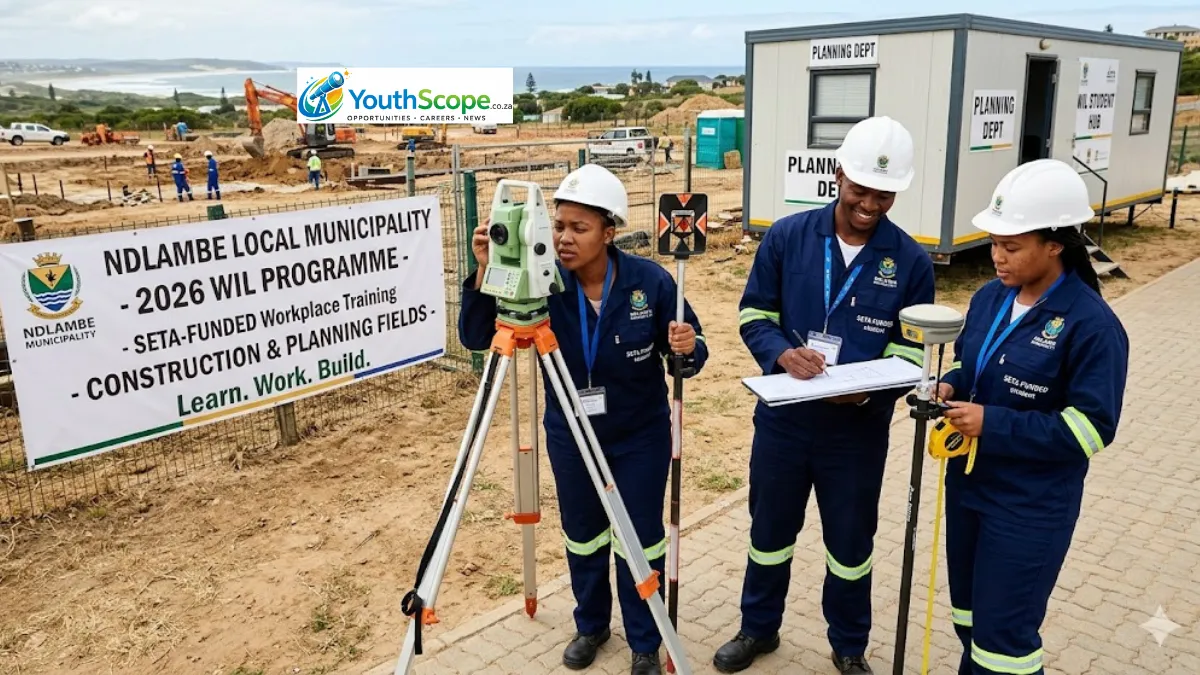
Ndlambe Municipality WIL Programme 2026 Opens 18-Month Training Opportunity for SETA-Funded Students

Ndlambe Local Municipality has opened applications for its 2026 Work Integrated Learning (WIL) Programme, offering an important workplace training opportunity for eligible SETA-funded students in selected construction and planning-related fields.

The programme runs for 18 months and is aimed at students who need practical industry experience linked to their studies. Applications close on Tuesday, 21 April 2026 at 12:00.

What Is the Ndlambe Municipality WIL Programme?

The Work Integrated Learning Programme is a structured placement initiative that allows students to gain practical experience in a municipal working environment.

It is designed to help students apply classroom knowledge in real projects, systems, and workplace settings.

This opportunity focuses on technical and planning disciplines where hands-on experience is often essential for career progression.

Why This Programme Matters

Many students complete theory-based studies but struggle to secure workplace exposure.

This programme helps bridge that gap by offering:

  • Real municipal work experience
  • Exposure to infrastructure and planning systems
  • Practical skills development
  • Stronger employability after studies

For students in technical fields, experience like this can significantly improve future job prospects.

Who Can Apply?

Applicants must meet all the listed requirements.

Minimum eligibility criteria:

  • Must be funded by SETA
  • Must be between 18 and 35 years old
  • Must be studying in an approved discipline
  • Must live within the Ndlambe municipal jurisdiction
  • Must clearly state the programme or field being applied for

Meeting only one requirement will not be enough. Applicants must satisfy all conditions.

Approved Fields of Study

The municipality will only consider students in the following disciplines:

Accepted programmes:

  • Engineering Studies: N6 Building and Civil Construction
  • Regional and Town Planning

Students outside these fields are unlikely to qualify.

Required Documents

Applicants must submit a complete application package.

Documents needed:

  • Application letter
  • Updated CV
  • Certified copies of qualifications
  • Certified copy of ID document
  • Proof of funding from the relevant SETA

All documents should be clear, current, and properly certified.

Incomplete applications may be disqualified.

Where to Submit Applications

Applications must be sent to the Human Resources Unit, Ndlambe Local Municipality.

Postal Address:

P.O. Box 13
Port Alfred
6170

Physical Address:

01 Causeway Road
Civic Centre
Port Alfred

Important:

Faxed applications will not be accepted.

Closing Date

Applications close on:

Tuesday, 21 April 2026 at 12:00

This is a midday deadline, not end of business day. Applicants should submit early to avoid delays or missing documents.

Important Conditions to Know

The municipality has outlined several conditions for applicants.

Key notes:

  • Applicants must be SETA-funded
  • Selection may consider equitable ward representation
  • The programme does not guarantee permanent employment
  • Being on the municipal database does not guarantee selection
  • Canvassing councillors or officials leads to disqualification
  • The municipality may choose not to appoint
  • Persons with disabilities are encouraged to apply

Applicants who do not receive feedback within one week after the closing date should consider their application unsuccessful.

You can also Check:

How to Strengthen Your Application

Simple mistakes can cost valuable opportunities.

Tips for a stronger submission:

  • Clearly mention your field of study in the application letter
  • Keep your CV updated and professional
  • Ensure certified copies are readable
  • Include proof of SETA funding
  • Review the full application before submitting

A complete and organised application creates a better impression.

Why Students Should Consider This Opportunity

For students in construction and planning fields, practical experience is often the missing link between studies and employment.

This programme can help learners gain:

  • Workplace confidence
  • Public sector experience
  • Practical technical exposure
  • Better readiness for future jobs

It can also strengthen a CV when applying for future internships or graduate roles.

Final Thoughts

The Ndlambe Municipality WIL Programme 2026 is a valuable opportunity for SETA-funded students in approved technical and planning fields. With 18 months of workplace exposure and practical learning, it offers a strong platform for future career growth.

Because applications close on 21 April 2026 at 12:00, interested students should prepare their documents and apply as soon as possible.

Eskom Plant Maintenance Programme 2026 Opens 10 Technical Training Opportunities for Engineering Graduates

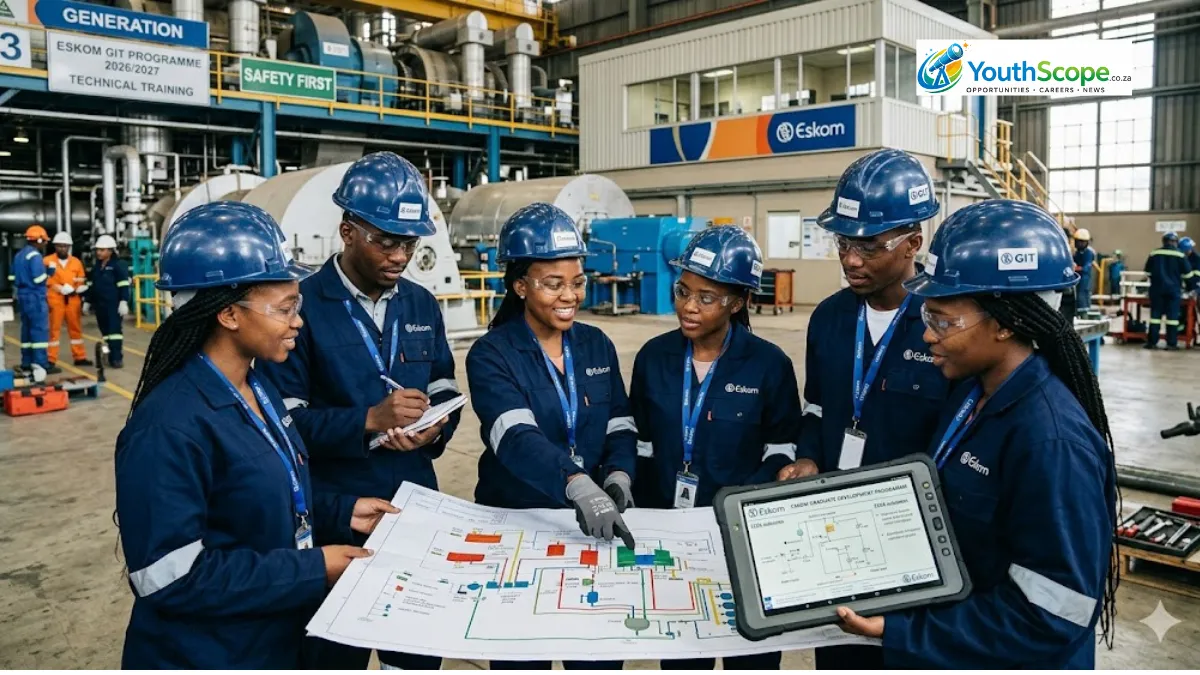
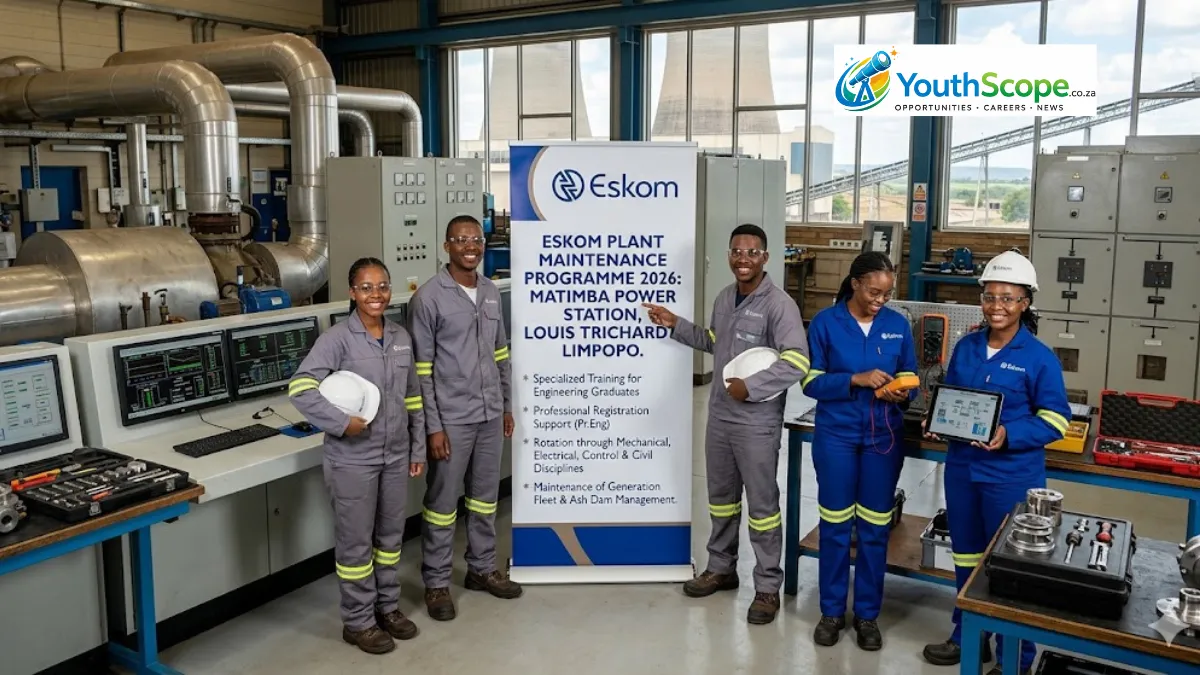
Eskom is offering a major opportunity for unemployed engineering graduates through its Plant Maintenance Programme 2026. With 10 available posts, this structured initiative provides two years of hands-on technical training inside one of South Africa’s most important energy organisations.

The programme is designed to give graduates real exposure to plant maintenance operations, engineering systems, and power generation environments within Eskom’s Turbo Gen Services division.

What Is the Eskom Plant Maintenance Programme 2026?

The Eskom Learner – Plant Maintenance Programme is a two-year structured training programme aimed at developing practical engineering and maintenance skills.

It focuses on turning theoretical knowledge into real workplace competence through exposure to:

  • Power plant maintenance systems
  • Engineering operations
  • Technical diagnostics and equipment handling
  • Industrial maintenance processes

This makes it especially valuable for graduates who have academic qualifications but limited workplace experience.

Why This Programme Is Important

Many engineering graduates struggle to enter the job market because employers require practical experience.

This programme helps bridge that gap by offering:

  • Structured on-the-job training
  • Real power plant exposure
  • Mentorship from experienced professionals
  • Practical engineering application

For graduates, this can be the first real step into the energy and technical engineering sector.

Who Can Apply?

Applicants must have an S4 qualification in one of the following fields:

  • Mechanical Engineering
  • Electrical Engineering
  • Mechatronics
  • Electronics (C&I)

Added advantage:

  • Specialisation in Electrical (Power Plant) engineering

No prior work experience is required, making this opportunity ideal for new graduates entering the workforce.

What Will Learners Do?

Successful candidates will gain exposure to real plant maintenance environments within Eskom operations.

Key learning areas include:

  • Plant maintenance and engineering operations
  • Reading and interpreting technical drawings
  • Equipment measurement and diagnostics
  • Quality control systems and standards
  • Maintenance of industrial equipment

This practical experience helps build job-ready technical skills.

Technical Knowledge Required

While no experience is needed, applicants should have a basic technical foundation.

Expected knowledge includes:

  • Use of mechanical, electrical, and instrumentation tools
  • Understanding technical drawings and tolerances
  • Basic quality system awareness
  • Knowledge of engineering standards and specifications

Having these skills can improve your chances of selection.

Skills and Personal Attributes Needed

Eskom also looks for strong personal qualities in candidates.

Important skills:

  • Technical and engineering ability
  • Communication and teamwork skills
  • Basic computer literacy
  • Ability to use hand tools

Key personal traits:

  • Reliability and honesty
  • Ability to work under pressure
  • Initiative and adaptability
  • Strong work ethic

These qualities are important in high-pressure technical environments like power plant maintenance.

Duration and Location

The programme runs for 2 years, giving learners enough time to build solid technical experience.

Placement details:

  • Various Eskom sites across South Africa
  • Site-based practical training
  • Placement depends on operational needs

Why This Programme Matters for Career Growth

Eskom is one of South Africa’s largest energy providers, and experience gained here can significantly improve a graduate’s career prospects.

Benefits include:

  • Real-world engineering experience
  • Exposure to power generation systems
  • Strong CV enhancement
  • Foundation for future technical roles
  • Professional workplace development

This makes it a strong entry point into engineering and maintenance careers.

You can also Check:

How to Improve Your Application

To stand out, applicants should focus on their technical strengths.

Tips for a stronger CV:

  • Highlight your S4 qualification clearly
  • Include technical projects or workshop experience
  • Mention ability to read drawings or use tools
  • Keep your CV structured and easy to read
  • Focus on relevant engineering modules

A targeted technical CV is more effective than a general one.

How to Apply

Applications must be submitted through Eskom’s official online application system.

Key details:

  • Position: Learner – Plant Maintenance
  • Reference Number: eskom_004458
  • Posts Available: 10
  • Duration: 2 years
  • Business Unit: Turbo Gen Services
  • Contact: recruitmenteri@eskom.co.za

Closing Date

The closing date for applications is:

1 May 2026

Because only 10 positions are available, early application is strongly recommended.

Final Thoughts

The Eskom Plant Maintenance Programme 2026 is a valuable opportunity for engineering graduates who want practical experience in the energy sector. With two years of structured training, hands-on exposure, and no work experience required, it offers a realistic pathway into technical and plant maintenance careers.

Applicants who meet the requirements should prepare their documents early and apply before the closing date.

Huawei 4IR Skills Programme 2026 Opens Fast-Track ICT Training for South African Youth

The Huawei 4IR Skills Programme 2026 is giving South African job seekers a short and focused pathway into the ICT sector through HCIA Datacom certification training. Running in partnership with Majuba TVET College, the programme aims to equip learners with practical networking and infrastructure skills that are increasingly in demand in today’s digital economy.

Applications close on 28 April 2026.

What Is the Huawei 4IR Skills Programme 2026?

The Huawei 4IR Skills Programme is a short ICT training initiative designed to prepare learners for entry-level roles in technology fields.

It focuses on the Huawei Certified ICT Associate (HCIA Datacom) certification and combines structured learning with practical exposure to networking and IT systems.

Training is delivered through collaboration with Majuba TVET College, helping bridge the gap between academic learning and workplace-ready digital skills.

Why This Programme Is Important

Many young people struggle to enter the ICT sector due to lack of experience or recognised certification.

This programme helps solve that problem by offering:

  • Internationally recognised certification
  • Practical, industry-relevant training
  • Skills aligned with real ICT job requirements

Because of this, it can improve employability in a competitive job market.

What Learners Will Study

The training is designed to build foundational and practical ICT knowledge.

Key areas include:

  • Networking fundamentals
  • Enterprise routing and switching
  • Data centre concepts
  • Cloud-ready infrastructure basics
  • IT troubleshooting skills
  • Enterprise storage systems

The programme also prepares learners for further advanced ICT certifications.

What Is HCIA Datacom Certification?

The HCIA Datacom certification is an entry-level qualification focused on modern ICT infrastructure and networking systems.

It introduces learners to:

  • Network configuration basics
  • Infrastructure support principles
  • Data communication systems
  • Cloud and enterprise network environments
  • Troubleshooting techniques

This certification is widely recognised and serves as a foundation for future ICT career development.

Programme Duration

The Huawei 4IR Skills Programme runs for 4 to 8 weeks, making it a short but intensive training opportunity.

Despite its short duration, it is structured to deliver practical, job-relevant skills quickly.

Who Should Apply?

This opportunity is ideal for individuals who want to start a career in technology.

Suitable applicants include:

  • Unemployed youth interested in ICT
  • Matriculants with Maths, Physical Science, or IT
  • TVET students seeking networking experience
  • Job seekers targeting IT support roles
  • Beginners interested in cloud and infrastructure careers

It is especially useful for those looking for an alternative to long academic study routes.

Entry Requirements

Applicants must meet the following minimum requirements:

  • Certified copy of Grade 12 certificate (Matric)
  • Mathematics, Physical Science, or Information Technology subject
  • Certified copy of South African ID
  • Basic Computer Literacy certificate

Added advantages:

  • ICT-related short courses
  • Basic networking knowledge
  • Previous technical exposure

Career Opportunities After Completion

This programme supports entry into several growing ICT fields.

Possible career paths include:

  • IT support technician
  • Networking assistant roles
  • Data centre operations support
  • Cloud infrastructure assistant roles
  • Enterprise storage support environments

It provides a foundation for long-term growth in the tech industry.

How to Apply

Applications must be completed online through the official application process.

Steps include:

  • Prepare all certified documents
  • Confirm Matric subject requirements
  • Ensure computer literacy proof is available
  • Submit application before the deadline

Applicants should ensure all documents are clear, certified, and correctly uploaded.

Closing Date

The final date for applications is:

28 April 2026

Early application is strongly recommended due to expected high demand.

You can also Check:

Final Thoughts

The Huawei 4IR Skills Programme 2026 offers a fast and practical route into ICT for South African youth. With HCIA Datacom certification, hands-on networking exposure, and strong alignment to modern digital careers, it provides a valuable starting point for anyone aiming to build a future in technology.

Applicants who meet the requirements should prepare their documents early and apply before the closing date to avoid missing out.

Siza Water Plumber Learnership Programme 2026

The Siza Water Plumber Learnership Programme 2026 is offering a valuable entry-level opportunity for unemployed youth interested in plumbing, water infrastructure, and technical maintenance work. With only two positions available, this programme is expected to attract strong interest from young job seekers looking for hands-on experience in a real working environment.

About the Siza Water Plumber Learnership 2026

Siza Water is recruiting learners under its Network Department through the reference number NET/02/2026. The programme focuses on practical exposure in plumbing and water infrastructure maintenance.

Unlike theory-based training, this learnership places participants directly in a working environment where they can learn through real tasks and field operations.

It is designed to help bridge the gap between school education and skilled technical work.

Who Should Apply?

This opportunity is aimed at unemployed youth who are ready to begin a career in plumbing or infrastructure maintenance.

Minimum requirements:

  • Grade 12 (Matric)
  • Valid Code 8 driver’s licence
  • Currently unemployed

Added advantage:

  • Previous plumbing or construction exposure
  • Basic technical or maintenance experience
  • Familiarity with tools or repair work

Even informal experience, such as assisting with repairs or construction tasks, can strengthen an application.

What Learners Will Do

Successful candidates will be placed in operational teams within the Network Department, where they will gain real-world experience in water system maintenance.

Duties may include:

  • Assisting with water pipeline repairs
  • Supporting plumbing installation work
  • Identifying faults in water networks
  • Helping maintenance teams in the field
  • Participating in site inspections
  • Following safety procedures on worksites

These tasks help learners build practical skills that are essential for future technical careers.

Why the Driver’s Licence Is Important

A valid Code 8 driver’s licence is a key requirement for this learnership.

In field-based technical roles, workers often need to travel between sites. Having a licence shows readiness for mobility and improves efficiency in service delivery environments.

Applicants should ensure their licence is clearly stated on their CV.

Preference for Local Applicants

Siza Water gives preference to candidates who live within its service area.

This is important because:

  • Local candidates can respond faster to operational needs
  • Familiarity with the area supports service delivery
  • It helps strengthen local employment opportunities

Applicants are encouraged to include valid proof of residence in their application.

Documents Required

Before applying, ensure all documents are prepared and certified.

Required documents:

  • Certified copy of ID
  • Certified copy of Matric certificate
  • Copy of driver’s licence
  • Proof of residence
  • Updated CV (maximum 2 pages)

A short and clear CV is recommended to keep the application simple and easy to review.

How to Strengthen Your Application

Even though this is an entry-level programme, presentation matters.

Tips to improve your chances:

  • Keep your CV short and well-organised
  • Highlight any construction or repair experience
  • Include technical subjects from school if relevant
  • Make your driver’s licence easy to notice
  • Ensure documents are clear and certified
  • Show interest in plumbing or technical work

Employers often look for reliability, discipline, and willingness to learn.

How to Apply

Applications can be submitted in two ways:

Online:

Through the official Siza Water vacancies portal

Hand delivery:

Human Resource Department
Siza Water

Applicants must ensure their CV does not exceed two pages, as longer documents may not be accepted.

Closing Date

The closing date for applications is:

23 April 2026

Late submissions may not be considered, so applicants are encouraged to apply early.

Why This Learnership Matters

The plumbing and water services sector plays a critical role in infrastructure development and service delivery across South Africa.

This learnership offers:

  • Real workplace experience
  • Exposure to technical systems
  • A pathway into artisan careers
  • Improved employability in infrastructure industries
  • Practical skills development

For unemployed youth, it can serve as a strong foundation for a long-term technical career.

You can also Check:

Final Thoughts

The Siza Water Plumber Learnership Programme 2026 is a rare opportunity for young people who want to enter the plumbing and water infrastructure field. With only two positions available, competition will be high, making early and well-prepared applications essential.

Applicants who meet the requirements should submit their documents before 23 April 2026 to avoid missing out.

Ochrana Risk Solutions Security Learnership 2026 Opens Paid Opportunities for School Leavers

Young job seekers in Nigel and surrounding areas now have a rare chance to enter the security industry through the Ochrana Risk Solutions Security Learnership 2026. With only three positions available, this paid programme is expected to attract strong competition from unemployed school leavers looking to gain real work experience and training.

A Rare Opportunity for Entry-Level Candidates

Ochrana Risk Solutions is offering a structured learnership designed specifically for beginners with no prior experience in the security field. The programme combines practical training with a basic monthly salary, making it especially valuable for youth who need both skills development and financial support.

The learnership runs for six months and focuses on preparing candidates for entry-level roles within the security sector.

What the Learnership Offers

Selected learners will receive hands-on training that builds essential workplace and security-related skills. The programme is designed to help participants become job-ready and confident in a professional environment.

Training may include:

  • Basic security procedures
  • Incident reporting and documentation
  • Workplace communication skills
  • Professional conduct and discipline
  • Safety awareness and risk understanding

These foundational skills are important for anyone starting a career in the security industry.

Paid Training Experience

One of the key benefits of this opportunity is that learners will receive a basic salary during the training period. This ensures that participants are not only gaining skills but also earning while they learn.

For many unemployed youth, this makes the programme a practical stepping stone into long-term employment.

Who Can Apply?

This learnership is aimed at young people who are ready to start their careers and commit to structured training.

Ideal candidates should:

  • Be recent school leavers
  • Be unemployed
  • Live in Nigel or nearby areas
  • Be willing to learn and follow instructions

No previous work experience is required, making this an ideal opportunity for first-time job seekers.

Personal Qualities That Matter

While qualifications are minimal, attitude plays a major role in selection. Applicants who demonstrate the right mindset are more likely to succeed.

Important qualities include:

  • Discipline and responsibility
  • Punctuality and reliability
  • Respect for rules and instructions
  • Willingness to learn
  • Strong work ethic

In the security field, professionalism and trustworthiness are highly valued.

Application Requirements

Applicants are required to submit a simple application package.

You must send:

  • An updated CV
  • A recent colour photo

Applications should be emailed to: info@ochrana.org.za

No Fixed Closing Date

There is no official closing date for this learnership. However, applications will close immediately once all three positions have been filled.

This makes early application extremely important, as late submissions may miss out completely.

What Happens After Applying?

Shortlisted candidates may be contacted for further steps, which could include:

  • An interview
  • Additional screening
  • Instructions regarding training start dates

Applicants are advised to ensure that their contact details are correct and active.

You can also Check:

CV Tips for Applicants

Since this is an entry-level opportunity, your CV does not need to be complicated. Focus on clarity and honesty.

Include:

  • Education background
  • Any school leadership roles or responsibilities
  • Personal strengths (e.g., hardworking, disciplined, reliable)

A clean and well-structured CV can still make a strong impression.

Final Thoughts

The Ochrana Risk Solutions Security Learnership 2026 presents a valuable opportunity for unemployed school leavers in Nigel and surrounding areas. With six months of paid training and only three available positions, this programme offers a practical pathway into the security industry.

Applicants who meet the basic requirements are encouraged to apply as soon as possible to avoid missing out.

Eskom Plant Maintenance Programme 2026 – Application Details, Requirements & Deadlines

South African engineering graduates searching for career opportunities should pay close attention to the Eskom Plant Maintenance Programme 2026. With 10 posts available, a two-year structured training period, and practical exposure to real engineering operations, this programme could be the career breakthrough many unemployed graduates need.

Eskom is recruiting unemployed South African graduates for its Learner – Plant Maintenance Programme 2026 under the Turbo Gen Services division. This opportunity is designed to help graduates gain workplace experience, technical confidence, and practical engineering skills in one of the country’s most important industries.

For graduates struggling to secure jobs due to lack of experience, this programme offers a valuable path into the energy sector.

What is the Eskom Plant Maintenance Programme 2026?

The Eskom Learner – Plant Maintenance Programme is a two-year technical development programme focused on plant maintenance and engineering operations.

Successful applicants will receive structured training and practical experience in real maintenance environments. The programme helps participants apply academic knowledge to actual workplace systems, machinery, and engineering processes.

This kind of experience is highly valuable because many employers prefer candidates with practical exposure.

Who Can Apply?

To qualify for the Eskom Plant Maintenance Programme 2026, applicants must have an S4 qualification in one of the following fields:

  • Mechatronics
  • Mechanical Engineering
  • Electrical Engineering
  • Electronics (C&I)

An Electrical (Power Plant) specialisation will be an added advantage.

The best part is that no previous work experience is required, making it ideal for recent graduates entering the job market.

Why This Eskom Programme Matters

Many engineering graduates face the same challenge after completing studies: companies ask for experience, but no one offers a chance to gain it.

This Eskom programme solves that problem by offering structured workplace learning inside a real maintenance environment.

Participants can build:

  • Hands-on engineering experience
  • Technical confidence
  • Workplace discipline
  • Industry exposure
  • Employable practical skills

For unemployed graduates, this could be the first major step toward a successful technical career.

What Will Learners Be Trained In?

Participants in the Eskom Plant Maintenance Programme 2026 will gain experience in several technical areas, including:

Plant Maintenance Operations

Learners will work in environments where maintenance of power plant systems and machinery is essential.

Technical Drawings

Applicants will develop the ability to read and interpret engineering drawings, diagrams, and tolerances.

Equipment Diagnostics

The programme includes measuring tools, inspections, and fault detection processes.

Quality Standards

Participants will learn about engineering standards, technical specifications, and quality workmanship.

These are essential skills for long-term growth in engineering careers.

Skills Eskom Is Looking For

Besides qualifications, Eskom values practical skills and strong work ethic.

Important skills include:

  • Good communication skills
  • Technical ability
  • Basic hand tool usage
  • Planning skills
  • Computer literacy
  • Problem-solving ability

Personal qualities that may strengthen applications:

  • Honesty
  • Reliability
  • Ability to work under pressure
  • Adaptability
  • Initiative
  • Professional attitude

Technical environments require both skill and discipline, which is why these traits matter.

Programme Duration

The Eskom Plant Maintenance Programme runs for two years.

This is a major advantage because learners receive enough time to build real workplace experience instead of short-term exposure.

Over two years, participants can understand how engineering systems operate, improve confidence, and develop strong maintenance skills.

Where Will the Programme Take Place?

The programme will be offered at various Eskom sites across South Africa.

Applicants should be prepared for site-based work and possible placement according to operational needs.

Being flexible about location can improve your chances of selection.

Why This Can Help Your Engineering Career

Eskom remains one of South Africa’s best-known names in the energy industry. Having Eskom training on your CV can add strong value when applying for future opportunities.

Benefits include:

  • Practical experience in power plant maintenance
  • Exposure to industrial engineering systems
  • Learning from experienced professionals
  • Stronger employability after completion
  • Better long-term career prospects

This makes it more than a training programme—it is a real career starter.

How to Make Your Application Stronger

To improve your chances of success:

  • Clearly list your S4 qualification
  • Mention your engineering specialisation
  • Include workshop training or technical projects
  • Highlight drawing interpretation skills
  • Mention measuring tools experience
  • Include maintenance or diagnostics knowledge
  • Keep your CV neat and professional

A focused technical CV often performs better than a general one.

How do you apply for the Eskom Plant Maintenance Programme 2026?

Applications must be submitted through the official Eskom online application portal

Application Details

Here are the official programme details:

  • Position: Learner – Plant Maintenance
  • Reference Number: eskom_004458
  • Number of Posts: 10
  • Duration: 2 Years
  • Department: Plant Maintenance
  • Business Unit: Turbo Gen Services
  • Remuneration: Market-related stipend

Closing Date

The closing date for applications is:

1 May 2026

Since only 10 posts are available, interested graduates should apply as early as possible.

You can also Check:

Final Thoughts

The Eskom Plant Maintenance Programme 2026 is one of the best opportunities currently available for unemployed South African engineering graduates. With no experience required, a market-related stipend, two years of structured training, and real workplace exposure, it offers a realistic path into the energy and engineering industry.

If you meet the requirements, this could be the opportunity that changes your future.

Frequently Asked Questions (FAQ)

1. Who can apply for the Eskom Plant Maintenance Programme 2026?

South African graduates with an S4 qualification in Mechanical, Electrical, Mechatronics, or Electronics fields.

2. Is work experience required?

No, previous work experience is not required.

3. How many posts are available?

There are 10 available positions.

4. How long is the programme?

The programme runs for two years.

5. Is there a salary or stipend?

Yes, Eskom offers a market-related stipend.

6. When is the closing date?

Applications close on 1 May 2026.

7. Where will learners be placed?

At various Eskom sites across South Africa.

Eskom Learnership Intake 2026 – Eligibility Criteria and Application Process

Introduction

The Eskom Learnership Intake 2026 is one of the most anticipated opportunities for unemployed youth and matriculants in South Africa. As the country’s leading electricity utility, Eskom continues to invest in skills development through structured learnership programmes that combine classroom learning with practical workplace training.

For many young South Africans, an Eskom learnership is more than just training—it is a pathway into technical careers, artisan trades, administration, engineering support, and long-term employment opportunities. With South Africa facing high youth unemployment, programmes like these play an important role in building future talent.

What is the Eskom Learnership Intake 2026?

The Eskom Learnership Programme 2026 is a structured training initiative designed to equip participants with practical experience while they study toward recognised qualifications.

These programmes usually run between 12 and 24 months, depending on the field. Learners receive exposure to real workplace environments while gaining valuable technical and professional skills.

Typical learnership categories may include:

  • Electrical Engineering
  • Mechanical Engineering
  • Civil Engineering
  • Plant Operations
  • Administration
  • Finance
  • Supply Chain Management
  • Customer Service

Eskom uses these programmes to develop future artisans, technicians, operators, and support staff.

Eskom Learnership 2026 Key Details

Here are the main details applicants should know:

  • Company: Eskom Holdings SOC Ltd
  • Programme Type: Learnership / Skills Development
  • Duration: 12 to 24 months
  • Locations: Across South Africa depending on vacancies
  • Stipend: Usually monthly learner allowance
  • Application Method: Online through official careers platform

Vacancies may differ by province, business unit, and operational needs.

Eligibility Criteria for Eskom Learnership Intake 2026

To qualify, applicants must meet minimum entry requirements.

1. Academic Requirements

Most entry-level learnerships require:

  • Grade 12 / Matric certificate
  • English pass
  • Mathematics for technical programmes
  • Physical Science for engineering-related programmes

Some advanced programmes may require:

  • N3 to N6 qualifications
  • Diploma or Degree in relevant field

2. General Requirements

Applicants are usually expected to be:

  • South African citizens
  • Between 18 and 35 years old (varies by intake)
  • Unemployed at the time of application
  • Medically fit where required
  • Willing to relocate if needed
  • Able to pass assessments and interviews

3. Skills Eskom Looks For

Strong candidates often demonstrate:

  • Good communication skills
  • Teamwork ability
  • Reliability
  • Safety awareness
  • Problem-solving ability
  • Willingness to learn

Available Eskom Learnership Fields in 2026

Depending on business needs, Eskom may advertise positions in the following fields:

Technical Fields

  • Electrical trades
  • Mechanical maintenance
  • Plant operations
  • Distribution networks
  • Instrumentation

Business Fields

  • Human Resources
  • Administration
  • Finance
  • Procurement
  • Customer Services

Graduate / Diploma Pathways

Some intakes also include training programmes for diploma and degree holders.

Eskom Learnership Application Process 2026

Applying correctly is very important. Follow these steps:

Step 1: Prepare Documents

Have the following ready:

  • Certified South African ID copy
  • Updated CV
  • Matric certificate
  • Qualifications / transcripts
  • Proof of residence (if requested)

Step 2: Apply Online

Visit Eskom’s official careers portal and search current learnership vacancies.

Step 3: Complete the Application Form

Fill in:

  • Personal details
  • Education history
  • Work history (if any)
  • Supporting documents upload

Step 4: Submit Before Deadline

Late applications are usually not accepted.

Step 5: Wait for Feedback

Shortlisted applicants may be contacted for:

  • Assessments
  • Interviews
  • Medical tests
  • Verification checks

Important Scam Warning

Eskom opportunities are highly searched, which means fake adverts sometimes circulate online. In 2026, false claims about “60,000 Eskom learnerships” were flagged as scams.

Always apply only through verified official Eskom channels and never pay money for applications.

Benefits of Eskom Learnerships

Successful applicants may gain:

  • Monthly stipend
  • Nationally recognised training
  • Real workplace experience
  • Improved employability
  • Career growth opportunities
  • Exposure to South Africa’s energy sector

Closing Dates for Eskom Learnership Intake 2026

Closing dates vary depending on programme and province. Some 2026 opportunities were listed with deadlines in January, March, and later months.

Applicants should apply as soon as positions open rather than waiting for final dates.

You can also Check:

FAQ – Eskom Learnership Intake 2026

1. Is Eskom Learnership paid?

Yes, most programmes offer a monthly learner stipend.

2. Can I apply with Matric only?

Yes, many entry-level programmes accept matriculants, especially technical streams.

3. Do I need experience?

No, most learnerships are for beginners.

4. Where are Eskom learnerships based?

Across South Africa depending on the vacancy.

5. How long does the programme run?

Usually 12 to 24 months.

6. How do I know if an advert is real?

Apply only through Eskom’s official recruitment platforms.

Conclusion

The Eskom Learnership Intake 2026 offers excellent opportunities for young South Africans seeking skills, experience, and career growth. Whether you are interested in technical trades, plant operations, or office-based careers, Eskom learnerships can provide a valuable first step.

Because competition is high, applicants should prepare documents early, monitor official vacancies, and apply before deadlines.

Sasol Learnership Programme 2026 – Application Details, Requirements & Deadlines

Introduction

The Sasol Learnership Programme 2026 is one of South Africa’s most sought-after youth development opportunities, offering unemployed matriculants a structured pathway into technical trades and corporate careers. Each year, thousands of young people apply for Sasol’s programmes because they combine theoretical learning, practical workplace training, and paid experience, giving learners a real chance to build a sustainable career in the energy and chemical industry.

Sasol, a globally recognised energy and chemical company, continues to invest heavily in skills development through learnerships that focus on engineering, artisan trades, and business-related fields. The 2026 intake is expected to attract strong competition due to its reputation, career opportunities, and structured training model.

What is the Sasol Learnership Programme 2026?

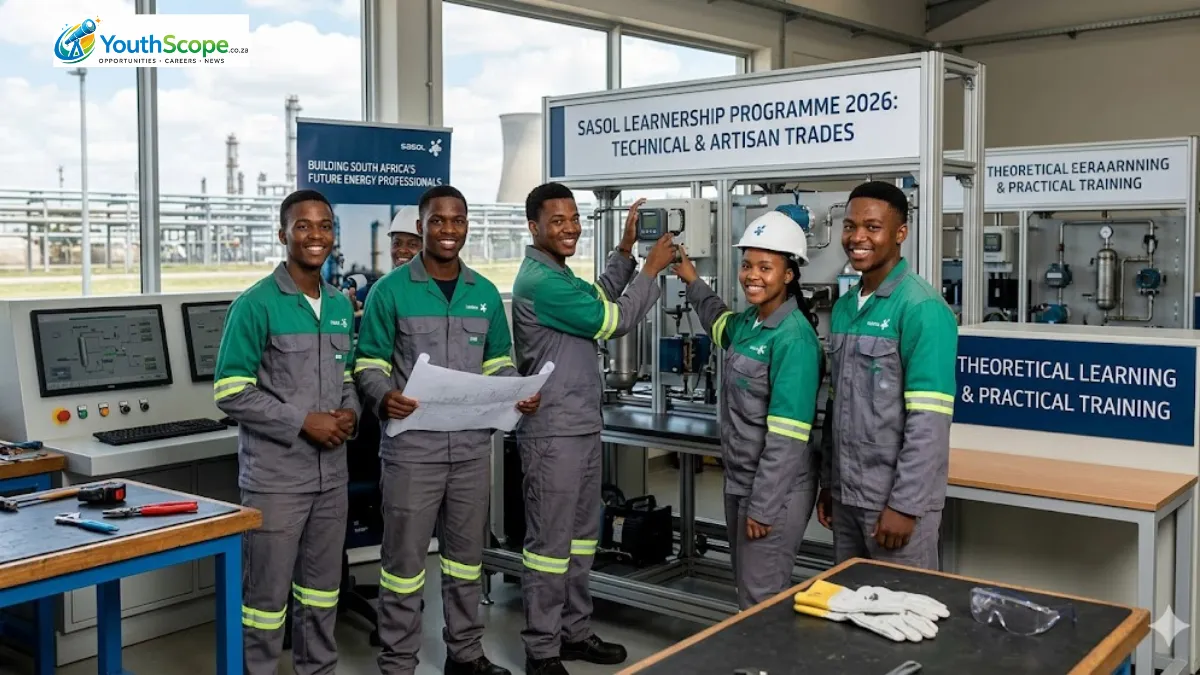
The Sasol Learnership Programme 2026 is a structured training initiative that blends classroom-based theory with hands-on workplace experience. Depending on the discipline, the programme typically runs between 12 months and 36 months, with artisan learnerships taking longer due to technical training requirements.

According to available programme details, Sasol offers learnerships in areas such as:

  • Mechanical Fitter
  • Electrician
  • Instrumentation
  • Chemical Plant Operator
  • Millwright Artisan Training

These programmes are designed to develop nationally recognised qualifications aligned with industry standards such as QCTO and NAMB frameworks.

Sasol Learnership 2026 Key Details

Here are the most important programme facts for applicants:

  • Company: Sasol South Africa
  • Programme Type: Learnership / Artisan Training
  • Duration: 12 to 36 months (depending on field)
  • Location: Secunda (Mpumalanga) and Sasolburg
  • Reference Number: 11441 (artisan programmes)
  • Closing Date: 2 March 2026 (for Secunda intake)

This makes the Sasol Learnership one of the most structured and long-term youth development programmes in South Africa’s energy sector.

Minimum Requirements for Sasol Learnership 2026

To qualify for the Sasol Learnership Programme 2026, applicants must meet strict entry requirements.

1. Academic Requirements

Applicants must have:

  • National Senior Certificate (Matric)
  • Mathematics (or Technical Mathematics)
  • Physical Science (or equivalent technical science)
  • English as a passed subject

OR

  • N3 Certificate with relevant technical subjects (for artisan programmes)

2. General Requirements

Candidates should also:

  • Be a South African citizen
  • Be unemployed at the time of application
  • Be willing to undergo assessments and medical checks
  • Have no prior artisan qualification (for entry-level learnerships)

3. Personal Competencies

Sasol looks for candidates who demonstrate:

  • Strong willingness to learn
  • Teamwork ability
  • Safety awareness
  • Basic problem-solving skills
  • Discipline and reliability

Available Learnership Fields in 2026

The Sasol Learnership Programme focuses on technical and industrial fields that support South Africa’s energy and manufacturing sector.

Artisan and Engineering Learnerships

  • Mechanical Fitter
  • Electrician
  • Instrumentation Technician
  • Millwright Artisan
  • Welder / Boilermaker (selected intakes)

Plant Operations Learnerships

  • Chemical Plant Operator
  • Process Artisan

These roles are critical in maintaining Sasol’s large-scale production facilities and industrial plants.

What the Programme Offers

The Sasol Learnership Programme 2026 is not just training—it is a career-building opportunity.

Successful candidates can expect:

1. Practical Workplace Training

Learners work in real industrial environments, gaining experience in plant operations, machinery maintenance, and safety procedures.

2. Theoretical Training

Classroom-based learning covers:

  • Engineering fundamentals
  • Safety procedures
  • Technical drawing interpretation
  • Process control systems

3. Mentorship and Development

Each learner is supported by experienced professionals who guide them throughout the programme.

4. Industry-Recognised Qualification

At the end of the programme, learners receive a nationally recognised qualification, opening doors to permanent employment opportunities.

Application Process for Sasol Learnership 2026

Applying for Sasol Learnerships is done online through official recruitment channels.

Step-by-Step Application Guide:

  1. Prepare certified documents:
    • ID copy
    • Matric certificate
    • Updated CV
  2. Search for the correct learnership vacancy (based on field and location)
  3. Complete the online application form
  4. Submit before the closing date
  5. Wait for shortlisting and assessments
  6. Attend interviews and medical evaluations if selected

Important: Late applications are not accepted.

Selection Process

The Sasol recruitment process is competitive and includes:

  • Application screening
  • Psychometric testing
  • Interviews
  • Medical fitness tests
  • Background and qualification verification

Only candidates who pass all stages are considered for final selection.

Sasol Learnership 2026 Closing Dates

Closing dates vary depending on the programme, but key dates include:

  • Secunda Artisan Learnership: 2 March 2026
  • Some programmes may close earlier depending on intake capacity

Applicants are strongly advised to apply early because positions fill quickly.

Benefits of the Sasol Learnership Programme

The programme is highly valuable because it offers:

  • Paid training opportunities
  • Real workplace experience
  • National qualification
  • Career pathway into engineering and energy sectors
  • Increased employability in South Africa and beyond

FAQ – Sasol Learnership Programme 2026

1. Do I need experience to apply?

No, most Sasol learnerships are designed for matriculants with no experience.

2. Is the Sasol Learnership paid?

Yes, learners receive a monthly stipend during training.

3. Can I apply without Mathematics and Science?

For technical learnerships, Mathematics and Physical Science are usually required.

4. How long does the programme take?

It ranges from 12 months to 36 months depending on the field.

5. Where are Sasol learnerships based?

Mainly in Secunda (Mpumalanga) and Sasolburg.

6. When is the closing date?

Most 2026 applications close around 2 March 2026, depending on the programme.

You can also Check:

Conclusion

The Sasol Learnership Programme 2026 is one of the strongest career entry points for young South Africans interested in engineering, technical trades, and industrial operations. With structured training, financial support, and industry-recognised qualifications, it provides a powerful foundation for long-term employment.

If you meet the requirements, applying early is critical due to high competition and limited spaces.

City of Tshwane Cell Phone Repair Training Programme 2026 Targets Informal Technicians in Pretoria West

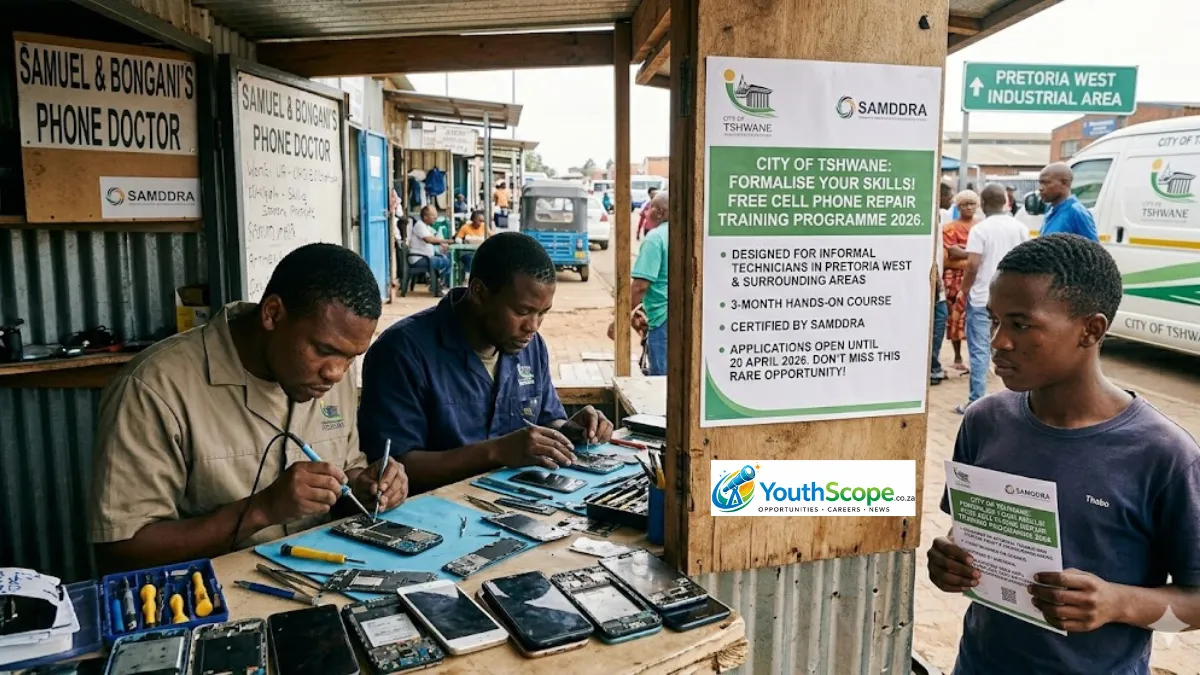
Informal mobile phone repair technicians in Pretoria West and surrounding areas are being offered a rare opportunity to formalise their skills through the City of Tshwane Cell Phone Repair Training Programme 2026, a three-month initiative aimed at strengthening practical experience with structured technical training and improved business credibility.

The programme is designed specifically for individuals already working in the cellphone repair space and could help bridge the gap between informal trading and recognised technical competence. Applications close on 20 April 2026 at midnight.

Structured Skills Training for Active Phone Repair Technicians

Unlike beginner-level courses, the City of Tshwane Cell Phone Repair Training Programme 2026 focuses on individuals who already have hands-on experience repairing mobile devices in their communities.

According to available programme information, applicants should have at least 12 months of informal repair or trading experience, making this an advancement opportunity rather than an introductory course.

The training is aligned with structured short-skills development models referenced in SAMDDRA-linked training frameworks, which emphasise practical technical strengthening and support for emerging micro-enterprises in the repair sector.

Who the Programme Is Designed For

The initiative is targeted at informal technicians operating in areas such as home workshops, street kiosks, and small trading spaces.

Ideal candidates include individuals who:

  • Already repair mobile phones informally
  • Have at least one year of practical experience
  • Are based in Pretoria West or nearby communities
  • Want to improve technical skills and business credibility

This makes the programme particularly relevant for self-taught technicians who have built experience through daily work rather than formal education.

Minimum Requirements for Applicants

To be considered for the City of Tshwane Cell Phone Repair Training Programme 2026, applicants are expected to meet several basic requirements.

These include:

  • Residency in Pretoria West or surrounding areas
  • Proof of residence
  • At least 12 months of repair or trading experience
  • Registration on, or willingness to join, the City of Tshwane traders database
  • Basic English literacy and numeracy skills
  • Commitment to completing the full three-month programme

While Matric is often preferred in similar initiatives, it is not compulsory for this programme, making it more accessible to experienced informal technicians.

Is Matric Required?

No formal Matric qualification is required.

However, applicants without Matric may need to provide an affidavit confirming their work experience and ability to participate in the training.

This approach allows skilled but unqualified technicians to access formal training opportunities based on practical experience rather than academic background.

Why the Traders Database Requirement Matters

A key requirement for the programme is registration on the City of Tshwane traders database, or willingness to register.

This condition is significant because it links informal traders to formal municipal systems. In practice, this can improve visibility for future opportunities, including:

  • Local enterprise development support
  • Compliance and registration benefits
  • Access to structured business programmes

While the official programme documentation focuses on registration, it also signals a broader effort to bring informal technicians into recognised local economic systems.

Programme Conditions and Expectations

One important detail applicants should consider is that no stipend is provided for the duration of the programme.

Participants must therefore be able to attend training for the full three months without financial support.

Other expectations include:

  • Full-time commitment for the programme duration
  • Completion of all training requirements
  • Active participation in practical and theoretical sessions

Some programme summaries also indicate priority consideration may be given to youth, women, and persons with disabilities, reflecting broader inclusion goals in skills development initiatives.

Required Documents for Application

Applicants are encouraged to prepare documentation early to avoid delays during submission.

Typically required documents include:

  • South African ID copy
  • Proof of residence (Pretoria West or surrounding areas)
  • Affidavit confirming repair experience (if Matric is not available)
  • Evidence of informal trading or repair activity (if available)

These documents help verify both identity and practical experience in the informal repair sector.

How to Apply

Applications for the City of Tshwane Cell Phone Repair Training Programme 2026 must be submitted online only.

No walk-in, email, or telephone applications will be accepted.

Applicants must complete the official online application form before the closing date:
20 April 2026 at midnight

Applications for the City of Tshwane Cell Phone Repair Training Programme 2026 online form must be submitted before 20 April 2026 at midnight.

Late submissions will not be considered.

Why Early Applications Are Recommended

Because the programme is targeted specifically at experienced informal technicians in a defined geographic area, competition may be concentrated among active repair workers.

Submitting early ensures:

  • Time to correct missing documentation
  • Avoidance of last-minute technical issues
  • Stronger consideration before deadline pressure

Given the short application window, early submission is strongly advised.

Why This Programme Matters for Informal Technicians

South Africa’s informal electronics repair sector continues to grow as demand for affordable device maintenance increases.

However, many technicians remain outside formal recognition systems, limiting their access to broader opportunities.

This programme aims to address that gap by:

  • Strengthening technical skills
  • Improving professional credibility
  • Supporting structured business development

For many participants, the value lies not only in technical improvement but also in being recognised as legitimate service providers within a growing local economy.

Final Thoughts

The City of Tshwane Cell Phone Repair Training Programme 2026 represents a targeted opportunity for informal technicians who already have practical experience but lack formal recognition.

With a three-month structure, no Matric requirement, and a focus on Pretoria West-based technicians, the programme is positioned as a practical bridge between informal work and structured skills development.

For eligible applicants, the key factor is timing. With the deadline set for 20 April 2026, early application could make the difference between securing a place and missing a rare opportunity to formalise and grow a repair-based livelihood.

You can also Check:

FAQs

Who can apply for the programme?

Informal cellphone repair technicians with at least 12 months of experience based in Pretoria West or surrounding areas.

Is the programme paid?

No, there is no stipend provided.

Do I need Matric to apply?

No, Matric is not compulsory, but an affidavit may be required if you do not have it.

How long is the training?

The programme runs for three months.

What is the closing date?

Applications close on 20 April 2026 at midnight.

Kia SA YES Programme 2026 Opens 12-Month Workplace Opportunity for Unemployed Youth Across South Africa

South African automotive brand Kia South Africa has opened applications for its YES Programme 2026, offering unemployed youth a 12-month work experience placement aimed at building employability and providing real workplace exposure.

The programme is part of the national Youth Employment Service initiative and is designed to give young South Africans a first entry point into a structured working environment, even without prior job experience.

Applications close on 24 April 2026.

A 12-Month Workplace Experience Programme for First-Time Job Seekers

The Kia South Africa YES Programme 2026 is focused on providing workplace exposure rather than formal employment.

It targets young people who are trying to enter the job market for the first time and need practical experience to build a stronger CV.

The programme runs for 12 months, giving participants enough time to:

  • Learn workplace systems
  • Build professional confidence
  • Develop communication skills
  • Gain industry exposure
  • Understand business operations

For many unemployed youth, this type of structured exposure can be the first real step into long-term employment.

Why the Kia YES Programme Matters for Youth Employment

Youth unemployment remains one of South Africa’s most pressing challenges, particularly for candidates without work experience.

Programmes like this are important because they help bridge the gap between education and employment by offering:

  • Real workplace exposure
  • A structured learning environment
  • Improved CV credibility
  • Industry experience in a recognised brand
  • Better employability after completion

For first-time job seekers, even a single year of experience can significantly change future job prospects.

Where the Programme Is Available

The YES Programme 2026 is open to applicants across several regions, including:

  • Gauteng
  • KwaZulu-Natal
  • Western Cape
  • Polokwane
  • Nelspruit

Placement location plays an important role, as candidates are usually expected to be able to travel reliably to their assigned workplace.

Who Can Apply for the Kia SA YES Programme 2026?

Applicants must meet the following requirements:

  • Age between 18 and 29 years
  • Must be unemployed
  • Must be a South African citizen
  • Must hold a valid South African ID
  • Must have completed Matric / Grade 12
  • Must have a clear criminal record
  • Must not have previously participated in a YES Programme

No prior work experience is required, making this opportunity accessible to first-time job seekers.

What Type of Work Experience Is Offered?

Participants may be placed in different departments depending on operational needs within Kia South Africa.

Possible placement areas include:

  • Administration
  • Finance support
  • Human resources
  • Sales support
  • Automotive workshop or parts operations

This variety allows participants to gain exposure to both office-based and operational environments within the automotive sector.

What Participants Gain From the Programme

The main value of the YES Programme is practical workplace exposure.

Over the 12-month period, participants can build:

  • Workplace confidence
  • Communication skills
  • Administrative experience
  • Teamwork ability
  • Industry awareness
  • Stronger CV credibility

Perhaps most importantly, participants gain real work history, which is often the biggest barrier for first-time job seekers.

Is Previous Experience Required?

No.

This programme is specifically designed for unemployed youth entering the job market for the first time.

That makes it one of the more accessible structured opportunities available in the automotive sector.

Stipend Information

The programme is described as a YES-aligned work experience placement.

However, the exact stipend amount is not clearly specified in the available listing details.

Applicants are encouraged to confirm payment details directly during the official recruitment process.

How to Apply for the Kia SA YES Programme 2026

Applications must be submitted through the official online application portal.

Before applying, candidates should ensure that:

  • All personal details are accurate
  • Documents are clearly scanned
  • Requirements are fully met
  • The correct region is selected

Required Application Documents

Applicants should prepare the following documents:

  • Updated CV
  • Certified copy of ID
  • Certified copy of Matric certificate
  • Proof of residence
  • Additional qualifications (if available)

Having documents ready in advance helps avoid delays and improves application quality.

Closing Date for Applications

The closing date for the programme is:

24 April 2026

Early submission is strongly recommended to avoid last-minute errors or missing documentation.

Why Early Application Matters

Programmes like this tend to attract high volumes of applicants because:

  • No prior experience is required
  • It is linked to a recognised automotive brand
  • It offers a full year of exposure
  • It is part of a national employment initiative

Applying early helps reduce the risk of technical issues, incomplete uploads, or missed deadlines.

Why This Programme Can Be a Strong Starting Point

The Kia South Africa YES Programme offers a practical entry point into the working world.

It helps young people transition from unemployment into structured workplace environments where they can build:

  • Professional discipline
  • Job readiness
  • Industry familiarity
  • Confidence in workplace settings

Even though it is not permanent employment, the experience gained can play a major role in future job applications.

Final Thoughts

The Kia SA YES Programme 2026 presents a meaningful opportunity for unemployed South African youth who want their first structured workplace experience.

With its 12-month duration, multiple regional placements, and no prior experience requirement, it offers a realistic pathway into the automotive and corporate working environment.

For eligible applicants, this opportunity could be an important first step toward building long-term employability and career direction.

You can also Check:

FAQ

What is the Kia YES Programme?

It is a 12-month work experience programme aimed at unemployed youth.

Who can apply?

South Africans aged 18–29 with Matric and no prior YES participation.

Do I need experience?

No. It is designed for first-time job seekers.

Where are placements available?

Gauteng, KwaZulu-Natal, Western Cape, Polokwane, and Nelspruit.

When does it close?

Applications close on 24 April 2026.

Dis-Chem Opens Multiple Dispensary Support Learnerships 2026 Across South Africa

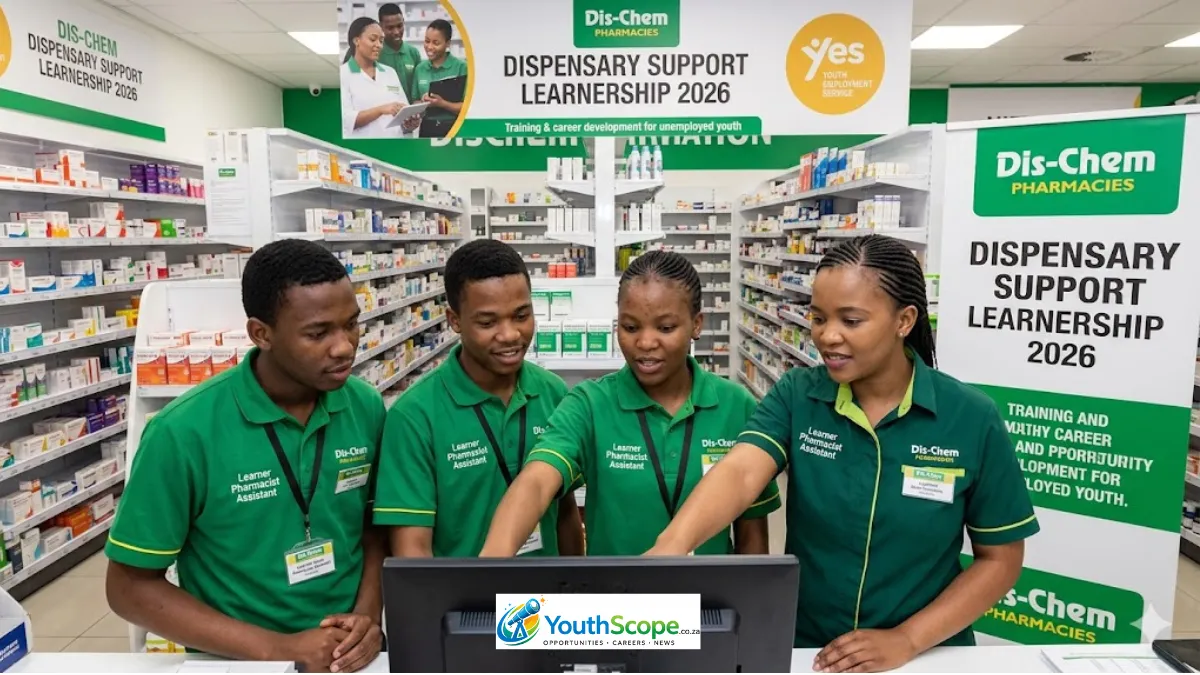
South African pharmacy retailer Dis-Chem Pharmacies has opened multiple Dispensary Support Learnership opportunities for 2026, offering unemployed youth a structured pathway into pharmacy training and learner basic pharmacist assistant development.

Unlike a single national vacancy, this intake is spread across multiple stores, each with its own closing date and application link. Some positions close as early as 18 April 2026, while others remain open later in the month.

For Matriculants with Mathematics and Science, this is emerging as one of the more structured entry routes into the healthcare and pharmacy sector.

A Structured Entry Into Pharmacy Careers

The Dispensary Support Learnership is designed to help learners complete the learner basic pharmacist assistant course while gaining hands-on experience inside a working pharmacy environment.

This makes it more than just an entry-level retail position. It is a structured training pathway that combines:

  • Workplace exposure
  • Formal pharmacy-related learning
  • Practical dispensary experience
  • Supervised pharmaceutical support duties

The programme is also linked to future registration pathways under the South African Pharmacy Council framework for learner basic pharmacist assistants.

Why This Learnership Is Gaining Attention

The healthcare sector continues to offer stable long-term career opportunities, and pharmacy support roles remain in consistent demand.

For unemployed youth, this programme offers:

  • A recognised career entry point into pharmacy
  • Practical experience in a professional healthcare environment
  • A structured route toward qualification
  • Improved employability in retail and healthcare sectors

Because it combines training with real workplace duties, it is often viewed as more valuable than general retail employment.

For many applicants, this is the first real step into a healthcare career path.

What Learners Will Do in the Pharmacy Environment

Successful applicants will work under supervision and may be involved in:

  • Assisting with Schedule 1 medicine sales
  • Supporting non-sterile medicine preparation
  • Picking, packing, and labelling medication
  • Interpreting prescriptions under supervision
  • Stock management and expiry monitoring
  • Receiving and unpacking pharmacy stock
  • Supporting customer service and script tracking
  • Assisting with OTC merchandising and cleaning
  • Reporting stock issues and shortages

These tasks help learners understand how a pharmacy operates on a daily basis while building confidence in a controlled environment.

Who Can Apply for the Dispensary Support Learnership?

Applicants must meet specific academic requirements.

Minimum requirements include:

  • Grade 12 / Senior Certificate
  • Mathematics (minimum 50%)
  • Life Sciences and/or Physical Science
  • Overall average of at least 50%

Applicants must also:

  • Be South African citizens
  • Pass a proficiency assessment
  • Clear criminal and credit checks

These requirements ensure candidates are academically prepared for pharmacy-related training.

Skills Dis-Chem Looks For

Beyond academic results, Dis-Chem Pharmacies seeks candidates with strong workplace skills.

These include:

  • Attention to detail
  • Customer service ability
  • Time management
  • Problem-solving skills
  • Teamwork
  • Numerical ability
  • Communication skills
  • Computer literacy
  • Professional conduct
  • Accountability and honesty
  • Ability to work under pressure

In pharmacy environments, accuracy and responsibility are critical because errors can affect patient safety.

Store-Based Opportunities Across the Country

This intake is not a single national application. It is made up of multiple store-specific vacancies.

Verified locations include:

  • Glenfair – Pretoria
  • Waverley – Pretoria
  • Southgate – Johannesburg
  • Three Rivers – Vereeniging
  • Northridge – Bloemfontein

Additional stores may still be added or updated on the official vacancies portal.

Applicants are advised to check each listing carefully, as requirements and closing dates may differ per store.

Why Store Selection Matters

Each vacancy has its own deadline and application process.

This means applicants should:

  • Apply to stores closest to where they live
  • Consider transport and daily travel
  • Check deadlines individually
  • Avoid using the wrong vacancy link

Applying correctly is just as important as meeting the requirements.

A mismatch between application and store listing can lead to disqualification.

How to Apply for the Learnership

Applications must be submitted through the official Dis-Chem Pharmacies vacancies portal.

Each store listing has a separate application link. Applicants must:

  • Select the correct store
  • Follow the application instructions
  • Submit required documents through the portal

Applications must be submitted through the official Dis-Chem pharmacy vacancies portal.

Verified store-specific apply links include:

There is no single national application form for this intake.

Closing Dates Vary by Store

Some Dispensary Support Learnership vacancies close from:

18 April 2026 onwards

However, not all stores share the same deadline.

Applicants must check each listing individually to confirm the exact closing date for their chosen store.

Early application is strongly recommended to avoid missing deadlines.

Why This Opportunity Stands Out

This learnership is considered one of the more structured pharmacy entry pathways currently available because it:

  • Combines training and workplace exposure
  • Leads toward pharmacy assistant development
  • Is offered by a well-known national pharmacy brand
  • Supports long-term healthcare career growth

For candidates with strong Mathematics and Science results, it provides a realistic route into the healthcare sector.

Final Advice for Applicants

Before applying, candidates should:

  • Confirm subject requirements match
  • Ensure Matric results meet minimum scores
  • Prepare clear and updated documents
  • Apply to the correct store listing
  • Check closing dates carefully

Attention to detail is essential in pharmacy-related roles, and the application process reflects that expectation.

You can also Check:

FAQ

What is the Dis-Chem Dispensary Support Learnership?

It is a pharmacy training programme that prepares learners for the basic pharmacist assistant pathway.

Who can apply?

South African citizens with Grade 12, Mathematics, and Science subjects meeting minimum requirements.

Is this a job or learnership?

It is a structured learnership linked to pharmacy training and workplace experience.

Where are the vacancies located?

Across multiple stores including Pretoria, Johannesburg, Vereeniging, and Bloemfontein.

When do applications close?

Some stores close from 18 April 2026, while others have different deadlines.

AVI Limited I&J YES4Youth Programme 2026 Opens for Unemployed Youth in South Africa

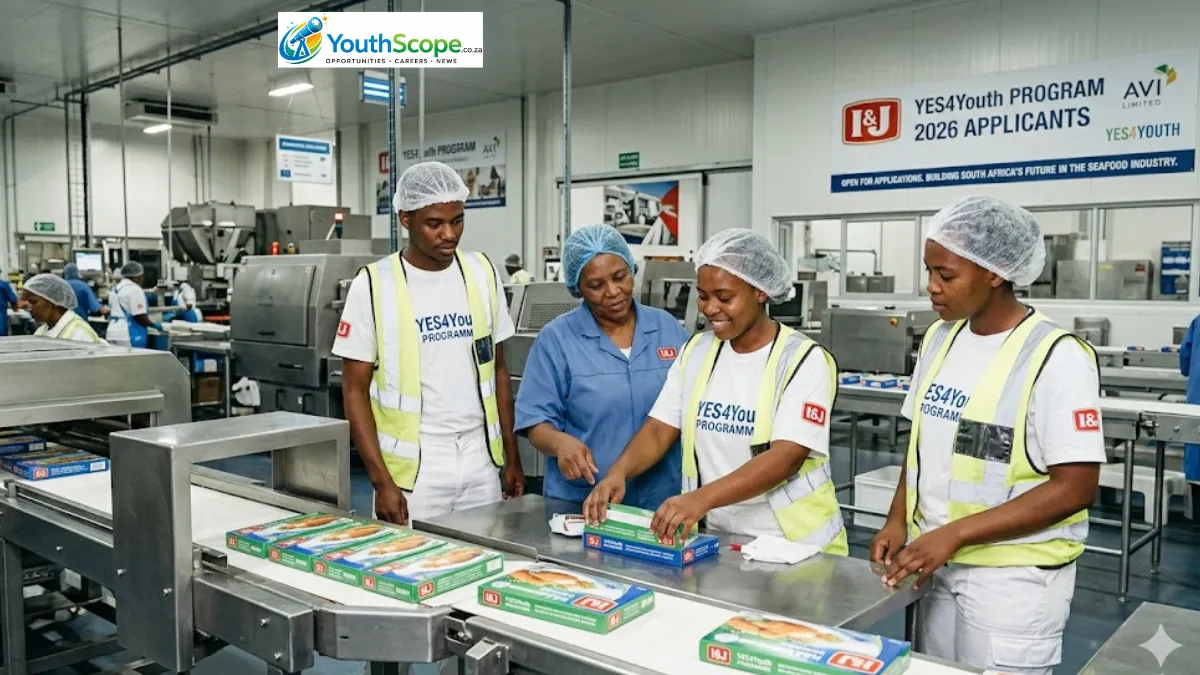
South African food manufacturer AVI Limited, through its well-known seafood division I&J, has officially opened applications for its YES4Youth opportunity for 2026. The programme offers unemployed young people a 12-month structured workplace experience aimed at improving employability and building real industry exposure.

With applications closing on 30 April 2026, the opportunity is expected to attract large interest from youth seeking their first formal workplace experience.

Unlike short-term training courses, this programme focuses on real operational exposure inside a functioning business environment.

A 12-Month Workplace Exposure Programme for Young South Africans

The YES4Youth opportunity at I&J is designed as a structured work experience placement, giving participants access to real business operations within one of South Africa’s established seafood producers.

The programme is not positioned as a traditional learnership, but rather as a workplace readiness initiative that builds practical experience over a 12-month period.

Participants will gain exposure to:

  • Day-to-day workplace operations
  • Manufacturing and production environments
  • Team-based work systems
  • Basic professional workplace expectations
  • Industry-standard practices

For many young job seekers, this type of experience can significantly strengthen future employment opportunities.

Why This YES4Youth Opportunity Matters

Youth unemployment remains a major challenge in South Africa, especially for those without experience.

Programmes like YES4Youth are important because they help bridge the gap between education and employment by giving young people:

  • First-time workplace exposure
  • Improved CV strength
  • Industry familiarity
  • Professional confidence
  • Practical job readiness

Even a single year of structured experience can improve future job prospects.

Sometimes, one opportunity is enough to shift a career direction.

About AVI Limited and I&J

AVI Limited is one of South Africa’s leading consumer goods companies, with a diverse portfolio of food and beverage brands.

Its seafood division, I&J, is one of the country’s most recognised names in the fishing and seafood industry, with a long operational history and strong reputation in both local and export markets.

The company is known for products such as Cape Hake and Abalone, and it places emphasis on sustainability, responsible fishing practices, and modern production systems.

This makes the programme especially valuable for youth interested in manufacturing, logistics, or production environments.

Who Can Apply for the YES4Youth Programme?

Applicants must meet all eligibility requirements before applying.

Minimum requirements include:

  • Age between 18 and 34 years
  • Minimum education: Grade 10 completed
  • Must be unemployed
  • Must not have previously participated in YES4Youth
  • Must not be enrolled in any government-funded training programme

Meeting all requirements is essential, as incomplete or ineligible applications will not be considered.

Documents Required for Application

Applicants must submit a complete set of supporting documents, including:

  • Updated CV
  • Certified copy of South African ID (not older than 3 months)
  • Certified copy of highest qualification (not older than 3 months)
  • SARS document or tax letter
  • Certified bank statement or stamped bank account confirmation (not older than 3 months)

Each document must be clear, valid, and correctly certified.

Missing or outdated documents may result in automatic disqualification.

Where Successful Candidates Will Be Placed

The programme is based in Cape Town, Western Cape.

Participants may be placed across various operational sites within I&J, depending on business needs.

This may include exposure to:

  • Production environments
  • Warehouse and logistics areas
  • Operational support departments

Applicants should consider transport and daily travel arrangements before applying.

Application Process and Submission Method

Applications must be submitted through the official online recruitment system.

A WhatsApp application option is also available:

  • Save number: 060 011 9717
  • Send message: “HI”
  • Follow automated instructions

The WhatsApp option provides a simpler mobile-friendly application route for many job seekers.

Closing Date for Applications

The closing date for this opportunity is:

30 April 2026

Early submission is strongly recommended to avoid last-minute delays, document errors, or system issues.

Selection and Screening Process

Shortlisted candidates may go through several screening stages, including:

  • Background checks
  • Criminal record verification
  • Qualification verification
  • Medical assessment (if required)

Applicants are encouraged to ensure all submitted information is accurate and up to date.

Incorrect or misleading information may lead to disqualification.

Why This Opportunity Can Be a Career Starting Point

Many young South Africans struggle to enter the job market due to a lack of experience.

This programme provides a structured way to gain that experience inside a real business environment.

Benefits may include:

  • Stronger CV profile
  • Workplace discipline
  • Exposure to real operations
  • Increased employability
  • Better understanding of industry expectations

Even though it is not a permanent job, the experience gained can influence future career opportunities significantly.

Final Advice for Applicants

Before applying, candidates should:

  • Confirm they meet all requirements
  • Prepare all documents in advance
  • Ensure certification is valid
  • Update and format CV properly
  • Double-check all uploaded files

A well-prepared application can make a strong impression in a competitive pool of applicants.

You can also Check:

FAQ

What is the YES4Youth programme at I&J?

It is a 12-month workplace experience programme offering youth exposure to real operations in the seafood industry.

Who can apply?

Unemployed South Africans aged 18–34 with at least Grade 10.

Is this a learnership?

No. It is a work experience programme, not a formal learnership.

Where is the programme based?

The programme is based in Cape Town, Western Cape.

What is the closing date?

Applications close on 30 April 2026.

Gauteng Artisan College Opens 2026 Occupational Health & Safety Learnership for Young Job Seekers

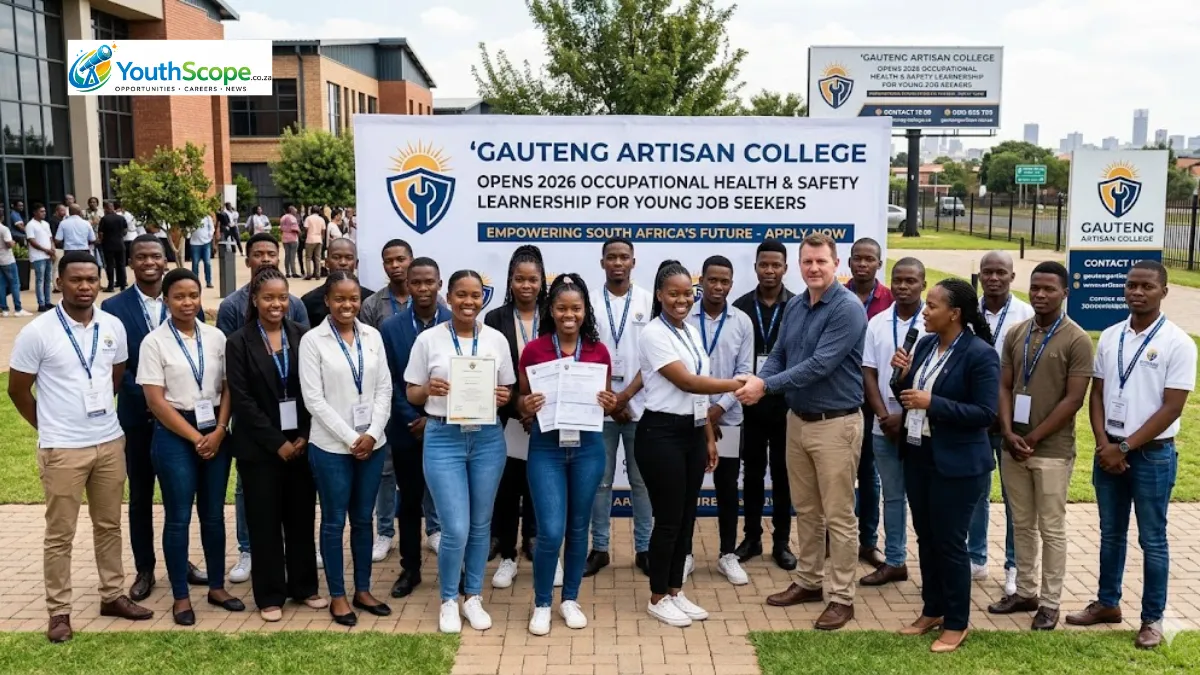
A new career development opportunity has opened for young South Africans looking to enter the workplace through structured training. The Gauteng Artisan College Learnership Opportunity 2026 is offering training toward an Occupational Health and Safety Officer qualification, aimed at building practical skills and improving employability in a high-demand field.

With applications closing on 17 April 2026, the programme is expected to attract interest from unemployed youth seeking a recognised pathway into workplace safety and compliance careers.

For many applicants, this type of opportunity represents more than training—it offers a structured entry point into long-term career development.

A Skills-Focused Path Into Occupational Health and Safety

The learnership is centred on training learners toward an Occupational Health and Safety Officer qualification at NQF Level 4.

Occupational health and safety plays a critical role in ensuring that workplaces operate safely, legally, and efficiently across multiple industries.

Rather than focusing only on classroom learning, the programme combines theory with practical workplace relevance, helping learners understand how safety systems are applied in real environments.

This makes it particularly relevant for young people who want job-ready skills rather than purely academic qualifications.

Why This Learnership Is Gaining Attention

Youth unemployment remains a major challenge in South Africa, and structured learnerships continue to be one of the most accessible ways to gain experience.

Programmes like this are especially important because they:

  • Build real workplace skills
  • Provide recognised qualifications
  • Improve CV credibility
  • Offer exposure to industry practices
  • Support entry into multiple sectors

For many first-time job seekers, this type of training helps bridge the gap between education and employment.

What Learners Will Study

The programme focuses on core occupational health and safety principles, including:

  • Workplace safety legislation
  • Hazard identification
  • Risk assessment procedures
  • Incident and accident reporting
  • Compliance monitoring
  • Workplace inspections
  • Safety awareness and prevention strategies

These topics are designed to prepare learners for environments where safety compliance is essential.

Employers increasingly value candidates who understand risk management and can contribute to safer workplaces from day one.

Industries Where This Qualification Can Be Used

One of the strongest advantages of occupational health and safety training is its flexibility across industries.

Graduates of the programme may find opportunities in sectors such as:

  • Construction
  • Manufacturing
  • Mining
  • Retail
  • Logistics
  • General industry operations

Because safety regulations apply across most workplaces, the qualification can open doors in both private and public sectors.

This makes it a practical long-term career foundation rather than a narrow skill path.

Key Benefits of the Learnership

The learnership offers a combination of education, practical exposure, and support.

Key benefits include:

  • NQF Level 4 Occupational Health and Safety qualification
  • Workplace-relevant training
  • Financial support during the programme
  • Improved employability
  • Transferable safety and compliance skills
  • Career entry into multiple industries

For many learners, the financial support aspect also helps reduce pressure while studying.

Who Can Apply?

Applicants must meet specific eligibility criteria before applying.

Requirements include:

  • Age between 18 and 26 years
  • Matric certificate
  • South African ID
  • Proof of residence
  • Proof of bank account details
  • SARS letter
  • Updated CV

All documents must be certified and clearly legible.

Incomplete applications may not be considered.

Required Application Documents

Candidates must prepare a full application package, including:

  • Updated CV
  • Certified copy of Matric certificate
  • Certified copy of ID
  • Proof of residence
  • Bank account confirmation
  • SARS documentation

Attention to detail is important. Well-organised documents can improve the overall impression of the application.

How to Apply (Important: Hand Delivery Only)

Applications must be submitted physically. No email or online applications are accepted.

Submission address:

183 South Rand Road
Unit 15 Tulisa Park
Alberton, 2197

Applicants are advised to plan transport and document preparation early to avoid last-minute challenges.

Closing Date

The closing date for applications is:

17 April 2026

Early submission is recommended to allow time for corrections, document certification, or unexpected delays.

Why Preparation Matters

In competitive learnerships, small details can influence selection outcomes.

Applicants should:

  • Ensure CV is updated and clear
  • Check all certified copies are valid
  • Organise documents neatly
  • Follow the required order of submission
  • Confirm personal details are accurate

Since applications are physically submitted, presentation also matters.

A well-prepared file can help create a stronger first impression.

Career Value of Occupational Health and Safety

Occupational health and safety is a career path focused on protecting people in the workplace.

Professionals in this field help:

  • Identify workplace hazards
  • Ensure compliance with safety regulations
  • Reduce workplace accidents
  • Promote safe working environments

With experience and further training, this career can lead to roles in compliance management, safety coordination, and risk assessment across industries.

It is a field that remains consistently relevant due to workplace safety regulations across all sectors.

Final Thoughts

The Gauteng Artisan College Learnership Opportunity 2026 presents a structured pathway for young South Africans who want practical training and a recognised qualification in Occupational Health and Safety.

With its combination of hands-on learning, financial support, and multi-industry relevance, the programme offers a realistic entry point into the job market.

For eligible applicants, it may represent not just training—but the beginning of a long-term career in workplace safety and compliance.

You can also Check:

FAQ

What qualification will I get from this learnership?

You will work toward an Occupational Health and Safety Officer NQF Level 4 qualification.

Who can apply?

South African youth aged 18–26 with Matric and required supporting documents.

Is the programme paid?

Yes, learners receive financial support during training.

How do I apply?

Applications must be hand-delivered to the Alberton address provided.

When is the closing date?

The closing date is 17 April 2026.

3-Month Skills Programme Opens for Unemployed Youth With Training Opportunity in Midrand

A new three-month skills programme for unemployed youth is offering young South Africans a chance to gain practical training, improve work readiness, and strengthen future job prospects through a short-term development opportunity.

While three months may seem brief, programmes like these are often viewed as important stepping stones for job seekers who need experience, structure, and confidence before entering the labour market.

For many young applicants, the biggest challenge is not motivation. It is access to opportunities that help build employable skills and workplace exposure.

This latest programme gives qualifying candidates a chance to take that first step.

Short Skills Programmes Continue to Attract Job Seekers

Across South Africa, short training programmes have become increasingly relevant as youth unemployment remains a major concern.

Many employers now seek candidates who can demonstrate workplace discipline, communication skills, and the ability to adapt to structured environments.

That means even a short programme can offer long-term value.

Participants may leave with:

  • Improved confidence
  • Better communication skills
  • Stronger job readiness
  • Practical workplace exposure
  • Added experience for future applications

For first-time job seekers, those gains can be significant.

What Is the 3-Month Skills Programme for Unemployed Youth?

The programme is designed to provide unemployed youth with short-term practical training aimed at preparing them for employment opportunities.

Rather than focusing only on theory, programmes of this nature often include real-world learning linked to everyday workplace expectations.

This can include:

  • Professional communication
  • Teamwork
  • Time management
  • Responsibility
  • Workplace discipline
  • Confidence building
  • Basic job readiness skills

For many applicants, the real value lies not only in completing the programme, but in becoming more employable afterward.

Why a Three-Month Programme Can Matter

Short programmes are often more accessible than longer qualifications and can be easier for unemployed youth to complete while still creating useful momentum.

They may help candidates improve how they:

  • Present themselves in interviews
  • Follow instructions
  • Work with others
  • Build routines
  • Apply for jobs more confidently

In a competitive market, even small advantages can make a difference.

Sometimes one short opportunity becomes the start of something much bigger.

Documents Required to Apply

Applicants are expected to prepare all supporting documents before submitting an application.

Required documents include:

  • Updated CV
  • Certified copy of ID (not older than 3 months)
  • Certified copy of Matric certificate
  • Affidavit confirming no previous learnership or SETA programme participation

Incomplete or unclear applications may not be considered, so candidates are encouraged to check every document carefully before submission.

Why These Documents Matter

Each document serves a purpose during the application process.

Certified ID Copy

This helps verify identity and confirms the applicant meets programme requirements.

Applicants should ensure certification dates are still valid and that copies are clearly readable.

Certified Matric Certificate

Used to confirm education level and eligibility.

If the copy is faint, damaged, or unclear, replacing it may help avoid delays.

Affidavit

The affidavit confirms the applicant has not previously participated in a learnership or another SETA programme.

This requirement may be used to ensure fair access for first-time beneficiaries.

False declarations could result in disqualification.

How to Prepare a Strong CV

Your CV remains one of the most important parts of any application.

Candidates are advised to keep it:

  • Clean
  • Simple
  • Easy to read
  • Honest
  • Relevant

Even without formal work experience, applicants can still include:

  • School achievements
  • Volunteer work
  • Community involvement
  • Short courses
  • Computer skills
  • Leadership roles
  • Team projects

A strong CV does not need to be long. It needs to make sense quickly.

Where Applications Can Be Submitted

Applicants can submit documents either by email or by hand delivery.

Email Submission

Applications may be sent to:

admin1@lethatspityltd.co.za

Candidates should scan documents clearly, use PDF format where possible, and name files professionally.

Hand Delivery Address

Thornhill Office Park
Vorna Valley
Building 13
Midrand

Those submitting in person should ensure documents are neatly arranged and properly certified.

Tips for Email Applications

A professional email can improve first impressions.

Recommended approach:

  • Use a clear subject line
  • State that you are applying for the Skills Programme
  • Mention that supporting documents are attached
  • Keep the message short and respectful

Well-organised submissions are often easier to review.

Benefits of Joining the Programme

Although temporary, the programme may provide lasting value.

Potential benefits include:

  • Practical workplace skills
  • Better confidence
  • Improved employability
  • Exposure to structured training
  • Networking with trainers or mentors
  • Greater personal discipline
  • Stronger future job applications

For many unemployed youth, these benefits can remain useful long after the programme ends.

Does Applying Guarantee Selection?

No.

Submitting an application does not guarantee acceptance.

Selection may depend on:

  • Available space
  • Meeting requirements
  • Complete documentation
  • Quality of application
  • Eligibility criteria

This is why careful preparation matters.

How Applicants Can Improve Their Chances

Small details often create stronger applications.

Candidates should:

  • Update contact details
  • Double-check documents
  • Use clear scans
  • Label files properly
  • Submit before deadlines
  • Keep communication professional

A rushed application can weaken otherwise strong candidates.

You can also Check:

Final Thoughts

The 3-Month Skills Programme for Unemployed Youth could be a valuable opportunity for young South Africans looking to gain practical training and improve their path into employment.

While short in duration, programmes like this can help participants build confidence, strengthen employability, and take an important first step into the job market.

For many applicants, three months could be where real progress begins.

FAQ

Who can apply for the programme?

The programme is aimed at unemployed youth who meet the stated document and eligibility requirements.

How long does the programme run?

The skills programme runs for three months.

What documents are needed?

Applicants need an updated CV, certified ID copy, certified Matric certificate, and affidavit.

Can I apply by email?

Yes. Applications can be sent to admin1@lethatspityltd.co.za.

Where is hand delivery accepted?

Applications can be delivered to Thornhill Office Park, Vorna Valley, Building 13, Midrand.

Does applying mean I will be selected?

No. Selection depends on eligibility, available space, and application quality.

Sibanye-Stillwater Opens Six Mining Learnership Opportunities for 2026 Intake Across Multiple Operations

April 2026 — Sibanye-Stillwater has officially opened applications for its 2026 Learner Official Mining learnership programme, offering a total of six positions across three separate listings. The intake, which spans operations in Rustenburg and West Wits, is drawing attention from job seekers looking for structured entry into the mining sector.

While the programme may initially appear as a single opportunity, the company has clarified that it consists of three distinct postings—each with its own requirements, reference numbers, and closing dates. For applicants, this means multiple chances to secure a place, provided they apply carefully and meet the criteria for each listing.

Multiple Learnership Listings Increase Entry Opportunities

Unlike typical single-post learnership announcements, this intake is divided into three separate vacancies:

  • KND 0070380 / KND AD0015491 — 1 position — Closing: 1 May 2026
  • KLF 0070368 / KLF AD0015496 — 3 positions — Closing: 27 April 2026
  • RPM 0070359 / RPM AD0015470 — 2 positions — Closing: 1 May 2026

This structure increases the total intake to six positions, offering broader access for qualifying candidates. However, each listing operates independently, meaning applicants must submit separate applications aligned with specific requirements.

Learnership Designed as Structured Entry Into Mining Careers

The Learner Official Mining programme forms part of Sibanye-Stillwater’s workforce development pipeline. Rather than a standard job vacancy, the learnership is a structured training programme aimed at developing industry-specific skills through practical, supervised workplace exposure.

Successful candidates will be placed in operational environments where they will:

  • Participate in structured training modules
  • Gain hands-on experience under supervision
  • Undergo regular assessments to track progress
  • Develop competencies aligned with mining operations

This approach positions the learnership as a formal pathway into long-term employment within the mining industry.

Locations: Rustenburg and West Wits Operations

The current intake is distributed across two key operational segments:

  • Operating Segment Platinum Rustenburg
  • Operating Segment Gold West Wits

Although the job title remains the same, each location may have slightly different expectations, qualification requirements, and operational focus areas. Applicants are advised to review each listing individually before applying.

Minimum Requirements: Small Differences Matter

Across all listings, the baseline academic requirement includes:

  • Grade 12 / NQF Level 4 / National Senior Certificate or equivalent

However, there are important variations:

  • Some listings require Mathematics and English
  • At least one listing specifies Mathematics (not Mathematical Literacy)

This distinction is critical. Candidates who meet the criteria for one listing may not qualify for another due to subject-specific requirements.

Additional Requirements and Conditions

Applicants should also be prepared to meet the following criteria:

  • Medically fit to work in mining environments
  • Clear security screening record
  • Valid driver’s licence (where required)
  • Relevant experience (advantageous but not mandatory)

Even where experience is not a strict requirement, it may strengthen an application during shortlisting.

What the Learnership Involves

The programme is designed to combine theoretical learning with practical exposure. Key responsibilities include:

  • Completing all assigned training modules within deadlines
  • Understanding programme objectives and workplace expectations
  • Following company policies and safety procedures
  • Participating in Safety, Health, and Environment (SHE) initiatives
  • Identifying workplace hazards and contributing to risk awareness
  • Reporting progress, challenges, and inconsistencies

In some cases, learners will rotate across different operational areas, gaining broader exposure to mining processes.

Selection Process: Screening and Evaluation

Sibanye-Stillwater has indicated that the selection process may include:

  • Pre-screening assessments
  • Psychometric evaluations
  • Panel interviews for shortlisted candidates

Applicants who do not receive feedback within 14 days after the closing date are advised to consider their application unsuccessful.

Why Attention to Detail Is Critical

One of the most important aspects of this intake is accuracy.

Because the programme consists of three separate listings, each application must match:

  • The correct requisition number
  • The correct reference number
  • The correct closing date
  • The specific qualification requirements

Submitting a generic or mismatched application could result in disqualification, even if the candidate meets the overall criteria.

How to Apply

Applications must be submitted through the official Sibanye-Stillwater online careers portal.

Before applying, candidates should:

  • Select the correct listing
  • Double-check qualification requirements
  • Prepare all supporting documents
  • Submit before the specified closing date

Early submission is recommended to avoid last-minute errors.

Why This Learnership Intake Stands Out

Mining learnerships with established companies are often highly competitive. What sets this intake apart is the availability of multiple positions under the same programme category.

Instead of a single opportunity, applicants can explore three different entry points—each offering a pathway into structured mining training.

For job seekers aiming to enter the mining sector, this significantly improves the chances of selection.

Final Outlook

The 2026 Learner Official Mining learnership intake from Sibanye-Stillwater represents a meaningful opportunity for candidates seeking practical training and career development in mining.

With six positions available across multiple operations, the programme offers more than one route into the industry. However, success will depend on careful application, attention to listing details, and meeting specific requirements.

You can also Check:

FAQ: Sibanye-Stillwater Mining Learnerships 2026

1. How many positions are available?
There are six positions available across three separate listings.

2. What is the closing date?
Closing dates range between 27 April 2026 and 1 May 2026, depending on the listing.

3. Do I need Mathematics to apply?
Yes, in some listings Mathematics is required—and in at least one case, Mathematical Literacy is not accepted.

4. Where are the learnerships located?
The opportunities are based in Rustenburg (Platinum) and West Wits (Gold operations).

5. Is prior experience required?
No, but relevant experience may improve your chances.

6. How do I apply?
Applications must be submitted through the official Sibanye-Stillwater online portal.

7. What happens after applying?
Shortlisted candidates may undergo assessments and interviews. If no response is received within 14 days, the application is considered unsuccessful.